

Booking online therapy that combines rapid access, real-time emotional support, and flexible data-driven tools remains difficult for those who need continuity between sessions and privacy-first delivery. Existing platforms often restrict insurance coverage to certain regions, delay therapist matching, or lack automated progress tracking so clients and therapists must rely on memory rather than actionable engagement metrics. This matching chart lets you compare six online therapy services by affordability, access speed, insurance acceptance, and data features so you can select one that suits your clinical needs and communication preferences without repeated trial sign-ups.
Table of Contents
MySafeTherapy
At a Glance
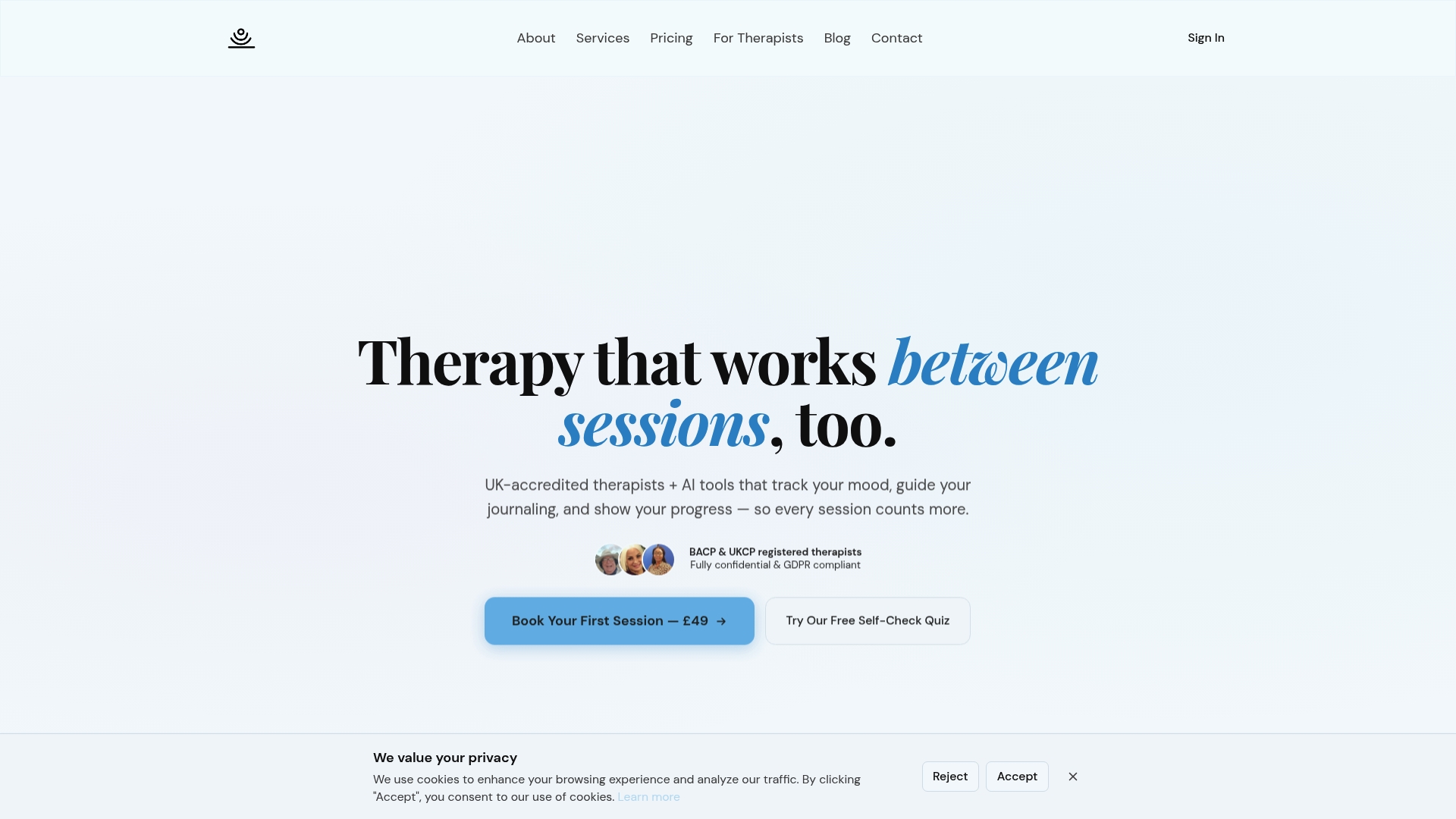
The platform includes the AI journaling companion Navi for near real-time emotional support between sessions. It also offers weekly automated progress reports that feed back to both client and therapist, so sessions start with data, not guesswork.
Core Features
- AI tools for mood tracking and journaling that log daily entries and surface engagement patterns to therapists.
- Structured self-help programmes for anxiety, burnout, stress and relationship issues, usable between live sessions.
- AI journaling companion Navi for conversational check-ins and emotional referencing when you are not in session.
- Weekly automated progress reports for clients and therapists plus secure, GDPR-compliant video, chat and avatar therapy options.
Key Differentiator
MySafeTherapy's marketing materials describe the service as combining clinical-grade AI tools with UK-accredited therapists to support mental health between sessions. That positioning focuses on continuous engagement rather than episodic contact, so therapists get ongoing behavioural data to shape treatment.
Pros
- Integrates AI features with professional therapy to keep momentum between appointments, which helps therapists spot engagement dips early.
- Quick match process with no reported waiting lists or referrals accelerates access; the vendor advertises faster onboarding than traditional routes.
- Affordable entry point, with therapy sessions starting at £49, making short blocks of weekly work financially accessible for many clients.
- Privacy forward: encrypted sessions and GDPR-compliant handling, plus avatar-based therapy for clients who prefer anonymity.
- Provides clinicians with actionable engagement metrics and progress summaries, which aim to improve session focus and reduce wasted time.
Cons
- The platform is an online, technology-dependent service and is not suitable for clients requiring urgent high-intensity or crisis intervention. Therapists should triage for risk outside the platform.
Who It's For
Therapists wanting to augment face-to-face work with data-driven follow up and clients across the UK who prefer private, flexible online therapy. Also a fit for practitioners who want measurable engagement metrics to inform clinical decisions.
Unique Value Proposition
Weekly automated progress reports arrive before appointments, giving the therapist a short dossier of engagement, mood trends and journaling highlights. That changes how a single session is planned: more targeted questions, fewer catch-up minutes, and clearer short-term goals.
Real World Use Case
A therapist prescribes daily mood tracking and journaling to a client with anxiety. The client submits entries through Navi and the weekly report flags a pattern of late-week dips. The therapist adjusts session focus and a brief coping exercise is introduced that evening.
Pricing
Therapy sessions start from £49 per session. Self-help tools and adjunct features begin at £9/month, with subscription options available for ongoing support and clinician access to progress reports.
Website: https://mysafetherapy.com
Calmerry
At a Glance
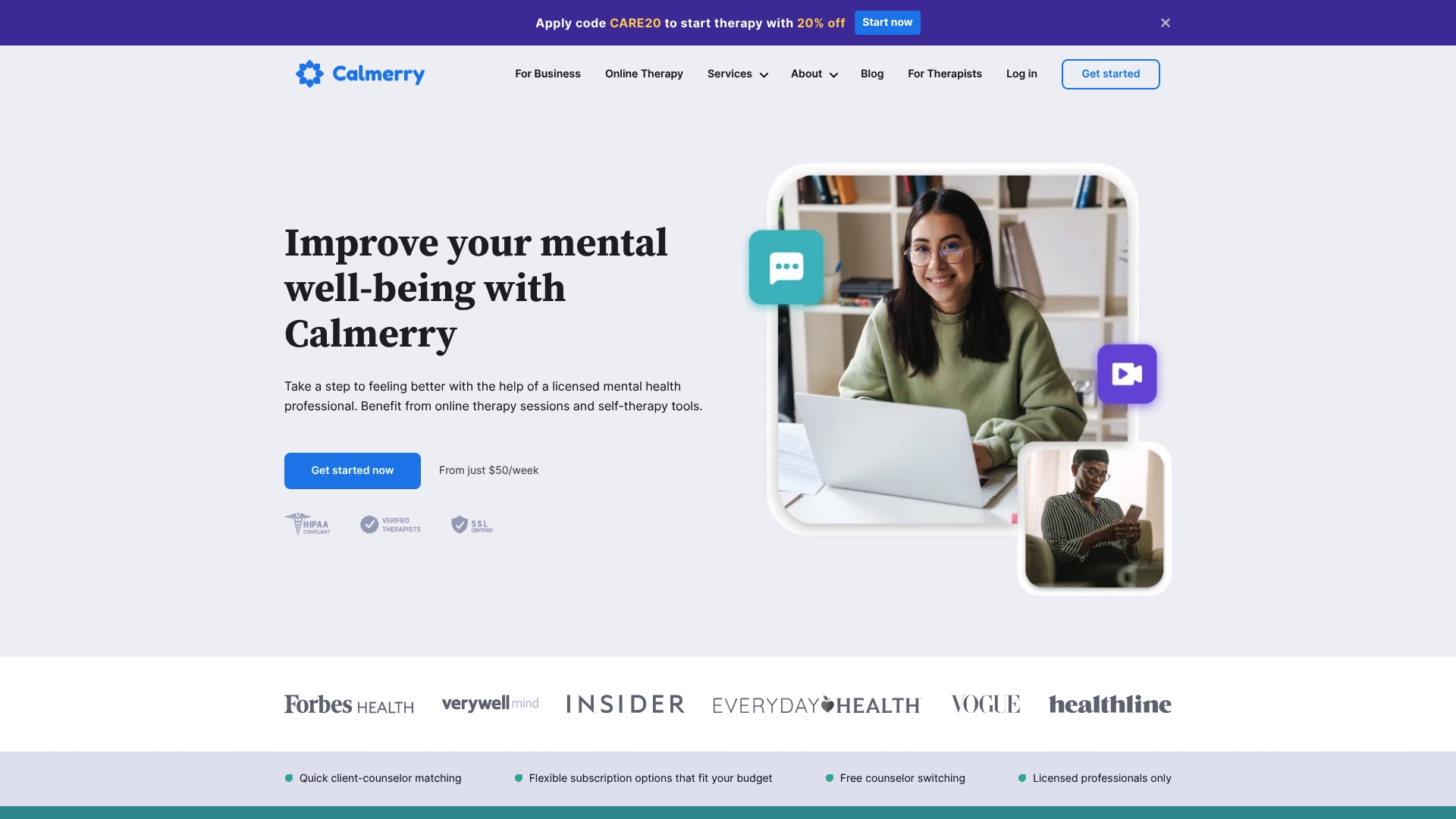
Plans start at $50 per week, billed monthly, with both messaging and live video therapy available and a free therapist switch policy. The vendor advertises HIPAA compliance, which it uses to promote confidentiality and security for clients.
Core Features
Calmerry supports messaging therapy, scheduled live video sessions, or a blended plan that combines both formats for continuity of care.
The platform offers an easy therapist matching process and permits free therapist switching when the fit is poor. Self-help tools include mood trackers, guided journaling, and standard assessments.
Key Differentiator
Flexible subscriptions plus no-cost therapist switching is the main practical difference here. You can start on messaging only to save time, add video sessions when you need them, then change therapist without extra charge if rapport falters.
Pros
-
Affordable entry point and transparent weekly pricing make short bursts of support accessible for people who need evenings or weekend slots.
-
The free therapist switch removes a common barrier: you can change therapists without reopening sign-up or paying a transfer fee.
-
Multiple communication modes let you pick what suits your routine: quick messages between meetings or a 50-minute video session after work.
-
Useful self-help features such as mood tracking and guided journaling help you see patterns between sessions rather than relying on memory alone.
-
The vendor's compliance claim is a positive signal for privacy conscious users, especially when sharing sensitive details.
Cons
-
App notifications and message delivery have reportedly suffered delays for some users, which reduces the value of asynchronous messaging when timely replies matter.
-
Refunds and billing disputes are described as difficult by a portion of user reviews, so predictable billing is not guaranteed for everyone.
-
Therapist quality appears uneven across the network; some clients report excellent matches while others find limited therapeutic fit.
-
Customer support response times can be slow in certain cases, which compounds frustration when technical or billing issues arise.
When It May Not Fit
If you prefer in-person sessions, Calmerry is the wrong shape: its entire offering is remote. If you need therapy reimbursed through insurance, this platform does not accept insurance and relies on out-of-pocket payment or financial aid options.
If you require guaranteed immediate replies from a therapist or highly consistent clinician quality, that variability and notification lag will be a persistent problem.
Who It's For
Adults in the UK looking for an affordable, flexible online therapy option will find Calmerry straightforward. It suits people who value evening and weekend availability, are comfortable with digital communication, and want the option to switch therapist without administrative friction.
Real World Use Case
A busy London professional books messaging therapy most weekdays, adds a weekly video session during a stressful project, and switches therapists once after three sessions when the match felt off. Mood tracking helps spot sleep and stress links between sessions.
Pricing
Plans begin at $50 per week, billed monthly, with higher tiers offering more live sessions or additional features. Insurance is not accepted; Calmerry advertises financial aid options for eligible clients.
Website: https://calmerry.com
Grow Therapy

At a Glance
Grow Therapy's marketing states sessions average $21 per session with insurance, a striking figure for people trying to lower out-of-pocket costs. The platform advertises a wide provider network, both virtual and in-person care, and rapid onboarding so appointments start within days rather than months.
Core Features
- A large network of licensed mental health providers across the United States, filterable by speciality, identity, and location.
- Both virtual and in-person appointment options with evening and weekend availability for working clients.
- Acceptance of 125+ insurance plans, including Medicaid in many states, plus clear cost estimates and transparent billing.
Key Differentiator
Grow Therapy centres on insurance compatibility and speed of access. Where many apps prioritise self-pay subscriptions, Grow positions itself to work with customers’ existing cover, claiming quick match times and combined therapy and medication support. That insurance-first approach shapes how providers are listed and how cost estimates appear during booking.
Pros
- User-friendly search and booking flow reduces friction when you need to book quickly after work. Profiles list qualifications and specialities clearly.
- Broad insurance acceptance makes therapy genuinely affordable for people with covered plans; that acceptance is the company’s central commercial promise.
- Flexible scheduling, including evenings and weekends, fits clients who work full time and cannot take daytime appointments.
- Detailed provider profiles and active client support help narrow choices when several clinicians share similar specialities.
- Offers both therapy and medication management pathways on one platform, reducing the need to juggle separate services.
Cons
- Reports around pay transparency and administrative communication are mixed, which can complicate billing questions for some clients.
- Some practitioners report referral pressure or limited clarity about pay arrangements, a downside for clinicians evaluating the platform.
- Availability depends on state licensure and insurance networks, so provider choice varies by postcode.
When It May Not Fit
If you live outside the United States, Grow Therapy is unlikely to help because its provider network and insurance integrations are US-focused. If you need guaranteed therapist continuity with a named clinician, the variable availability and referral-driven matching may frustrate you.
Who It's For
People in the United States who want therapy that works with their insurance and who value fast starts and flexible hours. UK readers comparing alternatives should treat Grow as a US-specific, insurance-centred option rather than a direct substitute for UK-based services like Mysafetherapy.
Real World Use Case
A client finds a licenced therapist specialising in anxiety in their state, books weekly virtual sessions after work, and uses their insurance to lower fees to around the advertised figure above. Administrative support helps with claims and cost estimates during onboarding.
Pricing
That $21 figure above reflects the vendor’s claim for sessions when insurance applies; self-pay rates vary by clinician. Grow offers insurance-based pricing first, with clear upfront cost estimates shown during booking so you see likely out-of-pocket fees before confirming an appointment.
Website: https://growtherapy.com
LunaJoy

At a Glance
LunaJoy's marketing materials advertise same-day appointment availability across multiple states and in-network insurance coverage for many plans. That combination is aimed at removing friction for women who need prompt, covered care during pregnancy, postpartum or menopause.
Core Features
- Virtual therapy sessions tailored to life stages such as pregnancy, postpartum and menopause, designed for continuity of care.
- Medication management that includes genetic testing options to guide prescribing choices and follow-up windows.
- 24/7 care navigation with a team available for immediate support and triage outside scheduled sessions.
- Custom holistic care plans and wellness tools to complement live therapy and coaching.
Key Differentiator
LunaJoy specialises exclusively in women's mental health and advertises insurance-covered care plus same-day scheduling in several states. That focus stacks clinical knowledge, coaching and medication management around maternal and reproductive concerns rather than offering a generic adult mental health product.
Pros
- The vendor reports high patient satisfaction, which supports the platform's emphasis on compassionate, personalised care rather than a transactional model.
- Insurance coverage integration reduces administrative burden for employees and employers by using in-network benefits rather than out-of-pocket rates.
- A broad service mix means you can combine therapy, coaching and medication management under one provider, cutting down on referrals and extra onboarding.
- Virtual-first delivery preserves confidentiality and convenience for people juggling childcare, work and appointments.
Cons
- Public third-party reviews are limited, so external validation beyond the vendor's materials is scarce.
- Reliance on virtual sessions means those who prefer or need in-person contact will find the offer unsuitable.
- Availability hinges on state licensing, so access is fragmented and depends on where licensed providers operate.
When It May Not Fit
If you live outside the states where LunaJoy holds licences you will not be able to use their clinicians for therapy or prescribing. If face-to-face care is essential for clinical history taking or personal preference, this virtual model will not match your needs.
Notable Integrations
- HIPAA-compliant telemedicine platform for secure video and messaging.
- Insurance verification systems that check in-network status and eligibility during enrolment.
Who It's For
Women at various life stages who need virtual, insurance-covered mental health support: new mothers, people planning pregnancy, those experiencing menopause, and women navigating significant life change. Employers seeking a female-focused benefit will also find the model relevant.
Real World Use Case
A new mother in California books a same-day session to address postpartum anxiety, uses in-network benefits to avoid immediate cost, and follows a combined plan of therapy plus medication management. Appointments fit around feeding and childcare because sessions are virtual.
Pricing
The vendor lists pricing as informational only. Cost to an individual typically depends on employer benefits and in-network arrangements, so employers or prospective patients should contact LunaJoy directly or check their benefits portal for precise coverage details.
Website: https://hellolunajoy.com
Comparative Analysis
Online Therapy Platforms Comparison
Discover which platform offers the most structured and data-driven therapy support with advanced features and accessibility.
| Platform | Core Features | Key Differentiator | Best For | Pricing | Notable Limitation |
|---|---|---|---|---|---|
| MySafeTherapy | AI journaling companion progress reports GDPR-compliant | Continuous engagement with actionable insights | Therapists seeking data-driven treatment support | £49/session | Not suitable for high-intensity or crisis intervention |
| Calmerry | Messaging live video self-help HIPAA compliance | Flexible subscriptions with free therapist switching | Affordable semi-synchronous therapy for busy professionals | $50/week | Message delivery delays impact timely support |
| Grow Therapy | Virtual in-person broad insurance coverage medication support | Insurance compatibility with upfront cost estimates | US residents needing rapid therapy and lower costs | $21/session with insurance | Limited licensure and availability by postcode |
| LunaJoy | Virtual female-focused genetic testing medication management compassive care | Specialised women’s mental health with holistic care | Women navigating pregnancy postpartum or menopause | Not disclosed | Reliance on virtual sessions limits physical evaluations |
Discover a Trusted Alternative Among MyselfCareTherapy.com Alternatives
Finding mental health support that fits your lifestyle and needs can feel challenging, especially when seeking continuous care without compromises on privacy or cost. Mysafetherapy offers a unique blend of UK-accredited therapists, flexible session formats including video, chat, and avatar-based therapy, and innovative tools like AI journaling and mood tracking to maintain steady progress between appointments. This approach helps reduce guesswork by providing weekly progress reports, enabling tailored sessions that focus on what matters most.
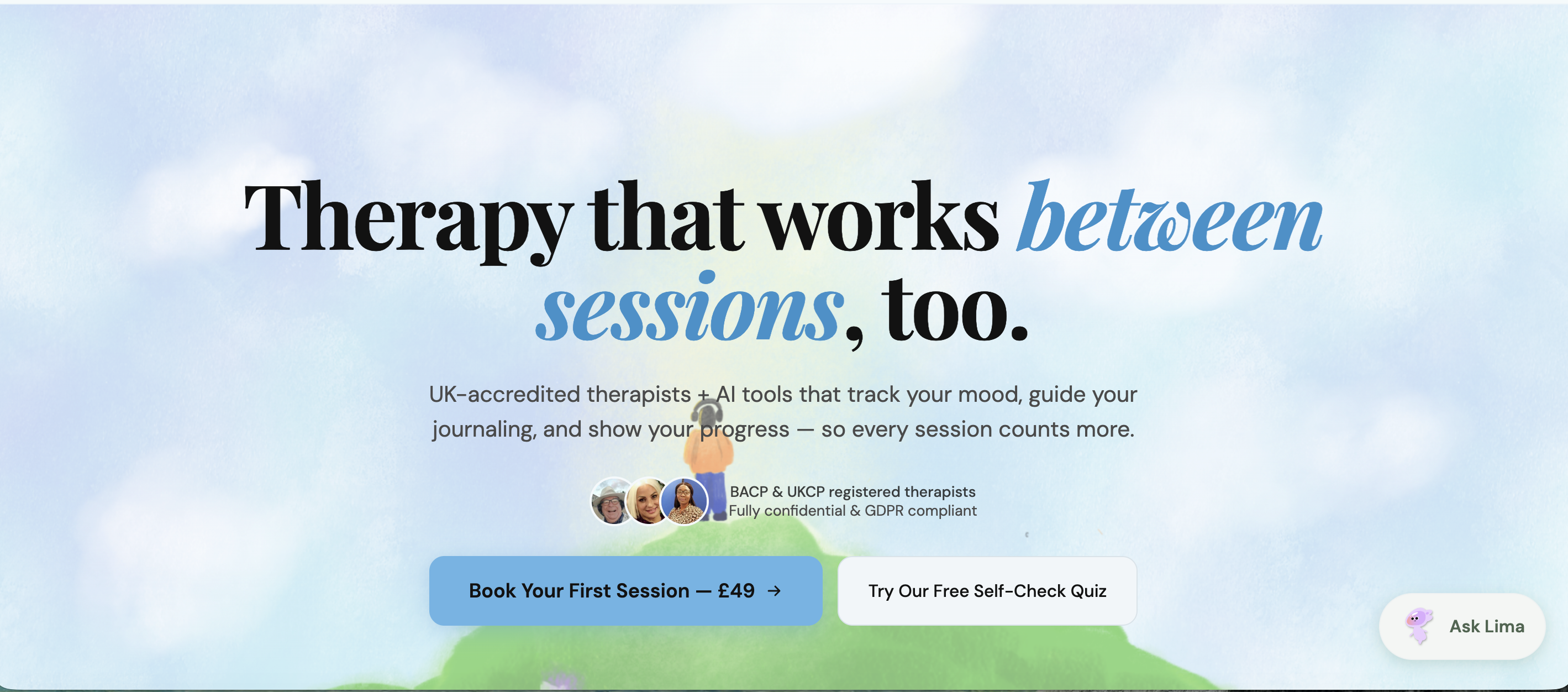
Choose Mysafetherapy to experience confidential, affordable therapy designed for your comfort and convenience. Explore how connecting with a professional online can fit around your schedule while benefiting from clear pricing and easy therapist switching. Visit Mysafetherapy and take the next step in managing your mental health with personalised support and insightful feedback.
Frequently Asked Questions
What therapy options does Mysafetherapy offer for ongoing support?
Mysafetherapy provides AI tools for mood tracking and journaling, which enhance the therapeutic experience by keeping clients engaged between sessions. The platform's AI journaling companion, Navi, allows for near real-time emotional support, ensuring that both clients and therapists have data to guide their discussions. You can start using these features to maintain a continuous connection with your therapist.
How does Mysafetherapy compare to Calmerry in terms of therapist switching?
Calmerry allows users to switch therapists for free if they feel the fit isn't right, accommodating those who may need a different therapeutic approach. In contrast, Mysafetherapy focuses on continuous engagement through weekly automated progress reports to inform therapy sessions, making it ideal for clients seeking structured follow-ups. Consider Mysafetherapy if you value having consistent support based on data-driven insights.
Can Mysafetherapy help with immediate emotional support if needed?
Mysafetherapy primarily relies on appointments scheduled in advance and does not provide urgent or crisis-based interventions. Instead, its AI journaling companion facilitates ongoing engagement outside regular sessions, making it suitable for clients looking for supportive tools rather than immediate crisis assistance. If you are seeking a continuous support system, Mysafetherapy might be a good fit.
What is the pricing structure for Mysafetherapy compared to other platforms like Grow Therapy?
Mysafetherapy's therapy sessions start at £49, while Grow Therapy claims an average of $21 per session with insurance. Mysafetherapy’s focus on integrating AI tools for continued engagement provides unique value at this price point, especially for clients needing regular support. If you’re looking for a cost-effective solution that combines AI with therapist-led sessions, Mysafetherapy is worth considering.
Which platform is better for clients who prefer flexible online appointments?
MySafeTherapy excels in providing structured self-help programmes that clients can use between sessions, ensuring they receive comprehensive support tailored to their needs. While Calmerry offers messaging and live video therapy, Mysafetherapy's automated progress reports enable therapists to make data-informed decisions during sessions, which can enhance therapeutic outcomes. If you appreciate flexibility and structured support, Mysafetherapy may be ideal for your needs.