

Many people assume any qualified therapist will do, believing professional credentials alone guarantee successful therapy. This misconception leads countless individuals to start online therapy without considering whether their assigned therapist truly matches their personal needs, communication style, or specific mental health challenges. The reality is strikingly different. Research shows that therapist matching significantly influences therapy outcomes, particularly for those managing anxiety and depression. Understanding how matching works and why it matters can transform your therapy experience from merely adequate to genuinely life changing. This article explores what therapist matching means, how it enhances personalised online therapy in the UK, and practical steps to ensure you find the right therapeutic partnership for your mental health journey.
Table of Contents
- What Is Therapist Matching And Why Does It Matter?
- How Therapist Matching Enhances Personalised Online Therapy Experiences
- Common Therapist Matching Methods And How To Choose The Best Fit
- Benefits Of Effective Therapist Matching For Mental Health Outcomes
- How My Safe Therapy Helps You Find The Right Therapist
Key takeaways
| Point | Details |
|---|---|
| Matching drives success | Therapist matching significantly improves therapy outcomes, especially for anxiety and depression, by aligning expertise with your specific needs. |
| Multiple factors matter | Effective matching considers therapy style, personality fit, cultural sensitivity, communication preferences, and specialist expertise. |
| Online platforms excel | Digital therapy services increasingly use sophisticated matching to personalise care whilst protecting your confidentiality and comfort. |
| Your input is crucial | Active participation in expressing preferences and mental health goals leads to better therapist pairing and stronger therapeutic relationships. |
| Better outcomes follow | Proper matching increases engagement, satisfaction, symptom relief, and reduces the likelihood of dropping out before completing therapy. |
What is therapist matching and why does it matter?
Therapist matching involves systematically aligning your specific mental health needs, preferences, and personality with a therapist whose expertise, approach, and communication style complement yours. This process goes far beyond simply assigning you to the next available professional. Key matching criteria include the therapeutic approach used, such as cognitive behavioural therapy or person centred counselling, cultural sensitivity and shared values, communication style and interpersonal chemistry, and specialist expertise in addressing particular issues like anxiety, depression, trauma, or relationship challenges.
Studies demonstrate that good therapist matches lead to better engagement and fewer therapy dropouts. When clients feel understood and comfortable with their therapist, they open up more readily, engage more deeply with therapeutic exercises, and experience more effective symptom relief. Conversely, poor matching creates barriers to progress. You might feel misunderstood, struggle to trust your therapist, or find their communication style frustrating, all of which discourage ongoing therapy participation.
The importance of matching becomes particularly evident when addressing common mental health concerns. Someone experiencing social anxiety might thrive with a gentle, patient therapist who allows silence and proceeds at a slower pace, whilst another person with the same diagnosis might prefer a more direct, structured approach. Similarly, cultural background, gender preferences, and life experience can profoundly affect how comfortable you feel discussing sensitive topics.
Pro tip: Before starting therapy, spend time reflecting on what makes you feel most comfortable in conversations. Do you prefer direct feedback or gentle guidance? Do you respond better to structured sessions or flexible exploration? Understanding your preferences helps you communicate effectively with matching services and increases the likelihood of finding an ideal therapeutic partnership.
How therapist matching enhances personalised online therapy experiences
Online therapy offers remarkable convenience and privacy, allowing you to access mental health support from home at times that suit your schedule, including evenings and weekends. However, the digital format makes therapist matching even more crucial than in traditional settings. Without the immediate physical presence and non verbal cues of face to face therapy, the quality of your therapeutic relationship depends heavily on how well matched you are from the outset.

Digital platforms use matching algorithms and human expertise to pair you with therapists attuned to your specific mental health needs and communication preferences. These systems consider multiple factors simultaneously, including your stated therapy goals, preferred session format such as video, chat, or avatar based sessions, therapist expertise in particular conditions like anxiety or depression, scheduling availability that matches your lifestyle, and personal preferences regarding therapist characteristics.
The benefits of systematic matching become clear when comparing online and traditional therapy approaches:
| Aspect | Online therapy with matching | Traditional in-person therapy |
|---|---|---|
| Therapist selection | Algorithm enhanced pairing based on detailed preferences and needs | Often limited to local availability and referral networks |
| Confidentiality | High privacy with sessions from home, reducing stigma concerns | Requires travel to clinic, potential for being seen by others |
| Personalisation | Detailed intake assessments inform precise matching | Matching often relies on brief initial consultations |
| Flexibility | Easy to request different therapist if match is not ideal | Changing therapists can be logistically challenging and awkward |
Certain sophisticated platforms analyse your intake questionnaire responses, therapy history, and specific concerns to suggest therapists whose expertise and style align with your needs. This data driven approach, combined with human oversight, creates more accurate initial matches than random assignment or simple availability based pairing.
Pro tip: Choose online platforms that prioritise customised matching and offer transparent information about their therapists' specialisations, approaches, and experience. Platforms that allow you to review therapist profiles and switch easily if needed demonstrate commitment to finding your best fit.
Common therapist matching methods and how to choose the best fit
Therapist matching occurs through several distinct approaches, each with unique strengths and limitations. Understanding these methods helps you navigate different platforms and advocate for the matching process that serves you best. The three primary approaches are algorithm based matching, human intuitive pairing, and self directed therapist selection.
Different matching methods show varied success depending on user preferences and platform sophistication:
| Method | Strengths | Limitations |
|---|---|---|
| Algorithm based | Processes multiple factors quickly, reduces bias, scales efficiently | May miss nuanced preferences, relies on accurate self reporting |
| Human intuitive | Captures subtle needs, allows for complex considerations | Time intensive, subject to individual matcher's biases |
| Self directed | Maximum client autonomy, direct control over choice | Requires significant research, may overlook important compatibility factors |
To evaluate and communicate your preferences effectively for better matching outcomes, follow these practical steps:
- Complete intake assessments thoroughly and honestly, providing detailed information about your mental health history, current challenges, therapy goals, and personal preferences regarding therapist characteristics and communication style.
- Identify your therapy priorities by ranking what matters most, whether specialist expertise in anxiety or depression, particular therapeutic approaches, scheduling flexibility, or demographic preferences.
- Research therapeutic approaches to understand differences between cognitive behavioural therapy, psychodynamic therapy, person centred counselling, and other modalities, helping you articulate which resonates with you.
- Communicate openly with matching services about any previous therapy experiences, both positive and negative, to help them understand what worked and what did not.
- Request initial consultations when available to assess chemistry and comfort before committing to ongoing sessions.
- Remain flexible and willing to revisit your match if therapy is not progressing as hoped, recognising that finding the right fit sometimes requires trying more than one therapist.
Platforms offering transparent matching criteria and robust client feedback systems provide added value. These features allow you to understand how matches are made and contribute to improving the matching process for yourself and future clients. The best services make therapist switching straightforward and stigma free, recognising that finding your ideal match is a legitimate part of the therapy journey.
Benefits of effective therapist matching for mental health outcomes
Successful therapist matching delivers concrete, measurable improvements in mental health outcomes. Clients matched well with therapists consistently report higher satisfaction levels and experience faster symptom relief compared to those in poorly matched therapeutic relationships. The difference extends beyond subjective feelings of comfort to objective measures of therapeutic progress and sustained mental health improvements.
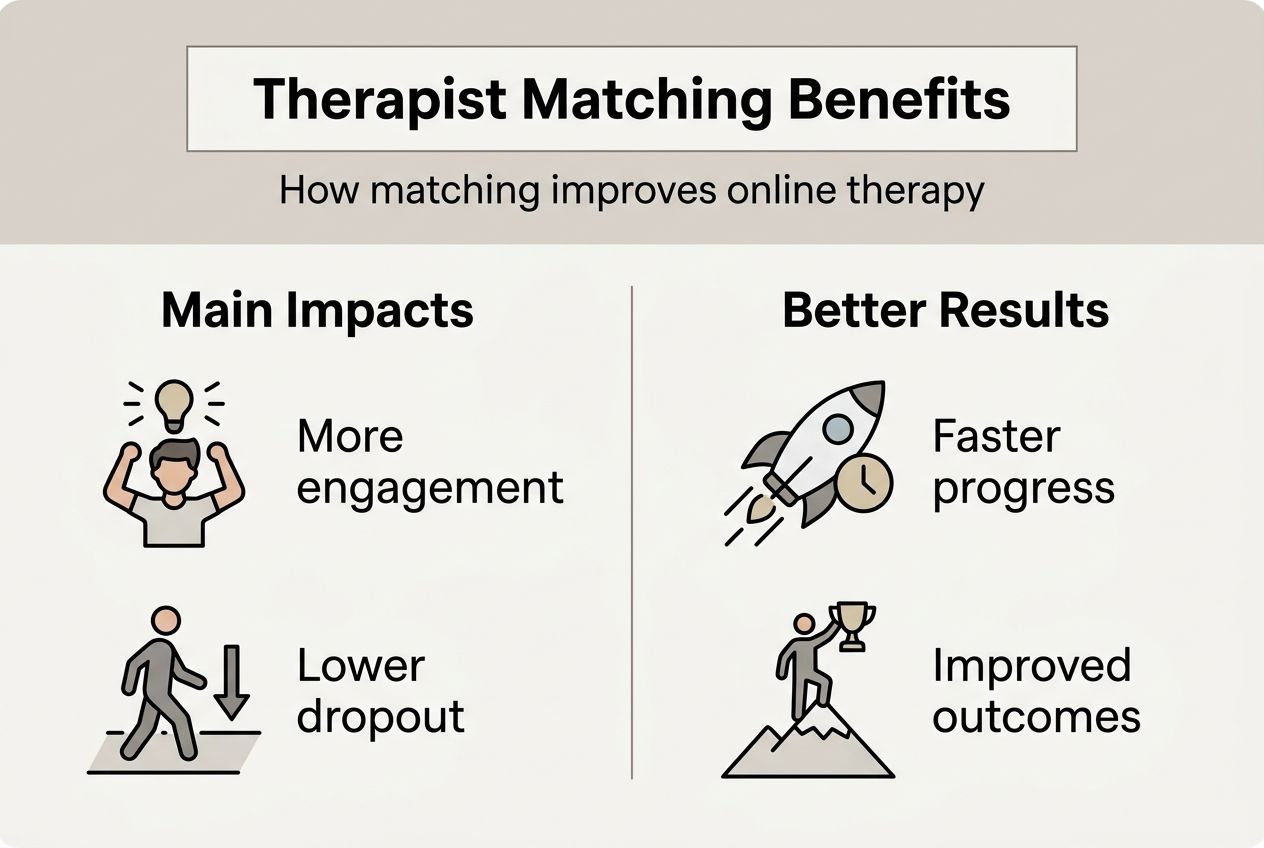
Effective matching improves treatment engagement, reduces dropout rates, and leads to better symptom management. Better matching dramatically increases the likelihood of completing therapy programmes. When you feel understood and supported by a therapist whose approach resonates with you, you are more motivated to attend sessions regularly, complete therapeutic exercises between sessions, and persist through difficult phases of treatment.
For anxiety and depression specifically, tailored therapy approaches facilitated by good matching lead to more meaningful progress. Someone with generalised anxiety might benefit most from a therapist skilled in cognitive restructuring and exposure techniques, whilst someone with depression rooted in past trauma needs a therapist experienced in trauma informed care. Matching ensures you receive the specific therapeutic interventions most likely to address your particular presentation.
Mental health improvements linked to good therapist matching include:
- Enhanced emotional safety allowing you to explore vulnerable feelings and experiences without fear of judgement or misunderstanding
- Stronger therapeutic trust enabling deeper work on core issues rather than remaining at surface level
- Increased motivation to engage with challenging therapeutic exercises because you believe in your therapist's competence and care
- Customised strategies tailored to your personality, lifestyle, and specific symptoms rather than generic interventions
- Reduced therapy related anxiety as you feel comfortable and understood from early sessions
- Greater likelihood of maintaining therapeutic gains long term through internalising approaches that genuinely fit your needs
"Therapist matching is a critical determinant of therapy success. When clients feel their therapist truly understands them and their therapeutic approach aligns with their needs, engagement deepens and outcomes improve substantially. This is not merely about comfort, it is about creating the conditions for genuine psychological change."
The cumulative effect of these benefits transforms therapy from a potentially frustrating or ineffective experience into a genuinely helpful partnership that supports lasting mental health improvements. Good matching does not guarantee instant results, but it creates the foundation for effective therapeutic work.
How My Safe Therapy helps you find the right therapist
Finding the right therapist can feel overwhelming, particularly when you are already struggling with anxiety, depression, or other mental health challenges. My Safe Therapy simplifies this process through tailored online therapy with a strong focus on matching you to UK accredited therapists experienced in your specific concerns. Their confidential platform respects your preferences and helps you build a trusting therapeutic relationship from the first session.
The service connects you with therapists registered with professional bodies such as BACP, UKCP, and NCPS, ensuring you receive evidence based care from qualified professionals. Whether you prefer video sessions, chat based therapy, or avatar based interactions for added privacy, the platform accommodates your comfort level and schedule, including evenings and weekends. Pro tip: Using their free consultation helps clarify your needs before matching, ensuring you articulate your preferences clearly and start with the therapist best suited to support your mental health journey.
FAQ
What is the role of therapist matching in online therapy?
Therapist matching ensures you are paired with a therapist whose expertise, approach, and personality suit your specific needs and preferences, which significantly improves therapy effectiveness and engagement. It is particularly important in online therapy to maintain personal connection and confidentiality despite the digital format. Good matching helps overcome the potential distance of online communication by ensuring strong therapeutic rapport from the outset.
How does therapist matching impact therapy outcomes?
Good therapist matching increases satisfaction, reduces premature dropout, and leads to quicker improvement in anxiety and depression symptoms. It fosters trust and personalised care by aligning therapeutic approaches with your unique needs and communication preferences. Clients who feel well matched report deeper engagement with therapy and greater likelihood of maintaining mental health improvements long term.
What should I consider when choosing an online therapist?
Consider the therapy approach used, therapist expertise in your specific concerns, communication style, cultural sensitivity, and whether you feel personally comfortable with them. Review matching options offered by platforms and do not hesitate to request a different therapist if your initial match does not feel right. Your preferences regarding session format, scheduling flexibility, and therapist characteristics all matter for creating an effective therapeutic relationship.
Can I change therapists if the match is not working?
Absolutely, and reputable platforms make therapist switching straightforward and judgement free. Recognising that a match is not working and requesting a change demonstrates self awareness and commitment to your mental health, not failure. Most online therapy services understand that finding the right fit sometimes requires trying more than one therapist and facilitate changes to support your therapeutic success.
How long does it take to know if a therapist is a good match?
Most people develop a sense of compatibility within the first two to three sessions, though some therapeutic relationships take slightly longer to establish. Pay attention to whether you feel heard and understood, if the therapist's approach resonates with you, and whether you feel comfortable being vulnerable. If discomfort or disconnect persists beyond initial nervousness, it may indicate the match is not ideal and exploring other options is worthwhile.