
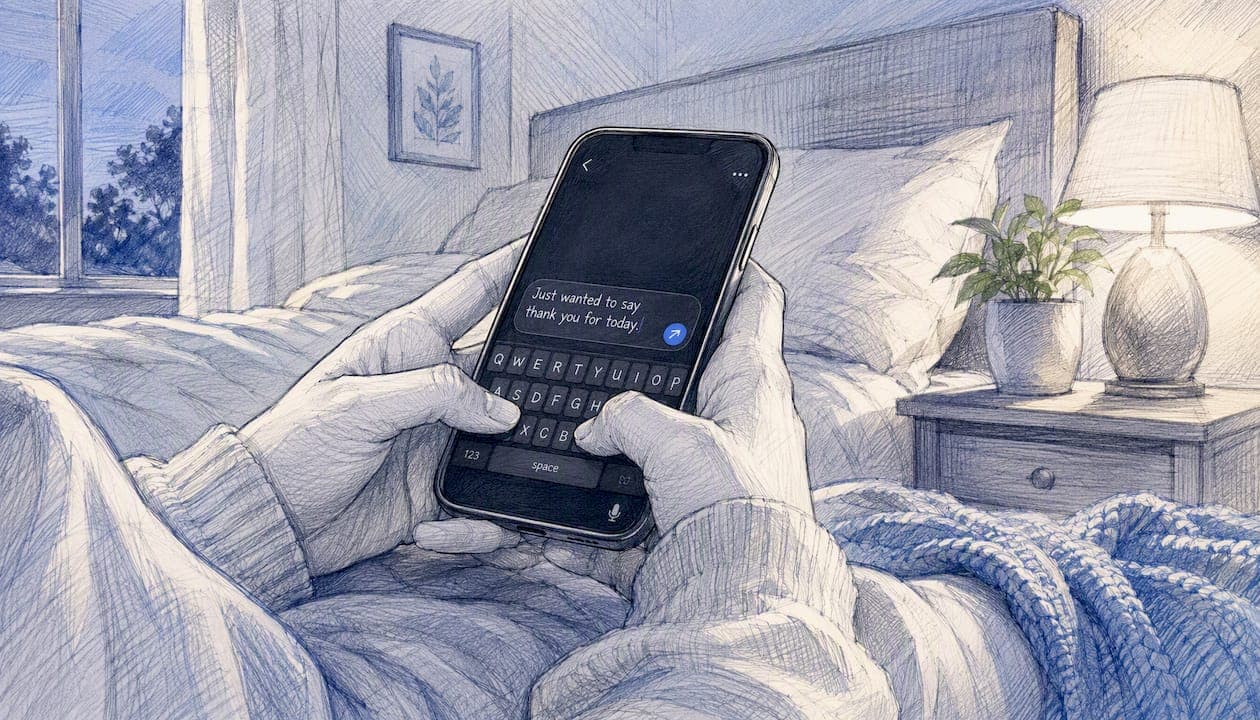
Asynchronous therapy is a form of mental health care where the clinician and client communicate at different times rather than in a shared live session. You write a message, record a voice note, or complete a structured module; your therapist reviews it and responds, typically within an agreed window of 24–48 hours. Research supports its use for mild-to-moderate anxiety and depression. A 2023 randomised controlled trial published in JMIR found message-based psychotherapy produced significant medium-to-large improvements in depression and was non-inferior to once-weekly video therapy on primary outcomes. A 2025 literature review reached a similar conclusion: asynchronous interventions can reduce symptoms at rates comparable to face-to-face care in many studies. However, attrition tends to run higher, and certain clinical presentations require live contact.
- Best suited to: mild-to-moderate anxiety or depression, people with schedule barriers, those who process thoughts more clearly in writing, and anyone needing support between live sessions.
- Less suitable for: active suicidal ideation, psychosis, severe substance dependence, or any acute risk situation requiring immediate assessment.
- Practical next step: if you face scheduling barriers or want structured support between appointments, asynchronous care is a reasonable starting point. If you are in crisis or your symptoms are severe, contact a clinician directly or call 999/111.
Pro Tip: If you are unsure whether asynchronous care is right for you, a single initial video or phone assessment with a registered therapist can clarify the most appropriate format before you commit to a messaging or module-based plan.
Key takeaways
Asynchronous therapy is clinically supported for mild-to-moderate anxiety and depression, with guided formats producing outcomes comparable to weekly video therapy when clinician involvement is consistent and the programme is evidence-based.
| Point | Details |
|---|---|
| Evidence base is solid for guided formats | RCT evidence shows message-based therapy is non-inferior to weekly video for depression when clinician feedback is regular. |
| Dropout is the main risk | iCBT dropout averages around 34.5%; regular, personalised clinician contact is the most effective way to reduce it. |
| Safety checks are non-negotiable | Verify BACP/UKCP/HCPC registration, GDPR-compliant platform, documented crisis protocol, and response-time commitments before starting. |
| NHS access is free but involves a wait | Self-refer to NHS Talking Therapies and ask specifically about internet-enabled therapy; digital options add most value where wait times are long. |
| Mysafetherapy offers accredited chat therapy | Chat-based and blended sessions from £49, with BACP/UKCP/NCPS-registered therapists and AI self-help tools between sessions. |
Table of Contents
- What asynchronous therapy looks like: main types and workflows
- What the research says about effectiveness
- Day-to-day delivery: what you actually experience
- Safety, ethics, and legal checks before you start
- Who benefits from asynchronous care — and who should avoid it
- Where to get asynchronous therapy in the UK
- Checklist for choosing an asynchronous therapy provider in the UK
- How Mysafetherapy implements asynchronous care
- Why asynchronous therapy matters more than most people realise
- Mysafetherapy offers a direct route into asynchronous care
- Sources
What asynchronous therapy looks like: main types and workflows
The term covers several distinct formats, and the level of clinician involvement varies considerably across them. Understanding the difference matters because the evidence base, the cost, and the clinical appropriateness differ by type, and effectiveness depends more on intervention quality than on synchronous versus asynchronous modality.
The main modalities
- Message-based therapy (text, audio, or video messages): The client sends written or recorded messages to a named therapist, who reads or listens and replies with clinical feedback. A typical week might involve two or three exchanges, with the therapist reviewing messages each working day and responding within 24 hours.
- Internet-delivered CBT (iCBT) modules: Structured, self-paced programmes built around cognitive behavioural therapy principles. The client works through psychoeducation, worksheets, and exercises at their own pace. A clinician reviews progress and sends personalised feedback at set intervals, often weekly.
- SMS and email interventions: Shorter, lower-intensity formats. SMS programmes typically deliver brief psychoeducational prompts or mood-check questions; email exchanges follow a similar pattern to message-based therapy but with longer response windows.
- Recorded psychoeducation and homework portals: Pre-recorded video or audio content, downloadable worksheets, and structured homework tasks submitted through a secure portal. Clinician involvement may be minimal or limited to reviewing submitted work.
How clinician involvement varies
- Fully self-guided: No clinician reviews the client's responses; the programme runs on automated logic or pre-set content. Evidence for this format is weaker and attrition higher.
- Guided asynchronous: A named clinician reviews submissions and sends personalised feedback. This is the format with the strongest evidence base.
- Blended: Asynchronous messaging or modules combined with periodic synchronous check-ins by video or phone. This is increasingly common in NHS Talking Therapies and private platforms.
The terminology can overlap. "Asynchronous counselling," "therapy via chat," and "asynchronous therapy messaging" all describe broadly the same thing; "iCBT" is a specific subset. NHS guidance defines internet-enabled therapy as a clinical intervention accessed by the patient in their own time and supported by NHS Talking Therapies (IAPT) staff, which places it firmly in the guided asynchronous category.
What the research says about effectiveness
The evidence for asynchronous mental health care has grown substantially over the past decade, though the quality and applicability of studies varies by format and population.
Key trial and review findings
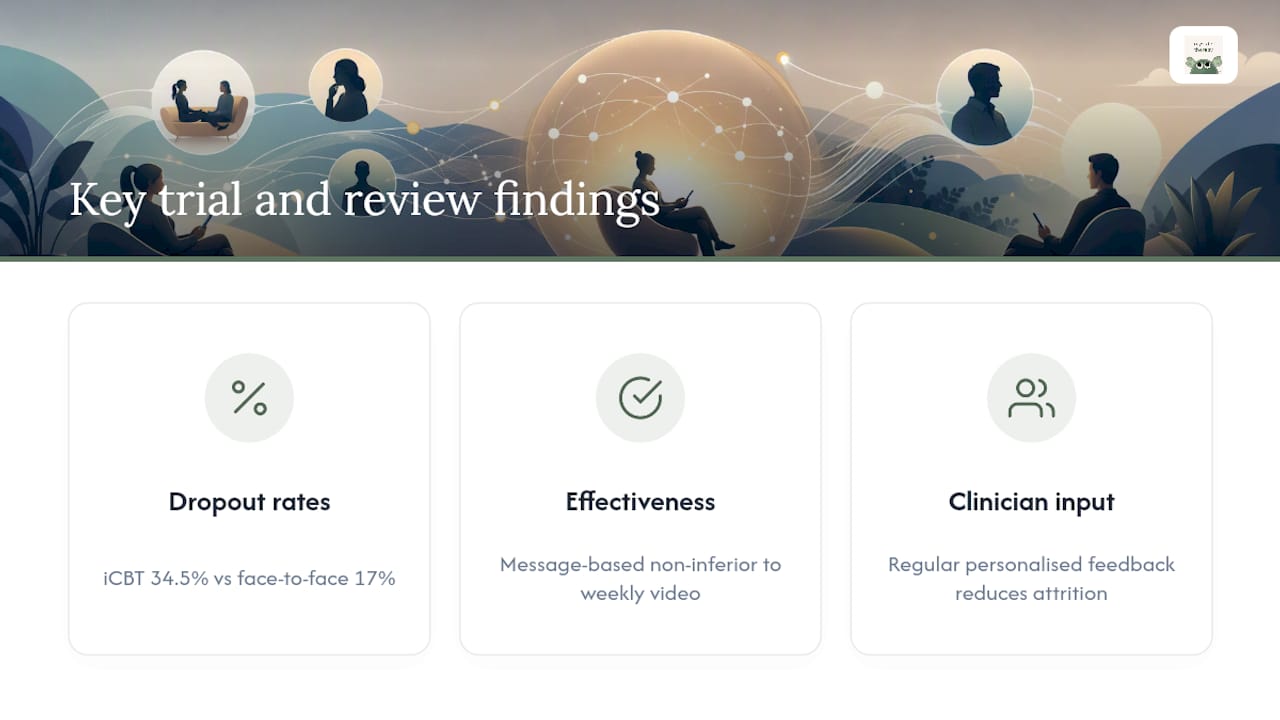
The JMIR 2023 RCT remains one of the most directly relevant studies for message-based care. Across 83 participants, message-based psychotherapy produced medium-to-large within-group effect sizes for depression and was non-inferior to weekly video therapy on primary outcomes. The same study found that therapeutic alliance in the message-based group was comparable to that reported in face-to-face cohorts in some prior research, and that engagement level predicted outcomes across both modalities.
The 2025 literature review synthesised a broader body of work and concluded that asynchronous interventions can mitigate symptoms at rates comparable to face-to-face care in many studies. It also identified average dropout rates for internet-delivered CBT at around 34.5%, compared with approximately 17% for face-to-face CBT. Higher clinician involvement, specifically regular personalised feedback, reduces attrition and increases the likelihood of clinically meaningful change.
A UK service evaluation of two London IAPT services found no significant worsening of recovery rates after an overnight shift to remote delivery, supporting the broader case for remote and hybrid models within NHS settings.
A 2026 preprint analysing AI-CBT deployment in NHS primary care identified four response trajectory classes (rapid responders, gradual improvers, partial responders, and non-responders) and found that digital interventions add greatest value where conventional IAPT wait times are long. This heterogeneity matters: not everyone responds equally, and digital formats are not uniformly effective.
A practitioner-focused review reached a conclusion that cuts across all the above: intervention quality and structure, not the synchronous versus asynchronous distinction alone, largely determines outcomes. A well-designed iCBT programme with regular clinician feedback can outperform a poorly structured live session. A broader PMC review of asynchronous technologies in mental health supports this, noting that asynchronous delivery can expand access while maintaining therapeutic effect in many cases.
Where the evidence is weaker
Evidence for fully self-guided programmes (no clinician contact) is less consistent. Studies of guided digital interventions for young people show mixed results between synchronous and asynchronous guidance formats, underlining the need to match the format to the population. For complex presentations, severe depression, or conditions requiring detailed diagnostic assessment, the evidence base for standalone asynchronous care is thin.
Day-to-day delivery: what you actually experience
In a guided asynchronous programme, the client typically writes or records a message at a time that suits them. The therapist logs in during their working hours, reviews the message, and responds with clinical commentary, a question, or a homework task. Response times are agreed in advance, most commonly 24–48 business hours, and are documented in the service's informed consent paperwork.
Progress is tracked using validated outcome measures. The PHQ-9 (Patient Health Questionnaire) and GAD-7 (Generalised Anxiety Disorder scale) are standard in NHS Talking Therapies and are routinely used in private digital platforms. Clients typically complete these at the start of each week or module, and the scores are reviewed by the clinician to assess whether the programme is producing meaningful change. Clinician guidance recommends that response-time policies, platform security, and outcome monitoring are all documented in informed consent from the outset.
A typical blended workflow
- Week 1: Initial assessment (synchronous video or phone call) to establish clinical suitability and agree goals.
- Weeks 2–6: Asynchronous exchanges or iCBT modules, with the client completing work in their own time and the therapist responding within the agreed window.
- Mid-point review: PHQ-9/GAD-7 scores reviewed; clinician and client agree whether to continue, adjust the programme, or escalate to more frequent synchronous contact.
- Weeks 7–12: Continued asynchronous work, with a scheduled synchronous check-in if scores plateau or worsen.
- Closing session: A synchronous review to consolidate gains, plan relapse prevention, and agree any follow-up.
Escalation to live contact is a standard feature of well-run asynchronous programmes. If a client's messages indicate acute distress or risk, the clinician contacts them directly, and the service's crisis protocol takes precedence over the asynchronous format.
Pro Tip: Ask any provider, before you start, what their escalation procedure is if you send a message outside business hours indicating you are in crisis. A reputable service will have a documented out-of-hours protocol and will direct you to emergency services or a crisis line.
Safety, ethics, and legal checks before you start
Before using any asynchronous mental health service, there are specific checks that are worth completing. These are not optional niceties; they are the difference between a clinically safe service and one that carries real risk.
Data protection and platform security
- The platform must be GDPR-compliant. All messages, recordings, and clinical notes constitute special-category health data under UK GDPR and must be stored and transmitted securely.
- Look for end-to-end encryption for messages and files. Standard consumer messaging apps (WhatsApp, standard email) are not appropriate for clinical exchanges.
- ISO 27001 certification, where stated, indicates a formal information security management system. Not all reputable platforms hold this, but its presence is a positive signal.
- Ask how long records are retained and who has access to your data beyond your named clinician.
Clinician registration and indemnity
- Your therapist must be registered with a recognised professional body: BACP (British Association for Counselling and Psychotherapy), UKCP (UK Council for Psychotherapy), or HCPC (Health and Care Professions Council) for regulated professions such as clinical psychology.
- Confirm that the clinician holds professional indemnity insurance that explicitly covers asynchronous and digital practice. Some older policies do not.
Crisis protocols and consent
- Informed consent must specify that asynchronous communication is not a crisis service and that response times are not immediate.
- The consent document should name the out-of-hours crisis pathway (e.g., Samaritans on 116 123, NHS 111, or 999 in an emergency).
- All messages should be retained as part of the clinical record, with the same standards applied as to session notes.
For a detailed overview of online therapy safety standards in the UK, including what GDPR compliance means in practice for digital platforms, the Mysafetherapy blog provides a practical reference.
Who benefits from asynchronous care — and who should avoid it
Asynchronous formats are not universally appropriate. The clinical literature is clear that certain presentations are well-suited to this model and others are not.
Profiles likely to benefit
- Adults with mild-to-moderate anxiety or depression who meet standard iCBT or guided messaging criteria.
- People with schedule barriers: shift workers, carers, those in rural areas, or anyone for whom attending a fixed weekly appointment is genuinely difficult.
- Individuals who process thoughts more clearly in writing and find the reflective time between messages therapeutically useful.
- Those managing time-zone differences, such as UK nationals living or working abroad temporarily.
- People seeking a lower-barrier entry point to therapy, or structured support between live sessions.
Research consistently shows that asynchronous messaging works well as an adjunct to live therapy or as a low-barrier entry point, and is less suitable as a standalone replacement for live clinical assessment when symptoms are severe.
Red flags requiring live care
- Active suicidal ideation or self-harm requiring immediate risk assessment.
- Psychosis or symptoms suggesting a psychotic episode.
- Severe substance dependence where detoxification may be medically necessary.
- Complex trauma presentations where detailed diagnostic assessment is required before treatment begins.
- Conditions where the therapy itself requires real-time interaction: EMDR (Eye Movement Desensitisation and Reprocessing), complex exposure work, or detailed neuropsychological assessment.
The accessibility of therapy matters precisely because barriers to care are real and varied. Asynchronous formats reduce several of those barriers, but they do not eliminate the need for clinical judgement about appropriateness.
Where to get asynchronous therapy in the UK
NHS Talking Therapies (IAPT)
NHS Talking Therapies, formerly known as IAPT, offers internet-enabled therapy as part of its stepped-care model. The NHS data dictionary defines internet-enabled therapy as a clinical intervention accessed by the patient in their own time and supported by IAPT staff. In practice, this means guided iCBT programmes such as SilverCloud (now Amwell Therapy) or Beating the Blues, delivered through a secure portal with periodic clinician review.
To access this route:
- Self-refer via your local NHS Talking Therapies service (find yours at nhs.uk/mental-health/talking-therapies-medicine-treatments/talking-therapies-and-counselling/nhs-talking-therapies).
- Complete an initial telephone or online assessment to establish clinical suitability and severity.
- Ask specifically about internet-enabled or digital options if you have schedule barriers or prefer a self-paced format.
- Expect a wait. A 2026 NHS primary care preprint found that digital interventions add greatest value where IAPT wait times are long, which is a practical argument for exploring digital options early in the referral process.
NHS Talking Therapies is free at the point of use for adults in England meeting clinical criteria. Scotland, Wales, and Northern Ireland have equivalent services under different names.
Private options
Private asynchronous therapy in the UK typically takes one of two forms: subscription-based messaging platforms or private clinics offering iCBT programmes alongside live sessions. Costs vary. Chat-based or messaging plans from private UK platforms generally start from around £49 per month, though pricing depends on session frequency and clinician involvement. Some private medical insurance policies cover digital therapy; check your policy terms before assuming coverage.
For a practical walkthrough of starting online therapy in the UK, including what to prepare for a first assessment, the Mysafetherapy guide covers the key steps.
Checklist for choosing an asynchronous therapy provider in the UK
Not all asynchronous services are equivalent. The following criteria help distinguish a clinically sound service from one that carries risk.
What to compare
| Criterion | What to look for |
|---|---|
| Evidence base | Does the programme cite peer-reviewed trials or NICE-aligned protocols? |
| Modality | Is it message-based, iCBT modules, or blended? Does it match your preference and clinical need? |
| Clinician credentials | Is the therapist registered with BACP, UKCP, or HCPC? Is registration verifiable on the relevant register? |
| Response times | Are response-time commitments written into the service agreement (e.g., 24–48 business hours)? |
| Data protection | Is the platform GDPR-compliant? Is messaging encrypted? Are records retained securely? |
| Crisis protocol | Is there a documented out-of-hours escalation pathway? Is it named in the consent form? |
| Cost and refund policy | Are fees transparent? Is there a cooling-off period or refund if the service is not clinically appropriate? |
Questions to ask before signing up
- What is your response-time guarantee, and what happens if my clinician is unavailable?
- How do you handle a message that indicates I am in crisis outside business hours?
- Which outcome measures do you use, and how often will my progress be reviewed?
- Are your modules aligned with NICE guidance for depression or anxiety?
- Does your informed consent document cover asynchronous-specific risks?
Red flags
- Non-clinical staff providing clinical advice or interpreting symptoms.
- No verifiable clinician registration details.
- Unclear or absent consent documentation.
- Use of standard consumer messaging apps for clinical exchanges.
- No documented crisis escalation pathway.
How Mysafetherapy implements asynchronous care
Mysafetherapy is a UK-based online mental health platform that connects adults with therapists registered with BACP, UKCP, or NCPS. Its approach to asynchronous and blended care includes several features directly relevant to the criteria above.
Platform features
- Chat therapy: Text-based sessions with a named, accredited therapist. Online chat counselling starts from £49, with therapists available including evenings and weekends.
- Blended formats: Clients can combine chat-based messaging with video or phone sessions, allowing escalation to synchronous contact when clinically indicated.
- AI self-help tools: Between sessions, clients can access AI-guided journaling, mood tracking, and structured self-help journeys that function as asynchronous adjuncts to live or message-based therapy. These tools support ongoing mental health management without replacing clinical contact.
- Avatar therapy: An alternative format for clients who prefer anonymity, available alongside messaging options.
- Outcome monitoring: Progress is tracked through the platform, with tools to support PHQ-9 and GAD-7 style self-reporting between sessions.
Safety controls
- All therapists are verified against their professional body registration before being listed on the platform.
- Data handling is GDPR-compliant, with secure messaging infrastructure rather than consumer apps.
- Clients are provided with clear information about crisis escalation at the point of consent, including out-of-hours guidance.
- Escalation to synchronous contact (video or phone) is available within the platform without requiring a new referral.
Pro Tip: When you first register on Mysafetherapy, use the initial matching process to specify that you want a therapist experienced in asynchronous or chat-based work. Not all therapists have the same level of experience with text-based formats, and the match matters for outcomes.
For context on how technology is shaping therapy delivery for UK adults, including the role of AI tools and digital platforms, the Mysafetherapy blog provides relevant background.
Why asynchronous therapy matters more than most people realise
The conventional framing of asynchronous therapy positions it as a compromise: something you settle for when you cannot get a "real" appointment. That framing is wrong, and the evidence is increasingly clear on this point.
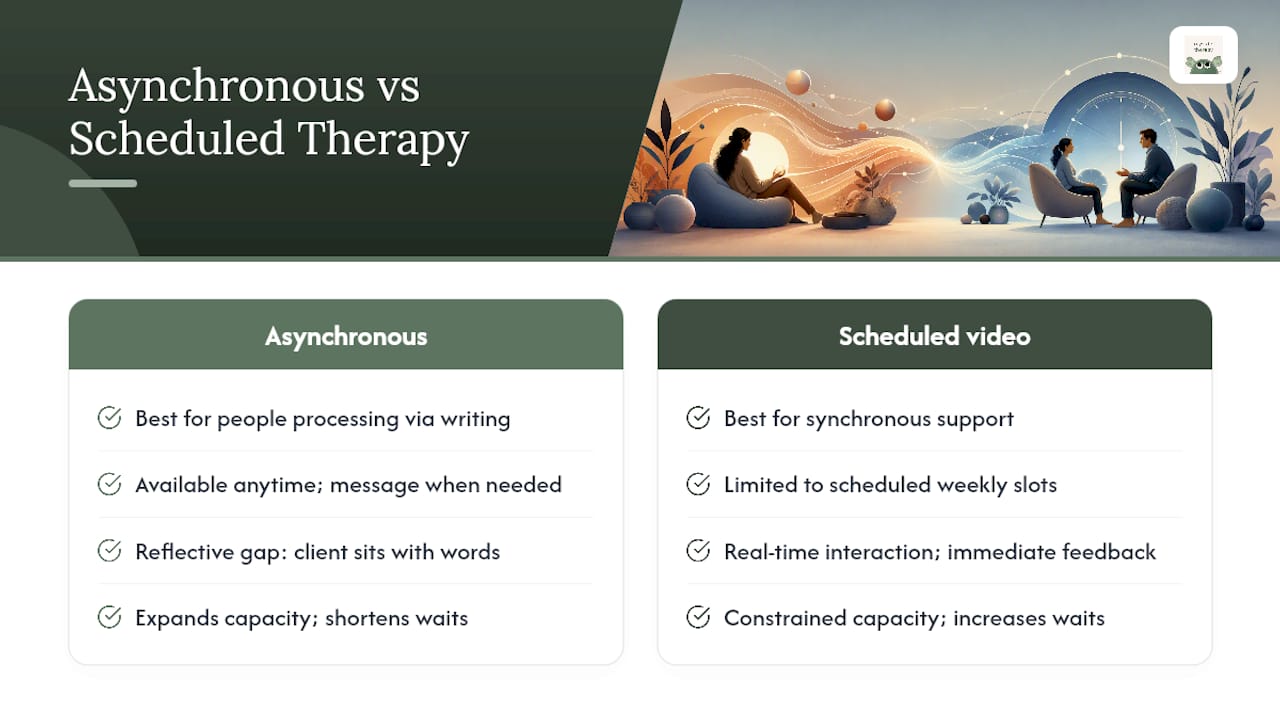
For a specific group of people, the asynchronous format is not a second-best option. It is the better one. Someone who processes anxiety through writing, who needs to articulate a thought at 11pm on a Tuesday rather than during a scheduled hour on Thursday, gets something from a message-based format that a weekly video session cannot replicate. The reflective gap between sending a message and receiving a response has therapeutic value in itself. It creates space for the client to sit with their own words before the clinician responds.
The more important point, though, is structural. NHS Talking Therapies is under sustained demand pressure. A 2026 preprint on AI-CBT in NHS primary care found that digital interventions add greatest marginal benefit precisely where wait times are longest. Asynchronous care is not just a format preference; it is a capacity solution that can reach people who would otherwise wait months for any contact at all.
The limitation worth naming honestly is this: the therapeutic relationship still matters, and it is harder to build through text alone. Asynchronous care works best when it is structured, clinician-guided, and connected to a clear clinical framework. A well-designed iCBT programme with regular personalised feedback is clinically meaningful. An unstructured messaging service with slow, generic responses is not. The format is not the variable that determines outcomes. The quality of the clinical content and the consistency of clinician involvement are.
Mysafetherapy offers a direct route into asynchronous care
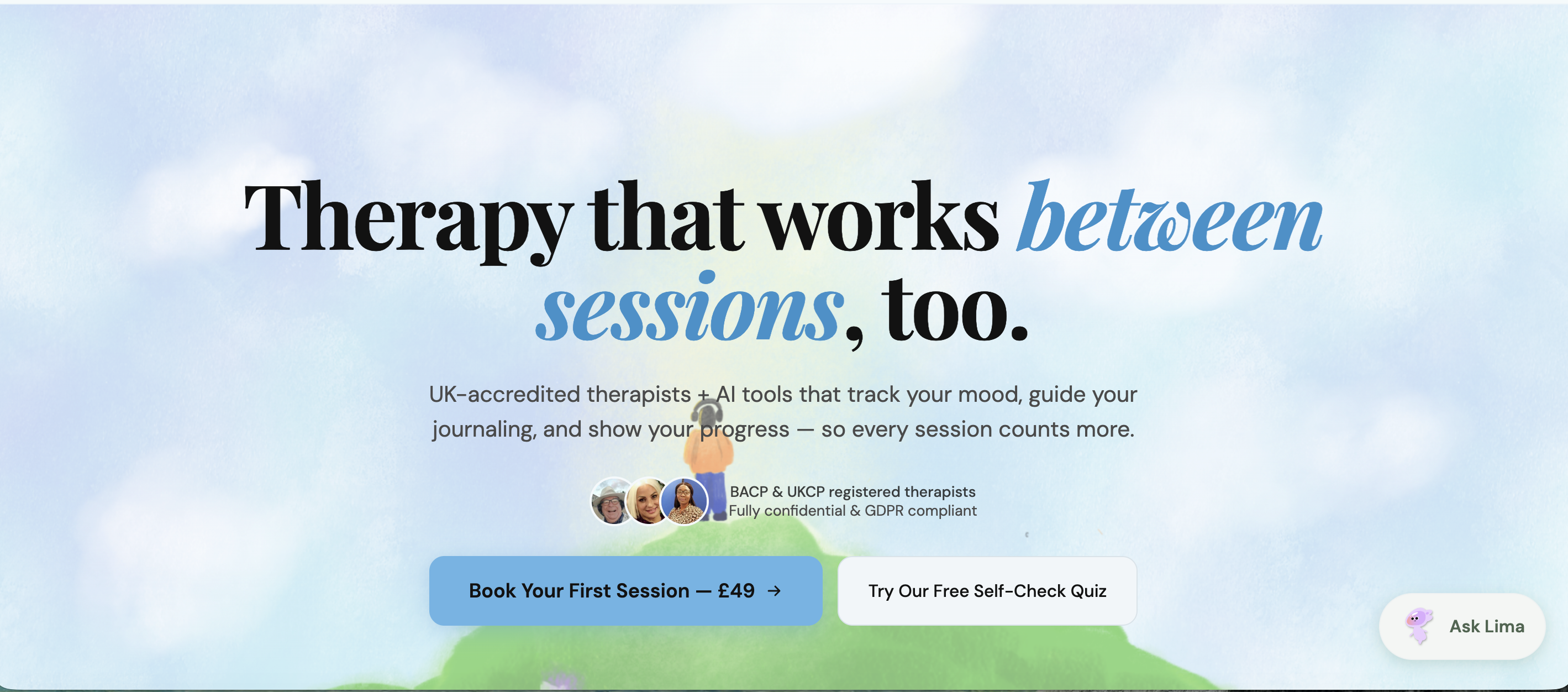
For UK adults who want to try message-based or blended therapy without navigating NHS waiting lists, Mysafetherapy provides a clear, accredited path. Chat therapy from £49 connects you with a BACP, UKCP, or NCPS-registered therapist for text-based sessions on your schedule, including evenings and weekends. If you want to supplement that with structured self-help between sessions, the platform's AI self-help tools include guided journaling, mood tracking, and progress reporting.
Therapist profiles are verified against professional body registers, consent documentation covers asynchronous-specific risks, and escalation to video or phone is available within the platform if your needs change. To raise an urgent concern at any point, the platform directs clients to NHS 111 or emergency services, and this pathway is documented in the consent process from the start. To see available therapists and formats, visit Mysafetherapy's individual therapy page and filter by session type.
Sources
The following sources underpin the claims in this article and are worth consulting directly for deeper reading.
- Asynchronous Technologies in Mental Health Care and Education - PMC
- Message-based psychotherapy RCT — JMIR 2023
- Internet enabled therapy — NHS data dictionary
- Outcomes of guided digital mental health interventions — Springer Nature Link
- Asynchronous therapy: using text and messaging in clinical practice — TheraFocus
This article is general information, not a substitute for advice from a qualified doctor. Consult a qualified healthcare professional about your own circumstances before acting on anything here.