

Online therapy in the UK typically costs a moderate amount per 50–60 minute session with a private therapist, though the actual price you pay depends heavily on which route you take. NHS talking therapies are free. Trainee counsellors and charity services often charge £10–£30. Subscription platforms sit in the middle. Here is a quick map of the main price bands and the fastest action for each:
- Free: NHS talking therapies (self-refer online in England); waiting times vary, so check local availability first.
- £5–£30 per session: Charity counselling services, university clinics, trainee therapists under supervision, and some Employee Assistance Programmes (EAPs) through your employer.
- £40–£60 per session: Independent counsellors and accredited therapists; many list fees in this band on the BACP directory.
- £60–£90+ per session: Experienced or specialist therapists, clinical psychologists, and couples therapy.
- Subscription platforms: Monthly or weekly plans that can lower the per-session cost; Mysafetherapy operates on this model with therapists registered with BACP, UKCP, and NCPS.
If cost is the primary concern, start with NHS self-referral or an EAP check. If speed matters more, a subscription platform or a trainee service is usually the fastest paid route.
Key takeaways
Online therapy in the UK ranges from free via NHS self-referral to £90 or more per session privately, with subscription platforms and trainee services offering the most accessible paid routes for most budgets.
| Point | Details |
|---|---|
| Typical private session cost | Independent therapists commonly charge £40–£90 per 50-minute online session. |
| Free and low-cost routes | NHS talking therapies, EAPs, charity services, and trainee counsellors offer sessions from free to £30. |
| Online vs in-person savings | Online therapy is typically 20–40% cheaper than in-person due to lower therapist overheads. |
| Verify before you book | Always confirm BACP, UKCP, HCPC, or NCPS registration and get fee and cancellation terms in writing. |
| Mysafetherapy option | Mysafetherapy offers subscription-based online therapy with BACP/UKCP/NCPS-registered therapists, including avatar sessions from £49. |
Table of Contents
- How much does online therapy cost in the UK, by provider type?
- Where can you access free or very low-cost online therapy in the UK?
- What factors change how much you pay for online therapy?
- How to find affordable online therapy: a step-by-step process
- How Mysafetherapy approaches online therapy pricing
- Practical tips for budgeting and planning therapy costs over time
- Balancing immediate access with continuity of care
- Mysafetherapy: a practical UK-based option for affordable online therapy
- Sources
How much does online therapy cost in the UK, by provider type?
Online therapy costs in the UK vary significantly depending on who delivers the session and how it is structured. The table below shows typical ranges across the main provider types.
| Provider type | Typical cost per session | Session length |
|---|---|---|
| NHS talking therapies | Free | 50–60 minutes |
| Trainee / supervised counsellor | £10–£30 | 50–60 minutes |
| Charity or low-cost service | £5–£30 | 50–60 minutes |
| Independent counsellor / therapist | £40–£90 | 50–60 minutes |
| Clinical psychologist | £60–£90+ | 50–60 minutes |
| Couples therapy (private) | £40–£60 | 60–90 minutes |
| Subscription platform (per session equivalent) | £10–£30 | Varies by plan |
According to All Health and Care UK, independent therapists commonly charge £40–£90 per 50-minute online session, with psychologists and specialist services sitting above that range. The BACP directory shows that more than half of therapist listings advertise fees of £40–£60 per session, and many offer introductory sessions or reduced rates for those on lower incomes.
Online sessions are generally cheaper than in-person appointments. TreatCompare's market analysis puts online therapy is generally less expensive than face-to-face, with typical online averages at a moderate level per session. The reason is straightforward: therapists working remotely carry lower premises costs, and those savings are often passed on.
A few practical points on how prices are quoted:
- Most private therapists quote a fee per 50-minute session; some use 60 minutes as standard.
- Subscription platforms typically quote a weekly or monthly rate that bundles a set number of sessions with messaging or self-help tools.
- Couples therapy sessions run longer (often 60–90 minutes) and command a higher fee to reflect the additional complexity.
- Clinical psychologists registered with the HCPC often charge considerably more than counsellors, reflecting doctoral-level training and specialist assessment skills.
Pro Tip: When comparing prices, always confirm what the quoted fee includes: session length, any messaging support between appointments, and whether an introductory or assessment session carries a different rate.
Where can you access free or very low-cost online therapy in the UK?
Several routes exist for people who need support without the cost of private therapy.
NHS talking therapies are the most accessible free option in England. You can self-refer without a GP, and services cover conditions including anxiety, depression, and PTSD. NHS counselling sessions typically last 50–60 minutes, and the NHS commonly offers 8–16 sessions where clinically appropriate. Waiting times vary by area; Digital NHS publishes monthly waiting-time statistics so you can check current performance for your region before deciding whether to wait or pursue a paid option in parallel.
- Employee Assistance Programmes (EAPs): Many UK employers provide free, confidential counselling through an EAP, typically covering 6–8 sessions. Check your HR intranet or staff handbook.
- Charity counselling: Organisations such as Mind, Cruse Bereavement Care, and Relate offer low-cost or free sessions, often delivered online. Local mental health charities frequently have shorter waiting lists than NHS services.
- University and student counselling: If you are in higher education, your institution's counselling service is usually free and can be accessed online.
- Trainee therapists: Counsellors in supervised training placements offer sessions at significantly reduced rates, typically £10–£30. They work under qualified supervision, so the clinical standard is maintained.
- Sliding-scale fees: Many private therapists will reduce their standard rate for clients on low incomes. This is worth asking about directly; the BACP encourages practitioners to consider accessibility when setting fees.
Pro Tip: If you are in crisis or need urgent support, contact Samaritans (116 123, free, 24 hours) or your GP for an emergency referral rather than waiting for a routine counselling slot. Routine counselling routes are not designed for acute risk.
What factors change how much you pay for online therapy?
Price is not arbitrary. Several specific variables determine where your costs land within the broad £10–£200+ range.
Therapist qualification and registration is the single largest driver. A trainee counsellor charges a fraction of what a HCPC-registered clinical psychologist commands, and rightly so: the training, supervision requirements, and scope of practice differ substantially. Accredited therapists registered with BACP, UKCP, or NCPS sit in the middle of that range. Always verify registration before booking; unregistered practitioners carry no professional accountability.
Format and session length also shift the price. Video sessions, phone sessions, and avatar-based therapy are all typically priced similarly by most platforms, but messaging-only or asynchronous support tends to cost less per week. Longer sessions (75–90 minutes, sometimes used in trauma work) cost more than a standard 50-minute appointment.
Specialism and complexity push fees upward. Couples therapy, trauma-focused work (such as EMDR or brainspotting), and neuropsychological assessment all carry higher rates than general counselling. A therapist with a niche specialism can charge a premium because demand for their skills is concentrated.
Subscription versus pay-per-session changes your total outlay over time. Subscription platforms bundle sessions and tools into a monthly fee, which can reduce the effective per-session cost if you attend consistently. Pay-per-session private therapy gives more flexibility but offers no discount for volume.
Geographic effects persist even online. Therapists based in London or the South East often set higher rates to reflect their local cost of living, and those rates carry over to their online practice. A therapist in the North of England or Scotland may charge £10–£20 less per session for equivalent qualifications.
Administration matters too. BACP best practice is for therapists to set out fees, cancellation terms, and payment arrangements in writing before therapy begins, though this is not a legal requirement. A clear written contract protects both parties. Ask about cancellation windows (48 hours is common) and whether missed sessions are charged at full rate.
Pro Tip: If weekly sessions are beyond your budget, discuss fortnightly appointments with your therapist. The BACP's cost-of-living research found that many practitioners prefer to reduce frequency rather than see clients stop therapy entirely, so the conversation is worth having.
How to find affordable online therapy: a step-by-step process
Finding lower-cost, safe, accredited therapy is a practical process, not a lottery.
- Clarify your needs and budget. Decide whether you need short-term support (anxiety, low mood) or longer-term work (trauma, complex issues). This determines which provider types are appropriate and what you can realistically spend per month.
- Check NHS and EAP eligibility first. Self-refer to NHS talking therapies and check your employer's EAP. Both are free and should be ruled in or out before spending money.
- Search accredited directories. Use the BACP, UKCP, or HCPC registers to find therapists. Filter by online availability, specialism, and fee range. Verify that the therapist's registration is current.
- Ask directly about concessions. Many therapists do not advertise reduced rates publicly but will offer them on request. A straightforward email asking whether they have a concessionary rate is entirely appropriate.
- Book a trial or introductory session. Many therapists offer a shorter, lower-cost first session. Use it to assess fit before committing to a block of appointments.
- Compare subscription platforms. If you want ongoing support, calculate the monthly cost of a subscription against paying per session. Check what is included: number of sessions, messaging access, self-help tools, and therapist continuity.
- Review the contract before you start. Confirm session length, fee, cancellation policy, and payment method in writing. This is recommended ethical practice and protects you if a dispute arises.
Questions to ask any therapist or platform before booking:
- What is your fee per session, and does it change after an introductory period?
- How long is each session?
- What is your cancellation policy and how much notice do I need to give?
- Are you registered with BACP, UKCP, HCPC, or NCPS?
- Do you offer a sliding scale or concessionary rate?
- How is payment taken, and are sessions charged if I miss them?
Red flags to watch for:
- No verifiable registration with a recognised professional body.
- Vague or verbal-only fee terms with no written confirmation.
- Compulsory pre-payment of large session blocks (six or more sessions upfront) before you have assessed fit.
- Unclear data privacy arrangements, particularly for video or messaging platforms.
How Mysafetherapy approaches online therapy pricing
Mysafetherapy operates as a UK-based subscription platform connecting adults with therapists registered with BACP, UKCP, and NCPS. Sessions are available as one-to-one video, phone, chat, or avatar-based therapy from £49, with the avatar format offering an anonymous option for those who find face-to-face video difficult.
The subscription model means you pay a regular monthly fee rather than booking and paying session by session. This structure tends to reduce the effective per-session cost for people who attend consistently, and it also gives access to AI-guided self-help tools including journaling, mood tracking, and guided self-help programmes between live sessions. Those tools can reduce how often you need a live session, which lowers your total monthly spend.
Affordable paths available on the platform include:
- Concessionary and reduced-rate options: Mysafetherapy lists therapists who offer reduced fees for clients on lower incomes.
- Trainee and supervised therapist matches: Where appropriate, the platform can match clients with supervised trainees at lower rates.
- Employer and workplace schemes: Mysafetherapy provides contracted workplace mental health services, so check whether your employer has an arrangement in place.
- AI self-help tools as a lower-cost complement: The platform's AI self-help tools can be used between sessions to extend the benefit of each appointment and reduce session frequency.
Pro Tip: Using Mysafetherapy's messaging and AI journaling tools between sessions can reduce the number of live sessions you need each month without losing continuity of care. This is one of the more practical ways to keep private therapy costs manageable over time.
Practical tips for budgeting and planning therapy costs over time
Therapy is most effective when it is sustainable, which means fitting it into a realistic budget from the start.
Set a monthly ceiling, not a per-session figure. If you attend weekly, four sessions a month at £55 each costs £220. Fortnightly attendance halves that to £110. Knowing your monthly ceiling before you book prevents the pattern the BACP's 2024 cost-of-living report identified: clients abruptly stopping therapy when costs become unmanageable, rather than adjusting frequency in advance.
Mix modalities deliberately. A subscription that includes messaging support alongside monthly video sessions can cost less than weekly video sessions alone. Use the messaging or AI journaling tools to process between appointments, and reserve live sessions for the work that genuinely requires a therapist present.
Review frequency at regular intervals. Therapy needs change. After an initial intensive phase, many people move to fortnightly or monthly sessions for maintenance. Build that review into your plan from the outset rather than treating weekly sessions as a permanent commitment.
Use free resources in parallel. NHS self-help resources, mental health apps, and charity helplines are not substitutes for therapy, but they can reduce the pressure on paid sessions. Mysafetherapy's AI mental health platform tools are designed specifically to complement live therapy rather than replace it.

Budget for the full course, not just the first session. A typical short-term course of therapy runs 6–12 sessions. At £50 per session, that is £300–£600 total. Knowing this upfront lets you plan whether to start with a trainee or charity service and move to private therapy when finances allow, or to start private and reduce frequency as you progress.
Balancing immediate access with continuity of care
The instinct to find the cheapest option first is understandable, but the cheapest route is not always the most cost-effective one over time.
Starting with NHS talking therapies or a charity service makes sense when the presenting issue is moderate and the waiting time is acceptable. These routes are free, clinically appropriate for many common presentations, and carry no financial risk. The trade-off is limited choice over therapist matching and, in some areas, a wait of several weeks or longer before the first appointment.
Where urgency is higher or the presenting issue is more complex, starting with a private or subscription-based therapist and then moving to a lower-cost maintenance model once the acute phase has passed is a practical approach. The therapeutic relationship built in that initial phase does not have to end; many therapists will shift to monthly or as-needed sessions rather than a full termination.
The evidence from BACP's cost-of-living research is clear on one point: reducing frequency is far better than stopping therapy abruptly. A fortnightly session with a therapist you trust is clinically more valuable than restarting from scratch with a new provider because you ran out of budget. Plan for that transition from the beginning, and discuss it openly with your therapist.
Mysafetherapy: a practical UK-based option for affordable online therapy
For UK adults who want accredited online therapy without the uncertainty of NHS waiting times or the full cost of traditional private practice, Mysafetherapy offers a transparent subscription model with therapists registered with BACP, UKCP, and NCPS.
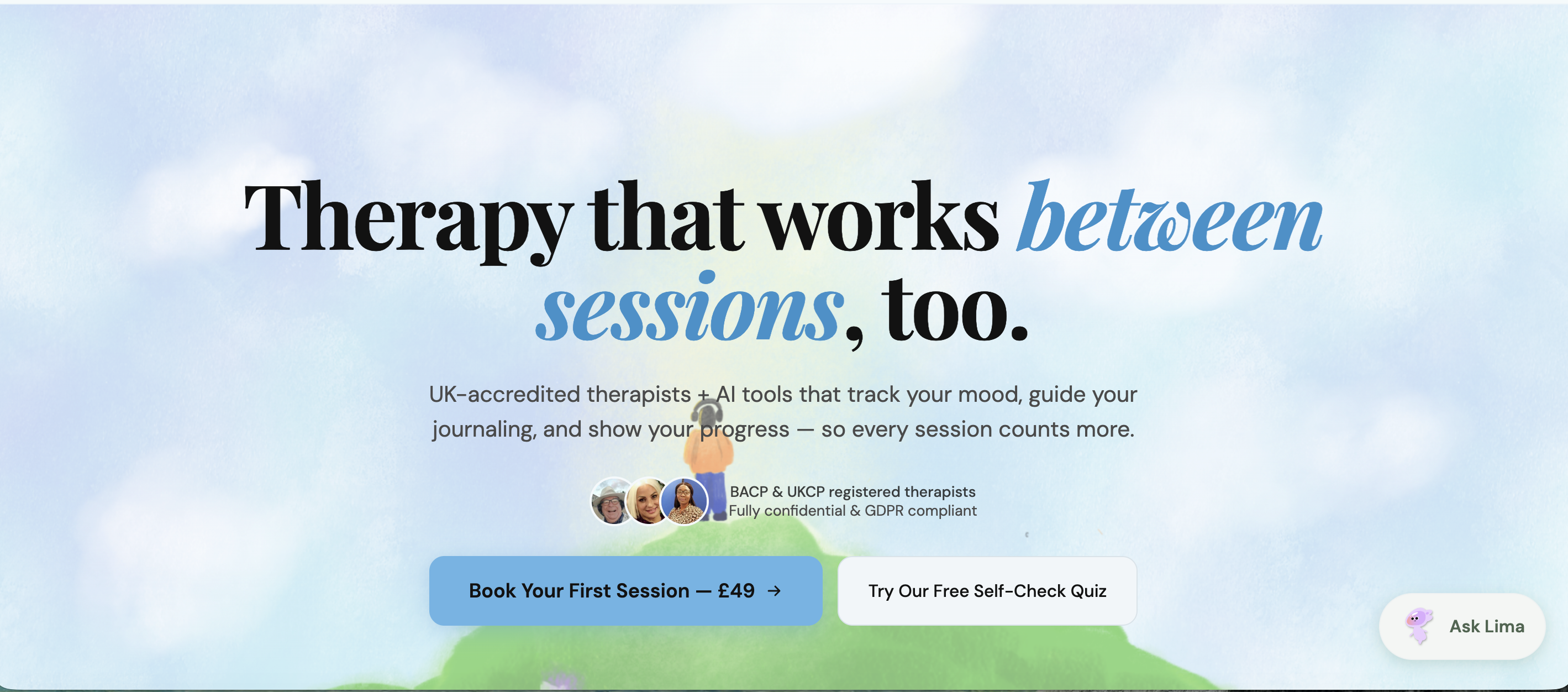
Sessions are available via video, phone, chat, or avatar format, including evenings and weekends. The platform's AI self-help tools sit alongside live sessions, giving you structured support between appointments and reducing the number of sessions you need to see consistent progress. Avatar therapy starts from £49, making it one of the more accessible entry points for private online therapy in the UK.
To get started, view available therapists and pricing on the Mysafetherapy start page, or book a session directly if you are ready to begin. If you are unsure which format suits your needs, the conditions and therapy pages at Mysafetherapy's conditions overview can help you identify the right starting point.
Sources
- NHS talking therapies
- Online Therapy & Counselling in the UK: Costs, Providers & What to Expect | All Health and Care UK
- How to get therapy
- digital.nhs: NHS talking therapies monthly statistics (waiting times)
- How Much Does Private Therapy Cost in the UK? 2026 Price Guide | TreatCompare
This article is general information, not a substitute for advice from a qualified doctor. Consult a qualified healthcare professional about your own circumstances before acting on anything here.