
Many people assume affordable therapy means settling for less, but that's simply not true. In 2026, quality mental health support is more accessible than ever in the UK, with online platforms and flexible pricing models making professional care available to those managing anxiety, depression, or relationship challenges. This guide explores what affordable therapy actually entails, the options available to you, and how to find confidential support that fits both your needs and your budget without compromising on care quality.
Table of Contents
- What affordable therapy really means in the UK
- Types of affordable therapy and how they differ
- How online therapy improves affordability and confidentiality
- Finding and preparing for affordable therapy that works for you
- Explore affordable therapy options at MySafeTherapy
- What is affordable therapy? common questions answered
Key takeaways
| Point | Details |
|---|---|
| Affordability meets quality | Professional therapy can be cost-effective whilst maintaining high clinical standards and accreditation |
| Multiple formats reduce costs | Online, group, and flexible session options make therapy more financially accessible |
| Confidentiality is guaranteed | Affordable therapy platforms maintain strict privacy protections regardless of price |
| Informed choices matter | Understanding therapy types and preparation helps maximise value and outcomes |
What affordable therapy really means in the UK
Affordable therapy isn't about cutting corners or accepting substandard care. It's about accessing professional mental health support through models that reduce costs whilst maintaining clinical excellence. Many assume price directly correlates with quality, but affordable options maintain professional standards through efficient delivery methods rather than compromising on therapist credentials or treatment effectiveness.
Several factors influence therapy costs in the UK. Session format plays a significant role, with online therapy typically costing less than traditional face-to-face appointments due to reduced overhead expenses. Therapists don't need to maintain expensive clinic spaces, and you save on travel costs and time. Session length also matters, as 30-minute check-ins cost less than hour-long deep dives, though both can be clinically appropriate depending on your situation.
Therapist experience affects pricing, but newer practitioners often bring current training and fresh perspectives whilst charging lower rates. They're fully qualified and supervised, making them excellent choices for many common concerns like anxiety or relationship difficulties. More experienced therapists may charge premium rates, but that doesn't automatically mean better outcomes for your specific needs.
Several models make therapy more affordable. Sliding scale fees adjust costs based on your income, ensuring support remains accessible during financial challenges. Package deals offer multiple sessions at reduced rates, lowering the per-session cost when you commit upfront. Group therapy spreads costs across participants whilst providing peer support, making it particularly effective for certain issues. Online platforms reduce administrative overhead, passing savings directly to you through lower session fees.
Pro tip: Focus on therapist matching rather than just price. A slightly more expensive therapist who truly understands your situation often delivers better value than the cheapest option that isn't quite right. Many platforms offer initial consultations to assess fit before you commit financially, helping you make informed decisions about where your money goes.
Types of affordable therapy and how they differ
Understanding different therapy approaches helps you choose support that matches both your budget and your specific mental health needs. Each type offers distinct benefits, and therapy types suit different anxiety and depression cases with varying cost implications.
Cognitive behavioural therapy focuses on changing thought patterns and behaviours that contribute to anxiety, depression, or relationship problems. It's typically structured and time-limited, making it cost-effective as you often see results within 12 to 20 sessions. The practical, skills-based approach means you develop tools to manage symptoms independently after therapy concludes.
Counselling provides a supportive space to explore feelings and experiences with a trained professional. It's often more flexible in duration and approach than CBT, adapting to your pace and preferences. Costs vary based on counsellor experience and session length, but many counsellors offer affordable rates, particularly for online sessions.
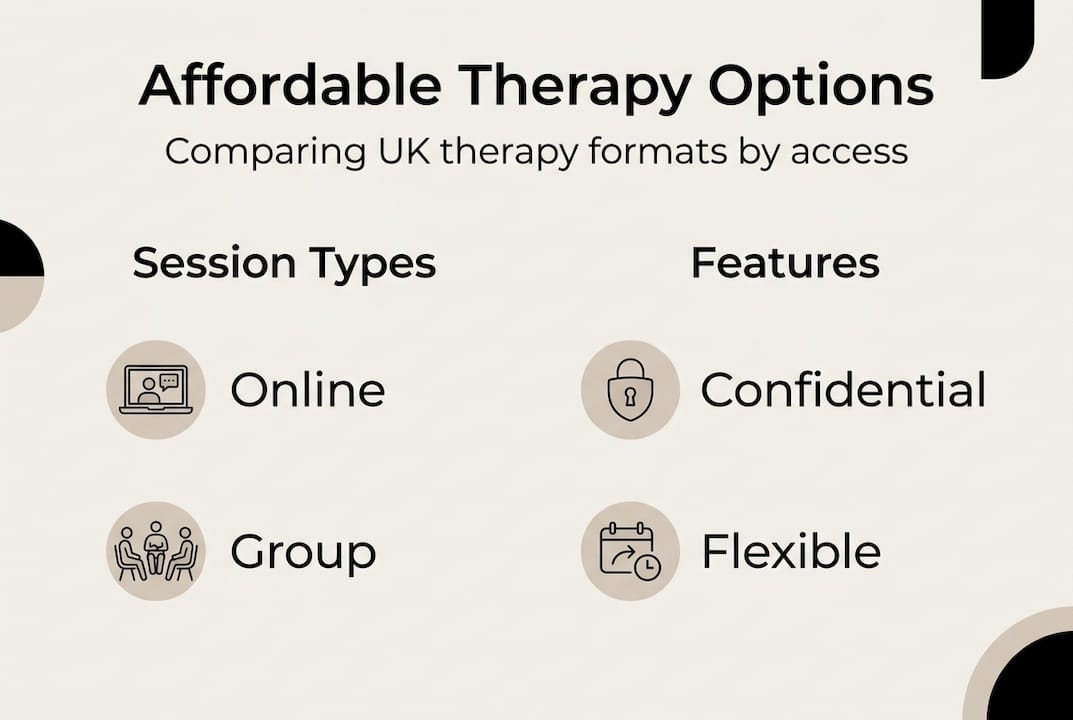
Group therapy brings together people facing similar challenges, such as anxiety management or relationship skills. You benefit from shared experiences and peer support whilst splitting the therapist's time and expertise across multiple participants. This format significantly reduces per-person costs whilst often providing unique therapeutic benefits that individual sessions cannot replicate.
Online therapy encompasses various formats, including video calls, chat-based sessions, and even avatar-based interactions for those who prefer additional anonymity. The flexibility and reduced overhead make it consistently more affordable than traditional in-person therapy, with session costs often 30 to 50 percent lower.
| Therapy type | Typical session cost | Best suited for | Format options | Confidentiality level |
|---|---|---|---|---|
| Cognitive behavioural therapy | £40-£80 | Anxiety, depression, specific phobias | Online, in-person, structured programmes | High, one-to-one |
| Counselling | £35-£70 | General emotional support, life transitions, relationships | Online, in-person, flexible scheduling | High, one-to-one |
| Group therapy | £15-£35 | Social anxiety, shared experiences, peer support needs | Online groups, in-person circles | Moderate, shared setting |
| Online therapy | £30-£60 | Flexible schedules, privacy preference, accessibility needs | Video, chat, avatar-based | Very high, from home |
Each approach has strengths and limitations. Individual therapy offers personalised attention but costs more per session. Group therapy provides community support and lower costs but less individual focus. Online formats maximise convenience and affordability but require reliable internet access and some technological comfort.
Pro tip: Match the therapy type to your specific situation rather than choosing solely based on cost. Someone with severe social anxiety might initially struggle in group settings despite the lower price, whilst another person might thrive on peer connection. Consider what environment helps you open up most effectively, as engagement directly impacts outcomes and overall value.
How online therapy improves affordability and confidentiality
Online therapy has transformed mental health accessibility in the UK, making professional support available to people who previously faced financial or practical barriers. Platforms reduce costs by eliminating physical clinic expenses, and online therapy offers greater convenience and lower costs whilst maintaining the same confidentiality standards as traditional settings.
The cost savings are substantial and genuine. Therapists working online don't pay for clinic rental, reception staff, or extensive insurance for physical premises. These overhead reductions translate directly into lower session fees for you. Many online therapists can offer appointments 20 to 40 percent cheaper than their in-person equivalents whilst earning similar income, creating a win for both parties.
Online therapy delivers multiple practical benefits beyond cost:
- Flexible scheduling including evenings and weekends fits around work and family commitments
- No travel time or costs makes sessions accessible even with limited mobility or tight schedules
- Privacy from your own home reduces anxiety about being seen entering a clinic
- Wider therapist choice lets you find specialists regardless of geographical location
- Multiple format options accommodate different comfort levels and communication preferences
- Immediate access to support during crises through chat or messaging features
Confidentiality remains paramount in online therapy, protected by the same professional standards and legal requirements that govern traditional practice. UK therapists must register with bodies like BACP, UKCP, or NCPS, which enforce strict ethical codes regardless of delivery method. Online platforms use encrypted connections, secure data storage, and rigorous privacy policies to protect your information.
Online therapy creates a safe, confidential space where clients often feel more comfortable opening up than in traditional settings. The familiar environment of home, combined with options like chat or avatar-based sessions, helps people discuss sensitive topics they might struggle to address face-to-face.
Technology security standards for therapy platforms typically exceed basic requirements. End-to-end encryption protects session content, whilst secure servers store records with multiple safeguards against unauthorised access. UK data protection regulations require platforms to obtain explicit consent for data use, provide transparency about storage practices, and allow you to request information deletion.
Video quality and connection stability have improved dramatically, making online sessions feel nearly as personal as in-person meetings. Many people find the slight technological distance actually helps them discuss difficult topics more openly, particularly when managing social anxiety or shame-related concerns.
Finding and preparing for affordable therapy that works for you
Choosing the right affordable therapy requires research and preparation, but the effort pays dividends in better outcomes and genuine value for your investment. Being prepared helps optimise affordable therapy outcomes by ensuring you use session time effectively and find support that truly fits your needs.
Follow these steps to find quality affordable therapy:
- Identify your primary concerns and therapy goals before searching, as clarity helps you find specialists rather than generalists
- Research platforms and individual therapists, checking professional registration with BACP, UKCP, or NCPS to verify credentials
- Compare pricing structures including per-session costs, package deals, and any additional fees for messaging or resources
- Verify confidentiality policies and data protection practices, ensuring the platform complies with UK regulations
- Book initial consultations with two or three therapists to assess rapport and approach before committing financially
- Ask about cancellation policies and session flexibility to avoid unexpected charges if your schedule changes
When evaluating potential therapists or platforms, ask specific questions about their services. Enquire about their experience with your particular concerns, whether that's anxiety, depression, or relationship challenges. Ask how they measure progress and what you can expect in terms of session frequency and overall duration. Understanding their approach to homework or between-session work helps you gauge the commitment required.
Pricing transparency matters enormously. Ask whether the quoted rate includes everything or if additional costs apply for extended support, resources, or administrative tasks. Some platforms charge separately for messaging access or crisis support, whilst others bundle these features. Clarify whether rates might increase over time and under what circumstances.
Pro tip: Take advantage of free assessment quizzes many platforms offer to determine whether therapy is appropriate for your current situation. These tools help you understand your symptoms and needs before spending money, and they often provide personalised recommendations about therapy types and intensity levels that suit your circumstances.
Preparation maximises the value you receive from each session. Before your first appointment, write down your main concerns, any previous therapy experiences, and what you hope to achieve. This clarity helps your therapist understand your situation quickly, reducing the time spent on basic information gathering. Between sessions, complete any suggested exercises or reflection tasks, as this homework often drives the most significant progress.
Maintain open communication with your therapist about what's working and what isn't. If you feel sessions aren't providing value, discuss adjustments rather than simply stopping. Sometimes small changes in approach or focus can dramatically improve outcomes. Remember that therapy is collaborative, and your feedback shapes the direction and effectiveness of your treatment.
Cost-effectiveness in therapy comes from engagement and application, not just from finding the lowest price. A moderately priced therapist you connect with and actively work with delivers far better value than a cheap option you attend passively. Track your progress using mood journals or symptom scales to objectively assess whether you're getting results worth your investment.
Explore affordable therapy options at MySafeTherapy
Finding professional, confidential support that fits your budget is possible with the right platform. MySafeTherapy connects you with UK-accredited therapists who specialise in anxiety, depression, and relationship challenges through flexible, affordable online sessions. Our platform prioritises both quality care and accessibility, ensuring you receive professional support without financial strain.
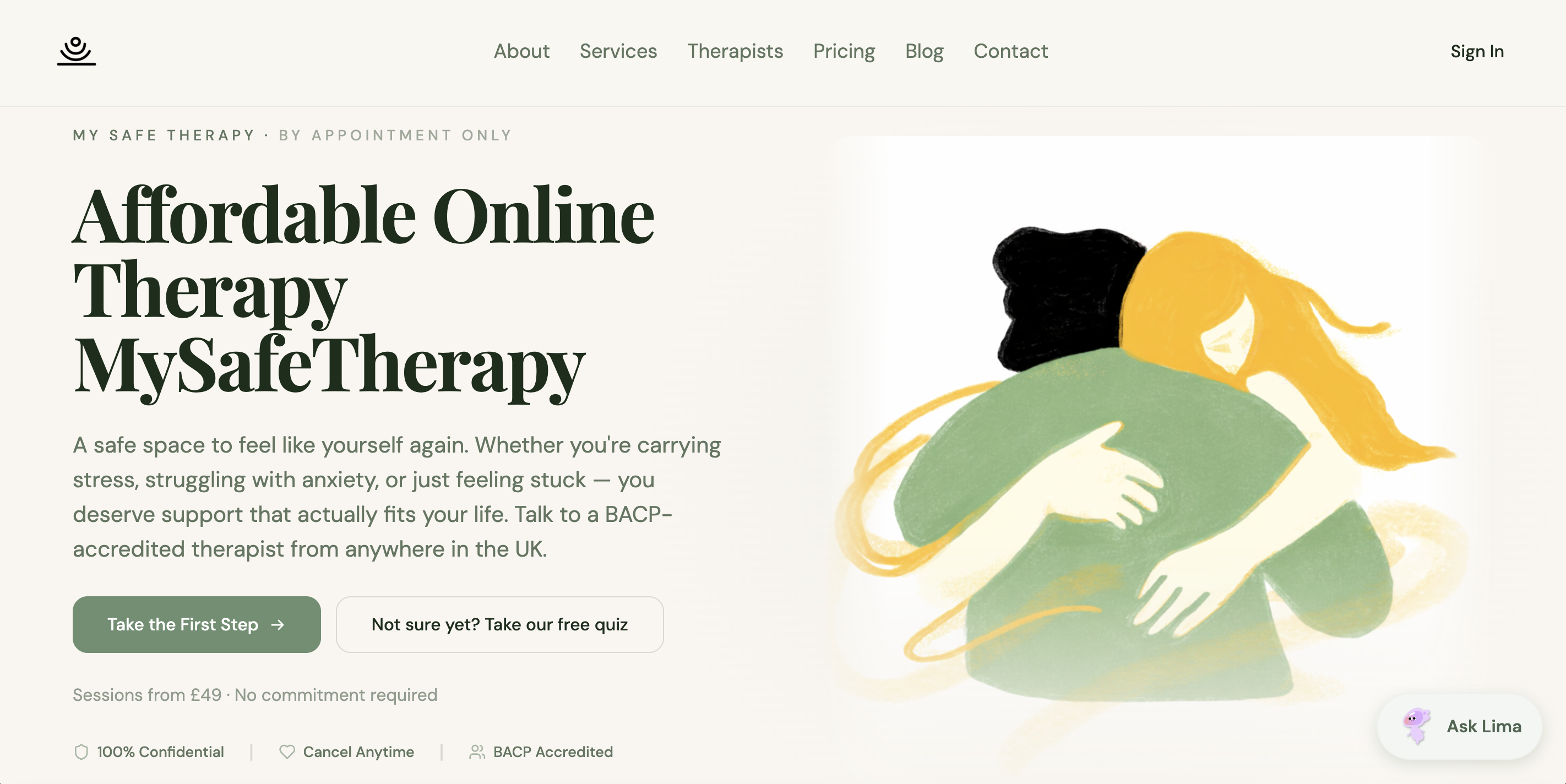
Start by taking our free therapy quiz to assess your needs and identify the support that suits your situation. We offer various therapy formats, including video sessions, chat-based support, and avatar options for additional privacy. Every therapist on our platform holds professional credentials and registration with recognised UK bodies, guaranteeing clinical excellence regardless of session cost.
Explore our therapy options to find the approach that matches your preferences and budget. We provide transparent pricing, flexible scheduling including evenings and weekends, and the ability to switch therapists if your initial match isn't quite right. Your mental health journey deserves support that's both effective and affordable, and MySafeTherapy delivers exactly that combination.
What is affordable therapy? common questions answered
How does affordable therapy maintain quality despite lower costs?
Affordable therapy reduces costs through efficient delivery methods like online platforms rather than compromising on therapist qualifications or treatment effectiveness. UK therapists must maintain professional registration and adhere to strict ethical standards regardless of their fees. Lower prices typically reflect reduced overhead expenses, newer practitioners building their practice, or sliding scale models designed to increase accessibility, not inferior care quality.
Is NHS therapy considered affordable and what are the pros and cons of private options?
NHS therapy is free at point of use, making it the most affordable option financially, but waiting lists often extend several months and session numbers may be limited. Private affordable therapy costs money but offers immediate access, greater therapist choice, flexible scheduling, and often longer-term support. Many people use NHS services for initial assessment whilst accessing affordable private therapy for ongoing care, combining the benefits of both systems.
Are insurance or subsidies available for therapy in the UK?
Some private health insurance policies cover therapy sessions, though coverage varies significantly between providers and policy types. Employee assistance programmes often provide limited free counselling sessions as a workplace benefit. Charities and community organisations sometimes offer subsidised therapy for specific groups or conditions. Always check your insurance details and ask potential therapists whether they accept insurance payments or offer sliding scale fees based on income.
How can I evaluate therapist credentials when cost is a concern?
Verify registration with professional bodies like BACP, UKCP, or NCPS through their online directories, which confirm qualifications and good standing. Check how long they've practised and whether they specialise in your specific concerns like anxiety or depression. Read client reviews if available, but remember that newer therapists with lower fees often provide excellent care whilst building experience. Ask about their training, supervision arrangements, and approach during initial consultations to assess their professionalism regardless of price.
How does online therapy compare price-wise with traditional face-to-face sessions?
Online therapy typically costs 30 to 50 percent less than equivalent in-person sessions due to reduced overhead expenses for therapists. A face-to-face session might cost £60 to £100, whilst online sessions for the same therapist often range from £40 to £70. The quality and effectiveness remain comparable for most concerns, with research showing similar outcomes between formats. You also save money on travel costs and time, adding to the overall affordability of online options.
Can I switch therapists if the affordable option I choose isn't working?
Yes, reputable platforms and individual therapists support switching if the initial match isn't right, as therapeutic rapport significantly impacts outcomes. Most services allow you to try different therapists without penalty, though policies vary. Discuss your concerns with your current therapist first, as sometimes small adjustments resolve issues. If switching is necessary, look for platforms that facilitate easy transitions and don't charge additional fees for changing providers, ensuring you find the right fit without financial barriers.