

Choosing the right therapy for anxiety can feel overwhelming when you're already struggling with worry and stress. With multiple approaches available, each using different techniques and delivery methods, it's difficult to know which will work best for your unique situation. This guide cuts through the confusion by outlining clear selection criteria and explaining the main therapy types recommended in the UK. We'll focus on accessible, confidential online options that fit the busy lives of UK adults seeking personalised mental health support with maximum privacy and flexibility.
Table of Contents
- How to evaluate and select therapy for anxiety
- Cognitive behavioural therapy (CBT) and applied relaxation
- Psychodynamic therapy and counselling for anxiety
- Online therapy options in the UK: flexibility and confidentiality
- Comparing therapy types and choosing what fits you best
- Explore personalised online therapy options at MySafeTherapy
Key takeaways
| Point | Details |
|---|---|
| CBT leads recommendations | Cognitive behavioural therapy is the primary NICE-recommended treatment for most anxiety disorders with strong clinical evidence |
| Applied relaxation complements CBT | Progressive muscle relaxation techniques work alongside CBT particularly well for generalised anxiety disorder |
| Alternative therapies available | Psychodynamic therapy and counselling suit specific anxiety types and preferences though evidence is less robust |
| Online delivery offers flexibility | Digital therapy provides confidential, accessible treatment comparable in effectiveness for mild to moderate anxiety |
| Personal fit matters most | Your anxiety type, preferences, and access needs should guide your final therapy choice |
How to evaluate and select therapy for anxiety
Before diving into specific therapy types, you need a framework for making an informed choice. The right therapy depends on several key factors that balance clinical effectiveness with your personal circumstances and preferences.
First, consider the clinical evidence behind each approach. NICE guidelines provide gold-standard recommendations based on rigorous research, helping you identify which therapies work best for specific anxiety disorders. Understanding a therapy's mechanism and typical session structure also matters. Some approaches focus on changing thought patterns, whilst others explore emotional roots or teach relaxation skills.
Flexibility and confidentiality become crucial when you're balancing treatment with work, family, and social commitments. Online therapy options let you access support from home at times that suit your schedule, with robust privacy protections built in. You should also match the therapy's focus to your specific anxiety type, whether that's panic disorder, social anxiety, health anxiety, or generalised worry.
Finally, practical considerations around costs and availability shape your options. NHS services offer free access but may involve waiting lists, whilst private providers deliver faster access with associated fees. Preparing for anxiety therapy helps you maximise benefits regardless of which route you choose.
Pro Tip: Create a shortlist of your top three priorities (such as evidence strength, flexibility, or cost) to narrow down therapy options more efficiently and avoid decision paralysis.
Cognitive behavioural therapy (CBT) and applied relaxation
CBT stands as the most thoroughly researched and widely recommended therapy for anxiety disorders in the UK. This structured approach targets the distorted thinking patterns and avoidance behaviours that maintain anxiety through two main techniques: cognitive restructuring and gradual exposure.
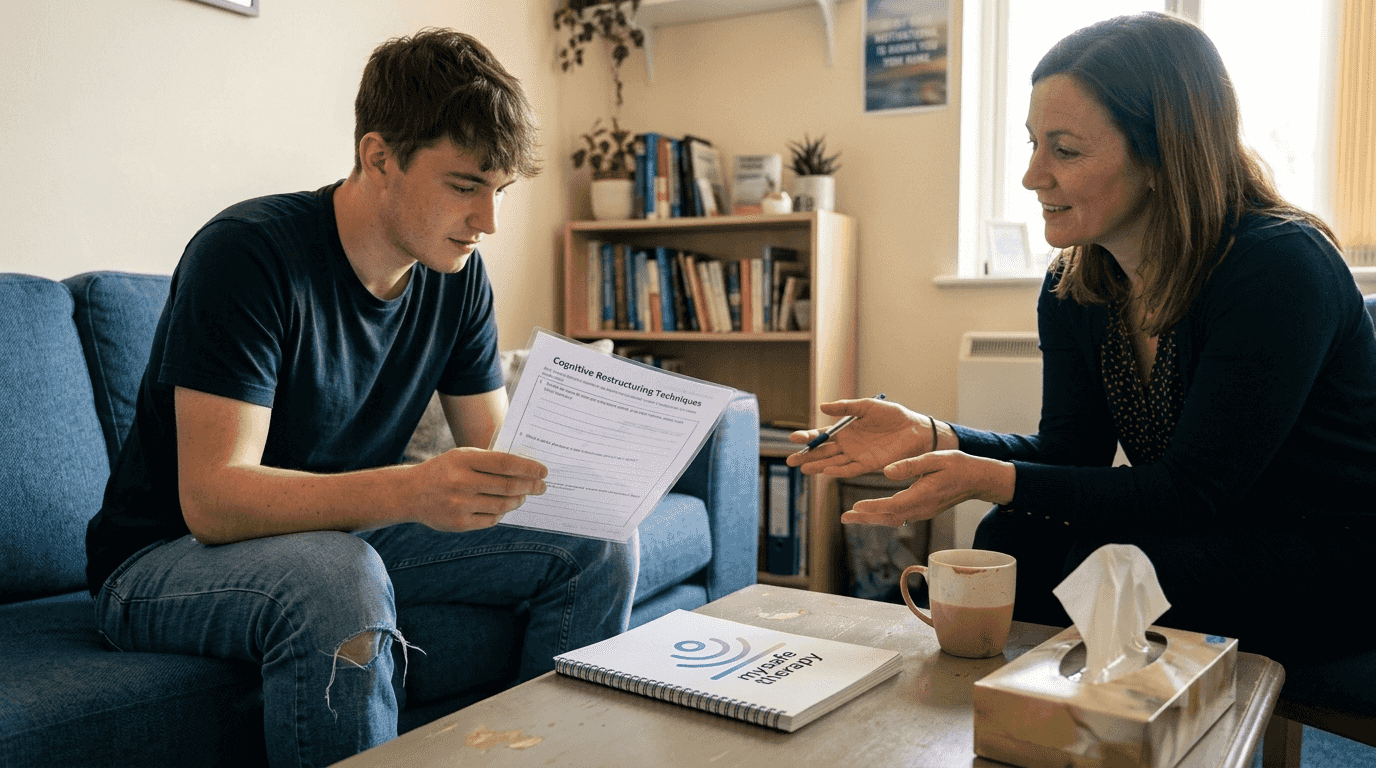
During cognitive restructuring, you learn to identify anxious thoughts, examine evidence for and against them, and develop more balanced perspectives. Exposure work involves gradually facing feared situations in a controlled way, helping your brain learn that the anticipated danger rarely materialises. CBT is the primary NICE-recommended therapy for most anxiety disorders with high effect sizes, typically showing improvements of Hedges g around 1.0 to 2.0 in symptom reduction.
A typical CBT course runs 12 to 15 weekly sessions, each lasting 50 to 60 minutes. You can access CBT face to face, via video call, or through digital platforms, with NHS CBT guidance providing detailed information about what to expect. Between sessions, you'll complete homework exercises that reinforce new skills and accelerate progress.
Applied Relaxation is recommended alongside CBT for generalised anxiety disorder with effective muscle relaxation techniques. This approach teaches progressive muscle relaxation, where you systematically tense and release different muscle groups. Once you've mastered the basic technique, you learn to apply it during anxiety-provoking situations, creating a portable tool for managing physical tension.
Pro Tip: Download reputable apps or guided self-help materials recommended by your therapist to practise techniques between sessions, reinforcing skills and speeding up your progress towards managing anxiety independently.
Psychodynamic therapy and counselling for anxiety
Whilst CBT dominates anxiety treatment recommendations, psychodynamic psychotherapy and counselling offer valuable alternatives for certain individuals and anxiety presentations. These approaches work differently, focusing on emotional patterns and relationship dynamics rather than specific symptom reduction techniques.
Psychodynamic therapy explores how unconscious conflicts and early life experiences shape current anxiety. Your therapist helps you understand recurring patterns in relationships and situations that trigger worry, connecting present anxiety to past experiences. Psychodynamic therapy is NICE-recommended for social anxiety though with less empirical support than CBT, making it particularly suited for people whose anxiety centres on social situations and interpersonal fears.
This approach typically requires a longer course than CBT, often running 16 to 20 sessions or more. Sessions feel less structured, with you leading the conversation whilst the therapist listens carefully and offers interpretations. The psychodynamic therapy overview explains how this method suits people interested in deeper self-understanding beyond symptom management.
Counselling and interpersonal therapy offer person-centred approaches for phobias and depression-related anxiety. Counselling emphasises emotional support and creating a safe space to explore feelings without judgement. Your counsellor helps you identify patterns in how you relate to others and yourself, working collaboratively to find solutions that fit your values and circumstances.
These therapies appeal to people who prefer exploring the 'why' behind their anxiety rather than just learning coping techniques. They work well when anxiety intertwines with relationship difficulties, low self-esteem, or unresolved grief. However, the research base remains smaller compared to CBT, so consider both the evidence and your personal preferences when selecting between options. Preparing for psychodynamic therapy helps you get the most from these exploratory approaches.
Online therapy options in the UK: flexibility and confidentiality
Online therapy has transformed access to anxiety treatment across the UK, offering confidential support that fits around your schedule without compromising on quality. Both NHS and private providers now deliver effective digital interventions that match face-to-face therapy for mild to moderate anxiety.
NHS Talking Therapies offers confidential online CBT self-referral with apps and video sessions. You can access free digital CBT through platforms like Space from Anxiety, which guide you through structured programmes at your own pace. For more personalised support, NHS services provide video and phone sessions with qualified therapists, often with evening and weekend slots available.
The NHS digital options include British Sign Language interpretation and allow self-referral in most areas, meaning you can access help without visiting your GP first. Waiting times vary by region, typically ranging from two to six weeks for initial assessment.
Private providers expand your options significantly. ThinkingThrough, OmniaHealth, and London Psychiatry Clinic offer flexible scheduling with shorter waiting times, usually one to two weeks. Private online therapy in the UK prioritises flexibility and GDPR-compliant confidentiality, using encrypted video platforms and secure messaging systems to protect your privacy.
Online therapy delivers several practical advantages:
- Access therapy from home, eliminating travel time and costs
- Choose appointment times outside traditional working hours
- Maintain complete confidentiality without visiting a clinic
- Switch therapists easily if the initial match isn't right
- Combine live sessions with self-help tools and mood tracking
Confidentiality protections meet the same standards as face-to-face therapy. All UK-registered therapists must follow GDPR requirements and professional body guidelines, ensuring your personal information and session content remain private. Video platforms use end-to-end encryption, and therapists store notes securely with strict access controls.
"Online therapy removes many barriers that previously prevented people from seeking help. The flexibility and privacy it offers make treatment accessible to those with demanding schedules or concerns about stigma."
Research shows online therapy works particularly well for anxiety disorders. Studies find comparable outcomes to in-person treatment for panic disorder, social anxiety, and generalised anxiety disorder. The individual psychotherapies online format suits people who feel more comfortable opening up from familiar surroundings.
Pro Tip: When choosing an online provider, verify that therapists hold UK accreditation with BACP, UKCP, or NCPS, and check whether the platform offers additional tools like journaling or mood tracking to support your progress between sessions. Therapist matching online therapy guidance helps you find the right professional fit.
Comparing therapy types and choosing what fits you best
Now that you understand the main therapy options, a direct comparison helps clarify which approach aligns best with your needs and circumstances. Each therapy type offers distinct advantages and limitations worth weighing carefully.
Direct comparisons show CBT has higher empirical effect sizes than other psychotherapies on anxiety reduction, making it the logical first choice for most people. However, effectiveness isn't the only factor that determines success. Your engagement with therapy and the therapeutic relationship matter enormously, so personal fit shouldn't be overlooked.
| Therapy Type | Best For | Session Length | Typical Duration | Key Advantages | Main Limitations |
|---|---|---|---|---|---|
| CBT | Most anxiety disorders | 50-60 minutes | 12-15 sessions | Strong evidence, structured, practical skills | Requires homework commitment |
| Applied Relaxation | Generalised anxiety, physical tension | 50-60 minutes | 12-15 sessions | Portable technique, complements CBT | Less comprehensive alone |
| Psychodynamic | Social anxiety, interpersonal patterns | 50-60 minutes | 16-20+ sessions | Deeper insight, addresses root causes | Longer duration, less direct |
| Counselling | Phobias, depression with anxiety | 50-60 minutes | 8-16 sessions | Supportive, flexible, person-centred | Less structured, variable evidence |
| Online Therapy | Mild to moderate anxiety, access barriers | 50-60 minutes | Varies by type | Flexible, confidential, accessible | Requires internet, not for severe cases |
CBT offers high effectiveness and structured sessions but requires commitment to homework exercises and facing uncomfortable situations during exposure work. If you prefer clear goals and measurable progress, this approach suits you well. The time-limited nature (usually 12 to 15 weeks) also appeals to people who want focused treatment without open-ended commitment.
Psychodynamic therapy and counselling appeal to those seeking emotional insight and interpersonal focus. These approaches work better when you're interested in understanding patterns across your life rather than just reducing current symptoms. They suit people who've tried CBT without lasting success or whose anxiety connects deeply to relationship difficulties and self-esteem issues.
Online therapy provides accessibility and confidentiality, suitable for mild to moderate cases. It works brilliantly when you need flexibility around work or family commitments, live in rural areas with limited local services, or feel more comfortable opening up from home. However, severe anxiety with significant safety concerns may require face-to-face support initially.
Consider treatment-resistant cases and possible augmentations with adjunct methods. If you've completed one therapy type without sufficient improvement, combining approaches sometimes helps. For example, adding applied relaxation to CBT, or following CBT with psychodynamic work to address underlying patterns. Some people benefit from medication alongside therapy, particularly for severe anxiety.
Your decision should weigh:
- Clinical evidence for your specific anxiety type
- Personal preferences around therapy style and structure
- Practical factors like cost, waiting times, and scheduling
- Previous therapy experiences and what worked or didn't
- Severity of symptoms and any safety concerns
Pro Tip: Prioritise therapist matching and preparation for better outcomes. Research consistently shows the therapeutic relationship predicts success more strongly than the specific therapy type, so finding a therapist you trust and feel comfortable with matters enormously.
Explore personalised online therapy options at MySafeTherapy
Finding the right therapy approach is just the first step. Connecting with a qualified therapist who understands your needs and creates a safe space for growth makes all the difference in your recovery journey.
MySafeTherapy offers secure, confidential personalised online therapy specifically designed for UK adults experiencing anxiety. Our platform connects you with BACP, UKCP, and NCPS-accredited therapists who specialise in evidence-based approaches including CBT, psychodynamic therapy, and counselling. Flexible scheduling accommodates your lifestyle with evening and weekend appointments available, ensuring therapy fits around your commitments rather than the other way around.
Our therapist matching guide helps you find the best professional for your situation, considering your anxiety type, preferences, and goals. You can explore the therapy types discussed in this article with expert guidance, switching therapists easily if needed. Additional tools like AI journaling and mood tracking support your progress between sessions. Start your personalised therapy journey conveniently from home with the privacy and flexibility you deserve.
FAQ
What types of therapy work best for anxiety?
CBT is proven most effective for most anxiety disorders, with strong NICE recommendations and large effect sizes in clinical trials. Applied relaxation works particularly well alongside CBT for generalised anxiety disorder. Psychodynamic therapy and counselling can help specific anxiety types like social anxiety or when anxiety intertwines with relationship difficulties, though they have less robust research support.
Can I access therapy for anxiety online in the UK?
Yes, the NHS provides free online therapies including digital CBT apps and video call sessions through Talking Therapies services. You can self-refer in most areas without seeing your GP first. Private providers offer flexible, confidential online therapy sessions with shorter waiting times, typically one to two weeks, though fees apply.
How do I choose the right therapy for my anxiety?
Consider therapy effectiveness for your specific anxiety type based on NICE guidelines, your personal preferences around therapy style, and practical factors like delivery format and cost. Match the therapy's focus to whether you want practical skills, deeper insight, or emotional support. Consult with your GP or contact a therapist directly for personalised advice, and review preparation tips to maximise your therapy benefits.
How long does therapy for anxiety usually take?
CBT and applied relaxation typically run 12 to 15 weekly sessions, whilst psychodynamic therapy often requires 16 to 20 sessions or more. Counselling varies widely from 8 to 16 sessions depending on your needs. Improvement often begins within four to six sessions, though lasting change requires completing the full course and practising skills independently.
Is online therapy as effective as face to face treatment?
Research shows online therapy delivers comparable outcomes to in-person treatment for mild to moderate anxiety disorders. Video sessions maintain the therapeutic relationship whilst offering greater flexibility and privacy. Severe anxiety with safety concerns may benefit from face-to-face support initially, but most people find online therapy equally effective and more convenient.