
Yes. If you live in England, you can usually self-refer to NHS talking therapies for anxiety and depression without seeing a GP first. Start at the NHS talking therapies service finder, enter your postcode or GP surgery name, and complete the local service's online form. Most people hear back relatively quickly.
Two caveats worth knowing before you begin:
- Age and area rules apply. Self-referral is generally open to adults, with some areas accepting younger people aged 16 and 17.
- Some conditions need a GP first. Complex presentations such as bipolar disorder or psychosis usually require GP or specialist referral rather than routine self-referral.
Key Takeaways
Most adults in England can self-refer to NHS talking therapies for anxiety and depression without a GP referral, using the official service finder as the starting point.
| Point | Details |
|---|---|
| Start with the NHS finder | Search by postcode or GP surgery name to locate your local talking-therapies service. |
| No diagnosis required | Common problems like anxiety and depression don't need a formal diagnosis to self-refer. |
| Expect an assessment first | A Psychological Wellbeing Practitioner call, often 30 to 45 minutes, decides your treatment path. |
| Some conditions need a GP | Bipolar disorder, psychosis, and active substance misuse require GP or specialist referral instead. |
| Private therapy fills the gap | Mysafetherapy offers UK-accredited therapists via video, chat, or avatar sessions for faster or alternative access. |
Where to check official guidance
For national rules, see NHS guidance on talking therapies. For local forms and waiting times, open your own trust's talking-therapies page directly.
Table of Contents
- What are NHS talking therapies and what do they treat?
- Who can self-refer, and who needs a GP referral instead?
- How do you self-refer to NHS talking therapies step by step?
- What happens after you submit a self-referral?
- When should you avoid self-referral and go to a GP instead?
- Frequently asked questions
- Sources
What are NHS talking therapies and what do they treat?
NHS Talking Therapies is the umbrella term for a range of psychological treatments offered through the NHS, previously known as IAPT. These services exist specifically for common mental health problems rather than severe or complex conditions.
They typically treat:
- Generalised anxiety and health anxiety
- Depression and low mood
- Panic disorder and phobias
- Obsessive compulsive disorder and PTSD in some services
Treatment is not one-size-fits-all. Services deliver therapy through several formats, including face-to-face sessions, phone appointments, video calls, and digitally enabled therapy (DET), which are structured online courses you work through with guided support. You are usually asked which format suits you during the initial assessment, rather than being assigned one by default.
Who can self-refer, and who needs a GP referral instead?
Self-referral eligibility rests on a small number of clear rules. You can usually refer yourself if you live in England and are aged 18 or over, with some services accepting 16 and 17 year olds. A formal diagnosis is not required for many common problems. Being registered with a GP surgery helps the service confirm your details, but it is not always a strict requirement. Check your local service's page, since rules vary by trust.
Most people who self-refer never see a GP for that referral at all. The route exists precisely because anxiety and depression rarely need a specialist gatekeeper before someone gets an assessment.
Certain conditions generally fall outside routine self-referral and need a GP or specialist first:
- Bipolar disorder
- Psychosis or schizophrenia
- Personality disorder
- Active substance misuse alongside your mental health difficulty
If any of those describe your situation more accurately than anxiety or low mood, speak to a GP before using the self-referral form. The service can still redirect you if needed, but starting with the right route saves time.
How do you self-refer to NHS talking therapies step by step?
The process is designed to be completed without help, but a few small habits make it go more smoothly.
- Go to the NHS talking therapies service finder. Search using your postcode or your GP surgery's name. This links you to the specific local service covering your area, since each NHS trust runs its own version.
- Complete the online referral form. You will give contact details, a brief description of what you are struggling with, and consent for information to be shared with your GP. Some services offer a phone-based referral for people who prefer not to fill in a form.
- Wait for confirmation. Local services typically send an automated confirmation once your form is received, followed by contact to arrange an initial assessment, often by phone.
A few practical points make the difference between a smooth referral and a frustrating one. Describe your symptoms plainly rather than diagnostically. "I've felt constantly on edge and can't sleep for three weeks" tells an assessor more than a self-diagnosed label. Flag any accessibility needs, such as a preference for text-based contact if phone calls trigger anxiety. And check your junk or spam folder for booking links, since confirmation emails from NHS services sometimes land there by mistake.
Pro Tip: Write your problem summary in a notes app before you start the form. Referral forms often time out after inactivity, and re-typing a description of what's been happening under time pressure rarely captures it as clearly as when you draft it calmly first.
If you would rather talk to someone than type, most trusts publish a direct phone number on their local talking-therapies page alongside the online form. Guidance on handling appointment bookings more generally can help if you find the admin side of arranging care stressful.
What happens after you submit a self-referral?
Almost every service begins with a suitability assessment rather than jumping straight to treatment. This is usually a phone call with a Psychological Wellbeing Practitioner, lasting around 30 to 45 minutes, where they ask about your symptoms, history, and safety.
From there, three outcomes are common:
- Low-intensity support, such as guided self-help or a digital course, for milder or more recent difficulties.
- Higher-intensity therapy, such as CBT, for more entrenched or severe symptoms.
- Signposting elsewhere, back to your GP or to a specialist service, if the assessment reveals something outside the service's remit.
Waiting times vary significantly by area and are tracked in national IAPT data collections, so what one trust offers in two weeks another might take six to deliver. If your situation involves an urgent deadline, such as a return to work or a court date, mention it explicitly in your referral. Services do consider occupational or time-sensitive priority, but only if you tell them.
When should you avoid self-referral and go to a GP instead?
Self-referral works well for anxiety and depression, but it is not built for every situation. Eating disorders, bipolar disorder, psychosis, and active substance misuse generally need a GP or specialist assessment rather than a routine talking-therapies referral, because these conditions often require medical input alongside psychological support.
If you are in crisis, having thoughts of suicide, or feel unable to keep yourself safe, do not wait for a routine referral. Call NHS 111 and select the mental health option, contact your local crisis team directly, or dial 999 if there is immediate danger.
Talking-therapies referral forms usually ask directly about risk to yourself or others, current medication, and any past crisis episodes. This is not a formality. Services use those answers to prioritise urgent cases and to redirect people who need a different kind of support before therapy can safely begin.
When might MySafeTherapy be a reasonable alternative?
Mysafetherapy works with UK-accredited therapists registered with bodies such as BACP and UKCP, offering video, chat, and avatar-based sessions with evening and weekend slots. Private online therapy can suit people who want faster access, a specific format, or choice over their therapist, particularly while waiting for an NHS assessment. NHS talking therapies remain free and are the right route for most people. Private therapy sits alongside that, not in place of it, for those who want a different pace or format.
How do you get started with private therapy if you'd rather not wait?
If a wait of several weeks doesn't suit your situation, or you simply want to choose your own therapist and session format, Mysafetherapy gives you that option without a long-term commitment. Sessions run via video, chat, or avatar-based formats, with evening and weekend slots for people juggling work or caring responsibilities, and pricing is shown upfront before you book.
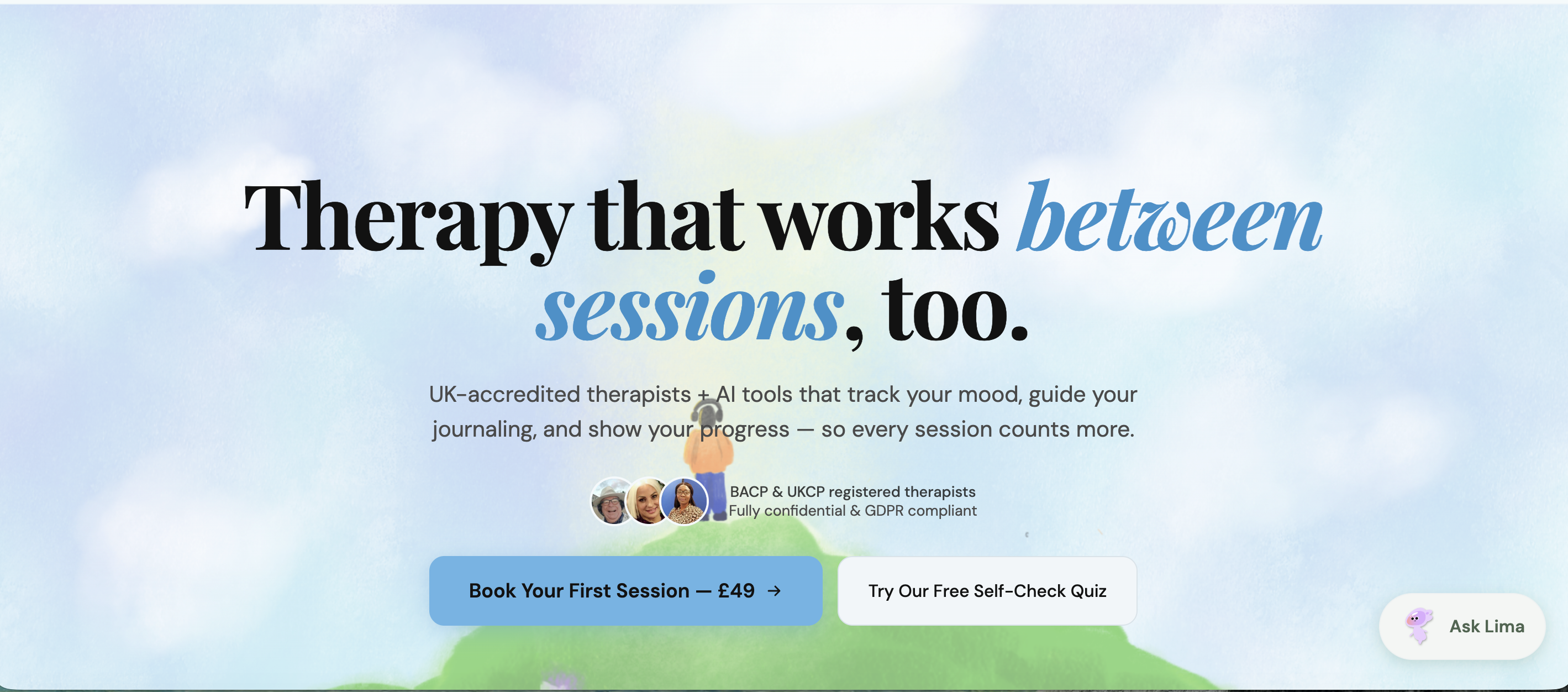
Self-help tools such as AI-guided journaling and mood tracking sit alongside live sessions, useful whether you're using Mysafetherapy as your main support or simply to fill the gap while an NHS assessment is pending. You can browse individual therapy options and book a session directly, or view therapist profiles such as Robert Paynter's page to see availability this week.
Frequently asked questions
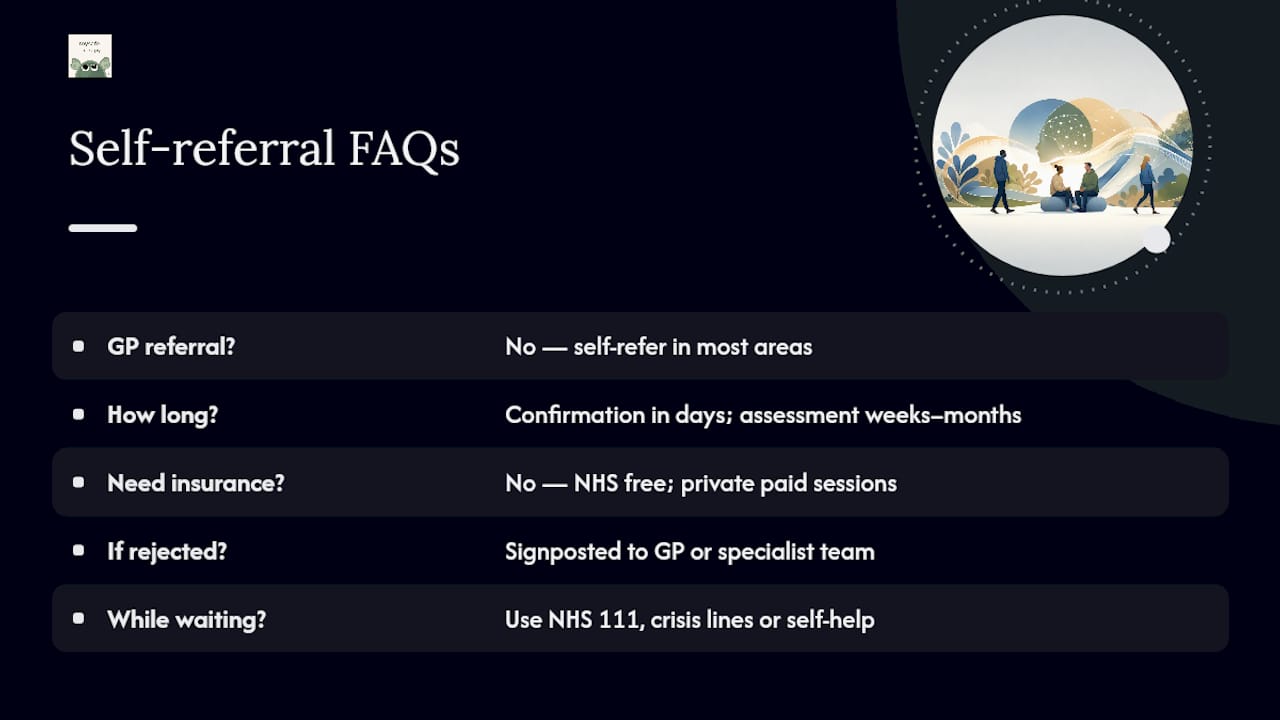
Do I need a GP referral for NHS talking therapies? No, not for common problems like anxiety or depression. You can self-refer directly through the NHS service finder in most areas of England.
How long does NHS talking therapies self-referral take? Confirmation of your referral often arrives within a few days, but the wait for your first assessment varies by area and can range from a couple of weeks to several months.
Can I self-refer for therapy without insurance in the UK? Yes. NHS talking therapies are free at the point of use and don't require private health insurance. Private platforms like Mysafetherapy operate separately, with published session pricing instead of insurance billing.
What if my self-referral is rejected or redirected? If your needs fall outside routine talking therapies, the service will usually signpost you to your GP or a more specialist team rather than simply closing your case. Contact your GP directly if you're unsure where to turn next.
What can I do while waiting for NHS therapy to start? NHS 111's mental health option, local crisis lines, and self-help resources such as guided journaling can help bridge the gap. Some people also choose private sessions through platforms like Mysafetherapy to start sooner.
This article is general information, not a substitute for advice from a qualified doctor. Consult a qualified healthcare professional about your own circumstances before acting on anything here.
Sources
- Find NHS talking therapies for anxiety and depression - NHS
- NHS Talking Therapies for anxiety and depression - NHS England
- NHS Cambridgeshire & Peterborough Talking Therapies | Self-Referral | CPFT NHS Trust