

TL;DR:
- Booking a therapy session in the UK can be done through NHS, private, or online platforms, with wait times and costs varying. The first appointment is an assessment to gather background and determine appropriate support, not a treatment session. Acting quickly is important, as delays can impact mental health and daily functioning.
You can book a therapy appointment via the NHS (self-referral or GP), privately, or through an accredited online platform. The first session is typically an assessment covering your concerns, confidentiality limits, session length, and fees. Most NHS Talking Therapies services accept self-referrals for adults aged 18 and over (16 and over in some areas) without a GP letter. Private sessions typically vary in cost depending on modality and location. Online therapy tends to cost less and can be accessed within days rather than weeks.
Pro Tip: If you need support now and cannot wait for an NHS assessment, contact NHS 111, your GP for an urgent appointment, or a crisis line such as Samaritans (116 123). Do not wait for a scheduled session if you are in immediate distress.
Table of Contents
- How do you book a therapy appointment in the UK?
- What happens at your first therapy appointment?
- What do NHS, private, and online therapy actually cost?
- How to prepare for your appointment
- What are your rights, and how do you raise a complaint?
- What is the 2-year rule in therapy?
- How do you choose the right format and therapist?
- How do you end, pause, or switch therapy safely?
- Key takeaways
- The case for acting sooner rather than later
- Start your first session with Mysafetherapy
- Useful sources and further reading
How do you book a therapy appointment in the UK?
There are four main routes, each with a different timeline and cost profile.
NHS Talking Therapies (IAPT self-referral) Visit nhs.uk/find-an-NHS-talking-therapies-service to locate your local service. Complete the online self-referral form or call the service directly. You will need your GP's name and surgery, a contact number, and a brief description of your concerns. A triage call usually follows within a few weeks to determine the right level of support.
GP referral Ask your GP if your concerns are complex, if you have a co-existing physical health condition, or if you have already tried self-referral without success. GPs can refer to specialist NHS services, community mental health teams, or secondary care that IAPT does not cover.
Private therapy Search the registers of BACP, UKCP, HCPC, or NCPS to find an accredited therapist. Check their specialism, session format, and fees before making contact. Most private therapists respond within 48 hours and can offer an initial session within one to two weeks.
Online platforms and employer EAPs Online platforms schedule therapy sessions with accredited therapists and typically offer evening and weekend slots. If your employer provides an Employee Assistance Programme (EAP), check your HR portal first — EAP sessions are usually free and available within days. Trainee therapists supervised by qualified practitioners are another lower-cost option worth considering.
- Have ready: your GP's name and surgery, preferred days and times, any accessibility requirements, and a brief note on what you want to address.
Pro Tip: When contacting a private therapist, ask upfront about their cancellation policy and whether they offer a short introductory call before committing to a paid session.
What happens at your first therapy appointment?
The first session is an assessment, not a treatment session. Its purpose is mutual: the therapist gathers information about your background and goals, and you assess whether the therapist feels right for you. UKCP's code of ethics requires therapists to present the working agreement clearly at first contact, covering fees, cancellation terms, session frequency, and confidentiality limits.
"Silence is allowed and can support reflection and processing during sessions. Clients do not need to perform or fill every pause." — ISPC
Sessions are structured as a therapeutic hour of around 50 minutes. The final few minutes are used to ground you before you leave, which is why the session does not run to a full 60 minutes.
Questions to ask at the first session:
- What is your therapeutic approach and training?
- Have you worked with clients presenting similar concerns?
- What are your fees, and do you offer a sliding scale?
- What is your cancellation policy and notice period?
- How do you handle confidentiality, and when would you need to share information?
- How will we know when therapy is working?
What do NHS, private, and online therapy actually cost?
| Route | Typical cost per session | Typical wait for first session |
|---|---|---|
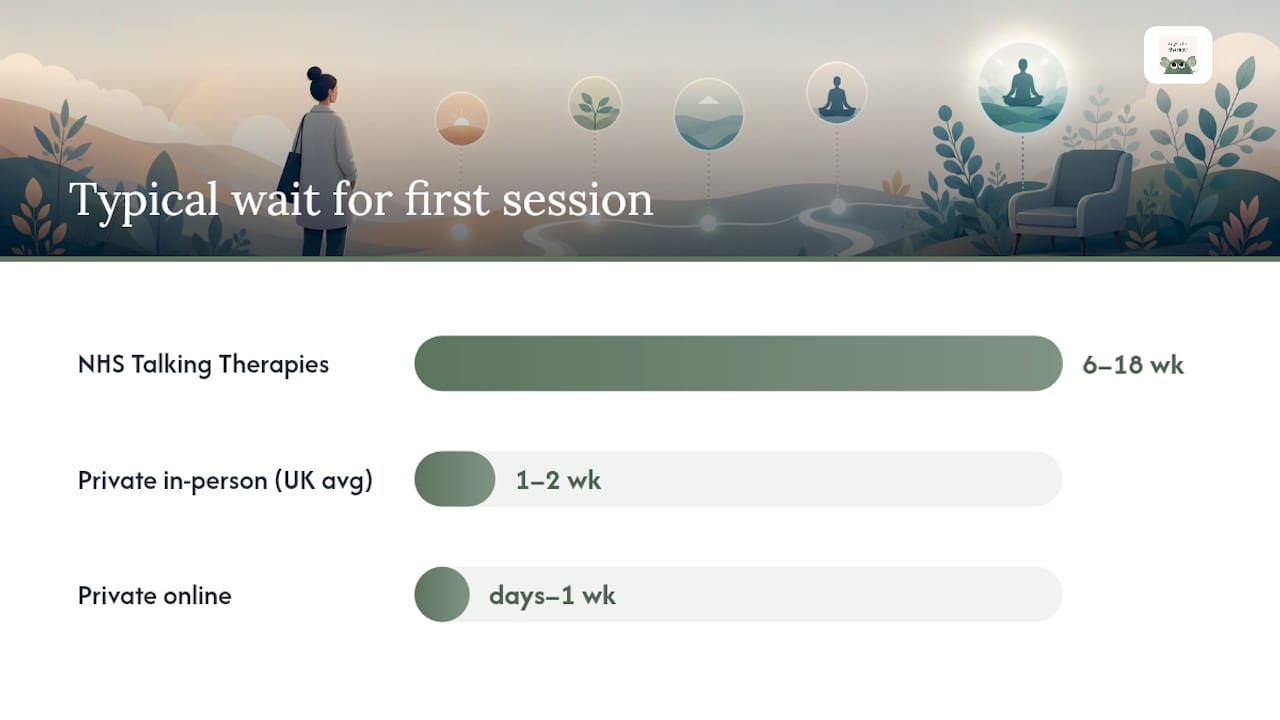
| NHS Talking Therapies | Free | 6–18 weeks for initial assessment; treatment waits vary |
| Private in-person (UK average) | £50–£120 (London at the higher end) | 1 to 2 weeks |
| Private online | £40–£80 (approx. 20–40% lower than in-person) | Days to a week |
| Employer EAP | Free (employer-funded) | Often within days |
NHS Talking Therapies is free, but waits commonly range from 6 to 18 weeks depending on local capacity and the level of support required. Private counselling, CBT, and psychotherapy sessions vary in price depending on the provider and location. Online sessions tend to cost less due to lower overheads, with research suggesting comparable outcomes for anxiety and depression to in-person therapy.
The non-financial costs of waiting are real. Delayed access can affect workplace productivity, relationships, and the coping strategies people adopt in the interim. For those who can afford private or online therapy, faster access often justifies the cost when weighed against those indirect effects.
Pro Tip: Block-booking sessions with a private therapist (paying for four to six in advance) sometimes reduces the per-session rate. Ask about this when discussing fees.
How to prepare for your appointment
You do not need a polished account of your life history. Assessment conversations are designed to draw out relevant background through open questions. A few practical steps make the session more productive.
- Bring your GP's name and surgery details.
- Note any current medication and recent significant events.
- If using insurance, bring your authorisation reference number.
- For video sessions: test your connection and camera beforehand, choose a private room, and use headphones.
- Write down two or three things you most want to address — bullet points are enough.
- Check the therapy checklist for beginners for a fuller preparation guide.
What are your rights, and how do you raise a complaint?
You have the right to informed consent, clear fees, a written or verbal cancellation policy, and the right to end therapy at any time. Confidentiality is not absolute. Therapists are required to share information when there is a serious risk to your life or someone else's, when a court orders disclosure, or when safeguarding obligations apply. A competent therapist explains these limits at the first session.
Counselling and psychotherapy are not legally protected titles in the UK. Anyone can call themselves a counsellor without formal training. Registration with BACP, UKCP, HCPC, or NCPS is the most reliable indicator of training and accountability. HCPC is the only statutory register.
If you need to raise a concern:
- Speak to the therapist directly first, where it is safe to do so.
- If the therapist works within an NHS service, use the NHS complaints procedure.
- For private therapists, escalate to their professional body: BACP, UKCP, HCPC, or NCPS each publish formal complaints processes on their websites.
- Keep copies of intake forms, session agreements, invoices, and any written communication.
What is the 2-year rule in therapy?
The 2-year rule is an ethical guideline, not a legal statute. It advises a minimum two-year interval before a therapist enters a personal or romantic relationship with a former client.
- It exists because the therapeutic relationship creates a power imbalance that does not disappear immediately when sessions end.
- Many professional bodies and training programmes treat it as a minimum standard; some consider any post-therapy personal relationship inappropriate regardless of time elapsed.
- In practice, therapists are expected to discuss boundary issues in clinical supervision and to prioritise the former client's welfare above their own interests.
How do you choose the right format and therapist?
| Format | Best suited to | Key consideration |
|---|---|---|
| In-person | Those who value physical presence and find it easier to open up face-to-face | Requires travel; limited evening/weekend availability in some areas |
| Video | Most presenting concerns; good accessibility | Needs a private space and reliable connection |
| Phone | Those uncomfortable on camera or with limited internet access | No visual cues for either party |
| Text/chat | Mild to moderate concerns; those who process better in writing | Slower pace; not suited to crisis work |
| Avatar-based | Those seeking anonymity or with social anxiety | Less common; check therapist experience with the format |
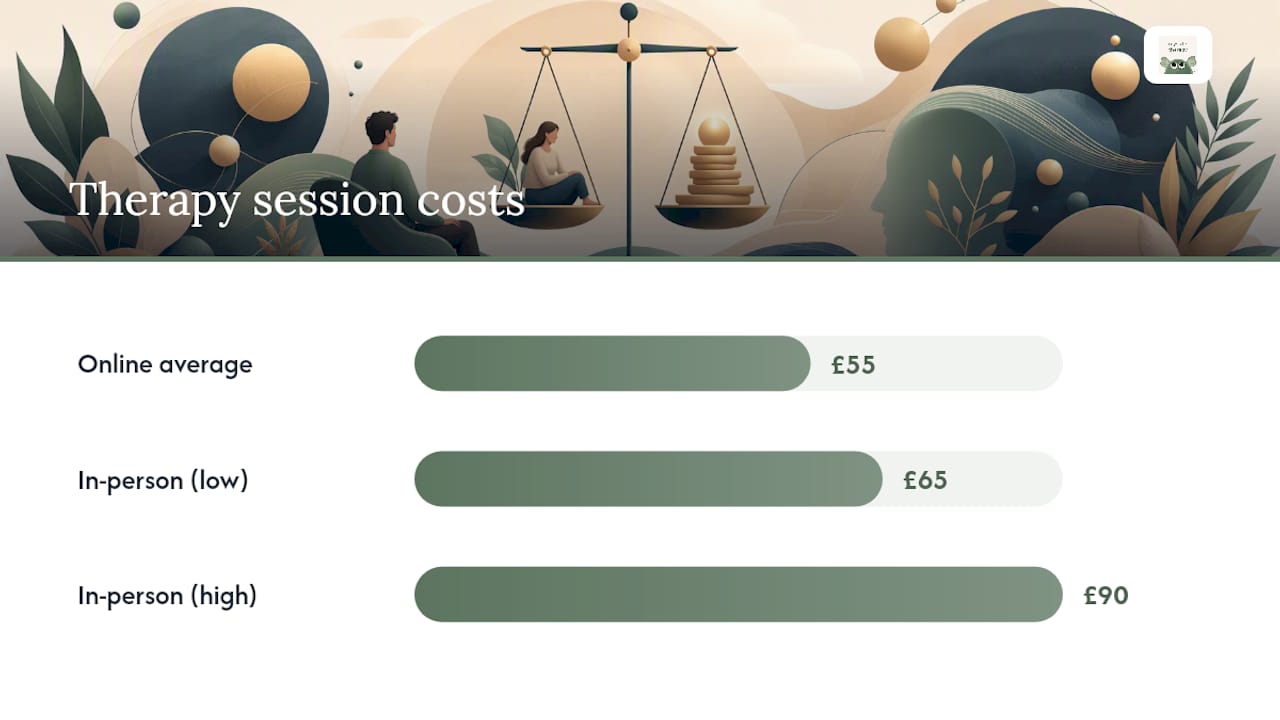
Online therapy is typically 20–40% cheaper than in-person therapy, with average online sessions costing around £55 compared to £65–£90 for in-person therapy, and produces comparable outcomes for common conditions. The therapeutic relationship matters more to outcomes than the specific modality, so trialling two or three sessions before deciding whether to continue or switch is reasonable practice.
When checking a therapist's credentials, search their name on the BACP, UKCP, HCPC, or NCPS registers directly. Do not rely solely on a therapist's own website claim. For complex presentations — trauma, eating disorders, psychosis — ask specifically about specialist training, as general IAPT services are not always the appropriate route.
Pro Tip: Use the therapist matching guidance on Mysafetherapy's blog to understand what questions to prioritise when assessing fit.
How do you end, pause, or switch therapy safely?
Planned endings are part of good therapeutic practice. Discuss your goals and a rough timeline with your therapist early on, and revisit them periodically. When you are ready to finish, a final session focused on progress and relapse planning is standard.
- Give the notice period specified in your contract, typically one to two weeks for private therapy.
- If switching therapists, you can request a brief handover note or summary of the work covered.
- You are entitled to request copies of any intake forms or written agreements you signed.
- If you need to pause, inform your therapist in writing and confirm whether your slot will be held.
If you need urgent help before your next appointment:
- Call NHS 111 (option 2 for mental health in many areas).
- Contact your GP and ask for an urgent same-day appointment.
- Go to A&E if there is immediate risk to life.
- Call Samaritans on 116 123 (free, 24 hours).
Key takeaways
Booking a therapy appointment in the UK is straightforward once you know which route fits your timeline and budget: self-refer to NHS Talking Therapies for free access, or use a private or accredited online service for faster availability.
| Point | Details |
|---|---|
| Quickest booking route | NHS self-referral is free; private or online therapy typically available within days to two weeks. |
| First session purpose | An assessment covering goals, confidentiality limits, fees, and cancellation terms — not a treatment session. |
| Session length | Around 50 minutes (the therapeutic hour), structured to include grounding time at the end. |
| Check accreditation | Verify registration on BACP, UKCP, HCPC, or NCPS before booking; these titles are not legally protected in the UK. |
| Mysafetherapy option | Mysafetherapy connects UK adults with BACP/UKCP/NCPS-registered therapists via video, chat, and avatar formats, with evening and weekend availability. |
The case for acting sooner rather than later
The conventional advice is to try the NHS first because it is free. That is sound guidance, but it understates one thing: the 6–18 week wait is not a neutral period. For many people, it is weeks of continued difficulty at work, in relationships, and in daily functioning. The financial cost of private or online therapy is real, but so is the cost of delay.
The other point worth making plainly: the format of therapy matters far less than the relationship with the therapist. Research consistently shows that rapport and trust predict outcomes more reliably than any specific modality. This means that spending time finding the right person, rather than the right technique, is the more productive use of energy when starting out.
Mysafetherapy's approach reflects this: therapist matching is based on specialism, availability, and fit, not just the first available slot. For UK adults who want accredited support without a long wait, that combination of speed and matching quality is where the practical value lies.
Start your first session with Mysafetherapy
Mysafetherapy offers a faster route to accredited therapy than the NHS waiting list, without the overhead costs of a traditional private practice. All therapists on the platform are registered with BACP, UKCP, or NCPS, and sessions are available via video, chat, or avatar format, including evenings and weekends.
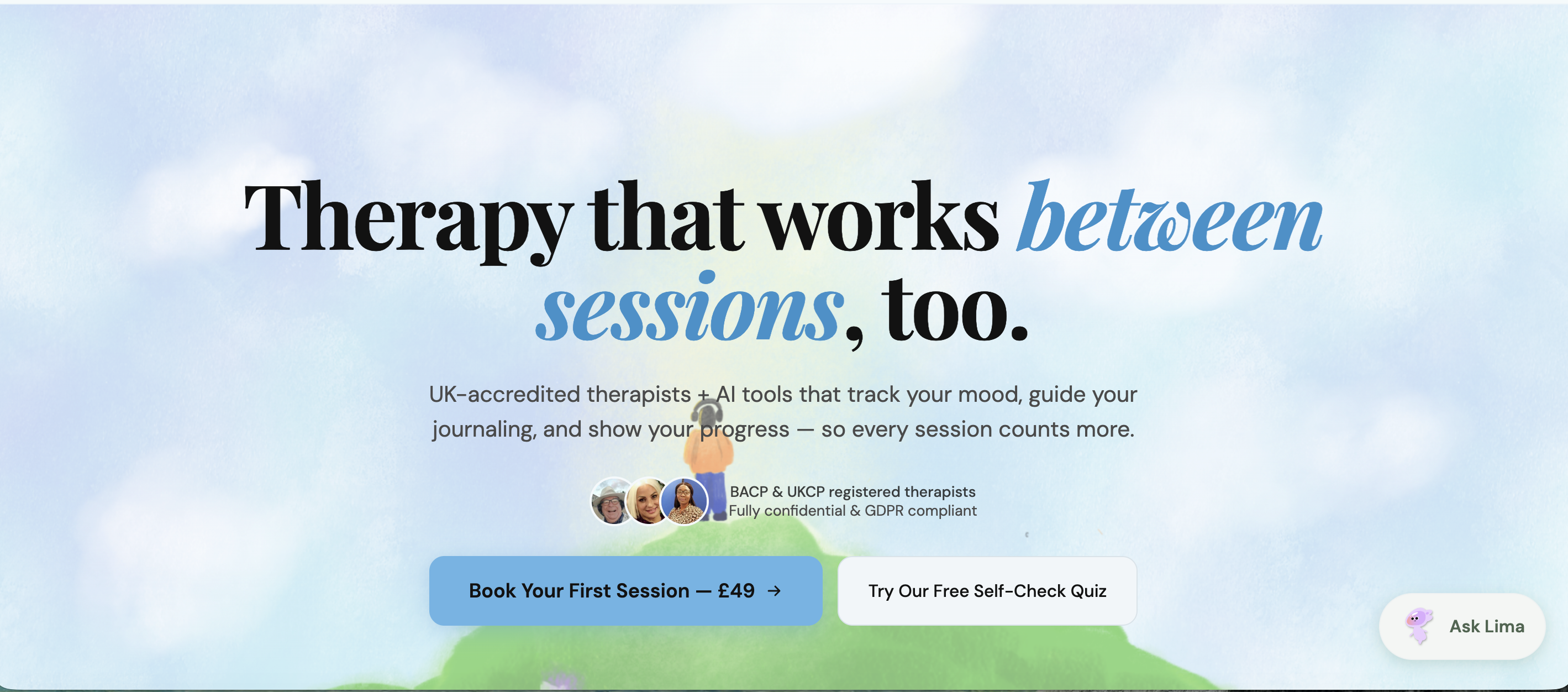
The process is straightforward: complete a short intake form, get matched with a therapist whose specialism fits your needs, and book your first session. Pricing is transparent from the start, with no hidden fees and a clear cancellation policy. For those who want to explore anonymous support, avatar therapy starts from £49.
Book your first session with a UK-accredited therapist on Mysafetherapy today.
Useful sources and further reading
- NHS Talking Therapies: find a service near you
- NHS Talking Therapies: what they are and how to access them
- Accessing NHS Talking Therapies digitally
- BACP therapist register
- UKCP therapist register and code of ethics
- HCPC statutory register
- Mind: what to expect from therapy
- Mysafetherapy: how to start online therapy
- Mysafetherapy: confidential therapy process explained
This article provides general information about accessing mental health support in the UK. It is not a substitute for professional advice. Confirm current eligibility, fees, and service availability directly with your chosen provider or a qualified clinician.