

TL;DR:
- A therapy checklist helps new clients prepare by clarifying their goals, gathering history, and completing questionnaires.
- It ensures they approach the session with confidence, honesty, and a clear plan, speeding up progress.
A therapy checklist for beginners is a structured preparation tool that helps new clients cover every practical and emotional consideration before, during, and after their first therapy session. Starting therapy without a plan is like attending a medical appointment without knowing your symptoms. The NHS Talking Therapies programme and NICE stepped care model both recognise that prepared clients make faster progress. This guide gives you a clear, step-by-step mental health checklist built specifically for adults in the UK who are ready to start therapy in 2026.
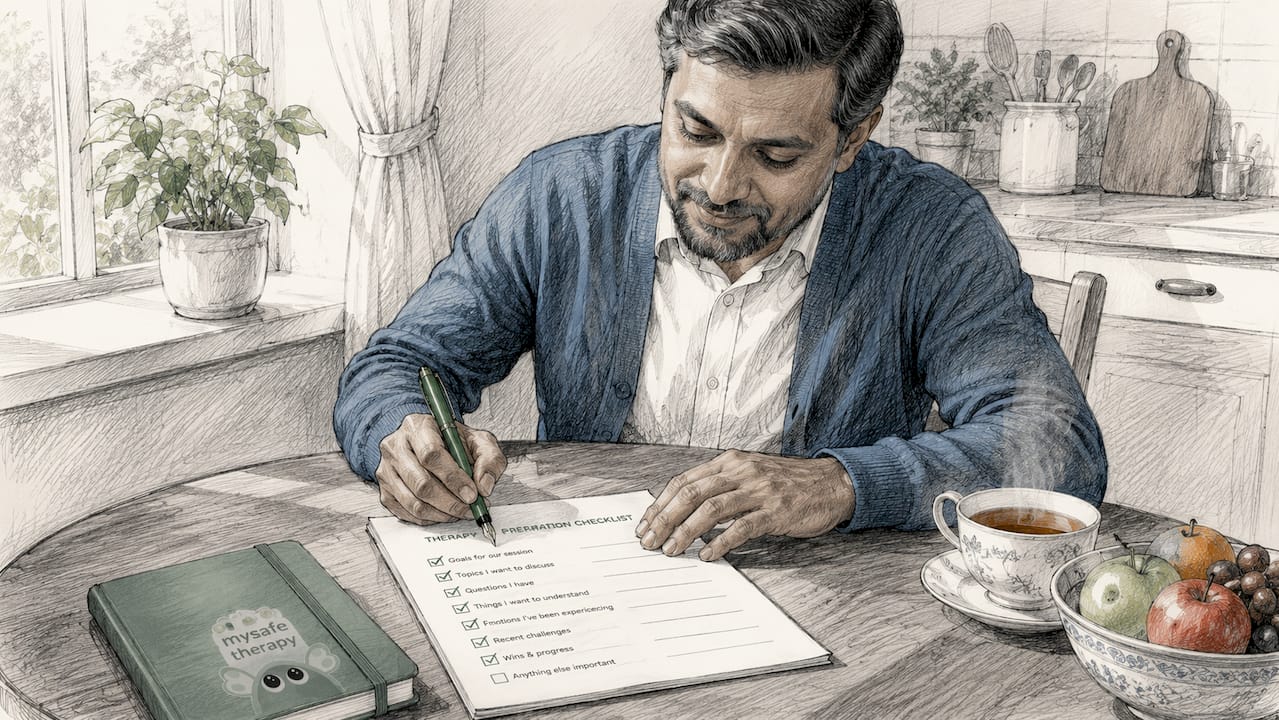
1. Therapy checklist for beginners: pre-therapy preparation steps
Preparation before your first session determines how quickly therapy becomes useful. Most people underestimate how much groundwork shapes the quality of early sessions.
Understand your referral pathway first. In England, adults can self-refer to NHS Talking Therapies without a GP appointment, using online forms, telephone, or email. Assessments typically happen within four weeks of referral. That timeline matters because it affects how you plan your schedule and manage expectations.
Gather your mental health history. Write down any previous diagnoses, medications, and therapy experiences. This is not about creating a polished narrative. It is about giving your therapist the context they need to recommend the right support.
Complete pre-assessment questionnaires in advance. Services often require clinical tools such as the PHQ-9 (for depression) and GAD-7 (for anxiety). Completing these questionnaires at least two hours before your session maximises the time available for actual discussion. Leaving them until the last minute reduces the quality of your assessment.
Your pre-therapy checklist should include:
- Referral route confirmed (NHS self-referral, GP, or private booking)
- Mental health and medical history written down
- PHQ-9 and GAD-7 questionnaires completed
- Two or three therapy goals identified in plain language
- Practical arrangements sorted: transport, childcare, time off work
Pro Tip: Write your goals as simple statements, not clinical descriptions. "I want to feel less anxious at work" is more useful to a therapist than "I have generalised anxiety disorder."
2. What to bring and discuss at your first therapy session
The first session is a collaborative assessment, not a test. Therapists use it to understand your goals and barriers, then recommend evidence-based next steps. You do not need a perfect account of your life.
Bring practical documentation. A list of current medications, any referral letter from your GP, and your completed questionnaires are the three most useful items. If you take medication for a physical health condition, include that too, as it can affect mood and energy.
Prepare two or three starting threads. Therapists do not expect polished narratives in the first session. Bringing simple bullet points about your main concerns helps guide the discussion without putting pressure on your memory. Think of them as conversation starters, not a formal report.
Your first session checklist should include:
- List of current medications (name and dose)
- Referral letter or booking confirmation
- Two or three bullet points summarising your main concerns
- Questions you want to ask the therapist about their approach
- Note of any risk factors you want to disclose, such as self-harm history
Discuss session structure and duration. Most initial assessments run for 45–60 minutes. Knowing this helps you pace yourself and avoid rushing through important points near the end.
Pro Tip: Ask your therapist directly: "What therapy model do you use, and why is it suited to my situation?" A good therapist will answer clearly. If they cannot, that tells you something important.
3. Common questions beginners should be ready to answer in therapy
Therapists ask specific questions during early sessions to assess your needs and match you with the right level of support. NICE guidelines recommend a stepped care model that starts from the least intrusive effective intervention. Your answers directly influence which step of that model you enter.
Prepare honest answers to these questions:
- What brings you to therapy now? Describe the specific trigger or pattern that made you seek support at this point.
- How long have you felt this way? Duration helps the therapist distinguish acute stress from longer-term conditions.
- How are your symptoms affecting daily life? Be specific: sleep, work, relationships, appetite.
- Have you had therapy or counselling before? If yes, what worked and what did not.
- Are you currently taking any medication for mental health? Include dosage if known.
- Have you ever experienced thoughts of self-harm or suicide? This is a standard safety question. Answer honestly. It is not a barrier to receiving support.
- What are your personal strengths and coping strategies? Therapists use this to build on what already works for you.
Being honest about messy or incomplete feelings enables accurate, tailored support. You do not need to have everything figured out before you walk in.
4. After your therapy session: follow-up checklist
What you do between sessions matters as much as the sessions themselves. Therapy programmes often include structured between-session assignments based on CBT principles, and clients who engage with these assignments make measurably faster progress.
Your post-session checklist should include:
- Notes from the session. Write down the key insight or technique discussed while it is still fresh. A single sentence is enough.
- Between-session tasks. Complete any homework your therapist sets, whether that is a thought diary, a breathing exercise, or a behavioural experiment.
- Progress tracking. Note any changes in mood, sleep, or anxiety levels since your last session. The PHQ-9 and GAD-7 are often used at regular intervals to measure this formally.
- Questions for next time. If something from the session confused you or raised new concerns, write it down immediately.
- Self-care planning. Identify one concrete self-care action before your next appointment, such as a short walk, reduced screen time, or a conversation with a trusted person.
Collaborative goal setting typically happens at the start of therapy, with progress reviewed every ten sessions. Tracking your own progress between those formal reviews keeps you engaged and gives you useful data to share with your therapist.
Lifestyle factors also affect therapy outcomes. Research on stopping smoking and mental health shows that physical health changes can directly influence mood and anxiety levels. Disclosing these factors to your therapist gives them a fuller picture.
5. Comparing NHS and private therapy pathways in the UK
The route you take to therapy shapes your preparation checklist. NHS and private pathways differ in cost, waiting time, and flexibility.
| Factor | NHS Talking Therapies | Private therapy |
|---|---|---|
| Cost | Free at point of use | Typically £40–£100 per session |
| Referral | Self-referral or GP | Direct booking |
| Waiting time | Up to four weeks for assessment | Often within days |
| Therapy type | Primarily CBT and guided self-help | Wider range of modalities |
| Session flexibility | Fixed appointment slots | Evenings and weekends available |
| Therapist standards | NHS-employed or contracted | BACP, UKCP, or NCPS registration |
NHS self-referral is available via multiple routes including online forms, telephone, and email. After referral, services contact clients for assessment by phone, video, or online form. Private therapy offers faster access and more choice, but the cost is a real consideration for many adults. For a detailed breakdown of both routes, the NHS vs private therapy comparison on Mysafetherapy covers waiting times, costs, and therapist qualifications in full.
Preparatory needs such as housing instability or addiction can affect therapy readiness and are often triaged during initial assessment. Disclosing these factors early accelerates the process of reaching effective psychological work, regardless of which pathway you choose.
Key takeaways
A therapy checklist for beginners works because it removes uncertainty, ensures honest disclosure, and aligns your preparation with the structured processes that NHS and NICE standards already use.
| Point | Details |
|---|---|
| Complete questionnaires early | Finish PHQ-9 and GAD-7 at least two hours before your assessment to maximise discussion time. |
| Prepare two or three starting threads | Brief bullet points about your main concerns guide the first session without pressure on memory. |
| Self-referral is available | Adults in England can access NHS Talking Therapies without a GP referral, via online or telephone. |
| Between-session work matters | CBT-based assignments between sessions accelerate progress and should be treated as part of therapy. |
| Choose your pathway deliberately | NHS and private routes differ in cost, speed, and flexibility; your checklist should reflect which route you take. |
Why a checklist changes everything about starting therapy
Most people arrive at their first therapy session with a vague sense of what they want to say and a sharper sense of dread about saying it. A checklist does not remove the discomfort. It removes the chaos that makes the discomfort worse.
At Mysafetherapy, the clients who report the most productive early sessions are not the ones who have the most insight into their problems. They are the ones who arrived with a short list of concerns, a realistic expectation of what the first session would cover, and a willingness to answer questions honestly, even when the answers felt incomplete.
The conventional advice is to "just be open." That is not wrong, but it is incomplete. Openness without structure leads to sessions that circle without landing. A checklist gives you a structure that makes openness easier, because you have already done the thinking before you walk in.
The first session builds a foundation of trust, not a clinical diagnosis. Knowing that in advance changes how you show up. You stop trying to perform and start trying to communicate. That shift is where therapy actually begins.
Personalise your checklist. The items in this guide are a starting point, not a fixed template. Add what matters to you and remove what does not apply. A checklist you own is more useful than a perfect one you ignore.
— Mysafetherapy
Mysafetherapy: support from your very first session
Mysafetherapy connects adults across the UK with accredited therapists registered with BACP, UKCP, and NCPS. Every therapist on the platform meets verified professional standards, which you can review on the therapist standards page before you book.
Sessions are available by video, text-based chat therapy, and anonymous avatar therapy, with appointments available in the evenings and at weekends. Pricing starts from £49, with no waiting list and no GP referral required. If you have worked through this beginner therapy guide and feel ready to take the next step, you can start therapy today and be matched with a qualified therapist within 24 hours.
FAQ
What is a therapy checklist for beginners?
A therapy checklist for beginners is a structured list of preparation steps covering pre-session tasks, what to bring, questions to answer, and follow-up actions. It helps new clients approach therapy with clarity rather than uncertainty.
Do I need a GP referral to start therapy in the UK?
No. Adults in England can self-refer to NHS Talking Therapies via online form, telephone, or email, with assessments typically arranged within four weeks. Private therapy requires no referral at all.
What questionnaires will I need to complete before therapy?
Most NHS Talking Therapies services use the PHQ-9 for depression and the GAD-7 for anxiety. Completing these at least two hours before your assessment gives you and your therapist more time to talk.
How do I prepare for my first therapy session if I feel anxious?
Write down two or three bullet points about your main concerns before the session. Therapists do not expect a polished account; brief starting threads are enough to guide a productive first conversation.
What is the difference between NHS and private therapy preparation?
NHS therapy requires self-referral and completion of clinical questionnaires before assessment. Private therapy allows direct booking with faster access, but costs typically range from £40 to £100 per session and preparation steps remain the same.