
TL;DR:
- Seeking support for mental health or personal growth requires choosing a safe and effective therapy pathway without added stress. Online therapy provides a private, flexible, and accredited option that can be booked confidently by verifying therapist credentials and preparing questions in advance. Taking time to select the right therapy type, platform, and therapist ensures a more successful and satisfying mental health support experience.
Seeking support for anxiety, depression, or personal development is a significant step, and the process of finding the right therapist should not add to your stress. Many people in the UK delay accessing mental health care simply because the booking process feels unclear or unsafe. Online therapy has changed this considerably. It offers a structured, private, and flexible route to speaking with an accredited professional from your own home, at times that suit your schedule, including evenings and weekends. This guide sets out exactly what you need to prepare, how to book safely, and how to choose the right pathway for your circumstances.
Table of Contents
- What you need before scheduling a therapy session
- Step-by-step guide to booking therapy sessions online
- How to verify therapist credentials and session safety
- Choosing between NHS, private, and alternative options
- Why the best therapy scheduling method might not be the obvious one
- Ready to schedule your therapy session online?
- Frequently asked questions
Key Takeaways
| Point | Details |
|---|---|
| Check therapist credentials | Always verify therapists are accredited and registered for your safety when booking online. |
| Prepare before booking | Clarify your needs, research options, and prepare questions to get the most from your first session. |
| Online is often quickest | Direct booking platforms and directories typically secure sessions faster than NHS waiting lists. |
| Compare therapy options | Consider NHS, private, or low-cost charities/EAPs to find a fit for your expectations and budget. |
| Prioritise fit over speed | Rushing scheduling can compromise outcomes; choose carefully for best long-term support. |
What you need before scheduling a therapy session
Before you search for a therapist or open a booking platform, it is important to understand the different components that determine whether a therapy experience will be effective and safe. Taking time at this stage will save considerable frustration later.
Know which therapy type suits your needs
Therapy is not a single approach. Cognitive Behavioural Therapy (CBT) is a structured, evidence-based method that works well for anxiety, depression, and phobias. It focuses on changing thought patterns and behaviours over a fixed number of sessions, typically six to twenty. Counselling is generally more open-ended and supportive, suited to grief, relationship difficulties, or life transitions. Psychodynamic therapy explores past experiences and unconscious patterns, and is often longer-term. Knowing which approach aligns with your needs helps you filter therapists effectively and ask the right questions from the outset.
Verify therapist accreditation
In the UK, therapy is not a legally protected profession in the same way as medicine. This means that technically, anyone can call themselves a therapist. The safest approach is to look for therapists registered with recognised bodies. According to the BACP's guidance on private online therapy, fees typically range from £40 to £120 per session, with online options frequently falling between £40 and £70. Searching the BACP or similar directories filters results to practitioners who meet professional standards, including Membership of the British Association for Counselling and Psychotherapy (MBACP). For further guidance on finding safe, affordable therapist options within the UK, it is worth reading up on what each accreditation body requires before booking.
Prepare your questions in advance
Many people attend an initial session without a clear sense of what to ask. Before booking, note down the following:
- What is your therapeutic approach and how does it work?
- Are you registered with the BACP, UKCP, or NCPS?
- What are your session fees and do you offer any concessions?
- How long are sessions and how frequently should we meet?
- What is your cancellation and rescheduling policy?
- How do you handle data, records, and confidentiality online?
Having these answers before committing gives you far more control over the process. Our accredited therapists guide covers what each registration body looks for, which helps you evaluate responses accurately.
Key platforms and what distinguishes trustworthy options
| Platform type | How they work | Typical fee range |
|---|---|---|
| BACP/UKCP directories | Search and contact therapists directly | £40 to £120/session |
| Dedicated online platforms | Matching algorithms, direct booking, profiles | £40 to £80/session |
| NHS Talking Therapies | Refer yourself via GP or self-referral | Free, waiting lists apply |
| Charity/EAP providers | Employer schemes or funded sessions | Free to low-cost |
Pro Tip: Always confirm whether the platform stores your session notes or recordings, and read the privacy policy before submitting any personal information.
Step-by-step guide to booking therapy sessions online
With preparation sorted, follow this step-by-step guide to book your session confidently. Each stage is designed to reduce uncertainty and ensure you make an informed choice rather than a rushed one.
Step 1: Identify your needs and preferred therapy type
Write down what you are hoping to address, whether that is persistent anxiety, low mood, relationship issues, or a desire for personal development. This clarity will guide every subsequent decision. If you are unsure which therapy type fits, consider reading about types of online therapy before proceeding.
Step 2: Use accredited directories to shortlist therapists
Search the BACP, UKCP, or NCPS directories using your location (or filter for online sessions) and your presenting issue. Most directories allow you to filter by approach, gender preference, session format, and fee range. Shortlist three to five therapists to compare.
Step 3: Review profiles, fees, and session logistics
Once you have a shortlist, examine each therapist's profile carefully. Look at their stated approach, qualifications, years of experience, and any specific areas of expertise. BACP-registered therapists are required to maintain continued professional development, so their profiles should reflect up-to-date training. Note the session fees, any sliding-scale options, and whether they offer evening or weekend availability.
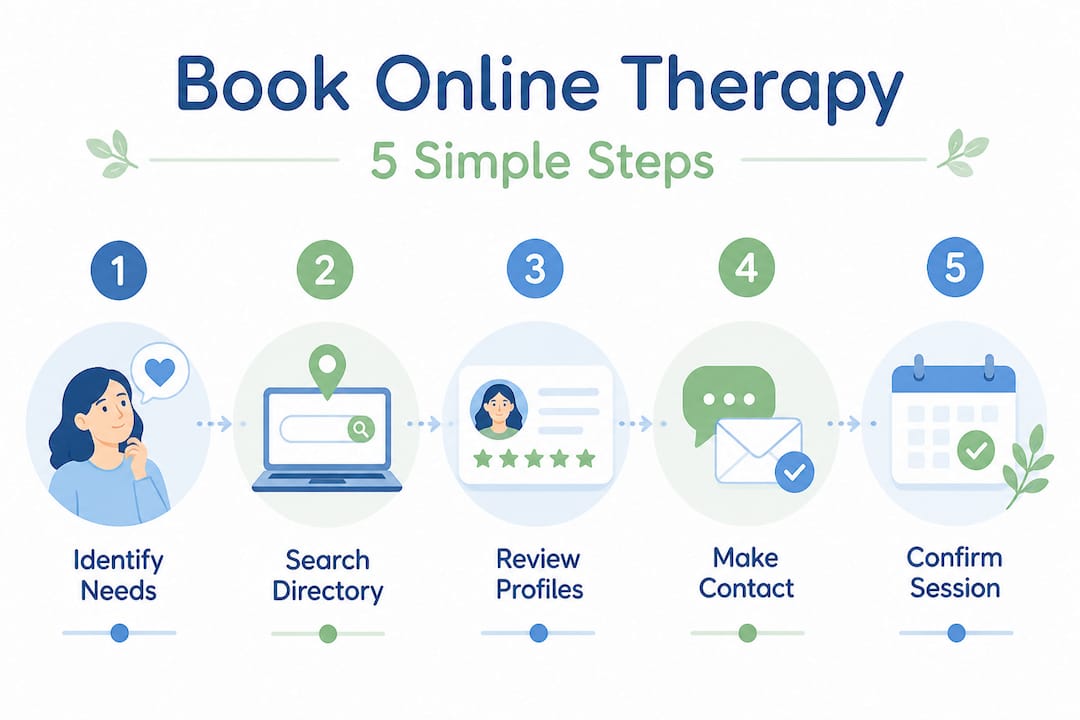
Step 4: Make initial contact or use the platform booking system
Contact your preferred therapist directly by email or telephone, or use the platform's booking interface if one is available. This initial contact is an opportunity to gauge responsiveness, clarity, and whether their communication style feels appropriate to you. For a detailed breakdown of the full booking process, the accessible online therapy steps guide provides additional context.
Step 5: Confirm the appointment and prepare for the assessment
Once a session is confirmed, you will usually receive a link to a video conferencing tool or the platform's own session interface. Prepare a brief summary of what you want to discuss. Keep this factual and focused. You do not need to have everything figured out. Initial sessions are typically assessments, giving both you and the therapist a chance to determine whether the relationship is a good fit.
| Booking method | Speed of access | Flexibility | Cost transparency |
|---|---|---|---|
| BACP directory direct contact | 3 to 7 days typically | High | Varies per therapist |
| Dedicated booking platforms | Same day to 48 hours | High | Usually clearly listed |
| NHS self-referral | Weeks to months | Low | Free |
| GP referral | Weeks to months | Low | Free |
Pro Tip: If you find an initial session does not feel right, you are not obligated to continue. Switching therapists is normal and does not reflect poorly on you. Most platforms, including MySafeTherapy, make therapist switching straightforward.
For first-time users, the starting online therapy guide covers what to expect in your first session and how to manage any pre-session anxiety.
How to verify therapist credentials and session safety
After booking, it is vital to verify safety and legitimacy before your first session. This step is often skipped, but it is one of the most important actions you can take.
Checking credentials in practice
Accreditation bodies maintain public registers. The BACP, for example, publishes a searchable directory where you can verify MBACP membership status independently. Type the therapist's name into the relevant directory and confirm their registration is current. A legitimate therapist will not object to this verification. If a therapist is reluctant to share their registration number or body, treat this as a significant concern.
What to look for on a platform
- Is the platform's privacy policy clearly published and GDPR-compliant?
- Does the website use HTTPS? Check for a padlock icon in the browser address bar.
- Are session recordings stored, and if so, where and for how long?
- Is there a clear complaints or safeguarding procedure visible on the site?
- Does the platform display therapist profiles with verifiable credentials?
Our online therapy safety guide provides a detailed breakdown of what GDPR compliance means for therapy platforms and what questions to ask before sharing personal data.
Recognising red flags
A trustworthy therapy platform will never pressure you to pay in full upfront, refuse to provide therapist credentials on request, or promise guaranteed outcomes. Legitimate practitioners operate within professional ethical codes that prioritise client welfare above all else.
Additional warning signs include vague or non-existent refund policies, therapists who do not conduct an initial assessment, booking forms that ask for excessive personal information before any contact has been made, and platforms with no visible professional oversight or association membership. The safe online support guide provides further detail on distinguishing reliable services from those that fall short of professional standards.
Reading reviews and testimonials
Platform reviews provide useful context, but approach them with appropriate judgement. Look for patterns in reviews rather than individual comments. Consistent mention of responsive communication, professional conduct, and confidentiality standards is a positive signal. Isolated negative reviews about booking logistics are less significant than repeated concerns about ethical practice.
Choosing between NHS, private, and alternative options
Finally, decide which pathway suits you best by comparing options, prices, and session styles. Each route has distinct advantages and limitations depending on your circumstances.
NHS therapy
NHS Talking Therapies (previously known as IAPT) is free at the point of access and covers CBT for anxiety and depression. You can self-refer online without a GP appointment. However, NHS talking therapy is structured and time-limited, typically six to twenty sessions of CBT. Waiting times vary significantly by region and can extend to several months. It is the most appropriate first step for many people, particularly those who have not previously accessed therapy.
Private online therapy
Private therapy offers immediate or near-immediate access, a wider choice of approaches, and greater flexibility in session frequency and duration. Private online fees typically range from £40 to £120 per session depending on the therapist's experience and location, with online sessions frequently available at the lower end of this range. Private therapy suits those who need rapid access, prefer a specific therapeutic model, or require more sessions than the NHS typically provides. Explore online mental health support options to understand the full range of private services available.
Charities, EAPs, and low-cost alternatives
Employee Assistance Programmes (EAPs) are offered by many employers in the UK and provide a fixed number of free therapy sessions. Charities such as Mind, Samaritans, and local counselling services also offer subsidised or free support. These represent a practical middle ground: faster than NHS referrals in many cases, and lower cost than private practice.
| Pathway | Access speed | Cost | Flexibility | Session variety |
|---|---|---|---|---|
| NHS Talking Therapies | Slow (weeks to months) | Free | Low | Mostly CBT |
| Private online platforms | Fast (days) | £40 to £120 | High | Wide range |
| Charity/EAP | Moderate | Free to low-cost | Moderate | Limited sessions |
| App-based alternatives | Immediate | Low | Very high | Varies |
For those considering app-based or platform alternatives, psychotherapists app alternatives and mindfulmusingstherapy alternatives provide useful comparisons of current options in the UK market.
Why the best therapy scheduling method might not be the obvious one
There is a tendency, understandable in the context of digital convenience, to treat therapy booking as equivalent to booking a restaurant or a taxi. Open an app, pick a time, confirm. The friction of the traditional route, ringing a GP, waiting for a referral, sitting with uncertainty, feels unnecessary when everything else in life is instantly accessible.
But the speed of booking is not the most important variable in whether therapy works. The single strongest predictor of therapeutic outcome is the quality of the relationship between client and therapist, known in clinical terms as the therapeutic alliance. Choosing a therapist purely on the basis of availability or price, without considering approach, communication style, or credential verification, is likely to produce a less effective experience.
We have observed that people who take slightly longer at the selection stage, reading profiles carefully, contacting two or three therapists before committing, and using structured guides such as the accessible therapy step guide, tend to report higher satisfaction with their eventual therapist match. This is not intuitive when anxiety or depression makes decision-making feel burdensome. The natural impulse is to act quickly and reduce uncertainty by just booking something.
The more measured approach is to recognise that one poorly matched session can increase reluctance to try again. Taking a week to find the right therapist is substantially better than attending two or three sessions with the wrong one and concluding that therapy does not work. The process of scheduling is itself an exercise in self-knowledge. What you notice when reading a therapist's profile, what makes you feel safe or uncertain, tells you something useful about what you are looking for.
Ready to schedule your therapy session online?
The steps in this guide lay out a clear and safe route to accessing mental health support online. If you are ready to put them into practice, MySafeTherapy provides a structured and transparent way to do exactly that.
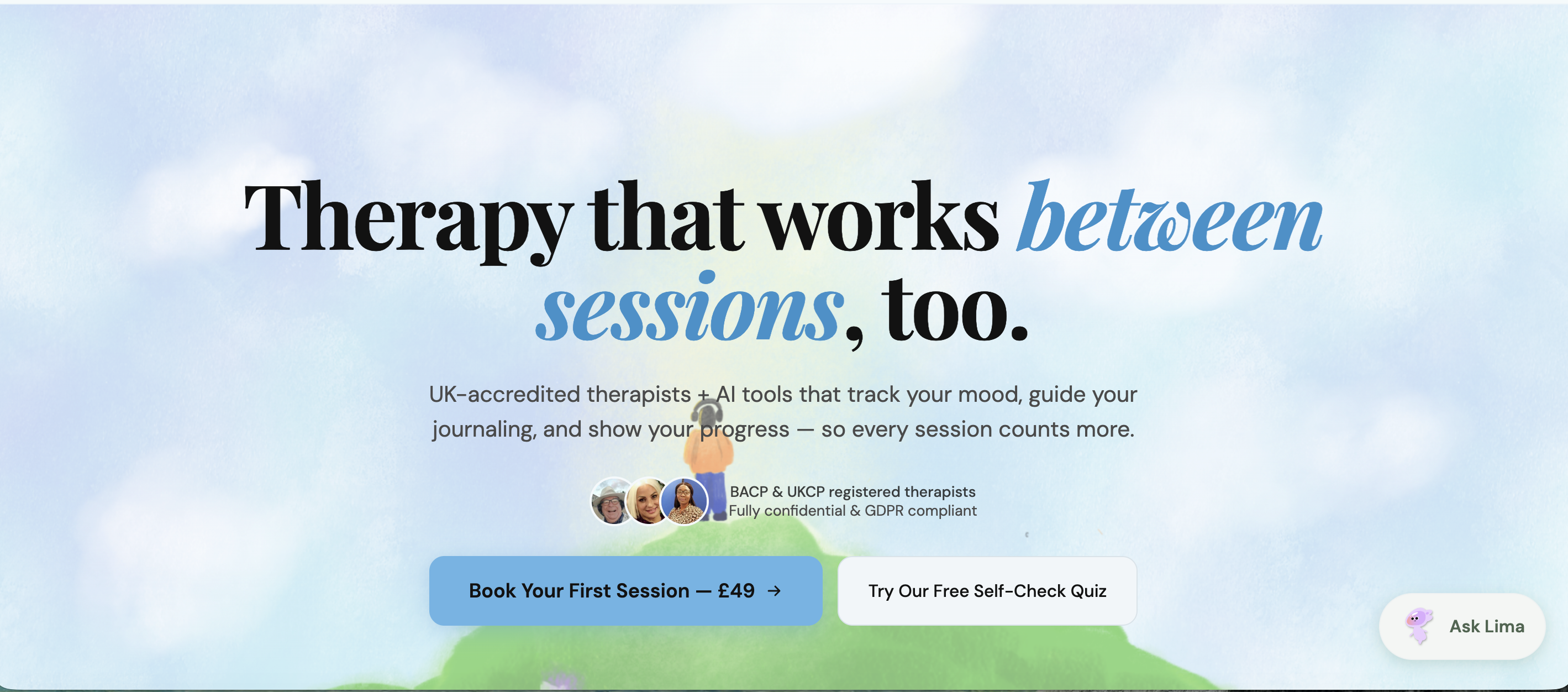
MySafeTherapy connects you with UK-accredited therapists registered with the BACP, UKCP, and NCPS, covering anxiety, depression, burnout, trauma, and relationship challenges. Sessions are available in video, chat, and avatar formats, including evenings and weekends. Pricing is clear, switching therapists is straightforward, and your data is handled in accordance with UK GDPR standards. When you are ready, start your therapy session with confidence, knowing the platform has been designed with your safety and comfort as the primary consideration.
Frequently asked questions
How much does online therapy typically cost in the UK?
Online therapy sessions in the UK typically range from £40 to £70, though private therapist fees can reach up to £120 per session depending on experience and specialism.
How can I safely verify a therapist's credentials online?
Search for the therapist's name on the BACP or MBACP register directly, and ask the therapist to confirm their registration number before your first session.
Are online therapy sessions as effective as in-person?
Online therapy is equally effective as face-to-face sessions for most presenting issues, though some individuals find in-person contact supports a deeper therapeutic connection.
What is the fastest way to get a therapy session?
Searching BACP-registered therapists on dedicated online platforms often allows you to secure an appointment within 24 to 48 hours, particularly through private providers.