
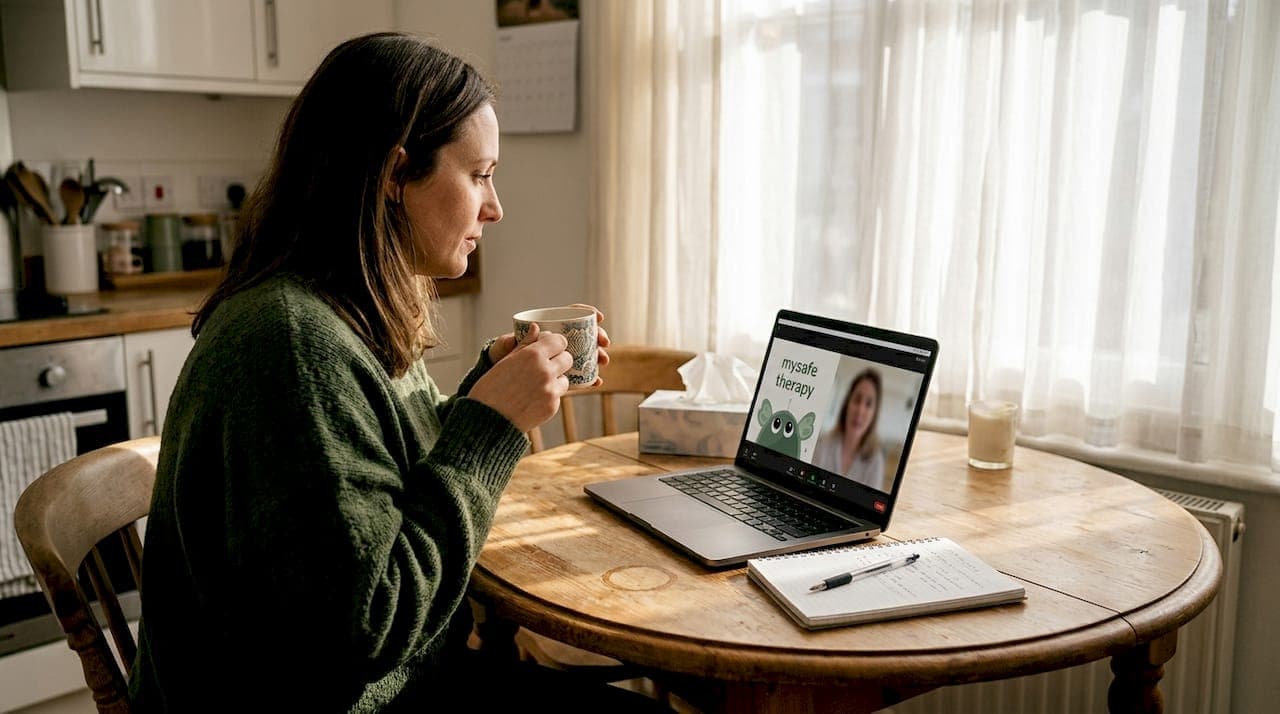
Many adults worry online therapy may not be safe or confidential, fearing their personal struggles could be exposed or mishandled. This concern often stops people from seeking help they desperately need. The truth is, UK regulations and technology work together to ensure your privacy during online therapy sessions. This guide explains how confidentiality protections, secure platforms, and practical safety steps create a trustworthy environment for your mental health journey. You will learn exactly what safeguards protect you and how to choose secure therapy options with confidence.
Table of Contents
- Understanding UK regulations protecting your privacy
- How technology ensures secure online therapy sessions
- Evidence for the effectiveness and satisfaction of online therapy
- Practical tips for staying safe and comfortable during your online therapy
- Explore safe, confidential online therapy options with MySafeTherapy
- Is online therapy as confidential as in-person therapy?
- What should I check before starting online therapy?
- Are online therapy sessions effective for anxiety and depression?
- How do I handle technical problems during an online therapy session?
- What happens if I disclose a crisis during my online therapy session?
- Can I switch therapists if the match is not working?
Key takeaways
| Point | Details |
|---|---|
| Legal protection | UK online therapy follows strict Data Protection Act 2018 and GDPR requirements for confidentiality |
| Technology security | Encrypted video platforms and secure data storage protect your personal information during sessions |
| Clinical effectiveness | Online therapy matches in-person treatment outcomes for anxiety, depression, and trauma |
| Verification matters | Check therapist registration with BACP, UKCP, or HCPC before starting sessions |
| Preparation essential | Create a private space, test your internet connection, and keep emergency contacts ready |
Understanding UK regulations protecting your privacy
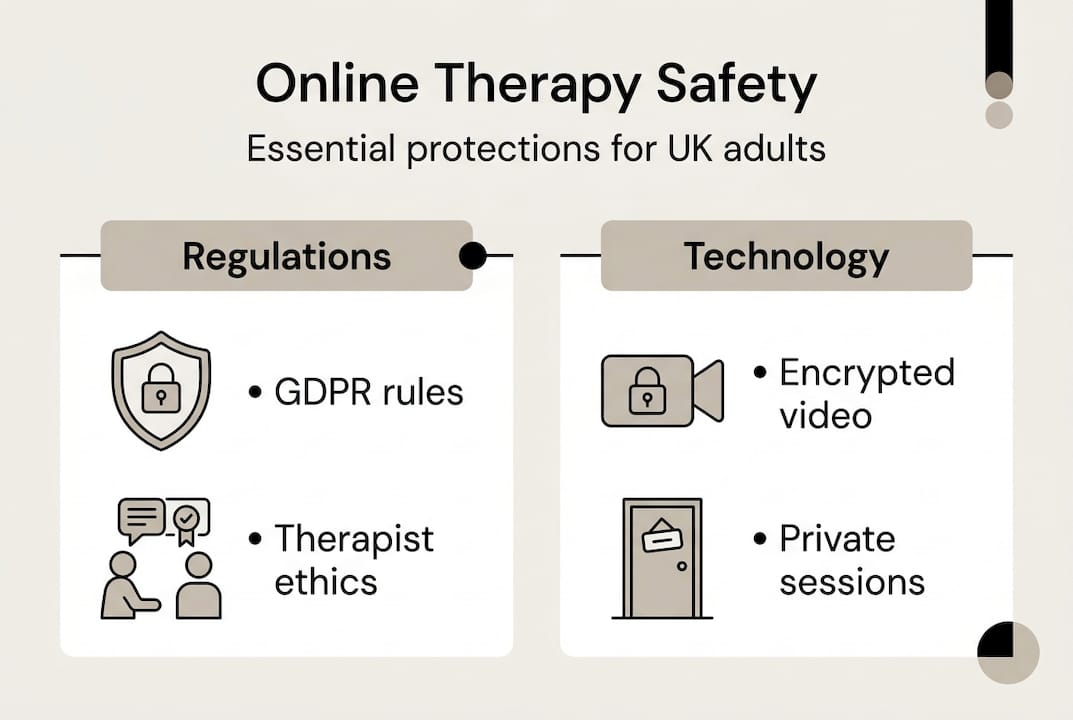
When you share your deepest fears and struggles with a therapist, you need absolute certainty that your words remain private. The UK has built robust legal and ethical frameworks specifically to protect your confidentiality during online therapy sessions.
The British Association for Counselling and Psychotherapy and the UK Council for Psychotherapy establish ethical standards that all registered therapists must follow. These professional bodies require therapists to maintain strict confidentiality, undergo regular supervision, and adhere to codes of conduct that prioritise your safety. If a therapist violates these standards, they face serious consequences including loss of registration.
Your personal data receives additional protection through the Data Protection Act 2018 and GDPR. These laws require therapy platforms to obtain your explicit consent before collecting information, store your data securely, and allow you to access or delete your records at any time. Online therapy services must comply with these regulations or face substantial penalties.
Confidentiality has specific boundaries you should understand. Therapists may break confidentiality only when there is serious risk of harm to you or others, when required by court order, or in cases involving terrorism or money laundering. These exceptions are narrow and clearly defined to balance your privacy with public safety.
Your data privacy rights during online therapy include:
- Right to know what personal information your therapist collects and stores
- Right to access your therapy notes and session records upon request
- Right to correct inaccurate information in your records
- Right to request deletion of your data after treatment ends
- Right to withdraw consent for data processing at any time
- Right to complain to the Information Commissioner's Office if protections are violated
Confidentiality is strongly protected legally in UK online therapy, with professional bodies and data protection laws creating multiple layers of security around your personal information.
These protections mean you can speak freely about your mental health challenges without fear of exposure. The legal framework treats your therapy conversations with the same seriousness as medical consultations, recognising that privacy is essential for effective treatment.
How technology ensures secure online therapy sessions
Legal protections only work when technology implements them properly. The platforms and tools your therapist uses create the practical security that keeps your sessions confidential and safe from unauthorised access.
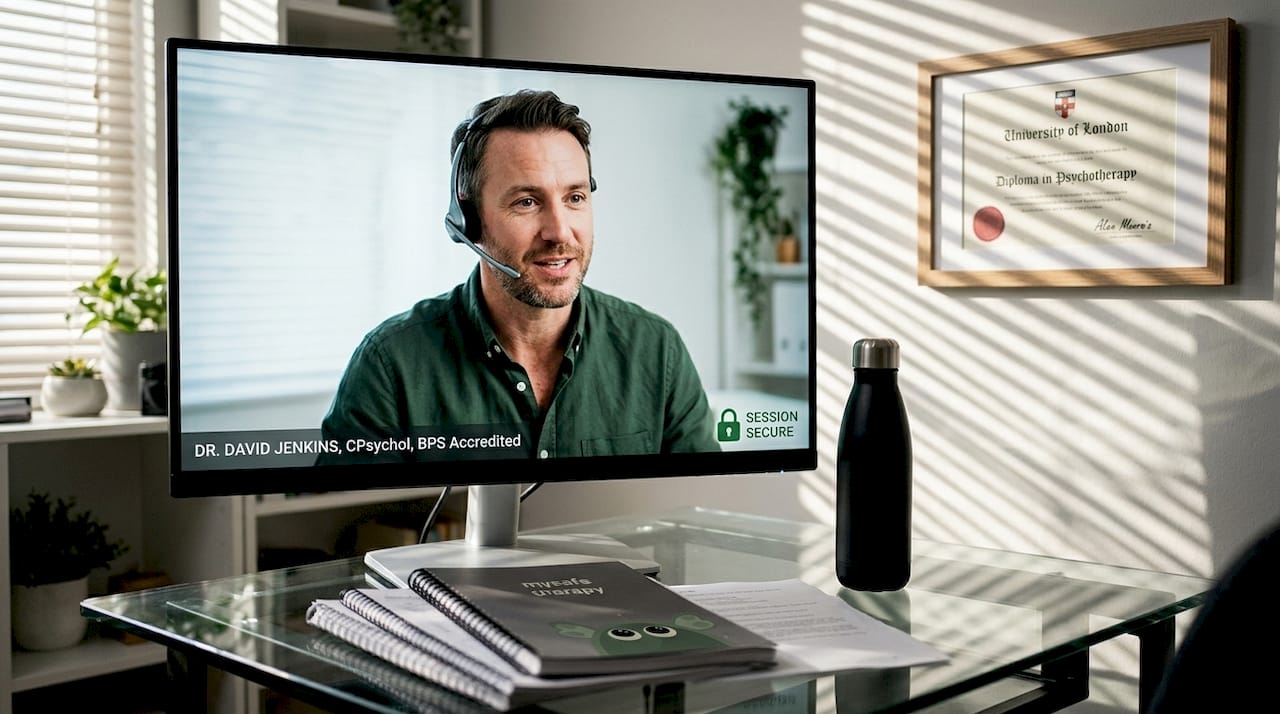
Secure video platforms form the foundation of safe online therapy. These platforms use end-to-end encryption, which means your video and audio data is scrambled during transmission so only you and your therapist can decode it. Even if someone intercepts the data, they see only meaningless code. Reputable therapy services use platforms specifically designed for healthcare, not consumer video chat apps that lack proper security features.
Therapists must establish clear contracts covering privacy policies, how they handle technical issues, and emergency protocols before your first session. These contracts should specify:
- How your therapist stores and protects session recordings and notes
- What happens if your internet connection drops during a session
- How to contact your therapist between sessions safely
- Emergency procedures if you disclose immediate risk during a session
- Data retention policies and when records are deleted
Risk management plans help therapists safeguard clients remotely. Your therapist should assess your safety at the start of treatment, identify potential risks specific to online delivery, and create strategies to address them. This might include establishing emergency contacts, agreeing on crisis protocols, or scheduling more frequent check-ins during difficult periods.
Steps therapists take to secure your sessions technically:
- Use GDPR-compliant video platforms with healthcare-grade encryption
- Store client records on secure, password-protected servers with regular backups
- Access client information only through secure, private networks, never public WiFi
- Update software regularly to patch security vulnerabilities
- Use strong passwords and two-factor authentication for all systems
- Conduct regular security audits to identify and address potential weaknesses
Pro Tip: Before your first session, ask your therapist directly which video platform they use and whether it meets GDPR standards. A professional will happily explain their security measures and provide written documentation of their privacy policies. If they cannot clearly answer these questions, consider this a red flag.
The table below compares features of common secure teletherapy platforms used in the UK:
| Platform | End-to-end encryption | GDPR compliant | Session recording | Waiting room feature | Mobile app |
|---|---|---|---|---|---|
| Attend Anywhere | Yes | Yes | Optional | Yes | Yes |
| Zoom Healthcare | Yes | Yes | Optional | Yes | Yes |
| Doxy.me | Yes | Yes | No | Yes | Yes |
| VSee | Yes | Yes | Optional | Yes | Yes |
Understanding these technical safeguards helps you make informed choices about your therapy provider. When preparing for therapy safely, knowing what security features to expect empowers you to ask the right questions and verify your therapist takes your privacy seriously.
Evidence for the effectiveness and satisfaction of online therapy
Knowing your sessions are secure matters little if the therapy itself does not work. Fortunately, extensive research confirms that online therapy delivers results comparable to traditional face-to-face treatment for anxiety, depression, and trauma.
Digital cognitive behavioural therapy shows strong effectiveness for anxiety disorders, with effect sizes of 1.08 compared to waitlist controls. This means people receiving online CBT experience substantially greater symptom reduction than those waiting for treatment. For depression, online therapy produces outcomes statistically equivalent to in-person sessions, giving you genuine choice in how you access care.
Trauma-focused digital therapy demonstrates particularly impressive results. Studies show adjusted differences of minus 4.92 on the PTSD Checklist for DSM-5, indicating meaningful symptom reduction for people with post-traumatic stress disorder. This matters because trauma survivors often find it easier to engage with difficult memories from the safety of their own homes rather than travelling to a clinic.
Patient satisfaction metrics reveal online therapy meets real-world needs effectively:
- 82% of clients report high satisfaction with online therapy services
- No-show rates drop to 15-20% compared to 30-40% for in-person appointments
- Clients appreciate flexible scheduling including evening and weekend sessions
- Many report feeling more comfortable discussing sensitive topics from home
- Therapy completion rates increase when clients avoid travel barriers
High satisfaction rates and strong clinical outcomes demonstrate that online therapy is not a compromise but a legitimate, effective treatment option for UK adults seeking mental health support.
Meta-analyses comparing online versus in-person therapy outcomes consistently find no significant differences in effectiveness for common mental health conditions. This research base has convinced the NHS to incorporate digital therapies into standard treatment pathways, recognising them as evidence-based interventions rather than experimental alternatives.
Therapist-patient matching significantly influences therapy success regardless of delivery format. Online platforms often provide better matching opportunities because you can access specialists beyond your immediate geographical area. This means you are more likely to find a therapist who truly understands your specific challenges, whether that is workplace burnout, relationship difficulties, or cultural identity issues.
The types of therapy for anxiety available online mirror those offered in traditional settings, including CBT, psychodynamic therapy, and person-centred approaches. You are not limited to a narrow range of treatments just because you choose online delivery. The therapist matching benefits of digital platforms actually expand your options rather than restricting them.
This evidence base should reassure you that choosing online therapy does not mean accepting inferior care. The research clearly shows you can achieve meaningful mental health improvements through secure, confidential online sessions with qualified UK therapists.
Practical tips for staying safe and comfortable during your online therapy
Understanding the evidence and regulations is valuable, but you also need concrete steps to maximise your safety and comfort during actual therapy sessions. These practical strategies help you create the secure environment necessary for effective treatment.
Preparing your physical and digital setting for privacy:
- Choose a private room where you will not be interrupted or overheard during sessions
- Use headphones to prevent others from hearing your therapist's voice
- Test your internet connection speed beforehand, aiming for at least 3 Mbps upload and download
- Close unnecessary browser tabs and applications to improve video quality
- Position your camera at eye level with good lighting on your face
- Have a backup device ready in case your primary device fails
- Inform household members of your session times to prevent interruptions
- Lock the door if possible or place a "do not disturb" sign outside
Keeping emergency contacts and resources readily available provides crucial safety nets. Write down these numbers and keep them visible during sessions:
- NHS 111 for urgent but non-emergency medical advice
- Samaritans helpline: 116 123 (available 24/7 for emotional support)
- Emergency services: 999 for immediate life-threatening situations
- Your GP surgery contact details for follow-up care coordination
- Crisis text line: text SHOUT to 85258 for text-based crisis support
Verifying therapist registration protects you from unqualified practitioners. Visit the BACP, UKCP, or HCPC online registers and search for your therapist's name. Legitimate therapists will provide their registration number and encourage you to verify their credentials. If someone refuses to share this information or claims exemption from registration requirements, do not proceed with treatment.
Pro Tip: Create a simple signal system with your therapist for managing interruptions or tech glitches without breaking therapeutic flow. For example, holding up one finger could mean "I need a moment" while waving your hand might signal "connection problems." This prevents awkward confusion and helps you both respond smoothly to unexpected issues.
Clear communication with your therapist regarding safety concerns builds trust and prevents misunderstandings. During your initial consultation, discuss how your therapist handles emergency situations, what happens if you disclose suicidal thoughts, and how they balance confidentiality with safety responsibilities. A skilled therapist will welcome these questions and provide clear, reassuring answers.
Before committing to therapy, consider taking a therapy need assessment to understand whether online treatment suits your current situation. Some conditions, particularly active psychosis or severe substance dependence, may require in-person or intensive support that online therapy cannot safely provide. An honest assessment helps you choose the right level of care.
These practical steps transform abstract security concepts into tangible actions you control. By preparing thoroughly, you create the safe space necessary for meaningful therapeutic work.
Explore safe, confidential online therapy options with MySafeTherapy
Now that you understand how UK regulations, technology, and preparation create safe online therapy, you might wonder where to find services that genuinely prioritise your security and confidentiality. MySafeTherapy connects you with BACP, UKCP, and NCPS-accredited therapists through a GDPR-compliant platform designed specifically for UK adults seeking mental health support.
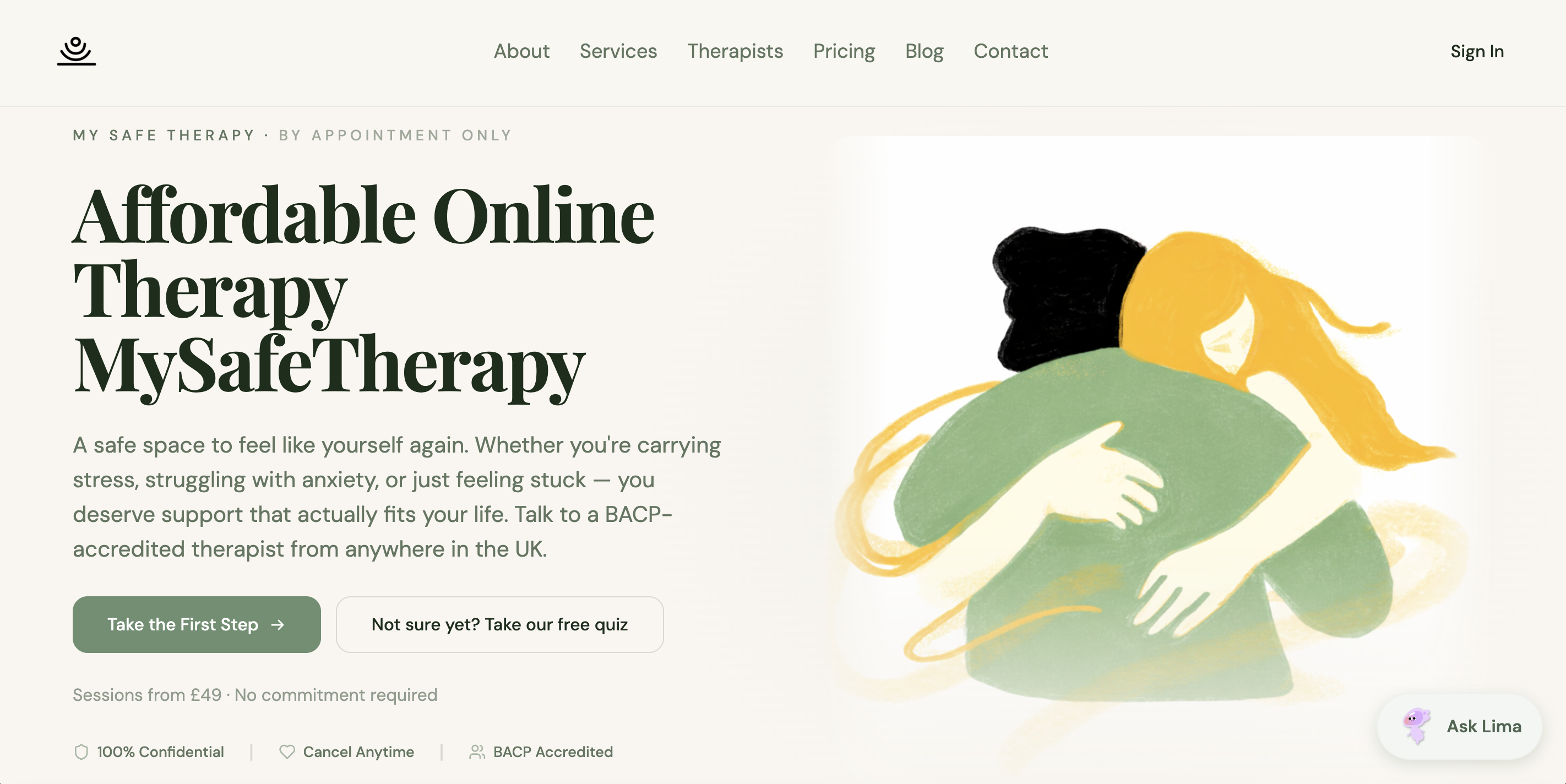
The therapy need quiz helps you assess whether therapy is right for you and what type of support might work best for your situation. This free assessment takes just minutes and provides personalised guidance based on your responses. You will discover whether your concerns warrant professional support or whether self-help resources might suffice.
MySafeTherapy offers flexible session formats including video, chat, and avatar-based therapy to match your comfort level and preferences. All therapists undergo thorough vetting to verify their qualifications and professional registration. The platform uses encrypted video technology and secure data storage that meets UK healthcare standards, giving you confidence that your personal information remains protected throughout your treatment journey.
Is online therapy as confidential as in-person therapy?
Yes, UK online therapy confidentiality receives the same legal protections as face-to-face sessions through Data Protection Act 2018, GDPR, and professional body ethical codes. Therapists must maintain the same confidentiality standards regardless of delivery format. The only exceptions involve serious risk situations where harm prevention outweighs privacy, such as immediate suicide risk or child protection concerns. These exceptions apply equally to in-person and online therapy, so you are not accepting reduced privacy by choosing digital sessions.
What should I check before starting online therapy?
Verify your therapist holds current registration with BACP, UKCP, or HCPC by searching their online registers using the therapist's name and registration number. Confirm the platform uses encryption and GDPR-compliant data protection by asking directly about security measures. Prepare a private space with stable internet connection of at least 3 Mbps, test your video and audio equipment beforehand, and ensure you have emergency contact numbers readily available. Request written documentation of privacy policies and emergency protocols before your first session.
Are online therapy sessions effective for anxiety and depression?
Research confirms online therapy produces effectiveness comparable to in-person treatment for anxiety and depression, with effect sizes of 1.08 for generalised anxiety disorder. The NHS endorses digital therapies as evidence-based interventions and incorporates them into standard treatment pathways. Patient satisfaction rates reach 82%, with many clients reporting they feel more comfortable discussing sensitive topics from home. Meta-analyses show no significant outcome differences between online and face-to-face therapy for these common mental health conditions.
How do I handle technical problems during an online therapy session?
Establish a backup communication plan with your therapist before your first session, such as a phone number to call if video connection fails. Close unnecessary applications and browser tabs to maximise bandwidth for your therapy platform. If connection drops, wait 2-3 minutes for your therapist to reconnect before using the backup contact method. Most platforms include waiting room features that allow smooth reconnection without losing your session time. Your therapist should extend sessions slightly to compensate for technical interruptions or offer to reschedule if problems persist.
What happens if I disclose a crisis during my online therapy session?
Your therapist will follow established crisis protocols discussed during your initial contracting, which typically involve immediate risk assessment and safety planning. They may ask for your current location, whether you have means to harm yourself, and who else is present in your home. If you are in immediate danger, your therapist may contact emergency services on your behalf while staying connected with you. For less acute concerns, they will work with you to develop a safety plan including emergency contacts, coping strategies, and follow-up arrangements. This is why providing accurate contact information and emergency contacts before starting therapy is essential.
Can I switch therapists if the match is not working?
Absolutely, and reputable platforms make switching straightforward without penalty or awkward conversations. Therapeutic relationship quality significantly impacts treatment outcomes, so finding the right match matters more than loyalty to your first therapist. Most services allow you to request a new therapist through their platform interface, and your records transfer securely to maintain continuity of care. Good therapists understand that personal chemistry affects therapy success and will not take offence if you need a different approach or personality style. Switching therapists is a normal part of finding effective mental health support.