
TL;DR:
- Online therapy is effective for mild to moderate anxiety, depression, and trauma.
- Preparation includes ensuring a private space, reliable internet, and using GDPR-compliant platforms.
- Choose NHS for free, longer waits or private for quicker, more flexible sessions.
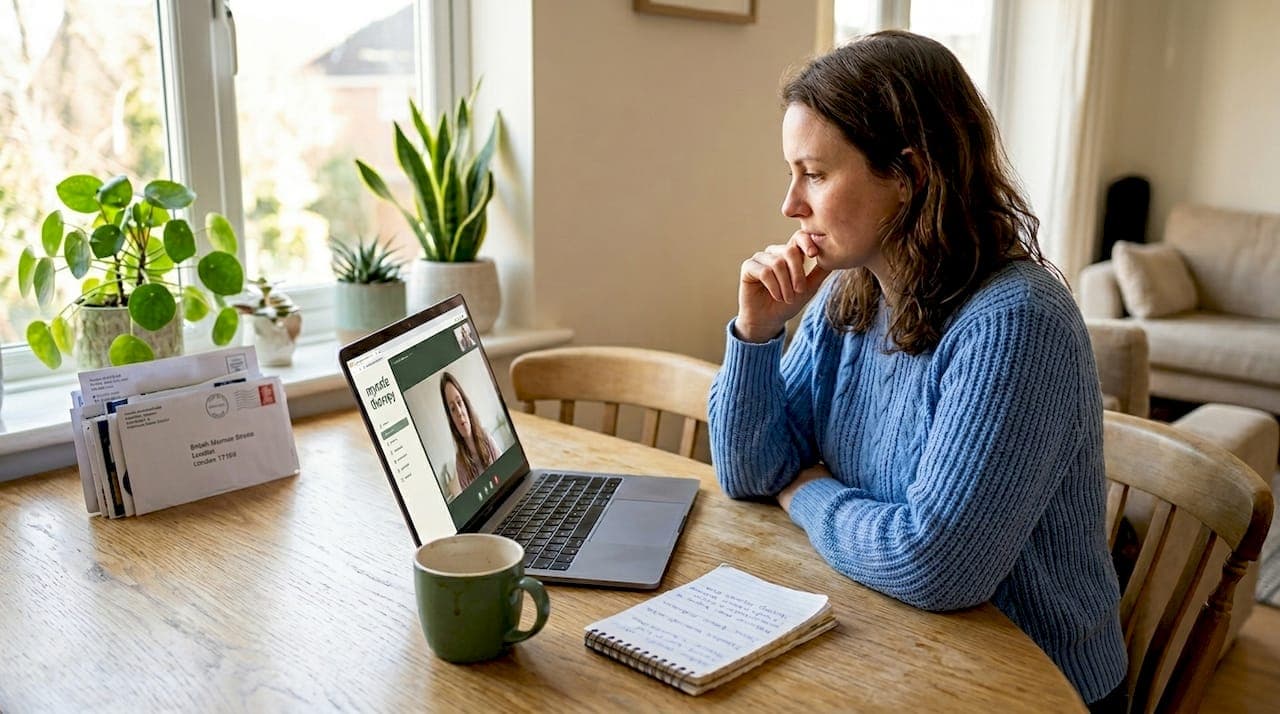
Seeking help for anxiety, depression, or trauma can feel like an enormous hurdle. Booking a face-to-face appointment often means long waits, inconvenient locations, and the quiet fear of being seen walking into a clinic. Online therapy removes many of those barriers, offering confidential, flexible support from your own home. Yet many adults in the UK are unsure how to begin, which platforms to trust, or whether it will actually work for them. This guide covers every stage clearly: from deciding whether online therapy suits your needs, to preparing your setup, choosing between NHS and private routes, and making the most of each session.
Table of Contents
- Understanding online therapy: Is it right for you?
- What you need before you begin: Requirements and preparation
- How to get started: NHS and private routes explained
- Making the most of your sessions: What to expect and expert tips
- Addressing common concerns and limitations
- An expert perspective: What actually works in online therapy
- Take the first step with trusted support
- Frequently asked questions
Key Takeaways
| Point | Details |
|---|---|
| Accessible support | You can start online therapy easily in the UK, with options for NHS and private care. |
| Prepare before starting | Check your privacy, tech, and personal readiness for a smooth online session. |
| Choose accredited therapists | Always ensure your therapist is BACP or UKCP accredited and GDPR compliant for safety. |
| Expect clear steps | Most services follow simple processes: self-assessment, referral/sign-up, and confidential video sessions. |
| Know the limits | Online therapy suits most but not all; high-risk cases need specialist or in-person help. |
Understanding online therapy: Is it right for you?
Online therapy is a structured, professional mental health service delivered through digital means rather than a physical room. Formats include live video calls, telephone sessions, and text-based or chat therapy. Each format suits different preferences and circumstances, so understanding the options helps you choose what fits your life.
The evidence base is strong. Online therapy is as effective as in-person therapy for anxiety, depression, and PTSD, according to a growing body of clinical research. For mild to moderate presentations of these conditions, outcomes are broadly comparable to face-to-face work. If you are managing everyday anxiety, low mood, relationship difficulties, or early-stage trauma responses, online therapy is a clinically sound option. You can read more about specific approaches in our guide to therapy sessions for anxiety.
That said, online therapy is not appropriate for everyone. It is important to be honest about your current situation before committing to a digital format.
Online therapy is generally suitable for:
- Mild to moderate anxiety or depression
- Relationship difficulties and communication issues
- Work-related stress and burnout
- Grief and adjustment challenges
- Trauma responses that are stable and not in acute crisis
Consider in-person support instead if you:
- Are experiencing severe mental illness requiring intensive intervention
- Are at high risk of suicide or self-harm
- Have complex trauma that requires close physical monitoring
- Need medication management alongside psychological support
"The format matters less than the relationship. If you feel safe and heard, therapy can work wherever it takes place."
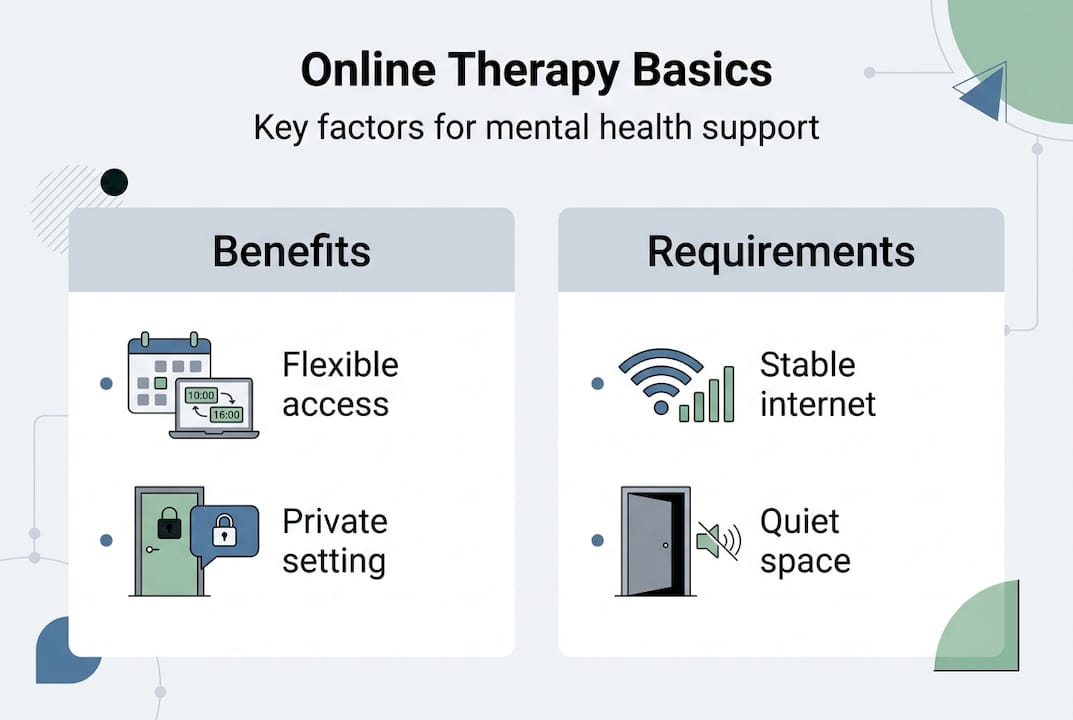
Practical factors also matter. You will need a private space, a reliable internet connection, and basic comfort with video or messaging technology. These are not high bars, but they are worth confirming before you book.
What you need before you begin: Requirements and preparation
Once you have decided that online therapy is a suitable option, preparing your setup in advance makes each session run more smoothly and ensures confidentiality is maintained from the outset.
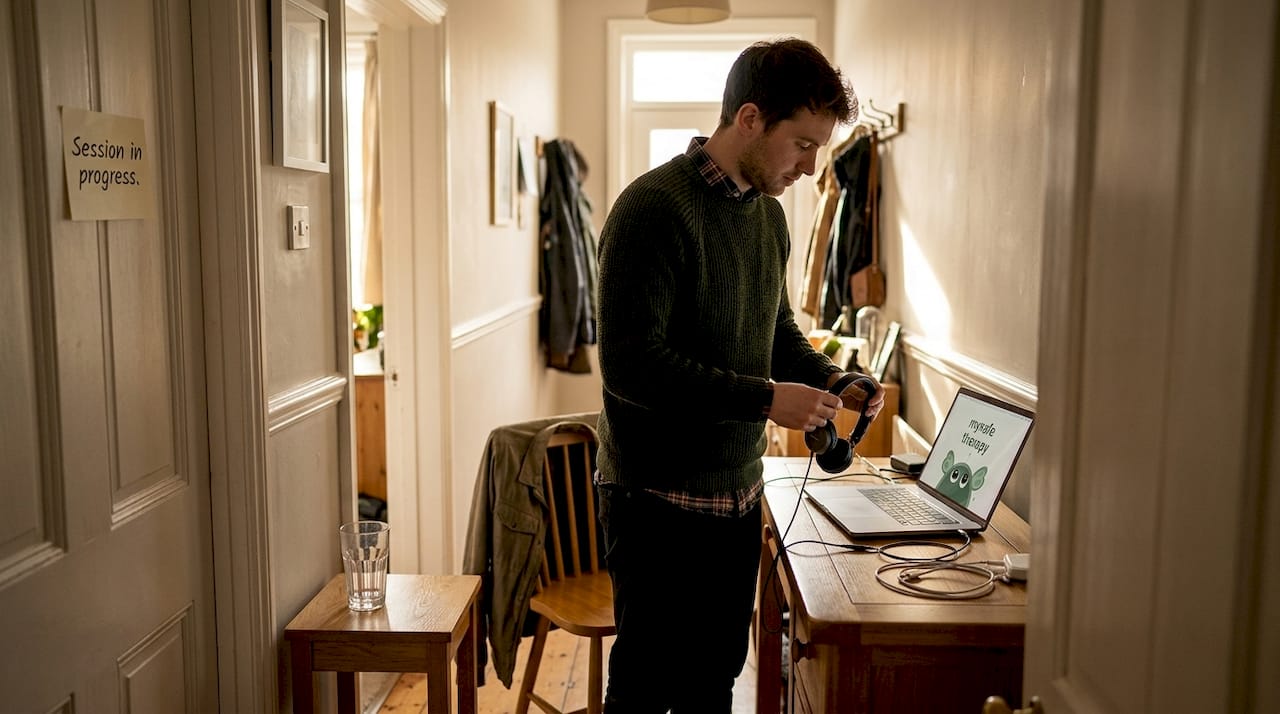
Our guide to preparing for online therapy covers this in detail, but the essentials are straightforward. You need a device with a camera and microphone, a stable internet connection, and a private space where you will not be interrupted. Headphones are strongly recommended if you share your home with others.
| Requirement | Details |
|---|---|
| Device | Laptop, tablet, or smartphone with camera and microphone |
| Internet | Stable broadband or 4G/5G connection |
| Environment | Private room, door closed, minimal background noise |
| Platform | GDPR-compliant, encrypted video or chat service |
| Documentation | Any GP letters, previous diagnoses, or medication lists |
Before your first session, most platforms ask you to complete an intake form or short questionnaire. This helps match you with a suitable therapist. Sessions are typically 50 minutes, and the matching process often uses a structured form or quiz to align your needs with a therapist's specialisms.
Personal preparation is just as important as technical setup. Spend a few minutes before your first session writing down what you want to address. You do not need a polished speech, but having a rough sense of your goals helps the therapist structure the early work effectively.
Data privacy is a non-negotiable consideration. Ensure any platform you use is GDPR compliant and uses end-to-end encrypted communication. You can review the platform's privacy policy before signing up, and it is reasonable to ask your therapist directly about how your data is stored.
Pro Tip: Silence your phone notifications and put a note on your door before each session. These small steps protect your confidentiality and help you stay present throughout.
For a full walkthrough of the sign-up process, visit the starting therapy practical steps page.
How to get started: NHS and private routes explained
With your setup confirmed, you can now choose between NHS and private online therapy. Both are legitimate routes, and the right choice depends on your circumstances, budget, and how urgently you need support.
NHS Talking Therapies: Step-by-step
- Confirm you are aged 18 or over and registered with a GP in England.
- Visit the NHS website and self-refer to Talking Therapies for free, confidential online sessions.
- Complete the referral form, which includes a brief assessment of your symptoms.
- Await a placement call, usually within one to two weeks.
- Attend an initial telephone assessment to confirm suitability and be matched with a therapist.
Private online therapy: Step-by-step
- Research platforms and check therapist accreditation via BACP or UKCP registers.
- Complete a sign-up form and therapist-matching questionnaire.
- Review therapist profiles and select based on specialism and availability.
- Book an initial session, often available within days.
- Attend your first session via secure video or chat.
| Factor | NHS Talking Therapies | Private online therapy |
|---|---|---|
| Cost | Free | Typically £50 to £100 per session |
| Wait time | Weeks to months | Often within days |
| Session types | CBT-focused, structured | Varied: CBT, psychodynamic, EMDR |
| Therapist choice | Limited | High degree of choice |
| Flexibility | Fixed scheduling | Evenings and weekends available |
The NHS receives over 1.76 million referrals annually, which explains the wait times. Private platforms offer faster access and greater flexibility. Our step-by-step online therapy guide and online therapy safety resource provide additional detail on verifying platform credibility before you commit.
Making the most of your sessions: What to expect and expert tips
Your first session is primarily an assessment. The therapist will ask about your current difficulties, your history, and what you are hoping to achieve. This is not an interrogation. It is a structured conversation designed to establish safety and set a direction for the work ahead.
Subsequent sessions typically follow a consistent pattern. You and your therapist will review progress from the previous week, address any between-session homework or reflections, and work through the agreed therapeutic focus. Sessions are often weekly, last around 50 minutes, and involve goal-setting alongside between-session tasks.
Strategies for getting the most from each session:
- Arrive on time and in a settled state. Rushing directly from another task reduces your ability to engage.
- Be honest, even when it feels uncomfortable. Therapists are trained to handle difficult disclosures without judgement.
- Complete any between-session tasks. These are not optional extras; they are integral to progress.
- Track your mood between sessions using a journal or app. Patterns become visible over time.
- Raise concerns early. If something is not working, say so in the session rather than waiting.
Pro Tip: After each session, write three sentences: what you discussed, what you noticed, and what you want to bring next time. This simple habit accelerates progress significantly.
If the therapeutic relationship does not feel right after three or four sessions, it is entirely reasonable to request a different therapist. Fit matters. Our guide to finding accredited online therapists explains how to assess compatibility, and our overview of therapy types for anxiety helps you identify which approach may suit your needs best.
Addressing common concerns and limitations
Online therapy is not without its boundaries. Being clear-eyed about these from the start prevents frustration and ensures you access the right level of support.
Online therapy is not ideal for severe mental health conditions, high suicide risk, or complex trauma that requires close in-person monitoring. If you are in crisis, contact the Samaritans on 116 123 or attend your nearest A&E. Online therapy is a scheduled, planned intervention. It is not a crisis service.
Common concerns and practical responses:
- Privacy in a shared home: Use headphones, choose a room with a lockable door, or consider text-based therapy if audio feels too exposed.
- Technology failures: Agree a backup plan with your therapist before sessions begin, such as switching to a phone call if video drops.
- Feeling disconnected through a screen: This often eases after two or three sessions as the relationship develops.
- Uncertainty about whether it is working: Use mood tracking tools and discuss progress openly with your therapist at regular intervals.
For trauma specifically, specialist approaches are available online. Online EMDR effectiveness for trauma is supported by 2021 research, making it a credible option for those with PTSD or flashback-related difficulties, provided their presentation is stable. Trauma-focused CBT (TF-CBT) is similarly available through accredited online practitioners.
"If your needs change, your therapy should change too. Raising this with your therapist is not a failure. It is good self-advocacy."
For broader guidance on day-to-day wellbeing between sessions, our mental health management tips resource offers practical tools to support your progress.
An expert perspective: What actually works in online therapy
After reviewing the evidence and observing outcomes across many clients, one finding stands out consistently: the quality of the therapeutic relationship matters far more than the platform or the technology used to deliver it. A well-matched therapist working through a basic video call will outperform a poorly matched one using the most sophisticated digital tools available.
Accreditation and confidentiality are the two factors that should drive your platform choice. Whether a service offers AI journaling or mood-tracking dashboards is secondary. What matters is that your therapist is registered with BACP, UKCP, or NCPS, and that the platform is GDPR compliant. Our overview of evidence-based therapists explains why this distinction is clinically significant.
The uncomfortable reality is that online therapy is not a universal solution. Some people need more intensive support. Others find the screen creates a distance they cannot bridge. Recognising this early and adjusting your approach is not a setback. It is informed decision-making. Small, consistent steps and honest feedback within sessions produce better outcomes than passive attendance. Advocate for yourself, track your progress, and do not wait until things feel unworkable before raising concerns.
Take the first step with trusted support
If you have read this far, you already have the information needed to begin. The next step is connecting with a therapist who is qualified, accredited, and matched to your specific needs.
At MySafeTherapy, all therapists are registered with recognised UK professional bodies, and every session takes place on a GDPR-compliant, encrypted platform. You can choose between video, chat, or avatar-based sessions, with appointments available in the evenings and at weekends. The sign-up process is straightforward, and therapist switching is available at any time. Visit the start therapy page to complete your matching questionnaire and book your first confidential session at a time that suits you.
Frequently asked questions
Can I start online therapy for free in the UK?
UK adults can self-refer to free NHS Talking Therapies for anxiety and depression online if you are aged 18 or over and registered with a GP. Wait times vary by area.
Is online therapy as effective as seeing someone in person?
Meta-analyses confirm online therapy is as effective as face-to-face for anxiety, depression, and PTSD, though individual outcomes depend on therapist fit and consistent engagement.
How can I be sure my online therapist is safe and accredited?
Verify BACP or UKCP accreditation directly on the relevant professional body's register, and confirm the platform uses encrypted video and is GDPR compliant before booking.
What if I have trouble with privacy or technology at home?
Tech issues and privacy concerns in shared spaces are common. Use headphones, agree a backup communication method with your therapist, and ask about text-based sessions if audio feels too exposed.
Is online therapy suitable for trauma or complex mental health issues?
It can be effective for trauma when you work with an EMDR or TF-CBT specialist, as online EMDR is supported by 2021 research, but severe or high-risk presentations require in-person clinical support.