
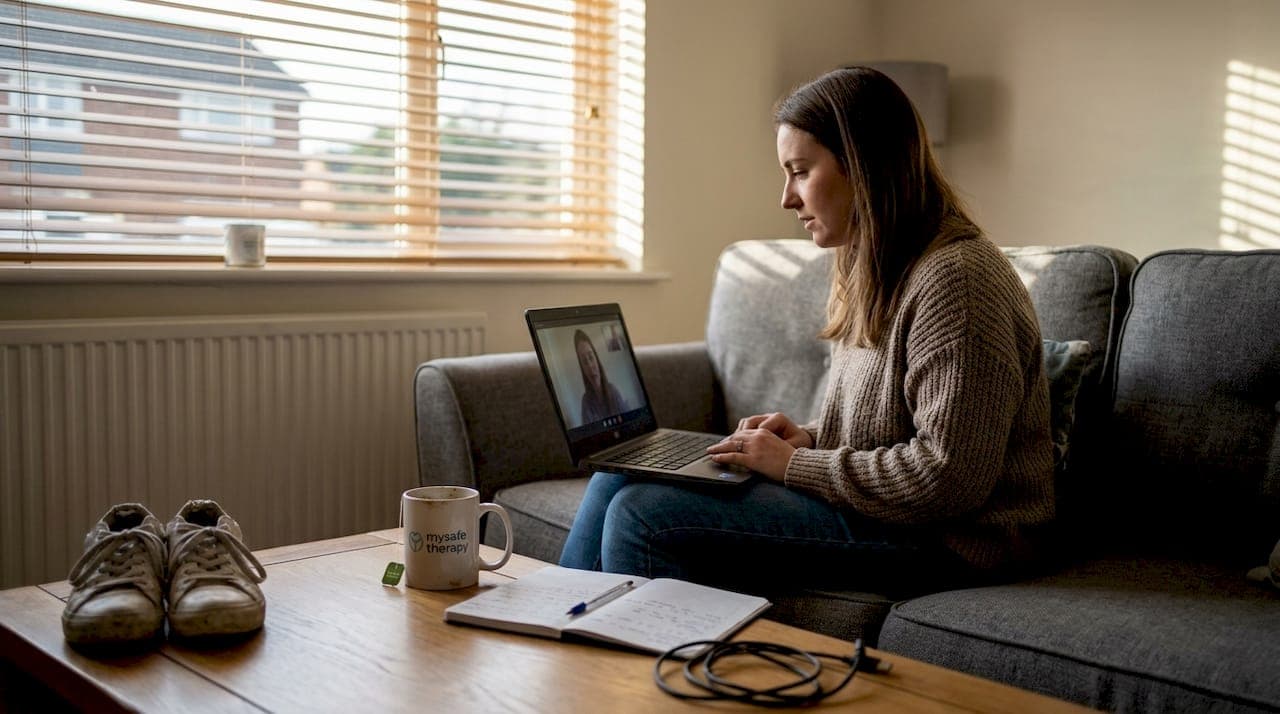
Starting therapy can feel daunting when you're unsure what actually happens in sessions. Many adults in the UK hesitate to seek help for anxiety and depression because the process seems unclear or overwhelming. This guide explains exactly what to expect from online therapy sessions, how to prepare effectively, and why confidential, accessible care works. You'll discover the therapy types available, how privacy is protected, and what realistic outcomes look like. By understanding the structure and benefits of therapy sessions, you can approach treatment with confidence and clarity.
Table of Contents
- Key Takeaways
- Understanding therapy session types and what suits you
- Maintaining confidentiality and privacy in online therapy
- Preparing for your first and ongoing therapy sessions
- What to expect regarding results and progress in online therapy
- Discover personalised online therapy with MySafeTherapy
- Frequently asked questions
Key Takeaways
| Point | Details |
|---|---|
| Therapy types explained | Online therapy offers cognitive behavioural therapy, person centred and mindfulness approaches with formats such as phone, chat and video to suit different preferences, and CBT is NICE recommended first line for anxiety and depression with 50 to 75 per cent remission, while online CBT matches in person outcomes. |
| Confidentiality safeguards | Confidentiality rests on ethical codes under UK GDPR with encrypted platforms and your session content is not shared without your explicit written consent except in safeguarding or legal circumstances. |
| Privacy in practice | Online platforms use end to end encryption, secure servers and many avoid storing session recordings entirely. |
| Preparation steps | Create a private space, use headphones and plan goals or questions before sessions to maximise engagement. |
Understanding therapy session types and what suits you
Choosing the right therapy approach makes a significant difference to your experience and outcomes. The three main types available through online platforms each work differently and suit particular needs.
Cognitive behavioural therapy focuses on identifying and changing unhelpful thought patterns that fuel anxiety and depression. You'll work with your therapist to recognise negative thinking, challenge these thoughts with evidence, and develop healthier responses. Sessions typically include homework assignments where you practise new skills in real situations. CBT is NICE-recommended first line for anxiety and depression with 50-75% remission rates, and online CBT matches in-person outcomes.
Person-centred therapy takes a different approach by creating a supportive space where you explore feelings without judgement. Your therapist listens actively and helps you discover your own solutions rather than giving direct advice. This works particularly well if you want to understand yourself better or process difficult emotions at your own pace.
Mindfulness-based approaches teach you to observe thoughts and feelings without getting caught up in them. You'll learn meditation techniques and awareness exercises that reduce rumination and worry. This suits people who find their minds constantly racing or who struggle with intrusive thoughts.
Online therapy offers multiple formats beyond traditional video calls. Phone sessions work if you prefer not to be on camera. Chat-based therapy lets you type responses, which some find easier than speaking aloud. Guided self-help programmes combine structured materials with periodic therapist check-ins.
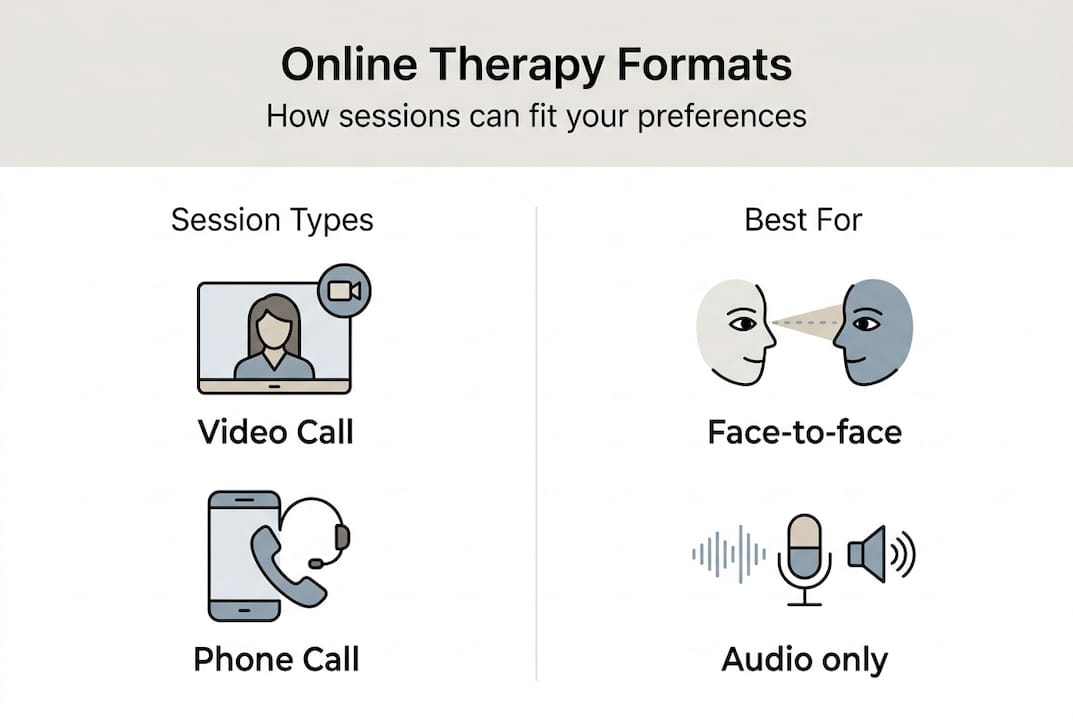
| Therapy type | Best for | Typical session structure | Evidence strength |
|---|---|---|---|
| CBT | Specific anxiety or depression symptoms | 45-60 minutes, agenda-driven, homework tasks | Strong: NICE-recommended, 50-75% remission |
| Person-centred | Self-exploration, processing emotions | 50 minutes, client-led discussion, reflective | Moderate: effective for general wellbeing |
| Mindfulness-based | Rumination, stress, worry patterns | 60 minutes, meditation practice, skill-building | Growing: reduces relapse in depression |
| Blended models | Flexible support needs | Mix of live sessions and self-help modules | Emerging: shows higher efficiency |
When selecting therapy types for anxiety, consider what feels comfortable. Some people prefer structured CBT homework whilst others value the open exploration of person-centred work. Your therapist can explain their approach during an initial consultation.
Pro Tip: Match the therapy format to your learning style. If you process information by writing, chat therapy might suit you better than video calls. If you need accountability, structured CBT with homework creates clear action steps.
Maintaining confidentiality and privacy in online therapy
Confidentiality forms the foundation of effective therapy. UK therapists must follow strict professional and legal obligations that protect your information.
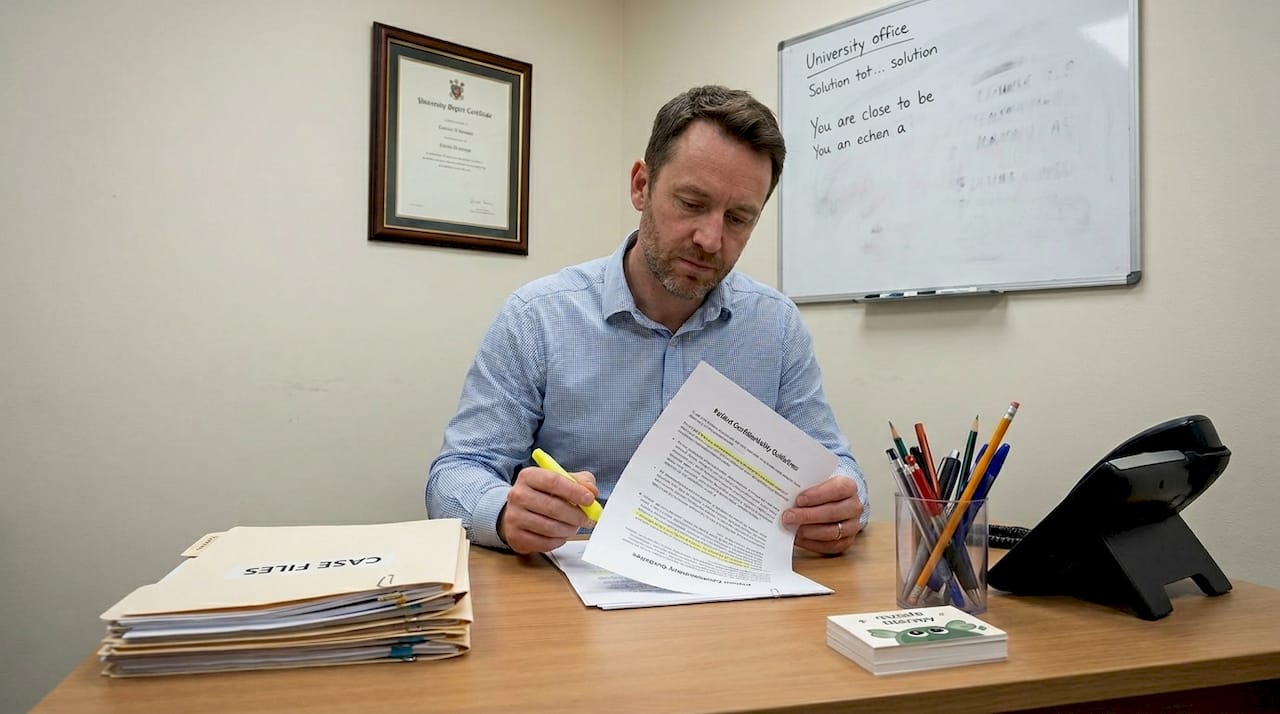
All accredited therapists registered with BACP, UKCP, or BPS work under ethical codes requiring complete confidentiality. Confidentiality is upheld under UK GDPR using encrypted platforms, with clients informed of limits around harm and safeguarding. Your therapist cannot share session content with anyone without your explicit written consent, except in specific circumstances.
Online platforms use multiple security layers to protect your privacy. End-to-end encryption means only you and your therapist can access session content. Secure servers store any records with the same protections as NHS systems. Video calls run through encrypted connections that prevent interception. Many platforms avoid storing session recordings entirely.
You control your own environment during online sessions, which adds privacy. Choose a room where others cannot overhear you. Use headphones to prevent sound travelling. Lock the door if possible. This level of control often exceeds what you'd have in a clinic waiting room.
Understanding confidentiality limits helps you engage openly:
- Risk of serious harm: If you express credible intent to harm yourself or others, your therapist must take action to ensure safety
- Safeguarding concerns: Suspected abuse of children or vulnerable adults requires reporting to appropriate authorities
- Court orders: Extremely rare, but therapists must comply with legal orders to disclose information
- Professional supervision: Therapists discuss cases anonymously with supervisors to maintain quality, but never use identifying details
Your therapist should explain these limits clearly in your first session. Most therapy content remains completely private. The exceptions exist solely to protect life and safety.
"Confidentiality creates the safety needed for honest exploration. When you trust that your words stay private, you can address the real issues holding you back rather than presenting a filtered version of your struggles."
Take the therapy confidentiality quiz to assess your understanding and readiness. Review UK therapy confidentiality guidelines for detailed professional standards.
Pro Tip: Before your first session, test your technology and internet connection. Use a secure personal device rather than a work computer. Create a simple signal with household members, like a closed door or sign, to prevent interruptions during your session time.
Preparing for your first and ongoing therapy sessions
Proper preparation significantly improves therapy engagement and outcomes. Preparation can improve therapy engagement, with meta-analyses showing preference affects outcome and hybrid models emerging.
Follow these steps before your first session:
- Test your technology 24 hours beforehand: check your camera, microphone, and internet speed
- Download any required apps or software and create your account
- Find a private space where you won't be interrupted for the full session duration
- Prepare a backup plan: have your therapist's phone number in case video fails
- Write down three main goals or concerns you want to address
- Note any questions about the therapy process itself
Your first session follows a predictable structure that reduces uncertainty. Most therapists begin with introductions and explaining how they work. You'll discuss confidentiality limits and practical arrangements like session frequency and cancellation policies. The therapist will ask about your current difficulties, relevant history, and what you hope to achieve. This assessment helps them tailor their approach to your needs.
Typical session structure includes:
- Check-in: Brief update on your week and current mood
- Agenda setting: Agree on what to focus on today
- Main work: Discussion, skill-building, or processing emotions depending on therapy type
- Summary: Recap key points and any actions to take
- Feedback: Opportunity to share what helped or didn't
Technical issues occasionally disrupt online sessions. If your connection drops, try rejoining immediately. If problems persist beyond five minutes, contact your therapist by phone to reschedule. Most therapists don't charge for sessions cut short by technical failures. Keep your therapist's contact details saved separately from the therapy platform.
Between sessions, engagement matters as much as the session itself. Keep a brief journal noting mood patterns, situations that triggered anxiety or low mood, and moments when you used therapy techniques. This record helps you and your therapist identify progress and adjust approaches. Practise any skills or exercises your therapist suggests. CBT homework might include thought records or behavioural experiments. Mindfulness approaches involve daily meditation practice.
Review preparing for therapy sessions for detailed guidance on maximising each appointment.
Pro Tip: Share your therapy goals explicitly with your therapist in the first session. Write them down and revisit them every few weeks to track progress. This personalises your care and helps your therapist adjust techniques to match what matters most to you.
What to expect regarding results and progress in online therapy
Understanding realistic outcomes helps you persist through the gradual process of therapy. Evidence shows online therapy delivers results comparable to traditional in-person treatment.
NHS empirical benchmark recovery sits at 51%, with online therapy outcomes comparable to in-person sessions and blended CBT showing higher recovery and efficiency.
| Therapy format | Recovery rate | Improvement rate | Dropout rate | Notes |
|---|---|---|---|---|
| In-person CBT | 51% | 63% | 15-20% | Traditional NHS benchmark |
| Online CBT | 48-52% | 61-65% | 25-30% | Matches in-person outcomes |
| Blended CBT | 55-58% | 68-72% | 18-22% | Combines live sessions with guided self-help |
| Self-guided digital | 35-40% | 48-52% | 40-50% | Lower engagement without therapist support |
Recovery means moving from clinical levels of anxiety or depression to normal functioning. Improvement indicates significant symptom reduction even if some difficulties remain. Both represent meaningful progress.
Several factors influence your individual outcomes. Patient preference matters considerably. If you feel comfortable with your chosen format and therapist, you're more likely to engage fully and benefit. Condition severity affects timelines. Mild to moderate anxiety or depression typically responds within 8-12 sessions, whilst severe symptoms may require longer treatment. The therapeutic alliance, your relationship with your therapist, predicts outcomes more strongly than the specific therapy type.
Signs of progress include:
- Noticing mood improvements, even if gradual or inconsistent initially
- Using coping strategies automatically in difficult situations
- Feeling more in control of anxious or depressive thoughts
- Improved sleep, appetite, or energy levels
- Better relationships as you communicate needs more clearly
- Reduced avoidance of situations that previously triggered anxiety
Progress rarely follows a straight line. You'll likely experience setbacks or difficult weeks. This doesn't mean therapy isn't working. Discuss these experiences openly with your therapist, who can adjust approaches or provide additional support.
Online therapy does show higher dropout rates than in-person treatment. The convenience that makes online therapy accessible can also make it easier to disengage when sessions feel challenging. Blended models combining live sessions with self-help modules aim to reduce dropout by offering flexible support between appointments. These hybrid approaches show promising results with higher recovery rates and better efficiency.
Expect to invest 8-16 sessions for meaningful change with anxiety or depression. Some people benefit from shorter interventions whilst others need longer-term support. Regular reviews with your therapist help determine whether to continue, reduce frequency, or conclude treatment.
Explore online therapy outcomes to understand how therapist matching affects results.
Discover personalised online therapy with MySafeTherapy
Now that you understand what therapy sessions involve, taking the next step becomes straightforward. MySafeTherapy connects you with UK-accredited therapists who specialise in anxiety and depression through secure, confidential online sessions.
Our platform matches you with therapists based on your specific needs, preferences, and goals. Take our free therapy quiz to assess whether therapy suits your current situation and what approach might help most. You'll access sessions from home at times that fit your schedule, including evenings and weekends. All therapists hold professional registration with BACP, UKCP, or NCPS, ensuring you receive evidence-based care.
Explore MySafeTherapy's full services including video, chat, and avatar-based sessions. Review our online therapy options to find the format that feels right for you. Confidential support starts with a single step.
Frequently asked questions
How confidential are online therapy sessions?
Online therapy sessions adhere to strict confidentiality under professional guidelines and UK law. Your therapist cannot share session content without your written consent except in rare circumstances involving risk of serious harm or safeguarding concerns. Platforms use end-to-end encryption and secure servers to protect your information. Your therapist will explain confidentiality limits clearly in your first session.
What should I do if I experience technical problems during a session?
Notify your therapist immediately if technical issues arise during your session. Try rejoining the video call if your connection drops. If problems prevent effective communication for more than five minutes, contact your therapist by phone to reschedule. Most therapists don't charge for sessions disrupted by technical failures. Prepare backup contact methods beforehand to handle these situations smoothly.
How do I know if therapy is working for me?
Look for gradual mood improvements, better coping skills in difficult situations, and progress towards your initial goals. You might notice reduced anxiety symptoms, improved sleep, or stronger relationships. Share your observations openly with your therapist, who can help you recognise subtle progress and adjust approaches if needed. Remember that therapy works gradually with individual timelines, and setbacks don't indicate failure.
Can therapy sessions be personalised to my needs?
Therapists customise their approach based on your specific goals, preferences, and presenting concerns. During initial sessions, you'll discuss what matters most to you and what therapy style feels comfortable. Your therapist adapts techniques, session frequency, and focus areas as your needs evolve. Online therapy enables flexible formats including video, phone, or chat, and blended models combine live sessions with self-help resources for truly personalised care.