
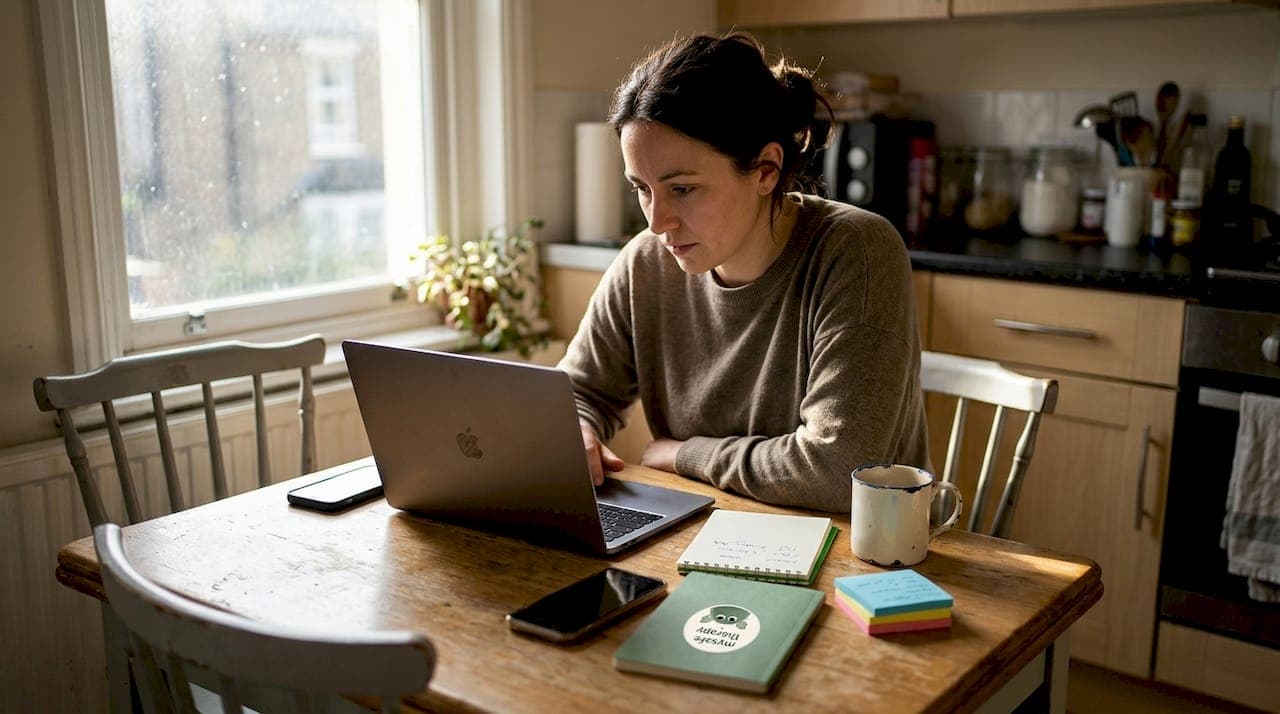
Wanting support for anxiety, depression, or relationship difficulties is one thing. Knowing where to start is another. Many people in the UK spend weeks, sometimes months, circling the idea of therapy without taking a single step, often because the process feels unclear or the fear of judgement feels too real. The good news is that confidential, stigma-free online therapy is more accessible than ever, and this guide walks you through exactly what to do, what to expect, and how to make it work for you.
Table of Contents
- What you need before starting online therapy
- Step-by-step: How online therapy works in the UK
- Therapy types, session formats, and what to expect
- Staying safe, confidential, and stigma-free online
- What success looks like: Progress, pitfalls, and measuring outcomes
- Ready to start online therapy? Take your next step
- Frequently asked questions
Key Takeaways
| Point | Details |
|---|---|
| Easy step-by-step start | You can self-refer or use a GP to begin online therapy through the NHS or private providers. |
| Effective for common issues | Online CBT and other therapies are proven to help anxiety, depression, and relationships as much as face-to-face sessions. |
| Privacy and safety assured | Reputable platforms ensure your data and sessions remain confidential thanks to GDPR compliance and encrypted technology. |
| Variety of session types | You can choose from video, phone, or guided self-help depending on your needs and situation. |
| Trackable progress | Most people notice improvements after a few sessions and can measure outcomes using regular progress reviews. |
What you need before starting online therapy
Once you've decided therapy might help, it's worth taking a few minutes to prepare before booking anything. The practical side is simpler than most people expect, but getting it right makes a real difference to how comfortable your sessions feel.
You'll need a reliable internet connection, a device with a working camera and microphone (a smartphone works fine), and a private space where you won't be overheard. That last point matters more than people realise. Even a parked car or a quiet bedroom with headphones can work well.
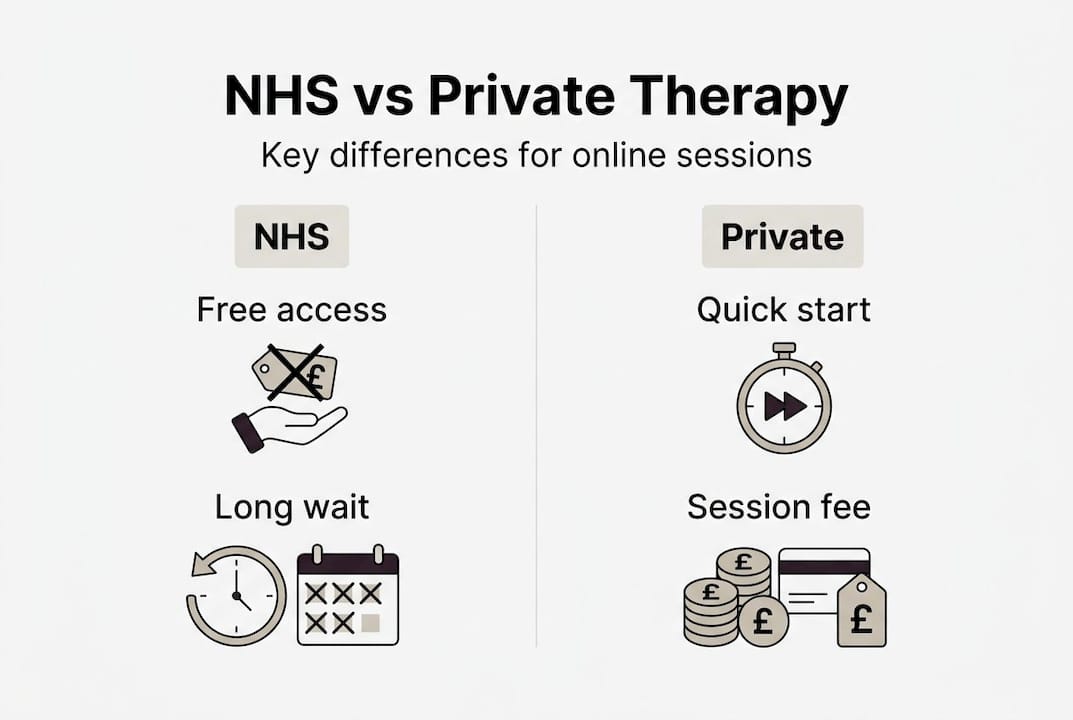
The bigger decision is whether to go through the NHS or a private provider. NHS talking therapies accept both self-referral and GP referral, which means you don't need a diagnosis to get started. The trade-off is waiting times, which can stretch from a few weeks to several months depending on your area. Private therapy gives you faster access, often within days, but comes at a cost. You can explore affordable therapy options if budget is a concern.
NHS vs private online therapy at a glance
| Feature | NHS | Private |
|---|---|---|
| Cost | Free | £40 to £150 per session |
| Waiting time | Weeks to months | Often within days |
| Referral needed | Self or GP referral | No referral needed |
| Therapist choice | Assigned | You choose |
| Session formats | Video, phone, self-help | Video, chat, avatar |
Before you book, always check that any platform you use is GDPR-compliant and that therapists are registered with a professional body such as BACP, UKCP, or NCPS. This is non-negotiable for your safety. Read more about online therapy safety before committing to a provider.
What to prepare emotionally:
- Have a rough idea of what you want to work on (anxiety, low mood, relationship stress, burnout)
- Know that you don't need to have everything figured out before your first session
- Be honest with yourself about your availability for weekly or fortnightly sessions
Pro Tip: Write down three things you'd like to feel differently about within the next three months. This simple exercise helps your therapist understand your goals from session one.
Step-by-step: How online therapy works in the UK
With everything in place, here's what actually happens during your online therapy journey. The process is more straightforward than most people imagine.
The five steps to starting online therapy:
- Self-refer or ask your GP. The NHS self-referral process is completed online in under ten minutes. Private platforms let you register directly.
- Complete a remote assessment. A brief phone or video call helps identify the right type of therapy for your needs.
- Get matched with a therapist. NHS assigns a therapist based on your needs; private platforms often let you browse profiles and choose.
- Attend your sessions. Most programmes run for 5 to 20 sessions, delivered via secure video, phone, or guided self-help modules.
- Review your progress. Regular check-ins using tools like PHQ-9 (for depression) and GAD-7 (for anxiety) help track how you're doing.
One of the most common misconceptions is that online therapy is somehow a lesser version of in-person support. The evidence says otherwise. Internet-delivered CBT shows 68 to 72% improvement rates, comparable to face-to-face therapy for most common mental health issues.
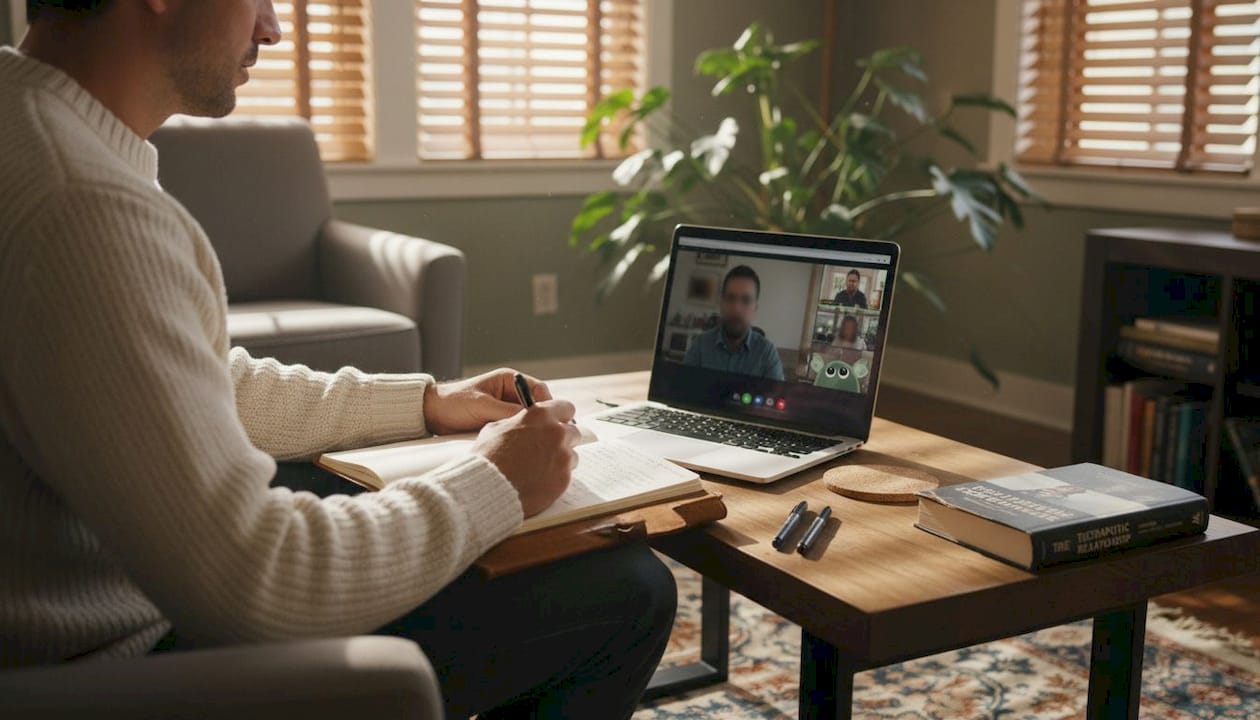
NHS vs private: a practical comparison
| Factor | NHS online therapy | Private online therapy |
|---|---|---|
| Cost | Free | £40 to £150 per session |
| Speed of access | Weeks to months | Days |
| Flexibility | Set schedule | Evenings and weekends available |
| Therapist continuity | May vary | Usually consistent |
For a fuller picture of NHS and private online therapy differences, it's worth reading up before you decide. And if you're curious about how sessions unfold week to week, that detail can help ease first-session nerves.
Pro Tip: If you're going private, book a single introductory session before committing to a package. Most good therapists welcome this approach.
Therapy types, session formats, and what to expect
After enrolment, it's natural to wonder what your sessions will actually involve. The type of therapy you receive depends on what you're working through, and there are more options than most people realise.
Common therapy types available online in the UK:
- CBT (Cognitive Behavioural Therapy): The most widely used approach for anxiety and depression, focusing on changing unhelpful thought patterns
- Counselling for depression: A gentler, more exploratory approach suited to those who feel CBT is too structured
- IPT (Interpersonal Therapy): Focuses on relationships and life events that affect mood
- BCT (Behavioural Couples Therapy) and EFT (Emotionally Focused Therapy): Designed for couples working through conflict, communication breakdown, or emotional distance
For a deeper look at which approach suits your situation, the guide on therapy types for anxiety is a useful starting point. If your concerns are relationship-focused, explore relationship-focused therapy methods for more detail.
Therapy types and what they treat
| Therapy type | Best for | Format |
|---|---|---|
| CBT | Anxiety, depression, phobias | Video, guided self-help |
| Counselling for depression | Low mood, grief, life changes | Video, phone |
| IPT | Relationship issues, mood | Video |
| BCT / EFT | Couples conflict, communication | Video (joint sessions) |
A typical online session lasts 50 to 60 minutes. Your therapist will usually begin by reviewing the previous week, check in on any homework or exercises, and work through a specific theme or skill. Sessions feel more like a structured conversation than a formal appointment.
"Online CBT has a proven effect on PHQ-9 scores, with 68 to 72% improvement rates across real-world studies, comparable to face-to-face delivery."
Complex trauma or severe mental illness may need more specialist, in-person support. But for the vast majority of people seeking help with anxiety, depression, or relationship stress, online therapy is a genuinely effective option.
Staying safe, confidential, and stigma-free online
Knowing what to expect is empowering. Now, let's ensure your therapy experience stays safe and private.
One of the biggest advantages of online therapy is that there's no waiting room. Nobody sees you arrive, nobody knows you're there. This alone removes a significant barrier for people who worry about being recognised or judged. Anonymous self-referral through NHS talking therapies means you don't even need to involve your GP if you'd rather not.
What to look for in a safe online therapy platform:
- End-to-end encrypted video sessions
- GDPR-compliant data storage and privacy policies
- Therapists registered with BACP, UKCP, or NCPS
- Clear information on confidentiality limits (for example, safeguarding situations)
- No sharing of your data with third parties for marketing
Always verify your therapist's registration before your first session. You can check the BACP register directly online in under two minutes. For a full checklist of approved safety practices, and guidance on verifying therapist credentials, both are worth bookmarking.
"Choosing a platform with encrypted video and GDPR compliance isn't just good practice. It's your right as a client."
Pro Tip: Before your first session, read the platform's privacy policy and look for a clear statement on what happens to your session notes. Reputable providers are transparent about this.
What success looks like: Progress, pitfalls, and measuring outcomes
Privacy and safety handled, let's turn to how you'll know if therapy is helping, and what to do if it's not.
Progress in therapy isn't always linear. Some weeks feel like breakthroughs; others feel flat. That's completely normal. What matters is having a way to track change over time rather than relying on how you feel on any given day.
How to measure your progress in online therapy:
- Use standardised tools. PHQ-9 measures depression severity; GAD-7 measures anxiety. Many platforms use these at the start and end of each course.
- Review your goals regularly. Revisit the goals you set in your first session every four to six weeks.
- Track your mood between sessions. Apps or simple journals work well. Patterns become visible over time.
- Raise concerns early. If something isn't working, tell your therapist. A good therapist will adjust the approach.
- Don't drop out too soon. Online therapy improvement rates of 68 to 72% are based on completing a full course, not just a session or two.
Common pitfalls and how to avoid them
| Pitfall | Why it happens | What to do instead |
|---|---|---|
| Dropping out early | Progress feels slow | Commit to at least 6 sessions before reassessing |
| Not raising concerns | Fear of seeming difficult | Therapists expect and welcome feedback |
| Therapist mismatch | Poor fit from the start | Switch early rather than persevering |
| Skipping homework | Busy schedule | Treat exercises like a medical prescription |
For more on measuring therapy progress session by session, and practical advice on finding the right therapist if the first match doesn't feel right, both guides are worth reading alongside this one.
Pro Tip: After every session, write one sentence about what you noticed or learnt. Over several weeks, this becomes a powerful record of your own growth.
Ready to start online therapy? Take your next step
When you're ready to put these steps into action, taking the leap is just a click away. MySafeTherapy connects you with UK-accredited therapists registered with BACP, UKCP, and NCPS, all within a platform built around confidentiality, safety, and your comfort. Sessions are available via secure video, chat, or avatar format, including evenings and weekends, so therapy fits around your life rather than the other way around.
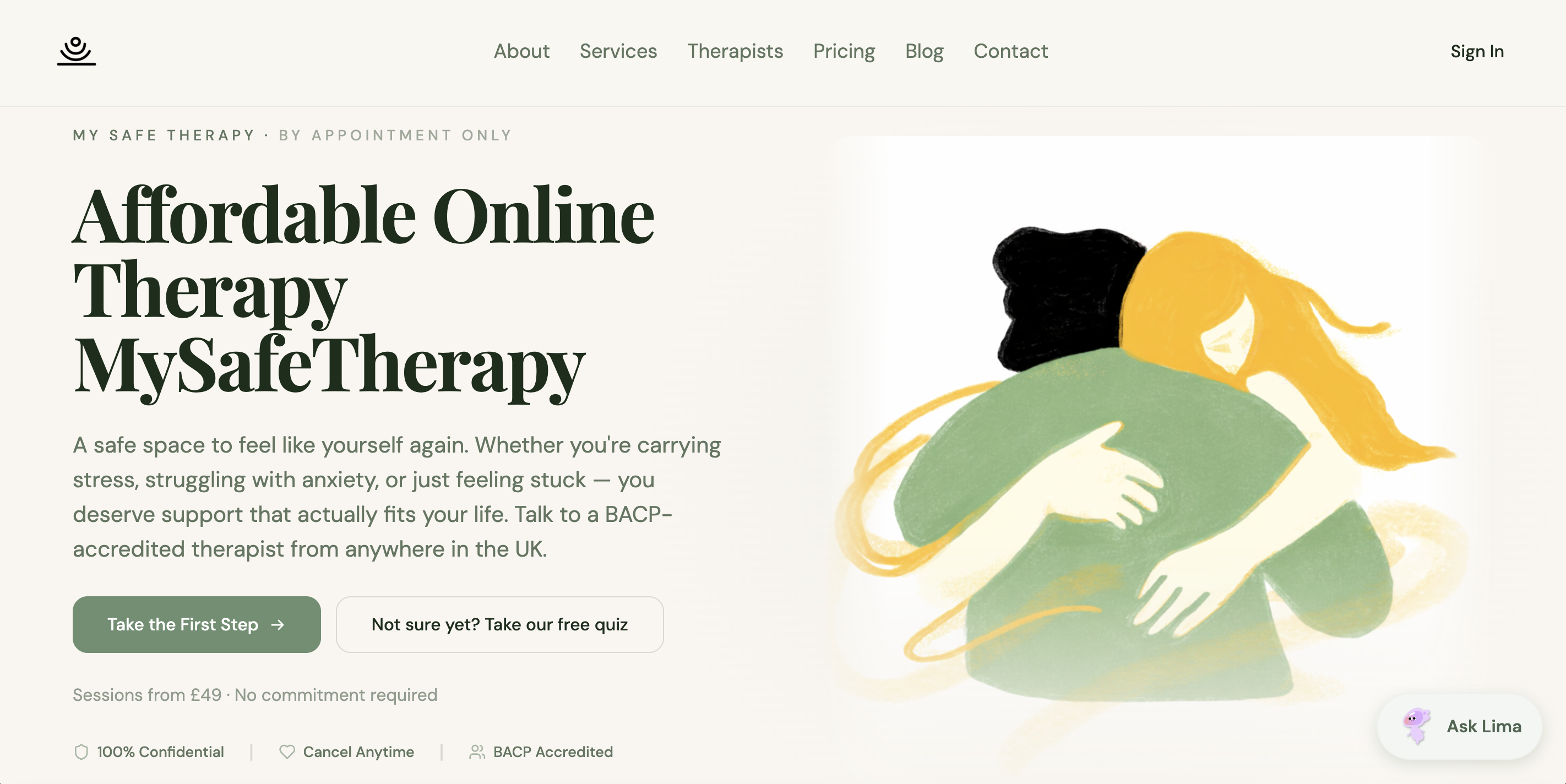
Not sure if you're ready? The therapy readiness quiz takes just a few minutes and helps you understand whether therapy is the right next step for you, with no commitment required. If you already know you want to begin, you can start therapy online today and be matched with a therapist quickly. MySafeTherapy follows NHS-aligned safety standards, uses encrypted sessions, and makes switching therapists straightforward if your first match isn't quite right. Your wellbeing deserves a platform built around you.
Frequently asked questions
Is online therapy as effective as face-to-face sessions?
Yes. Online CBT improvement rates of 68 to 72% match those seen in face-to-face therapy for most common mental health issues, including anxiety and depression.
Can I refer myself for online therapy in the UK?
Yes. NHS talking therapies accept self-referral without a GP diagnosis, and most private platforms require no referral at all.
How private and confidential are online therapy sessions?
Reputable platforms use end-to-end encrypted video and comply with GDPR, meaning your session data is protected and not shared without your consent.
What's the cost difference between NHS and private online therapy?
NHS online therapy is free at the point of use. Private therapy costs typically range from £40 to £150 per session depending on the therapist and platform.
What types of therapy can I access online?
CBT, counselling for depression, IPT, guided self-help, and couples therapies such as BCT and EFT are all available online. The right therapy type depends on your specific needs and goals.