
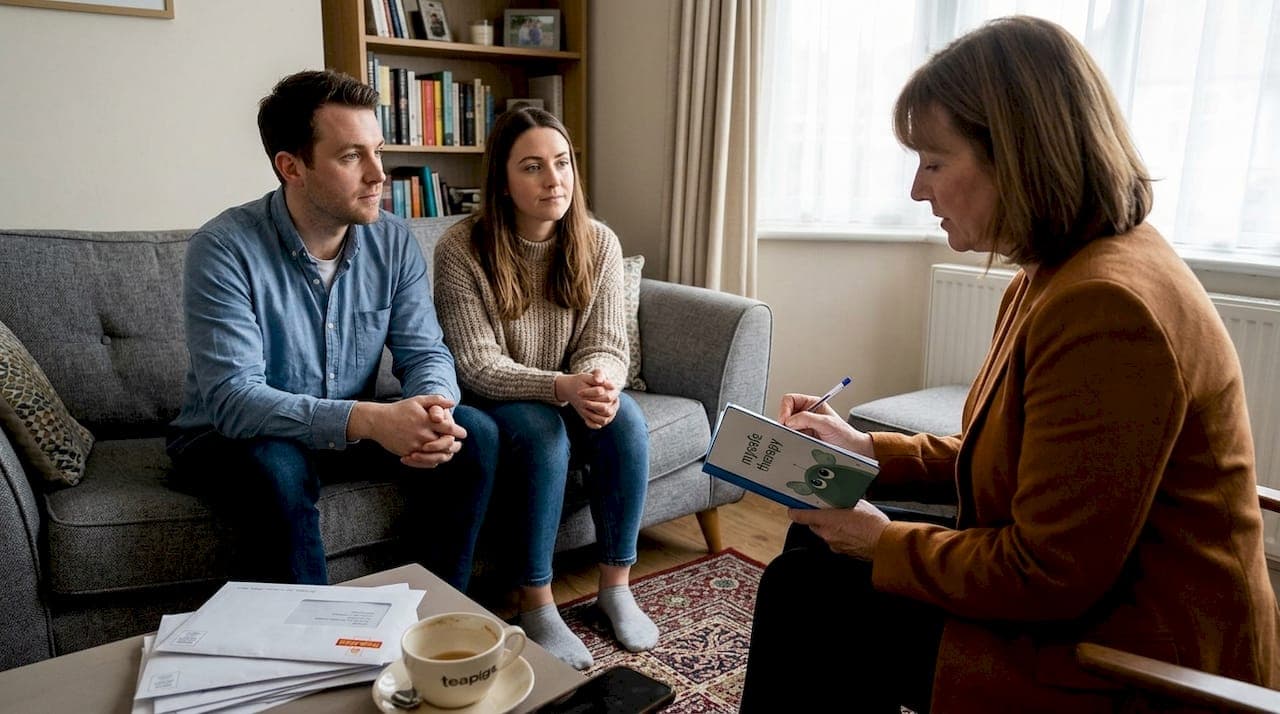
Many people assume relationship therapy is only for couples on the brink of separation or those locked in constant arguments. This misconception prevents countless partners from accessing help that could transform their connection. Relationship therapy is a practical, evidence-based tool designed to strengthen communication, resolve conflicts, and rebuild emotional intimacy in romantic partnerships. Whether you're facing specific challenges or simply want to deepen your bond, understanding how therapy works, which methods suit your needs, and how to access support in the UK can open doors to lasting relationship improvement.
Table of Contents
- Key Takeaways
- What is relationship therapy and how does it help couples?
- Main approaches to relationship therapy: EFT, Gottman method, and Imago therapy
- Evidence of effectiveness and choosing the right therapy in the UK context
- Practical tips and next steps for applying relationship therapy tools
- Discover personalised therapy support with MySafeTherapy
- Frequently asked questions
Key Takeaways
| Point | Details |
|---|---|
| Improved communication and bonds | Relationship therapy strengthens how couples talk and deepens emotional connection. |
| Key therapy methods EFT Gottman Imago | The main approaches are Emotionally Focused Therapy EFT, the Gottman Method, and Imago Therapy. |
| Substantial evidence of success | Around 70 to 75 per cent of couples recover from distress with therapy. |
| Right fit matters | Choosing the right approach and a compatible therapist increases the chances of positive change. |
| UK access options | In the UK access is available via NHS services and private providers. |
What is relationship therapy and how does it help couples?
Relationship therapy, also called couples or marriage counselling, involves structured conversations with a trained therapist to improve communication, resolve conflicts, and strengthen emotional bonds. Unlike casual conversations with friends, therapy provides a safe, confidential space where a neutral professional guides both partners towards understanding rather than blame. The therapist doesn't take sides or judge; instead, they help you identify patterns, express needs clearly, and develop practical skills for navigating disagreements.
The goals of relationship therapy extend beyond simply stopping arguments. Therapy helps couples rebuild trust after betrayal, reconnect emotionally after drifting apart, navigate major life transitions together, and develop healthier communication habits. Many couples mistakenly believe therapy means admitting failure or that one partner needs "fixing". In reality, therapy is not about blaming but building trust and communication between two people committed to improvement.
Common misconceptions prevent couples from seeking help early. Some believe therapy is just "talking about feelings" without structure or outcomes. Others assume therapists will tell them what to do or take one partner's side. Professional relationship therapy follows evidence-based frameworks with clear goals and measurable progress. Therapists facilitate understanding and teach practical tools rather than offering generic advice.
Pro Tip: Early intervention dramatically increases therapy success rates. Don't wait until resentment has built for years. Seeking help when problems first emerge, whilst both partners remain committed to the relationship, creates the best foundation for positive change. Finding the right therapist matching online therapy service can streamline this process significantly.
Main approaches to relationship therapy: EFT, Gottman method, and Imago therapy
Three primary evidence-based approaches dominate relationship therapy, each with distinct techniques and focus areas. Understanding these methods helps you identify which might suit your relationship's specific challenges.
Emotionally Focused Therapy (EFT) targets attachment bonds and emotional security between partners. Developed by Dr Sue Johnson, EFT follows a 9-step process typically completed in 8-20 sessions. The therapy moves through three stages: de-escalation of negative cycles, restructuring emotional bonds, and consolidation of new patterns. EFT views relationship distress as stemming from insecure attachment and emotional disconnection. Therapists help partners identify their underlying emotional needs, express vulnerability safely, and respond to each other with empathy rather than defensiveness.
The Gottman Method, created by Drs John and Julie Gottman after decades of research, emphasises building friendship, managing conflict constructively, and creating shared meaning. This approach builds skills across 9 behavioural levels including love maps (knowing your partner's world), fondness and admiration, turning towards rather than away, and managing gridlock on perpetual problems. Sessions involve structured exercises, homework assignments, and practical tools like the "softened start-up" for raising issues gently. The method suits couples who need concrete communication skills and conflict management strategies.
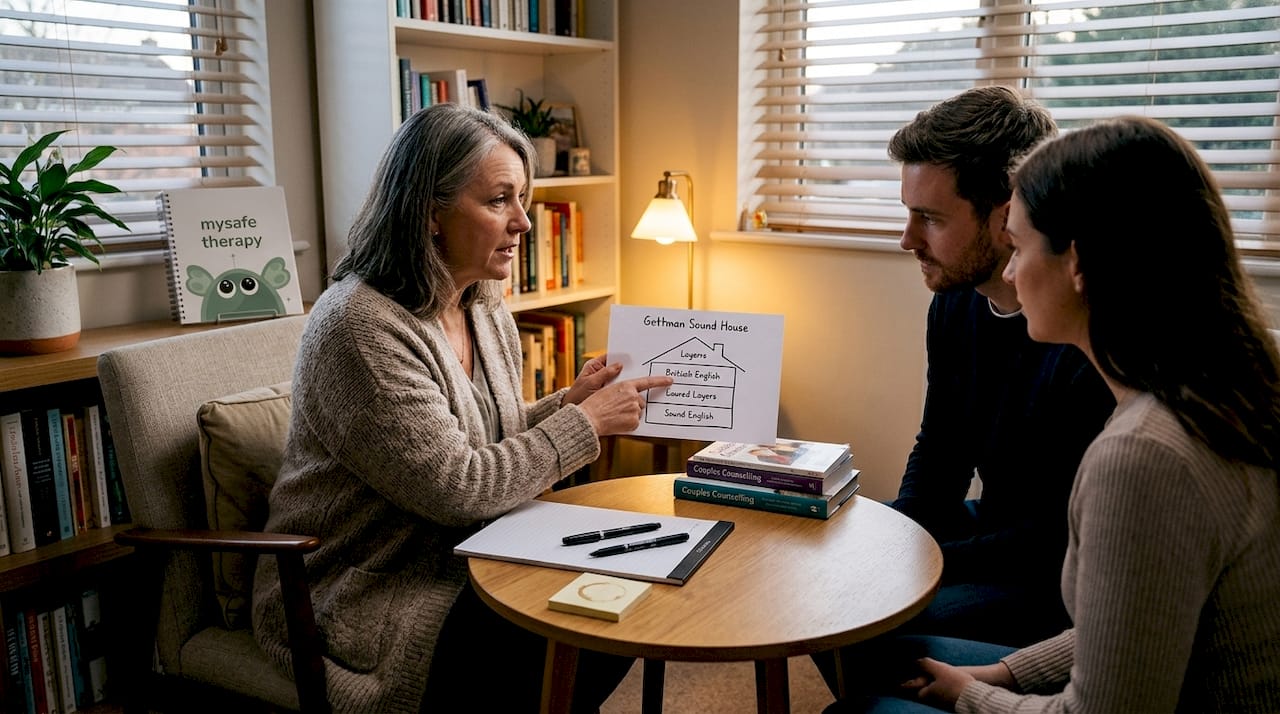
Imago Relationship Therapy, developed by Harville Hendrix and Helen LaKelly Hunt, focuses on healing childhood wounds that surface in adult relationships. Imago uses a 3-part dialogue process: mirroring (reflecting what your partner says), validation (acknowledging their perspective makes sense), and empathy (connecting with their feelings). The theory suggests we unconsciously choose partners who trigger unresolved childhood issues, then work to heal those wounds through conscious partnership. This approach suits couples whose conflicts seem to repeat patterns from their families of origin.
| Therapy Type | Primary Focus | Typical Duration | Best For |
|---|---|---|---|
| EFT | Emotional bonds and attachment security | 8-20 sessions | Emotional disconnection, withdrawal |
| Gottman Method | Friendship, conflict skills, shared meaning | 12-16 sessions | Communication problems, frequent arguments |
| Imago Therapy | Childhood wound healing through dialogue | 12-20 sessions | Repeating patterns, deep-rooted triggers |
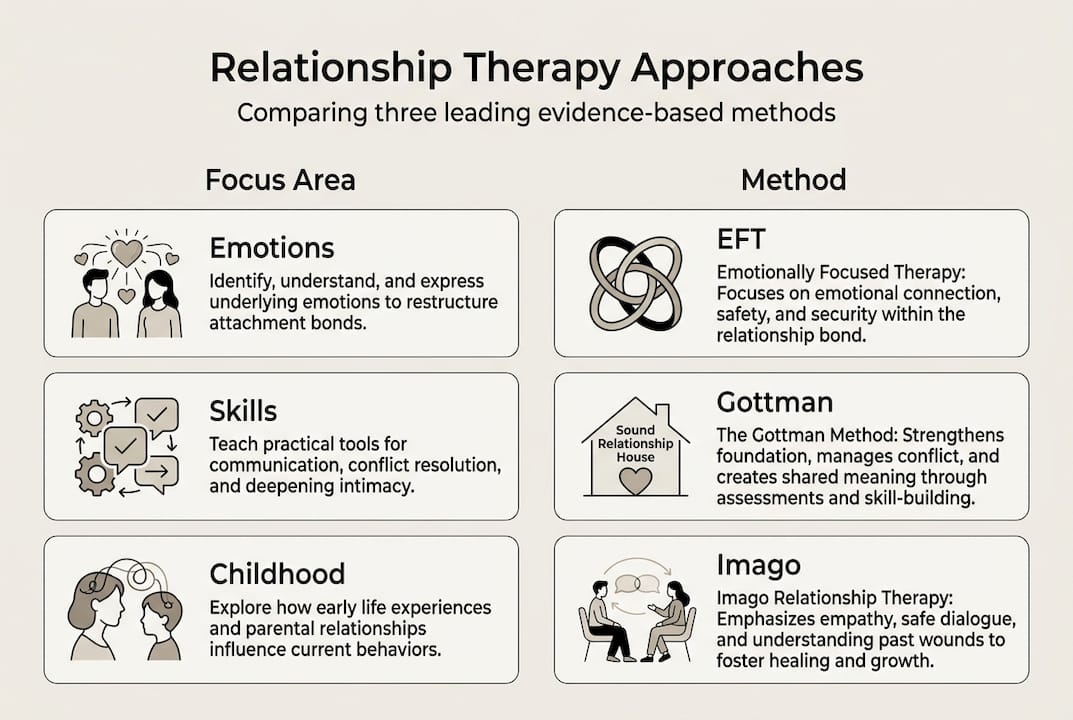
Pro Tip: Your relationship's core issues should guide method selection. If you feel emotionally distant or one partner withdraws, EFT's focus on attachment may help most. If arguments escalate quickly or you lack conflict resolution skills, Gottman's structured approach offers practical tools. If childhood experiences seem to drive your conflicts, Imago's healing focus might resonate. Many therapists integrate techniques from multiple approaches, so discussing your needs during initial consultations helps. You can explore various therapeutic approaches through resources like the MySafeTherapy blog or learn about CBT couples therapy as another option.
Evidence of effectiveness and choosing the right therapy in the UK context
Research consistently demonstrates relationship therapy's effectiveness when both partners engage fully. Studies show EFT achieves 70-75% recovery rates from relationship distress, with improvements lasting over two years. Gottman Method research similarly shows significant reductions in conflict frequency and increases in relationship satisfaction. These aren't temporary fixes; couples who complete therapy programmes maintain gains long after sessions end.
Therapy success depends heavily on timing and commitment. Couples who seek help early, before resentment hardens into contempt, achieve better outcomes. Both partners must participate willingly and complete homework assignments between sessions. One partner attending alone or under pressure rarely produces lasting change. The therapeutic relationship itself matters; feeling understood and respected by your therapist predicts better results regardless of specific method used.
Certain situations make couples therapy inappropriate or ineffective. Therapy is unsuitable when abuse is present, as it can escalate danger. Active addiction must be addressed individually before couples work begins. If one partner seeks therapy merely to validate their decision to leave or prove the other wrong, therapy won't help. Therapists assess these factors during initial consultations and may recommend individual therapy first.
UK adults can access relationship therapy through multiple routes. NHS Improving Access to Psychological Therapies (IAPT) programmes offer some couples interventions, though availability varies by region and waiting lists can extend several months. Private therapy provides quicker access and broader choice but costs typically range from £60-150 per session. Some employers offer Employee Assistance Programmes covering limited therapy sessions.
| Approach | Recovery Rate | Session Range | Primary Strength | Limitation |
|---|---|---|---|---|
| EFT | 70-75% | 8-20 sessions | Deep emotional healing | Requires vulnerability |
| Gottman Method | 65-70% | 12-16 sessions | Practical conflict skills | Less focus on past wounds |
| Imago Therapy | 60-65% | 12-20 sessions | Childhood pattern healing | Can feel slow initially |
Choosing a therapist involves more than selecting a method. Look for practitioners registered with professional bodies like BACP (British Association for Counselling and Psychotherapy) or UKCP (UK Council for Psychotherapy). These registrations ensure training standards and ethical oversight. During initial consultations, assess whether you both feel comfortable with the therapist's style and approach. Good therapeutic fit matters more than credentials alone.
Consider practical factors like session format (in-person, video, or telephone), scheduling flexibility, and cost. Some therapists offer sliding scale fees based on income. Don't hesitate to try sessions with different therapists before committing; most offer initial consultations to assess fit. Resources like types of therapy for anxiety can help you understand various approaches, and tools like the do I need therapy quiz can clarify your readiness for professional support.
Practical tips and next steps for applying relationship therapy tools
You can begin improving your relationship immediately using techniques drawn from therapy approaches. These exercises work whether you're considering formal therapy or want to strengthen your connection independently.
Start with speaker-listener exercises and love maps to improve communication immediately. The speaker-listener technique involves one partner speaking uninterrupted for a set time whilst the other listens without planning their response. The listener then reflects back what they heard before responding. This simple structure prevents the escalation that occurs when both partners talk over each other. Love maps involve regularly asking questions about your partner's inner world: their current stresses, dreams, fears, and daily experiences. These conversations rebuild intimacy and show genuine interest.
Prepare mentally for therapy by setting realistic expectations. Progress isn't linear; some sessions feel difficult as you address painful topics. Improvement takes weeks or months, not days. Discuss your goals as a couple before starting, ensuring you're both committed to the process rather than attending to appease one partner. Be honest with your therapist about what's working and what isn't; they can adjust approaches based on your feedback.
Finding and assessing a relationship therapist in the UK involves several steps:
- Search professional directories like BACP's Find a Therapist tool or UKCP's register, filtering for couples/relationship specialists
- Read therapist profiles carefully, noting their training, approach, and areas of expertise
- Contact 2-3 therapists for initial consultations, asking about their experience with issues similar to yours
- Discuss practical matters: session frequency, duration, cost, cancellation policies, and expected therapy length
- Assess comfort level after initial sessions; both partners should feel heard and respected
- Commit to at least 6-8 sessions before evaluating progress, as early sessions focus on assessment and building rapport
Pro Tip: Don't wait years before seeking help. Research shows couples wait an average of six years after problems emerge before attending therapy, by which time resentment has often calcified. Early intervention, when you still have goodwill towards each other, dramatically improves outcomes. If you're unsure whether you're ready, resources like prepare for therapy can help you understand what to expect.
Balance NHS and private options based on your circumstances. NHS therapy offers free access but longer waits and less choice in therapist or approach. Private therapy costs more but provides immediate access, greater therapist choice, and flexible scheduling including evenings and weekends. Some couples split the difference, using NHS services for initial assessment then paying privately for ongoing work. Others use private therapy during crisis periods then maintain progress with less frequent sessions.
Discover personalised therapy support with MySafeTherapy
Finding the right relationship therapist shouldn't feel overwhelming. MySafeTherapy connects UK adults with accredited relationship therapists matched to your specific needs and preferences. Our free therapy quiz helps you clarify what you're looking for in therapy, whether that's improving communication, rebuilding trust, or navigating a specific challenge.
The platform offers access to BACP and UKCP registered therapists who specialise in couples work, with flexible session formats including video, chat, and telephone options. You can explore both NHS pathways and private therapy choices through one accessible platform, with transparent pricing and scheduling that fits around your life. Whether you're ready to start therapy now or simply exploring your options, MySafeTherapy provides expert guidance to help you take that first step towards a stronger relationship.
Frequently asked questions
What is the difference between relationship therapy and couples counselling?
Relationship therapy and couples counselling are essentially the same service: professional support helping romantic partners resolve conflicts and strengthen their connection. The terms are used interchangeably across the UK, with some practitioners preferring one term over the other based on training background. Both involve working with a qualified therapist to improve communication patterns, address specific issues, and develop healthier relationship dynamics. The goal remains consistent regardless of terminology: helping couples build stronger, more satisfying partnerships through evidence-based techniques.
How long does relationship therapy usually take to show results?
Most evidence-based relationship therapies require between 8 to 20 sessions before significant improvements become apparent. EFT typically completes its structured process in 8-20 sessions, whilst Gottman Method often spans 12-16 sessions. However, many couples notice small positive shifts within the first 3-4 sessions as they begin using new communication tools. Lasting change requires consistent practice of skills learned in therapy, with improvements continuing long after formal sessions end. The timeline varies based on relationship distress severity, both partners' engagement levels, and whether additional individual issues require addressing alongside couples work.
Can relationship therapy help if one partner is reluctant or unwilling?
Therapy effectiveness drops significantly when one partner attends reluctantly or under pressure from the other. Both partners' genuine willingness to engage, complete homework, and consider changing their own behaviour is crucial for success. That said, therapists can help with initial engagement, sometimes meeting with the reluctant partner individually first to address their concerns about therapy. If one partner remains unwilling after these attempts, the engaged partner might benefit from individual therapy to work on their own responses and needs. Sometimes seeing one partner make positive changes motivates the reluctant partner to join later.
Is relationship therapy available for free on the NHS in the UK?
The NHS does offer some relationship and couples therapy through IAPT programmes, though availability varies significantly by region. Some areas provide behavioural couples therapy for specific conditions like depression or anxiety affecting relationships. However, waiting lists can extend several months, and the number of sessions offered may be limited compared to private therapy. Many NHS services prioritise individual mental health treatment over couples work. Private therapy provides quicker access, greater therapist choice, and more flexible scheduling, though costs typically range from £60-150 per session. Some couples combine approaches, using NHS services where available whilst paying privately for additional support. You can explore NHS therapy options to understand what might be available in your area.