
TL;DR:
- Online relationship counselling in the UK is a flexible, effective, and confidential option for couples facing relationship issues.
- It offers various formats like video, phone, chat, and email, requiring minimal technology and privacy.
- Research shows online counselling has outcomes comparable to in-person therapy, with 70-80% reporting improvements.
Relationship difficulties rarely arrive at a convenient time. Work pressures, childcare, and the simple awkwardness of sitting face-to-face with a stranger can all make seeking help feel impossible. Yet the need is real, and leaving it unaddressed tends to make things worse. Online relationship counselling is now widely available across the UK in confidential, flexible formats that fit around your life. This guide covers everything you need: what online counselling actually involves, how to prepare, how to book, what it costs, and what the evidence says about results.
Table of Contents
- Understanding online relationship counselling in the UK
- Preparing for your first online counselling session
- Step-by-step: Booking and attending your session
- Costs, outcomes, and special cases
- The reality: What most guides miss about online relationship counselling
- Ready for safe, flexible relationship support?
- Frequently asked questions
Key Takeaways
| Point | Details |
|---|---|
| Flexible formats | Video, phone, chat, and email sessions allow counselling to fit your schedule and privacy needs. |
| Quality and safety | Choosing BACP or UKCP registered therapists ensures ethical standards and secure platforms. |
| Evidence of effectiveness | Research indicates 70-80% of couples report benefits from online relationship counselling. |
| Diverse support | Online counselling helps intercultural, LGBTQ+, and non-monogamous couples, but outcome depends on engagement. |
| Cost and access | NHS is free but has long waitlists; Relate and private providers offer flexible fees and scheduling. |
Understanding online relationship counselling in the UK
Online relationship counselling is a structured, professionally led process in which one or both partners work with a trained therapist via a digital platform. It follows the same clinical principles as face-to-face work, but removes the need to travel or sit in a waiting room. Understanding the formats available helps you choose what suits you.
Common session formats
- Video call: The most widely used format. Both partners join from separate or shared devices.
- Phone: Useful when video is not practical or causes anxiety.
- Live chat: Text-based sessions in real time, popular for those who prefer to write.
- Email/asynchronous messaging: Less common for couples work, but available through some providers.
You can explore the full range of types of online therapy to find what fits your situation.
Sessions typically last 50 to 60 minutes, and the technology required is minimal: a smartphone, tablet, or laptop with a stable internet connection is sufficient. Most platforms are browser-based, so no specialist software is needed.
Who provides online relationship counselling in the UK?
| Provider type | Examples | Access route |
|---|---|---|
| NHS Talking Therapies | IAPT services | Self-referral or GP |
| Charity/voluntary sector | Relate | Direct booking online |
| Private practice | Independent therapists | Direct booking or directory |
| Online platforms | MySafeTherapy | Direct registration |
In a first session, the therapist will typically outline the process, discuss confidentiality, and gather background on the relationship. No immediate problem-solving is expected. The goal is to establish a safe working relationship. Many couples find flexible session benefits particularly valuable when coordinating two busy schedules.
Preparing for your first online counselling session
Preparation reduces anxiety and makes the session more productive. There are three areas to address: technology, privacy, and therapist selection.
Technical checklist
- Test your device's camera and microphone at least 24 hours before the session.
- Confirm your internet connection is stable. A wired connection is more reliable than Wi-Fi if possible.
- Download or bookmark the platform link in advance.
- Have a backup plan, such as a phone number, in case the video connection fails.
- Charge your device fully before the session begins.
Creating a private space
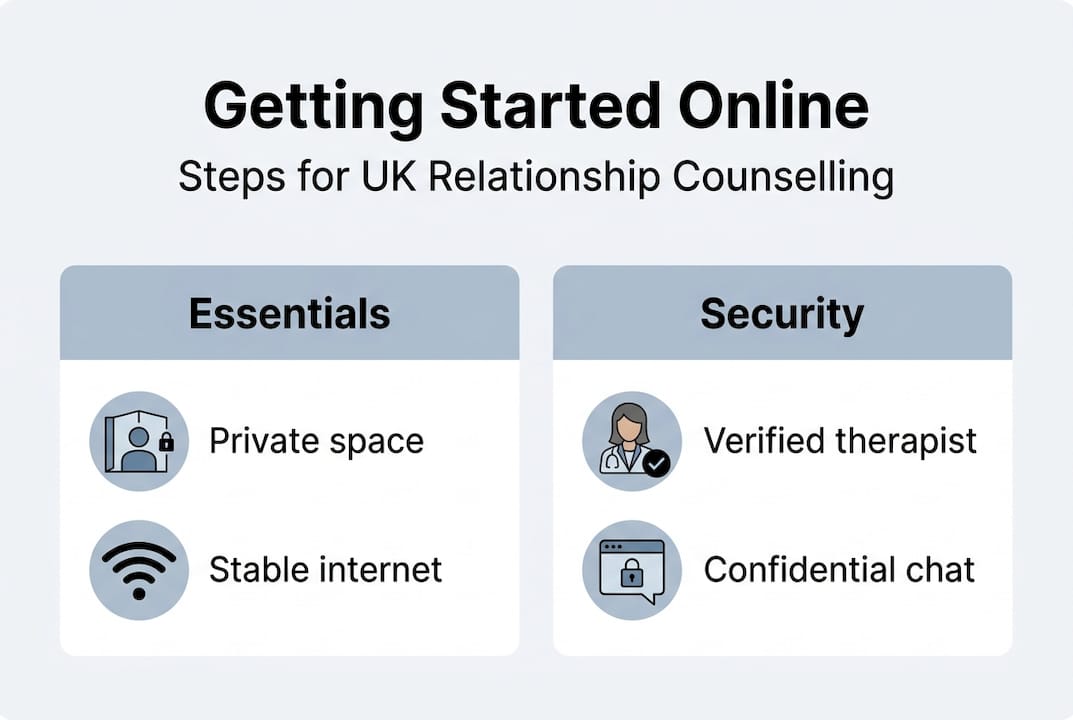
Privacy is not optional. A private space and stable internet are essential requirements, and choosing a BACP or UKCP registered therapist ensures you receive ethically sound, quality care. A closed door, headphones, and background noise (such as a fan or white noise app) can help if complete isolation is not possible.
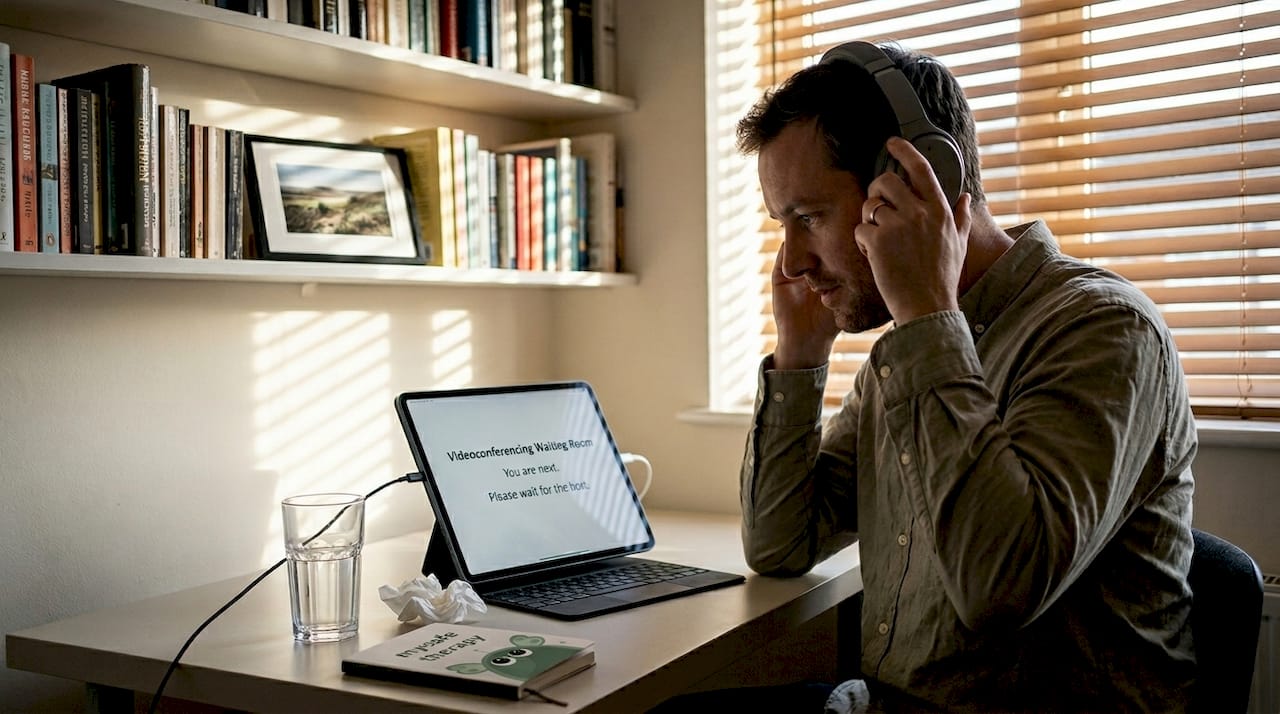
Pro Tip: Inform others in your household that you are unavailable for the duration of the session. Even a brief interruption can disrupt the therapeutic flow significantly.
Finding and registering with a therapist
Therapist selection is the most consequential decision you will make. Use the following comparison to guide your choice:
| Option | Cost | Wait time | Couples-specific? |
|---|---|---|---|
| NHS Talking Therapies | Free | Weeks to months | Limited |
| Relate | £20 to £90 per session | Short to moderate | Yes |
| Private therapist | £40 to £150 per hour | Usually short | Varies |
| Online platform | Varies | Usually short | Yes |
Always verify BACP or UKCP registration before booking. Registered therapists adhere to professional codes of ethics and are subject to complaints procedures. Review online safety protocols to understand what secure platforms should offer. For personalised guidance on finding the right fit, therapist matching advice can clarify what questions to ask.
Step-by-step: Booking and attending your session
With preparation complete, the booking and attendance process is straightforward. Follow these steps to move from enquiry to first session.
- Identify your preferred provider type using the comparison table above.
- Complete the registration or enquiry form on the provider's website. Most platforms ask for basic contact details and a brief description of what you are seeking support with.
- Select a therapist from the available profiles, or request a matching process if the platform offers one.
- Confirm your appointment and note the platform link, session time, and any pre-session paperwork required.
- Review the confidentiality agreement before your first session. Understand what is covered and what exceptions apply.
- Log in five minutes early to resolve any technical issues before the session begins.
Strict confidentiality applies in all professional counselling relationships, with clearly defined exceptions for situations involving serious risk of harm. Secure platforms protect session data and personal information throughout.
During the session itself, focus on listening as well as speaking. Couples counselling is not a space to win arguments. The therapist's role is to facilitate understanding, not to assign blame. A step-by-step online therapy approach helps both partners engage at the same pace.
Pro Tip: Keep a brief note of what you want to raise before each session. Three to four points is enough. This prevents the session from being dominated by whichever partner speaks first.
Security matters throughout. Use a private email address for correspondence, avoid shared devices, and log out of the platform after each session. Reviewing online session best practices before you begin ensures nothing is overlooked.
Costs, outcomes, and special cases
Understanding what you are likely to pay, and what you are likely to gain, helps set realistic expectations before you begin.
Typical costs in the UK
- NHS Talking Therapies: Free at point of access, but NHS services carry waitlists and couples-specific provision is limited.
- Relate: Sliding scale fees of £20 to £90 per session depending on income and location.
- Private therapists: £40 to £150 per hour, with most charging between £60 and £90.
- Online platforms: Variable, often with subscription or pay-per-session options.
What the evidence says
The outcomes data for online relationship counselling is encouraging. A meta-analysis of digital interventions for couples found that 70 to 80% of participants reported meaningful improvement, with effect sizes comparable to in-person therapy. This is a significant finding. It means the medium itself is not a barrier to progress.
Special cases worth noting
- Intercultural couples: Online counselling is accessible regardless of geography, which helps when partners are in different locations.
- LGBTQ+ couples: Online platforms often have a wider pool of specialist therapists than local in-person services.
- Non-monogamous relationships: Specialist therapists are more readily available online than through traditional routes.
- Infidelity or acute crisis: Online counselling can be effective, but some situations may require in-person or more intensive support.
For context on how providers are regulated, therapy regulations in the UK set clear standards. For a deeper look at why accreditation matters, evidence-based safety outlines what registered practice actually guarantees.
The reality: What most guides miss about online relationship counselling
Most articles focus on process: how to book, what to expect, how much it costs. That is useful, but it sidesteps the harder question. Does it actually work for your relationship?
The honest answer is that the method matters far less than the engagement. Digital therapy is as effective as in-person when both partners are genuinely committed and the programme is well designed. The platform does not do the work. You do.
Registration with BACP or UKCP is not a bureaucratic detail. It is the single most reliable indicator that your therapist is trained, supervised, and accountable. Skipping this check to save time or money is the most common mistake people make.
Privacy is equally non-negotiable. A session taken from a shared office or a car park does not create the psychological safety that good couples work requires. The online safety wisdom around private spaces exists for clinical reasons, not administrative ones.
Finally, some situations genuinely require in-person or specialist input. Domestic abuse, severe mental health crises, and certain trauma presentations are not well served by standard online couples counselling. Recognising this is not a limitation of online therapy. It is a sign of a well-calibrated system.
Ready for safe, flexible relationship support?
If you have read this far, you have the information needed to take the next step with confidence. MySafeTherapy connects you with UK-accredited therapists registered with BACP, UKCP, and NCPS, all available via secure video, chat, or avatar-based sessions.
Sessions are available evenings and weekends, with transparent pricing and no long waitlists. Switching therapists is straightforward if the first match is not right. Whether you are dealing with communication breakdown, trust issues, or simply want to strengthen your relationship, you can start therapy with MySafeTherapy today. To learn more about the platform and its approach, find out more about MySafeTherapy before you book.
Frequently asked questions
How do I know my online relationship counselling is confidential?
UK therapists follow strict privacy protocols and use secure platforms for all sessions. Confidentiality is guaranteed except in cases where there is a serious risk of harm to you or another person.
Can online relationship counselling help with intercultural or LGBTQ+ couples?
Yes. Digital interventions are effective for intercultural, LGBTQ+, and non-monogamous couples, though outcomes depend on programme design and how actively both partners engage.
Is online relationship counselling as effective as face-to-face?
Meta-analyses confirm that online counselling produces comparable results to in-person therapy for most couples, with 70 to 80% reporting meaningful improvement.
What does online relationship counselling cost in the UK?
NHS services are free but often have waitlists. Relate charges £20 to £90 per session on a sliding scale, while private therapists typically charge between £40 and £150 per hour.