
TL;DR:
- Anyone in the UK can call themselves a therapist, with limited legal regulation.
- Verified professional registers ensure therapists meet training, supervision, and ethical standards.
- Clients should verify credentials and ask about supervision and complaints processes for safety.
Anyone in the UK can call themselves a therapist. There is no law stopping it. That single fact carries significant weight when you are searching for help with anxiety, depression, or any other mental health concern. Many people assume that booking a session with a professional means that professional has been checked, trained, and held accountable. Sometimes that is true. Sometimes it is not. This guide sets out exactly how UK therapy regulation works, which titles are legally protected, how to verify a therapist's credentials, and how to access flexible, stigma-free support with confidence.
Table of Contents
- Who regulates therapy in the UK?
- How professional registers protect you
- What ethical frameworks and complaints processes mean for you
- Navigating therapy choices: practical tips for UK adults
- Why voluntary regulation still leaves gaps—and what you can do
- Get safe, flexible therapy with registered professionals
- Frequently asked questions
Key Takeaways
| Point | Details |
|---|---|
| Not all therapists are regulated | Titles like ‘counsellor’ are not legally protected—anyone can use them without checks. |
| Check PSA-accredited registers | BACP, UKCP and HCPC registers help ensure your therapist meets strict standards and training. |
| Complaints processes protect you | If things go wrong, accredited registers offer clear, fair systems for complaints and accountability. |
| Flexible, safe therapy options exist | You can access registered help for anxiety and depression both in-person and online, often without GP referral. |
Who regulates therapy in the UK?
The UK's regulatory landscape for mental health professionals is split between statutory (legally enforced) and voluntary frameworks. Understanding the difference is essential before you book a single session.
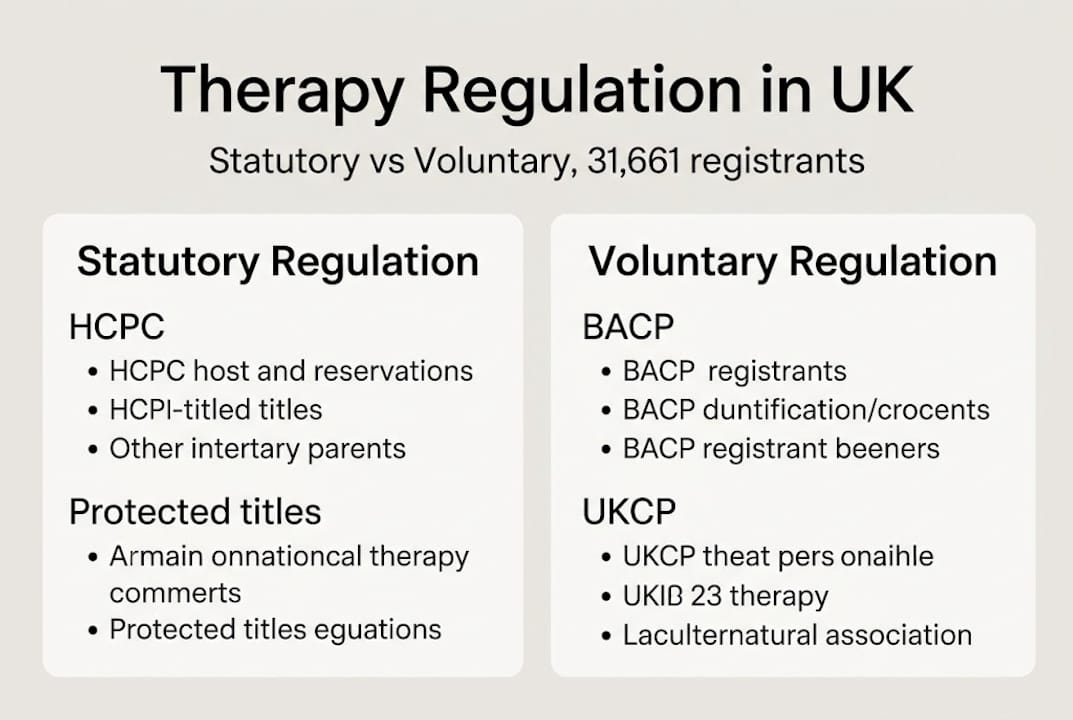
Statutory regulation covers a small number of specific titles. The Health and Care Professions Council (HCPC) protects titles such as practitioner psychologist, clinical psychologist, and forensic psychologist. The General Medical Council (GMC) regulates psychiatrists, who are qualified medical doctors with specialist training. Protected psychologist titles are regulated by HCPC, with 31,661 registrants as of March 2026. Using a protected title without HCPC registration is a criminal offence.
Counsellors and psychotherapists sit in a different category entirely. These titles carry no statutory protection. Anyone may use them, regardless of training or experience. This is where confusion and genuine risk enter the picture.
Voluntary professional registers fill the gap. The Professional Standards Authority (PSA) accredits several registers, including:
- BACP (British Association for Counselling and Psychotherapy)
- UKCP (UK Council for Psychotherapy)
- BPC (British Psychoanalytic Council)
- NCPS (National Counselling and Psychotherapy Society)
These bodies set training standards, require ongoing supervision, and operate complaints procedures. Membership is voluntary, but it signals a meaningful commitment to professional accountability. You can check BACP accredited registers directly through the PSA website.
| Profession | Title protected? | Regulator |
|---|---|---|
| Clinical psychologist | Yes | HCPC |
| Psychiatrist | Yes | GMC |
| Counsellor | No | Voluntary (BACP, NCPS) |
| Psychotherapist | No | Voluntary (UKCP, BPC) |
"The absence of statutory regulation for counsellors and psychotherapists means clients carry a greater responsibility to verify credentials before beginning therapy."
For a practical overview of what registration means in practice, the therapist registration safety guide outlines the key checks to carry out before committing to a therapist.
How professional registers protect you
Knowing who regulates therapy leads into how professional registers actually protect you as a client. The standards required for membership are more rigorous than many people realise.
For BACP registration, therapists must complete a minimum of 450 supervised client hours and meet specified training hour requirements. UKCP requires four years of training at Masters level, also with supervised practice. HCPC-registered psychologists must hold an accredited doctorate-level qualification.
All three organisations require members to:
- Hold valid professional indemnity insurance
- Engage in regular clinical supervision
- Complete continuing professional development (CPD) each year
- Adhere to a published code of ethics
- Submit to a formal complaints and disciplinary process
These requirements are not formalities. They represent a structured framework that protects clients from harm and ensures therapists remain competent throughout their careers.
| Register | Minimum training | Supervision required | Complaints process |
|---|---|---|---|
| BACP | 450+ client hours | Yes | Yes |
| UKCP | 4 years, Masters level | Yes | Yes |
| HCPC | Doctorate level | Yes | Yes |
The SCoPEd (Scope of Practice and Education) framework is an ongoing effort by BACP, UKCP, and BACP to standardise what different practitioners can safely do. It is not yet fully implemented, but it reflects a sector-wide push toward greater clarity for clients.
Pro Tip: Before your first session, search your therapist's name on the BACP, UKCP professional standards, or HCPC register. If they do not appear, ask them directly which body they are registered with and request their membership number.
Red flags to watch for include: no verifiable registration number, reluctance to discuss qualifications, no mention of supervision, and no clear complaints process. Understanding the benefits of accredited therapists helps you distinguish genuine professionals from those operating without oversight. For further guidance on safe online therapy choices, the principles are the same whether sessions are face-to-face or remote.
What ethical frameworks and complaints processes mean for you
Knowing about registers is just the start. What really matters are the professional standards and complaint processes that underpin client safety in every session.
Registered therapists are bound by core ethical principles. These typically include:
- Placing the client's welfare above all other considerations
- Maintaining strict confidentiality, with defined exceptions (such as risk of serious harm)
- Engaging in regular supervision to reflect on their practice
- Keeping up to date through CPD
- Being transparent about their qualifications and limitations
These principles are not aspirational guidelines. Breaching them can result in formal investigation, suspension, or removal from a register.
"Ethical frameworks give clients a clear basis for raising concerns. Without them, there is no formal mechanism for accountability."
The complaints process matters too. UKCP handled 57 complaints in 2024 (0.62% of registrants), with transparent adjudication at each stage. That figure is low, which reflects the general standard of practice across the sector. But the process exists precisely for the cases where something goes wrong.
If you have a concern about a therapist, you can:
- Raise it directly with the therapist if you feel safe to do so
- Contact their professional body (BACP, UKCP, or HCPC) to submit a formal complaint
- Contact the PSA if the body itself fails to act appropriately
Pro Tip: Keep a brief record of your sessions, including dates and any concerns that arise. This is useful if you ever need to make a formal complaint, as specific details carry more weight than general impressions.
For more information on staying safe with online therapy, the same ethical standards apply regardless of the format of your sessions.
Navigating therapy choices: practical tips for UK adults
With the foundations clear, here is how you can actually use UK regulations to make informed, safe therapy choices.
Start by identifying what you need. Anxiety and depression are among the most common reasons people seek therapy in the UK. NHS talking therapies offer self-referral and online, phone, and group options for anxiety and depression. You do not need a GP referral to access NHS Talking Therapies (formerly IAPT). This is a practical starting point if cost is a concern.
For private therapy, the process involves a few clear steps:
- Search a PSA-accredited register (BACP, UKCP, or HCPC) for therapists in your area or offering remote sessions
- Check their registration is current and their profile is complete
- Contact two or three therapists and request an initial consultation
- Ask about their qualifications, experience with your specific concerns, and how they handle confidentiality
- Confirm they hold professional indemnity insurance
For flexible NHS mental health help and self-help resources, there are structured options available alongside or between sessions. Remote therapy has expanded significantly and is now a mainstream, well-regulated option. Evening and weekend appointments are increasingly available through private platforms, which matters for people who cannot access support during working hours.
Pro Tip: Ask any prospective therapist these three questions before committing. Which professional body are you registered with? Do you receive regular clinical supervision? What is your process if I want to raise a concern? A confident, transparent answer to each is a strong indicator of professional accountability.
For a clear walkthrough of easy online therapy steps, the process is more straightforward than many people expect. If cost is a barrier, there are affordable therapy options that do not require compromising on safety or accreditation.
Why voluntary regulation still leaves gaps—and what you can do
The regulations described above are a solid guide. But the reality is more complex, and it is worth being direct about where the gaps remain.
A 2025 BACP survey found that many people cannot distinguish between therapy titles such as counsellor, psychotherapist, and psychologist. That confusion is not the client's fault. The sector itself has not resolved it. Voluntary schemes like BACP and UKCP are robust in their standards, but they cannot prevent someone from practising outside those schemes and using unprotected titles to attract clients.
The honest position is this: checking a register is necessary, but it is not sufficient on its own. You should also look for clear communication from the outset, evidence of active supervision, and a transparent complaints process that the therapist can explain in plain terms. If a therapist is vague about any of these, that warrants caution.
You have agency here. Even within an imperfect system, you can protect yourself by asking the right questions and using verified platforms. Understanding the different types of therapy for anxiety also helps you assess whether what a therapist offers matches what the evidence supports for your specific needs.
Get safe, flexible therapy with registered professionals
If you are ready to take the next step, you deserve a safe and accessible starting point.
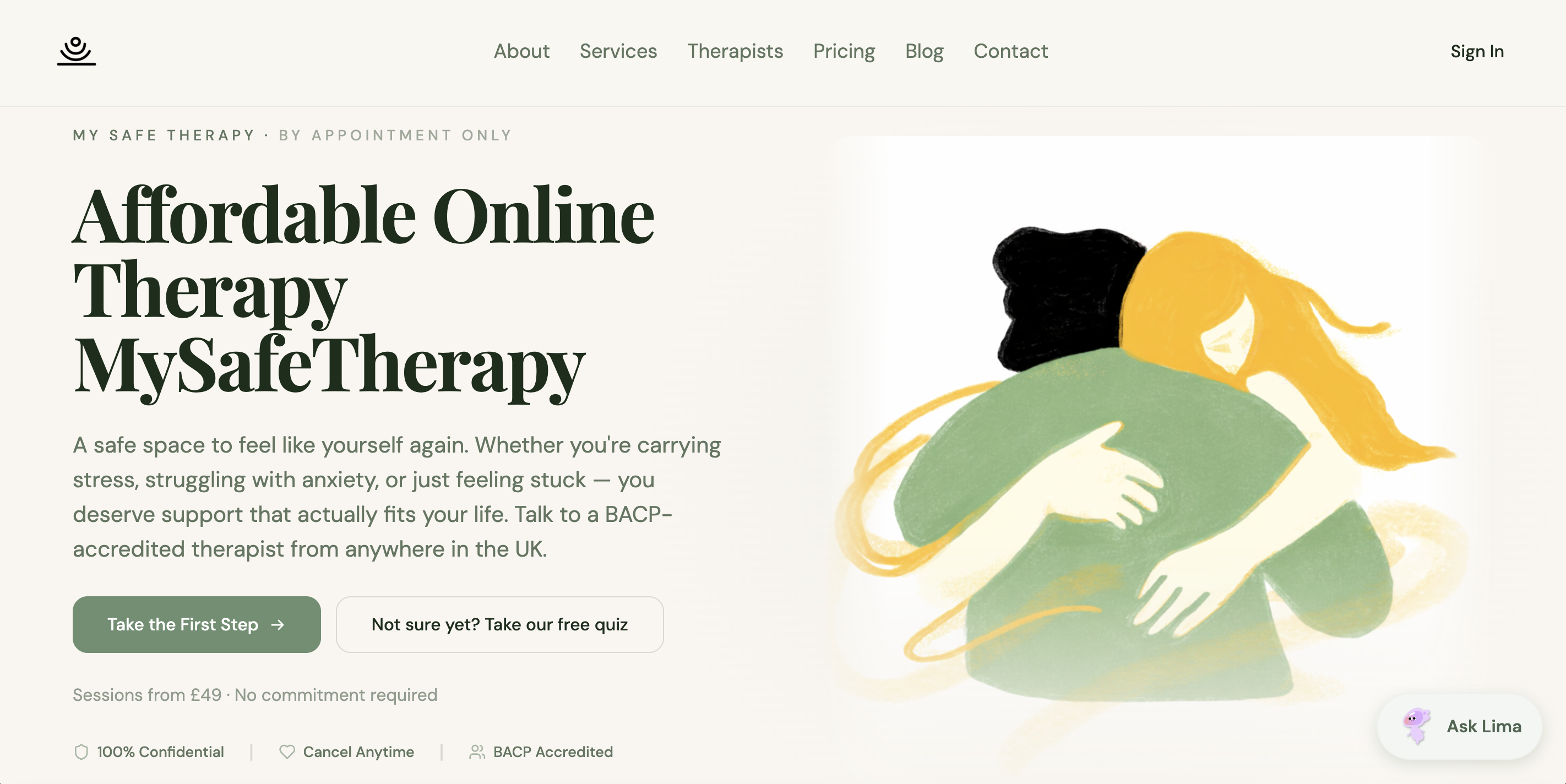
MySafeTherapy lists only PSA-accredited, insured therapists, so every professional on the platform has been independently verified before you make contact. Whether you are managing anxiety, depression, or another concern, you can search by specialism, availability, and session format, including video, chat, and avatar-based options. Evening and weekend appointments are available, and you can switch therapists at any point without pressure. Start therapy safely online and take the first step with confidence, knowing that every therapist you see has met the accreditation standards this article has outlined.
Frequently asked questions
Is it legal for anyone to call themselves a therapist in the UK?
Yes. The titles 'counsellor' and 'psychotherapist' are not legally protected in the UK, meaning anyone may use them. Only PSA-registered professionals are independently checked against defined standards.
How do I check if my UK therapist is properly registered?
Use the BACP, UKCP, or HCPC online registers to search by name and verify qualifications, complaints history, and insurance cover directly.
Are online or remote therapy sessions regulated differently?
No. Accredited registers and standards apply equally to online, phone, and face-to-face therapists, so the same checks apply regardless of how sessions are delivered.
What qualifications should a safe UK therapist have?
Look for BACP, UKCP, or HCPC registration, evidence of 450+ supervised hours, active clinical supervision, and valid professional indemnity insurance as a minimum.