

TL;DR:
- Choose NHS-approved, confidential, personalized, and flexible digital self-help tools for mild to moderate symptoms.
- SilverCloud and NHS Talking Therapies offer structured, guided CBT modules with high success rates.
- For severe or crisis symptoms, seek immediate support from NHS or emergency services rather than self-help resources.
Finding reliable, confidential self-help therapy resources online is not straightforward. Many adults in the UK are searching for mental health support without wanting face-to-face appointments, yet the sheer number of platforms, apps, and NHS services can feel overwhelming. This guide cuts through the noise. It explains what to look for, profiles the most credible evidence-based options available in the UK, and compares them directly so you can make an informed choice that fits your life, your schedule, and your level of comfort with technology.
Table of Contents
- What to look for in therapy self-help resources
- NHS digital self-help: Guided options and accessibility
- SilverCloud and digital CBT: Flexible online improvement
- Every Mind Matters and specialist mental health apps
- How the top self-help therapy resources compare
- Why picking the right self-help therapy makes a lasting difference
- Find your next step towards better mental health
- Frequently asked questions
Key Takeaways
| Point | Details |
|---|---|
| Evidence-based options | NHS, SilverCloud, and ORCHA-vetted apps all offer clinically proven self-help therapy solutions. |
| Confidential support | Most services allow you to start therapy privately and flexibly, without a GP. |
| Guided vs. self-led | Guided self-help improves engagement, but self-led options suit those preferring privacy or total control. |
| Choose what fits | The best resource is the one you’ll use consistently, tailored to your personal needs. |
What to look for in therapy self-help resources
Before choosing any platform, it is worth knowing what separates a genuinely useful resource from one that simply looks credible. Several criteria matter most.
Confidentiality and clinical backing are non-negotiable. Any platform worth using should be transparent about how it handles your data, and ideally should be NHS-approved or supported by published clinical evidence.
Personalisation is equally important. A resource tailored to anxiety is not automatically suited to depression or general low mood. Look for platforms that ask about your specific concerns before assigning content.
Flexibility determines whether you will actually use the resource consistently. Self-paced modules that you can access at midnight or during a lunch break are far more sustainable than rigid schedules. Some platforms also offer optional guided support, where a trained supporter reviews your progress periodically.
Accessibility covers ease of sign-up, whether the service is app-based or browser-based, and whether anonymous use is possible. Many people value the option to engage without creating a named account.
Safety is a critical point. As SilverCloud guidance notes, these resources are best for mild to moderate symptoms and are not appropriate for crisis situations or active suicide risk. If you are in crisis, call 111 or 999 immediately.
Key criteria to check before committing:
- Is the resource NHS-approved or clinically evidenced?
- Does it offer personalisation for your specific concern?
- Can you access it anonymously if needed?
- Is guided support available if self-led feels too isolated?
- Is there clear signposting for emergencies?
Pro Tip: Supported self-help, where a trained person reviews your progress, consistently shows better adherence than fully unguided approaches. If you find yourself losing motivation easily, look for a resource with optional check-ins. You can explore a broader self-help tools overview and read more about self-help therapy explained to build your understanding before choosing.
NHS digital self-help: Guided options and accessibility
Once you understand the key criteria, it is worth examining what the NHS offers directly.
NHS Talking Therapies provides confidential, guided self-help grounded in cognitive behavioural therapy (CBT) principles. CBT is a structured, evidence-based approach that helps you identify unhelpful thought patterns and replace them with more balanced ones. Crucially, adults aged 18 and over can self-refer without involving a GP, which protects your privacy from the outset.
NHS digital self-help courses are designed for mild to moderate anxiety and depression. They are not monitored around the clock, so they are not a crisis tool. However, for day-to-day management of symptoms, they are a strong starting point.
Key features of NHS digital self-help:
- Self-referral available, no GP required
- CBT-based, clinically evidenced courses
- Confidential and delivered entirely online
- Guided support options available through local services
- Audio guides and structured modules for flexibility
"NHS Talking Therapies offers guided self-help based on CBT for anxiety and depression, accessible via self-referral for adults 18+, with no GP needed and full confidentiality online."
The Every Mind Matters Mind Plan extends this offer further. It asks a short set of questions and then generates a personalised action plan with audio guides and step-by-step techniques. It is free, requires no registration, and is available to anyone.
Pro Tip: If you are unsure whether NHS digital self-help is right for your situation, review NHS self-help services alongside information on flexible therapy types to understand your full range of options. You can also explore using self-help tools for practical guidance on getting started.
SilverCloud and digital CBT: Flexible online improvement
A standout resource within the NHS digital offer is SilverCloud. It is a free, online CBT-based platform commissioned by NHS services across the UK and is widely regarded as one of the most rigorously evaluated digital self-help tools available.
SilverCloud provides structured modules covering depression, anxiety, stress, and resilience. Each module uses core CBT techniques including thought-challenging, behavioural activation (gradually re-engaging with activities you have been avoiding), and progress tracking. The platform is self-paced, meaning you work through content at your own speed.
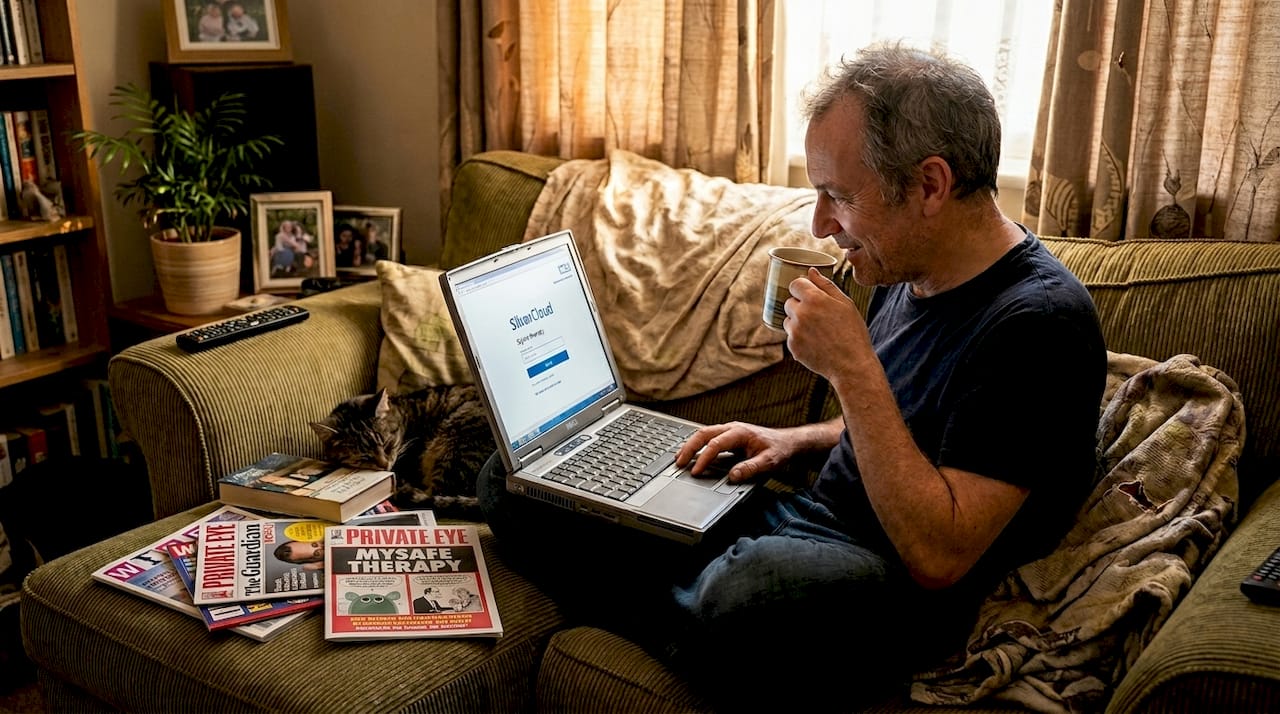
Optional guided support is available through many NHS services that commission SilverCloud. A trained supporter reviews your progress and sends brief, personalised messages to keep you on track. This combination of self-paced learning and light-touch human contact is what makes SilverCloud particularly effective.
The outcomes data is notable. SilverCloud results show that 65% of users achieve clinical improvement, up to 80% show measurable symptom improvement in anxiety and depression, and 93% report satisfaction with the platform.
Key features of SilverCloud:
- Free via NHS referral or self-referral
- Structured CBT modules for anxiety, depression, and stress
- Optional guided support for better adherence
- Progress tracking built into the platform
- Best suited to consistent, engaged users with mild to moderate symptoms
Pro Tip: SilverCloud works best when you treat it like a scheduled appointment rather than something you dip into occasionally. Setting a regular time each week significantly improves outcomes. For context on how it fits into broader care, see SilverCloud platform details and therapy techniques.
Every Mind Matters and specialist mental health apps
Beyond NHS core services, other credible digital platforms also play an important role in the self-help landscape.
Every Mind Matters, developed by NHS England, offers a range of self-help CBT techniques alongside its personalised Mind Plan. NHS self-help guidance highlights that the platform provides audio guides and step-by-step modules to help you tackle low mood, anxiety, sleep difficulties, and stress. No registration is needed, and the content is free.
For those seeking vetted apps, Mind.org.uk has partnered with ORCHA (the Organisation for the Review of Care and Health Applications) to provide a curated library of high-quality mental health apps. ORCHA independently reviews apps for clinical evidence, data privacy, and usability before listing them.
Key options within this space:
- Every Mind Matters Mind Plan: free, personalised, no sign-up required
- QWELL: offers anonymous text-based support and a self-help library
- Mind/ORCHA app library: vetted for safety, privacy, and clinical value
- Audio guides: accessible on mobile, useful for anxiety management on the go
"Always prioritise NHS-vetted or ORCHA-reviewed resources when choosing mental health apps. Data privacy and clinical credibility are not guaranteed on unvetted platforms."
It is also worth noting that mindful phone use can itself support mental health. Using apps intentionally, rather than passively scrolling, makes a measurable difference. For a broader understanding of self-directed approaches, see self-guided therapy explained and therapy options for anxiety.
How the top self-help therapy resources compare
With several strong options available, a direct comparison helps clarify which resource suits which situation.
| Resource | Format | Access | Guided support | Best for | Privacy |
|---|---|---|---|---|---|
| NHS Talking Therapies | Online courses, CBT | Self-referral, no GP | Yes, via local service | Mild to moderate anxiety/depression | High, NHS data standards |
| SilverCloud | Structured CBT modules | NHS referral or self-referral | Optional | Consistent, self-motivated users | High, NHS commissioned |
| Every Mind Matters | Mind Plan, audio guides | Free, no registration | No | Low mood, general wellbeing | High, no account needed |
| Mind/ORCHA apps | App-based, varied formats | Free download | Some apps offer chat | Varied needs, anonymous use | High, ORCHA-vetted |
Digital CBT self-help achieves large effect sizes for anxiety (d=1.08) and moderate effects for depression, with outcomes comparable to face-to-face therapy for mild cases. This is significant. It means choosing a digital self-help resource is not a compromise; it is a clinically sound decision for many people.
How to choose:
- Mild anxiety or low mood, want structure: SilverCloud or NHS Talking Therapies
- Want to start immediately with no sign-up: Every Mind Matters Mind Plan
- Prefer anonymous, app-based support: Mind/ORCHA app library or QWELL
- In crisis or symptoms are severe: Contact NHS 111 or call 999. These platforms are not crisis services.
For more context on online therapy types, a broader overview can help you position self-help within a wider care plan.
Why picking the right self-help therapy makes a lasting difference
Most guides focus on which platform has the best clinical evidence. That matters, but it is only part of the picture. The more important question is which resource you will actually use consistently over several weeks.
Research on CBT delivery formats confirms that supported self-help yields better retention than unguided approaches, yet individual results vary considerably. Some people genuinely thrive with fully self-led tools, particularly those who value privacy above all else or who find human interaction, even light-touch check-ins, adds pressure rather than support.
The real differentiator is fit. A platform that aligns with your schedule, your comfort with technology, and your personal values will outperform a technically superior platform you abandon after two sessions. Knowing your own patterns matters here. If you tend to disengage when things feel difficult, a guided option with optional check-ins is likely a better choice. If privacy is your primary concern, an anonymous app or no-registration platform removes a barrier that might otherwise stop you starting at all.
Apps and platforms are tools. Regular, intentional engagement is what produces change. It is also important to recognise your own warning signs. If symptoms worsen or feel unmanageable, that is a signal to seek direct support rather than persist alone. Explore personalising therapy to understand how to match support to your specific needs.
Find your next step towards better mental health
Self-help resources offer a clinically supported, confidential starting point for managing anxiety, depression, and low mood. Many are free, require no GP referral, and can be accessed entirely on your own terms.
If you are ready to move beyond self-help tools and want structured, personalised support from a UK-accredited therapist, MySafeTherapy connects you with BACP, UKCP, and NCPS-registered professionals through flexible video, chat, and avatar-based sessions, including evenings and weekends. No GP referral is needed. You can start therapy now at a pace and in a format that suits you. For further reading on tailoring your approach, the MySafeTherapy blog offers practical, evidence-informed guidance across a wide range of mental health topics.
Frequently asked questions
Are online therapy self-help resources as effective as face-to-face therapy?
For mild to moderate anxiety and depression, digital CBT reduces symptoms comparably to face-to-face therapy, particularly when guided support is included. The evidence from randomised controlled trials and meta-analyses supports digital self-help as a clinically sound choice for many adults.
How confidential are NHS and app-based self-help platforms?
Mind.org.uk and ORCHA apps are designed to meet data privacy standards, with many offering anonymous modes and no requirement to involve a GP. NHS platforms follow strict NHS data governance rules.
What should I do if I feel worse using a self-help resource?
If your symptoms seriously worsen or feel overwhelming, contact your GP, call NHS 111, or dial 999 in an emergency. As SilverCloud guidance makes clear, these digital resources are not designed for crisis situations.
Can I start NHS self-help therapy without telling my GP?
Yes. NHS self-referral for most digital therapy courses requires no GP involvement, allowing you to access support confidentially and at your own pace.