
Most people assume therapy means sitting in a room with a professional, but nearly half of those who try structured self-help programmes experience meaningful improvements in anxiety and depression. Self-help therapy offers a flexible, affordable alternative that fits around your life whilst delivering evidence-based techniques. This guide explains what self-help therapy involves, how effective it is compared to traditional therapy, and whether it might suit your needs as you navigate mental health challenges in the UK.
Table of Contents
- Key Takeaways
- Understanding self-help therapy: what it is and who it suits
- Effectiveness and limitations: what the evidence says about self-help therapy
- Clinical recommendations and best practices for using self-help therapy
- Using digital tools and online resources alongside self-help therapy
- Get personalised support with MySafeTherapy
- Frequently asked questions about self-help therapy
Key Takeaways
| Point | Details |
|---|---|
| Self help formats | Self help therapy uses structured programmes you can complete alone or with minimal professional input, including workbooks, online programmes, mobile apps and audio resources. |
| Guided versus unguided | Guided self help includes brief professional checks in which progress is reviewed and questions answered, improving completion and outcomes compared with unguided versions. |
| Effectiveness versus no treatment | Evidence shows a medium effect size compared with no treatment for anxiety, and depression shows similar symptom reductions with structured self help programmes. |
| Face to face advantage | Face to face therapy generally outperforms self help approaches. |
| Monitoring and escalation | Regular monitoring helps track progress and triggers escalation to professional care if improvements stall. |
Understanding self-help therapy: what it is and who it suits
Self-help therapy encompasses structured interventions you complete independently or with minimal professional guidance to manage mental health conditions. Common formats include cognitive behavioural therapy workbooks, online programmes teaching specific psychological techniques, mobile apps offering daily exercises, and audio resources guiding relaxation or mindfulness practices. Unlike traditional therapy where you meet regularly with a clinician, self-help places you in the driver's seat whilst providing evidence-based frameworks to follow.
Guided self-help involves brief check-ins with a professional who monitors your progress and answers questions, whilst unguided versions offer complete independence. The distinction matters because self-help therapy shows better outcomes when paired with even minimal support. You might receive weekly emails from a therapist reviewing your workbook entries or attend monthly phone calls discussing challenges you've encountered.
This approach particularly suits adults experiencing mild to moderate anxiety or depression who value privacy, flexibility, and cost-effectiveness. You can work through materials during evenings or weekends without coordinating schedules with a therapist. For those seeking affordable therapy options, self-help programmes typically cost significantly less than ongoing face-to-face sessions. The confidential nature appeals to people uncomfortable with traditional therapy settings or concerned about stigma.
Self-help therapy works best when you possess reasonable motivation and can follow structured instructions independently. It requires commitment to complete exercises regularly rather than sporadically engaging with materials. The format assumes you can read and comprehend written content or follow audio instructions, which may not suit everyone's learning style or cognitive abilities.
Pro tip: Choose guided self-help programmes over purely independent resources when starting out. Even minimal professional contact improves completion rates and outcomes whilst maintaining the flexibility and affordability that make self-help appealing.
Certain situations make self-help therapy particularly appropriate. You might use it whilst waiting for face-to-face therapy to begin, combining it with other treatments, or as a standalone intervention for specific issues like mild social anxiety or generalised worry. Geographic isolation, physical disabilities limiting travel, or work schedules incompatible with traditional therapy hours often make self-help the most practical option.
Effectiveness and limitations: what the evidence says about self-help therapy
Research demonstrates that self-help interventions produce medium effect sizes compared to no treatment for anxiety disorders, meaning approximately 50% of participants experience clinically meaningful improvement. This represents a substantial benefit, though the evidence quality remains moderate due to study limitations including risk of bias and inconsistency across trials. Depression responds similarly, with structured programmes delivering measurable symptom reduction for many users.

Face-to-face therapy generally outperforms self-help approaches when comparing effect sizes directly. Traditional therapy allows therapists to tailor interventions moment by moment, address complex presentations, and provide relationship-based healing that self-help cannot replicate. However, self-help serves valuable roles as a complement to therapy, a first step before pursuing intensive treatment, or an accessible alternative when professional services remain unavailable or unaffordable.
| Treatment comparison | Effectiveness level | Typical completion rate | Cost relative to therapy |
|---|---|---|---|
| Unguided self-help | Low to moderate | 25-40% | 5-10% |
| Guided self-help | Moderate | 50-65% | 15-25% |
| Face-to-face therapy | Moderate to high | 60-75% | 100% |
| Combined approach | High | 70-85% | 110-125% |
Guided self-help consistently demonstrates superior outcomes compared to unguided versions across multiple studies. The difference stems from accountability, troubleshooting support, and encouragement that minimal professional contact provides. Even brief weekly emails or monthly phone calls significantly boost completion rates and symptom improvement. This finding suggests the human connection element, however minimal, enhances self-help effectiveness.
Limitations warrant honest consideration. Study quality varies, with some trials lacking proper blinding or using inadequate comparison groups. Dropout rates can reach 60% in unguided self-help programmes, indicating many people struggle to maintain engagement without external support. Self-help also requires adequate literacy, cognitive function, and motivation that not everyone possesses during acute mental health crises.
"Self-help therapy represents a useful tool within a broader mental health strategy rather than a complete replacement for professional care. It works best for mild to moderate presentations and when integrated into stepped-care pathways with clear escalation plans." — NHS clinical guidance on self-help interventions
Certain conditions respond better to self-help than others. Specific phobias, generalised anxiety, and mild depression show good response rates. Complex presentations involving trauma, severe symptoms, suicidal thoughts, or co-occurring conditions typically require professional therapy from the outset. Understanding these distinctions helps you match intervention intensity to your actual needs rather than under or over-treating.
For those exploring types of therapy for anxiety, self-help often employs cognitive behavioural techniques, mindfulness practices, or behavioural activation strategies. These evidence-based approaches translate well to self-directed formats because they involve learnable skills and structured exercises rather than requiring complex therapeutic relationships.
Clinical recommendations and best practices for using self-help therapy
Stepped-care models position self-help as the recommended first-line approach for mild to moderate anxiety and depression within UK mental health services. This framework starts with the least intensive intervention likely to help, escalating to more intensive treatments only when necessary. You might begin with guided self-help, progress to brief therapy if improvements plateau, and access specialist services only for complex or severe presentations.
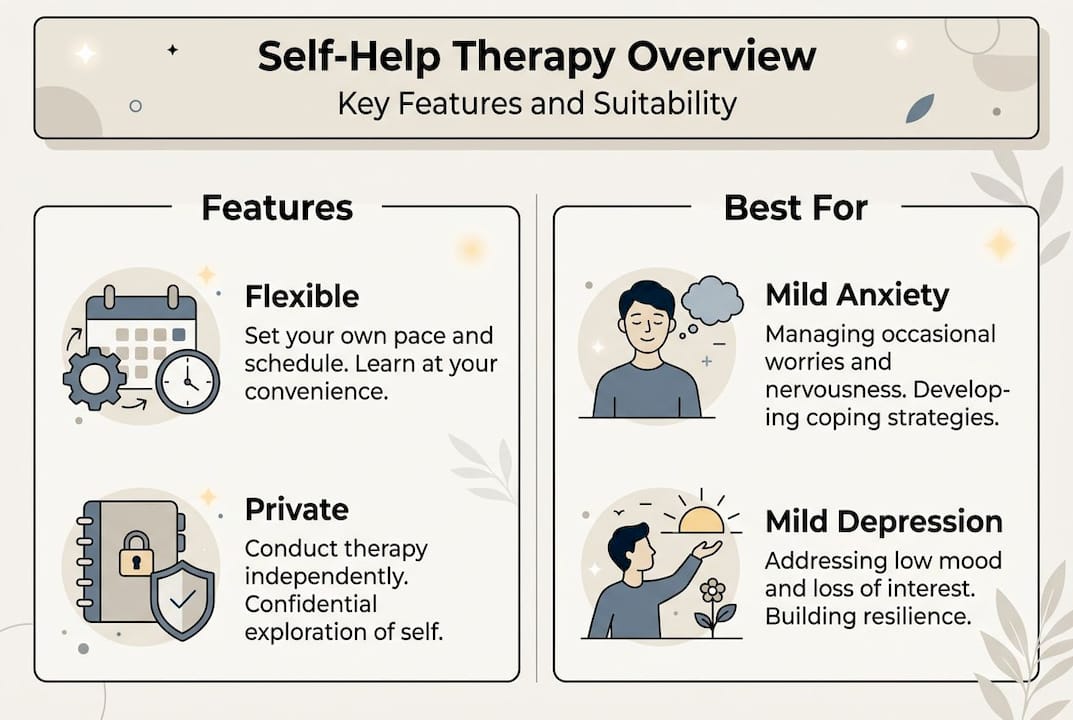
Monitoring your progress systematically determines whether self-help provides sufficient support or whether you need to escalate care. Track specific symptoms weekly using standardised questionnaires like the GAD-7 for anxiety or PHQ-9 for depression. If scores fail to improve after 6-8 weeks of consistent engagement, or if they worsen at any point, this signals the need for professional input. Setting clear timeframes and measurable goals prevents you from persisting with ineffective approaches whilst symptoms deteriorate.
Pro tip: Recognise warning signs requiring immediate escalation to face-to-face therapy: suicidal thoughts, self-harm urges, inability to function in daily life, symptoms worsening despite self-help efforts, or feeling overwhelmed by the materials. Self-help works within limits, and knowing when you've reached those boundaries protects your wellbeing.
Practical steps maximise self-help therapy effectiveness:
- Choose programmes based on recognised psychological approaches like CBT rather than untested methods
- Schedule specific times for self-help work rather than fitting it around other activities
- Complete exercises in order rather than skipping ahead to topics that seem more relevant
- Apply techniques in real-world situations between sessions rather than treating them as purely academic
- Seek guided versions where minimal professional support enhances accountability and outcomes
- Join online communities or support groups to share experiences whilst maintaining programme structure
- Review progress monthly using objective measures rather than relying solely on subjective feelings
Quality self-help resources display several characteristics. They base content on evidence-based therapeutic approaches with research supporting their effectiveness. Clear learning objectives outline what you'll achieve in each module or chapter. Interactive exercises require active participation rather than passive reading. Progress tracking tools help you monitor improvements objectively. Accessibility features accommodate different learning styles and abilities.
Professional guidance, even minimal, substantially improves outcomes. A brief initial assessment ensures self-help matches your needs appropriately. Periodic check-ins identify obstacles preventing progress and provide encouragement during difficult phases. This support need not involve lengthy therapy sessions; short phone calls or email exchanges often suffice whilst preserving the cost and convenience advantages that make self-help attractive.
For those preparing for therapy, self-help can build foundational skills and clarify goals before beginning professional treatment. You arrive better informed about psychological concepts and more articulate about your experiences. This preparation often accelerates therapy progress and helps you use limited sessions more effectively.
Using digital tools and online resources alongside self-help therapy
Digital platforms expand self-help therapy access through smartphone apps, web-based programmes, and online communities offering support and accountability. Popular categories include mood tracking apps recording daily emotional patterns, meditation apps teaching mindfulness techniques, CBT programmes delivering structured courses, and AI-powered journaling tools helping you process thoughts and feelings. These digital tools provide scalability and convenience whilst maintaining evidence-based approaches.
Safety and privacy considerations matter when selecting online mental health resources:
- Verify that platforms comply with UK data protection regulations including GDPR requirements
- Check whether apps encrypt data transmission and storage to protect sensitive information
- Understand how platforms use your data, particularly whether they share it with third parties
- Look for professional oversight or clinical governance ensuring content quality and safety
- Confirm whether crisis support pathways exist if you experience worsening symptoms
- Read user reviews identifying technical issues or privacy concerns other people encountered
- Prioritise platforms offering clear contact information and responsive customer support
UK-based options often provide better regulatory compliance and understanding of NHS pathways compared to international services. Platforms connecting you with BACP, UKCP, or NCPS registered professionals ensure clinical standards whilst maintaining the flexibility digital delivery provides.
| Platform feature | Free apps | Subscription apps | Integrated therapy platforms |
|---|---|---|---|
| Cost | £0 | £5-15/month | £40-80/session |
| Professional guidance | None | Minimal | Comprehensive |
| Confidentiality level | Variable | Good | Excellent |
| Clinical oversight | None | Limited | Full |
| Personalisation | Low | Moderate | High |
Online communities complement structured self-help programmes by providing peer support and reducing isolation. Forums, social media groups, and moderated discussion platforms let you share experiences and learn from others facing similar challenges. However, these spaces cannot replace professional guidance and sometimes spread misinformation or unhelpful coping strategies. Approach them as supplements rather than primary interventions.
For complex presentations involving trauma, severe depression, or co-occurring conditions, digital self-help tools work best alongside professional therapy rather than as standalone treatments. The convenience and affordability remain valuable, but they cannot substitute for the therapeutic relationship and clinical expertise needed for serious mental health issues. Understanding this boundary prevents under-treatment whilst still benefiting from digital resources.
Exploring therapist matching in online therapy helps you transition from self-help to professional support when needed. Many platforms now offer hybrid models where you begin with self-help modules before adding therapist sessions as required. This graduated approach balances cost-effectiveness with clinical effectiveness.
The online therapy safety landscape continues evolving as regulations tighten and platforms improve security measures. Staying informed about best practices protects your privacy whilst accessing the genuine benefits digital mental health tools provide. Legitimate platforms transparently explain their safety protocols rather than hiding information in dense privacy policies.
Get personalised support with MySafeTherapy
Whilst self-help therapy offers valuable tools for managing anxiety and depression, combining it with professional support often delivers the best outcomes. MySafeTherapy connects you with UK-accredited therapists registered with BACP, UKCP, and NCPS through confidential online sessions that fit your schedule, including evenings and weekends. The platform offers video, chat, and avatar-based formats alongside AI journaling and mood tracking tools that enhance your self-help efforts.
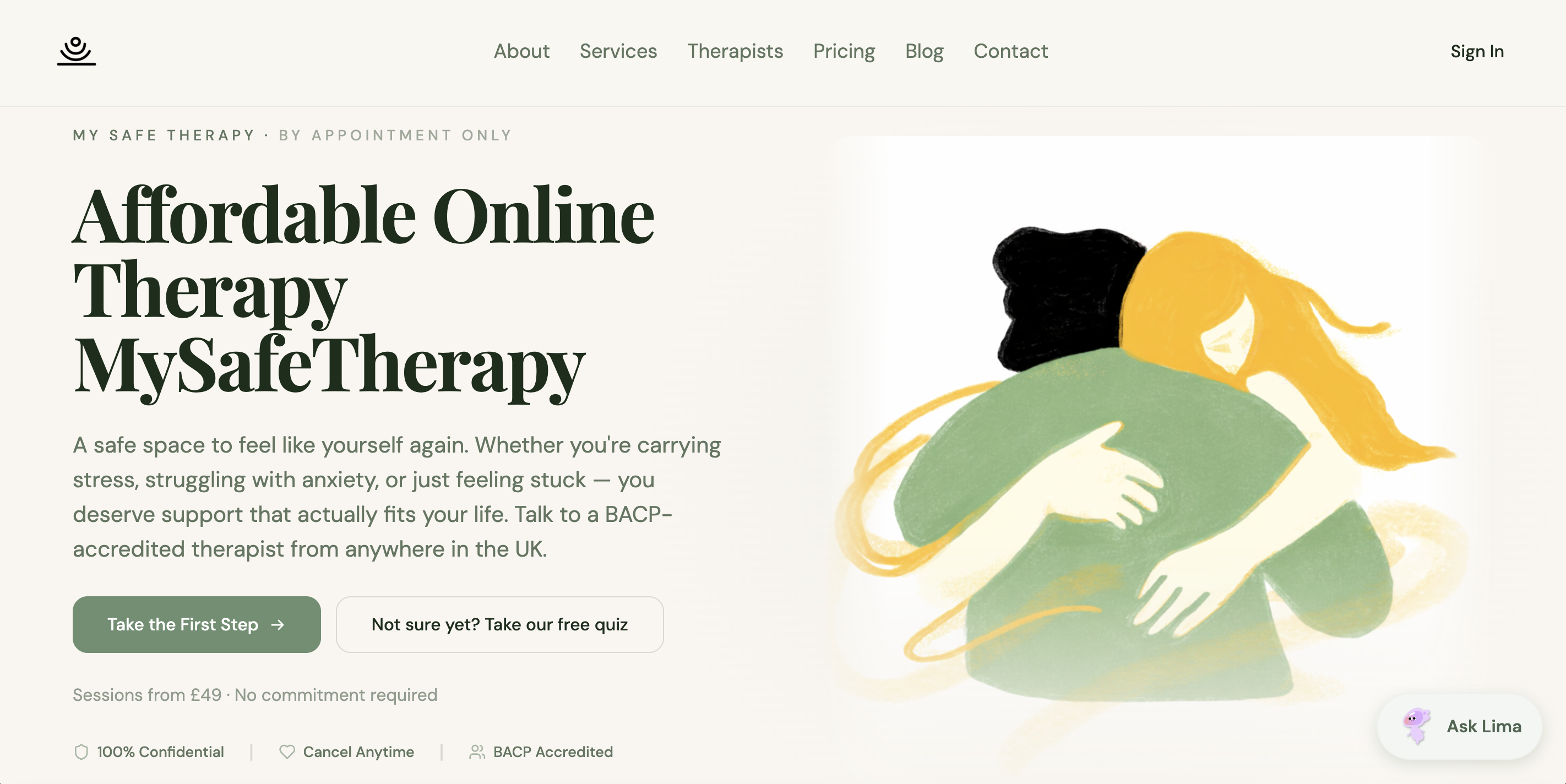
Take the free therapy quiz to assess whether self-help alone suits your needs or whether adding professional sessions would accelerate your progress. The quiz provides personalised recommendations based on your symptoms, preferences, and circumstances. When you're ready, start therapy by matching with a therapist who understands your specific challenges and can guide you through evidence-based treatments.
Pro tip: Use self-help resources between therapy sessions to reinforce techniques your therapist introduces and maintain momentum during weeks when you don't meet. This integrated approach maximises both the clinical expertise therapy provides and the flexibility self-help offers.
Frequently asked questions about self-help therapy
What types of self-help therapy are most effective?
Cognitive behavioural therapy-based programmes demonstrate the strongest evidence for anxiety and depression, followed by mindfulness-based approaches and behavioural activation techniques. Guided versions with minimal professional support consistently outperform purely independent resources. Choose programmes based on recognised psychological frameworks rather than untested methods.
Can self-help therapy replace seeing a therapist?
For mild to moderate anxiety and depression, self-help can serve as an effective standalone treatment when you engage consistently and monitor progress objectively. However, severe symptoms, complex presentations, trauma, or suicidal thoughts require professional therapy from the outset. Self-help works best as a first step or complement rather than a complete replacement.
How do I know if self-help therapy is right for me?
Self-help suits people with mild to moderate symptoms who possess reasonable motivation, can follow structured instructions, and prefer flexible, affordable options. It works less well during acute crises, for complex conditions, or when you struggle with self-directed learning. Taking a therapy sessions guide helps clarify whether self-help alone suffices or whether professional support would better meet your needs.
Are online self-help resources safe and confidential?
Reputable UK platforms comply with GDPR and encrypt your data, but quality varies significantly across providers. Verify regulatory compliance, read privacy policies carefully, and prioritise platforms with professional oversight. Free apps often have weaker privacy protections than subscription services or integrated therapy platforms.
How quickly can self-help therapy improve anxiety or depression?
Most people notice initial improvements within 4-6 weeks of consistent engagement, with full benefits emerging over 8-12 weeks. Progress varies based on symptom severity, programme quality, and how thoroughly you complete exercises. If you see no improvement after 6-8 weeks, escalate to professional therapy rather than persisting with an ineffective approach.