
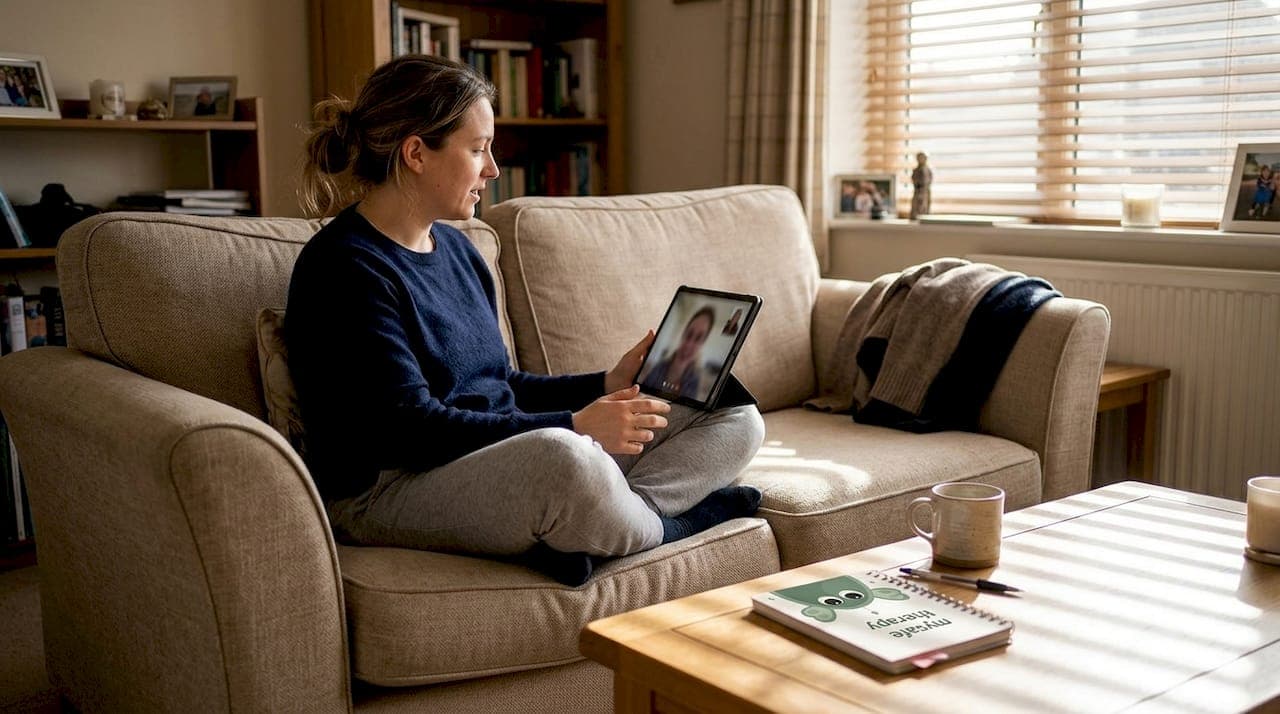
Most people assume therapy means a fixed slot every Tuesday at 6pm, indefinitely. That assumption is changing. Flexible therapy, which adapts session length, format, and timing to fit your life, is now a well-evidenced option for managing anxiety and depression. Research published between 2020 and 2025 shows online and flexible formats achieve effect sizes comparable to traditional face-to-face care. For adults in the UK who need privacy, manage unpredictable symptoms, or simply cannot commit to a rigid weekly schedule, this shift matters. This article explains how flexible therapy works, what the evidence says, and how to make it work for you.
Table of Contents
- How flexible therapy sessions work
- Evidence: Does flexible therapy work for anxiety and depression?
- Personalisation: Why flexibility matters for mental health needs
- Integrating flexible therapy into daily life
- The overlooked advantage: Flexible therapy helps you adapt, not just cope
- Start your flexible therapy journey today
- Frequently asked questions
Key Takeaways
| Point | Details |
|---|---|
| Proven effectiveness | Flexible and online therapy sessions work as well as traditional approaches for anxiety and depression. |
| Personalised support | Therapy can be tailored to your changing needs and preferences, supporting sustained progress. |
| Accessible options | Flexible sessions fit around work, family, and fluctuating motivation, making mental health support easier. |
| Easy to start | You can book and manage flexible sessions online, ensuring privacy and convenience. |
How flexible therapy sessions work
Flexible therapy is not a single product. It is a framework that allows sessions to vary in length, medium, and frequency depending on what you need at a given time. Rather than attending a fixed 50-minute session every week regardless of how you feel, you can adjust the structure as your circumstances change.
For adults in the UK, this typically means access to accessible online therapy via video call, text-based chat, or a combination of both. Some platforms also offer avatar-based sessions, which reduce the social pressure of appearing on camera. Sessions can be booked for early mornings before work, late evenings, or weekends, making support available outside standard office hours.
The people who benefit most from this model include:
- Adults with fluctuating symptoms who may need more support during difficult periods and less during stable ones
- Those with demanding or irregular work schedules
- People who prioritise privacy and prefer not to attend a physical clinic
- Neurodivergent individuals who find rigid structures difficult to maintain
- Anyone returning to therapy after a break who wants to ease back in gradually
Personalisation via variable frequency suits symptoms and prevents overload, especially for neurodivergent individuals. This is a practical consideration, not just a convenience. When the structure of therapy matches the reality of your life, you are more likely to attend consistently and engage meaningfully.
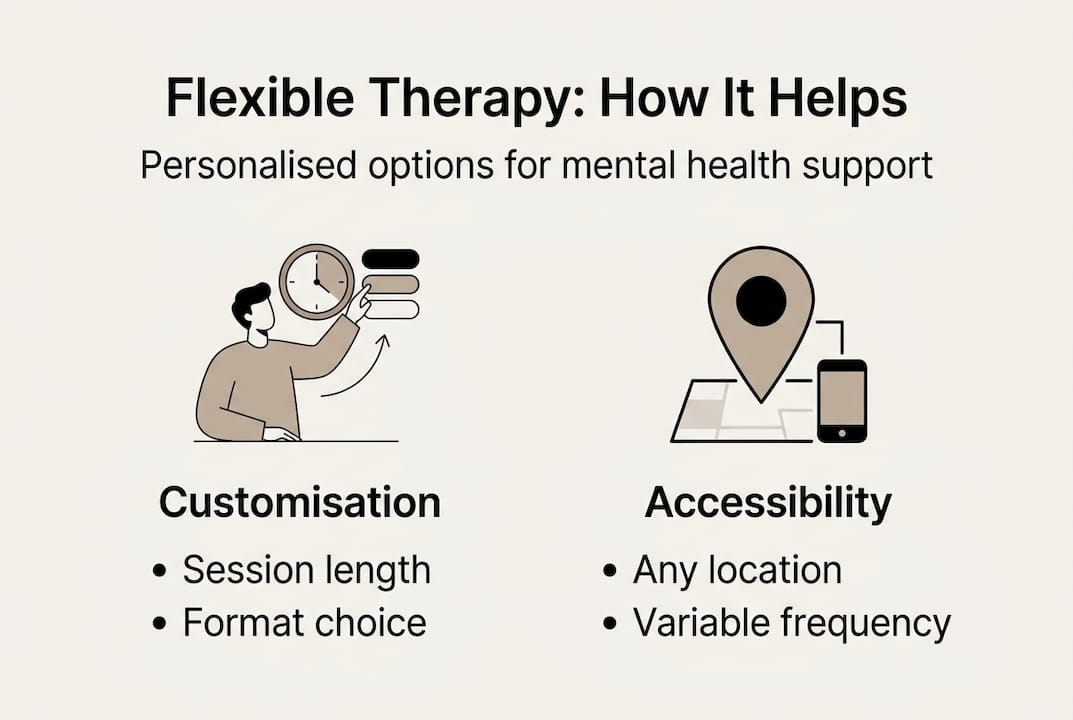
Formats can also be mixed. You might have a longer video session one week, followed by a shorter text check-in the next. Some providers offer on-demand messaging between sessions, which allows you to flag concerns as they arise rather than waiting for your next scheduled slot.
Pro Tip: Before your first session, write down your preferred times, formats, and how often you think you need support. Share this with your therapist so the structure is agreed from the outset, rather than defaulting to a standard weekly model.
Evidence: Does flexible therapy work for anxiety and depression?
The evidence base for online and flexible therapy has grown substantially since 2020. The question is no longer whether it works, but how well it works and for whom.
Online therapy is as effective as in-person care for anxiety and depression, with standardised mean differences (SMD) ranging from 0.87 to 1.02 across multiple studies. These are strong effect sizes. For context, an SMD above 0.8 is considered large in psychological research.
NHS data from 2023 to 2024 recorded over 1.8 million UK referrals for remote therapy, reflecting both demand and institutional confidence in the model. Flexible formats are not a fringe option; they are now a mainstream component of mental health provision.
"Empirical data confirms that online therapy, including flexible sessions, is as effective as in-person care for anxiety and depression, with large effect sizes across both conditions."
For therapy for anxiety and depression, the data on depression is particularly striking. Digital programmes consistently produce effect sizes around d=1.61, which is exceptionally high. This suggests that when flexible formats are applied consistently, they can produce outcomes that match or exceed traditional models.
| Condition | Format | Effect size | Source period |
|---|---|---|---|
| Anxiety | Online CBT | SMD 0.87 to 1.02 | 2020 to 2025 |
| Depression | Digital programme | d = 1.61 | 2020 to 2025 |
| Mixed presentations | Remote therapy | Comparable to face-to-face | 2023 to 2024 |
One important consideration is online therapy safety. Flexible does not mean unregulated. Effective flexible therapy is delivered by accredited practitioners using secure platforms. The evidence supports flexible formats precisely because they maintain clinical rigour while removing structural barriers.
The NHS uptake figures confirm that commissioners and clinicians trust this model. For adults managing anxiety or depression, the research provides a clear answer: flexible therapy works.
Personalisation: Why flexibility matters for mental health needs
Evidence confirms that flexible therapy is effective. But why does personalisation specifically improve outcomes? The answer lies in how mental health conditions actually behave.
Anxiety and depression are not static. Symptoms fluctuate. Some weeks are manageable; others are not. A fixed weekly session cannot account for this variation. Personalisation prevents overload and supports neurodivergent clients by adapting frequency and intensity to match current need.
Consider the difference between rigid and flexible scheduling:
| Factor | Rigid weekly schedule | Flexible schedule |
|---|---|---|
| Session timing | Fixed day and time | Chosen to suit your week |
| Session length | Standard 50 minutes | Variable, 30 to 60 minutes |
| Frequency | Weekly regardless of need | Adjusted as symptoms change |
| Format | Face-to-face or single mode | Video, chat, or mixed |
| Risk of burnout | Higher during low-motivation periods | Lower, as intensity can reduce |
| Engagement | Can feel obligatory | More likely to feel purposeful |
Good therapist matching also plays a role here. When your therapist understands your preferences and history, they can suggest format or frequency changes proactively rather than waiting for you to disengage.
You might benefit from a flexible approach if:
- Your symptoms vary significantly week to week
- You have previously dropped out of therapy due to scheduling conflicts
- You find long sessions draining or difficult to sustain
- You work shifts, travel frequently, or have caring responsibilities
- You prefer written communication over spoken conversation
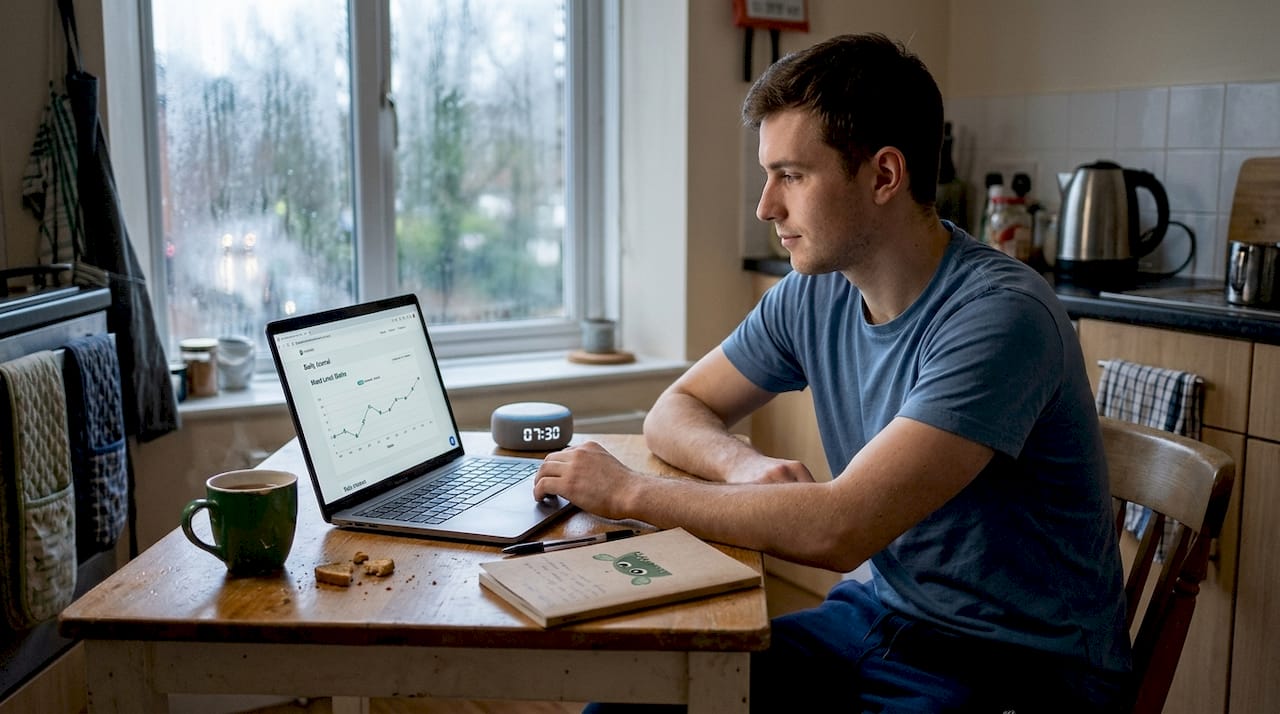
Tools such as AI in online therapy can supplement flexible sessions by providing mood tracking and journalling between appointments. This creates continuity even when sessions are spaced further apart, ensuring that progress is maintained rather than reset each time.
Flexibility is not about doing less therapy. It is about doing the right amount at the right time.
Integrating flexible therapy into daily life
Knowing that flexible therapy works is one thing. Building it into your routine in a way that sustains progress is another. Practical structure matters.
Digital programmes with consistent application produce large effect sizes for depression. Consistency does not mean rigidity; it means showing up regularly in whatever format works for you at a given time.
Here is a step-by-step approach to setting up a personalised therapy routine:
- Assess your schedule honestly. Identify two or three time windows each week when you are least likely to be interrupted or distracted.
- Discuss format preferences with your therapist. Be specific about whether you prefer video, chat, or a mix, and why.
- Agree on a starting frequency. Weekly sessions are a reasonable baseline, but you can adjust after the first month.
- Set digital boundaries. Decide in advance whether you will use between-session messaging and how quickly you expect responses.
- Review and adjust monthly. Check in with your therapist about whether the current structure is working. Do not wait until you feel like dropping out.
- Use supplementary tools. Mood tracking apps or AI journalling can bridge the gap between sessions and give your therapist useful data.
For those concerned about cost, exploring affordable therapy options can help you find a sustainable model without compromising on quality.
Privacy is also worth addressing directly. If you share a home with others, schedule sessions when you have a private space. Use headphones. Inform your household that you are unavailable during that time without needing to explain further.
Pro Tip: Track your mood for two weeks before your first session. This gives your therapist a baseline and helps you both identify patterns that should inform the structure of your support.
The overlooked advantage: Flexible therapy helps you adapt, not just cope
Most discussions about flexible therapy focus on convenience. That framing undersells what is actually happening.
Standard therapy models assume a stable life. Fixed weekly sessions work well when your circumstances are predictable. But for most adults managing anxiety or depression, life is not stable. Work pressures shift. Relationships change. Symptoms intensify without warning.
Flexible therapy does not just accommodate this reality. It trains you to respond to it. When you can adjust session frequency during a difficult period and reduce it when you stabilise, you are practising the same skill that therapy aims to build: adaptive self-regulation.
This is a foundational shift. Rather than attending therapy to cope with a fixed problem, you are using it as a dynamic tool that mirrors how mental health actually works. The ability to start therapy on your own terms, and to adjust it as your needs evolve, is itself a therapeutic act.
"The most effective mental health support is not the most intensive. It is the most responsive."
When therapy adapts to you, you are more likely to maintain progress over time and less likely to relapse when life becomes difficult again. That is not just a convenience. It is a clinical advantage.
Start your flexible therapy journey today
If this article has clarified what flexible therapy can offer, the next step is straightforward.
MySafeTherapy connects you with UK-accredited therapists registered with BACP, UKCP, and NCPS, all of whom are experienced in delivering flexible, personalised support. You can choose your format, set your schedule, and adjust as your needs change. Privacy and confidentiality are built into every session. If you are unsure where to begin, take the therapy quiz to identify the right approach for your situation. When you are ready, start flexible therapy and access support that works around your life, not the other way around.
Frequently asked questions
Are flexible therapy sessions as effective as regular face-to-face therapy?
Yes. Online therapy is as effective as in-person sessions for anxiety and depression, with strong effect sizes confirmed across multiple studies between 2020 and 2025.
Who should consider flexible therapy sessions?
Anyone with fluctuating symptoms, irregular schedules, or privacy concerns can benefit. Variable frequency is particularly useful for neurodivergent individuals and those managing unpredictable workloads.
Are flexible therapy sessions private and secure?
Most reputable platforms use encrypted technology to protect your data and communications. Always review your provider's privacy policy and confirm their accreditation before starting.
Can I switch formats or reschedule easily with flexible therapy?
Yes. Flexible therapy is specifically designed to allow changes to session mode, length, and timing. Discuss your preferences with your therapist at any point to adjust the arrangement.