
TL;DR:
- Self-help tools offer private, flexible support for mild to moderate anxiety and depression in the UK.
- Using vetted apps consistently is key to achieving positive mental health outcomes.
- For severe symptoms or crises, professional support and escalation are recommended.
Finding confidential, flexible mental health support in the UK can feel like navigating a maze. Many adults experience mild to moderate anxiety or depression but hesitate to seek help due to cost, waiting times, or concerns about privacy. Self-help tools offer a practical, private route to managing symptoms on your own terms. Whether you prefer a structured programme backed by NHS talking therapies or a discreet app you can use at midnight, options exist for every schedule and comfort level. This guide walks you through exactly what you need, how to get started, and how to track your progress effectively.
Table of Contents
- What you need to get started with self-help tools
- Step-by-step: Using guided and unguided self-help tools
- How self-help tools work: CBT techniques and app features
- Tracking progress, troubleshooting, and when to escalate
- A fresh perspective: Why consistent use and evidence-backed tools matter most
- Next steps: Professional support options and online therapy
- Frequently asked questions
Key Takeaways
| Point | Details |
|---|---|
| Trusted UK sources matter | Always choose NHS, Mind, or ORCHA-vetted apps and guides for evidence-backed self-help. |
| Guided and unguided options | Self-help tools can be therapist-guided or self-paced; both are accessible online for adults aged 18 and over. |
| Consistency drives results | Regular practice and monitoring are the keys to symptom improvement and mental health progress. |
| Know when to escalate | If symptoms persist or worsen, seek professional help or escalate support through your GP or NHS. |
What you need to get started with self-help tools
Before downloading an app or booking a guided session, it helps to understand which sources are trustworthy and what basic requirements apply. In the UK, the most reliable starting points are the NHS, the mental health charity Mind, and ORCHA, which is the Organisation for the Review of Care and Health Applications. These bodies assess tools for clinical effectiveness and data security, so you are not left guessing whether an app is safe to use.
Self-help tools for anxiety and depression in the UK primarily include guided self-help based on cognitive behavioural therapy (CBT), available via NHS talking therapies services, self-help books recommended by the Reading Well scheme, online tools like Every Mind Matters, and apps such as SilverCloud and WorryTree. These resources have been assessed by Mind and ORCHA for both clinical value and privacy standards.
To access most tools, you need to meet a few basic criteria:
- Age: Most guided NHS services require you to be 18 or over.
- Symptom severity: Tools are designed for mild to moderate symptoms, not crisis-level presentations.
- Technology: A smartphone or computer with internet access is sufficient. No advanced technical skills are needed.
- Commitment: A willingness to practise techniques regularly is the single most important factor in seeing results.
It is worth understanding the distinction between guided and unguided self-help. Guided self-help pairs you with a therapist or trained practitioner who checks in periodically, usually via phone or online message. Unguided self-help means working through a programme or app entirely at your own pace, with no scheduled contact. Both have merit, and your choice may depend on how much structure you find helpful. For broader mental health management tips, it is useful to read around both formats before committing.
| Format | Support level | Flexibility | Example tools |
|---|---|---|---|
| Guided self-help | Therapist check-ins | Moderate | NHS talking therapies |
| Unguided self-help | None | High | SilverCloud, WorryTree |
| Self-help books | None | Very high | Reading Well titles |
| Online programmes | Optional | High | Every Mind Matters |
For a broader overview of how these formats compare, the self-help therapy guide covers the key differences in more detail. Whichever route you choose, prioritise tools that are recommended by the NHS or assessed by ORCHA to protect your data and your wellbeing.
Step-by-step: Using guided and unguided self-help tools
Knowing which tools exist is one thing. Using them consistently is another. Here is a clear process for both guided and unguided routes.
For guided self-help via NHS talking therapies:
- Visit the NHS talking therapies website and complete a self-referral form. You do not need a GP referral.
- Attend an initial assessment, usually by phone or video, to confirm that guided self-help is appropriate for your needs.
- Work through a structured workbook or online course over 6 to 8 sessions, with a practitioner available for support.
- Complete exercises between sessions. This is not optional; practice between contact points drives the majority of the benefit.
- Attend a review at the end of the programme to assess progress and decide on next steps.
For unguided self-help via apps or online tools:
- Choose a vetted app such as SilverCloud or WorryTree, or visit Every Mind Matters for free CBT-based exercises.
- Create an account and complete any initial questionnaires to personalise your experience.
- Set a daily or weekly schedule and treat it like any other appointment.
- Use the app's built-in features, including mood tracking and journaling, to monitor how you feel over time.
- Review your progress every two weeks and adjust your routine if needed.
If you are unsure which format suits you, the Mind app FAQs provide clear guidance on choosing between options. For a more detailed walkthrough of the process, the accessible online therapy guide covers the full journey from first contact to ongoing use.
Pro Tip: Combine daily app use with one small lifestyle change each week, such as a short walk or a consistent sleep time. Research consistently shows that behavioural changes amplify the effects of CBT-based tools. For more on structuring this approach, the self-guided therapy resource is worth reviewing.
| Week | Guided focus | Unguided focus |
|---|---|---|
| 1 to 2 | Assessment and orientation | Account setup and baseline mood log |
| 3 to 5 | Core CBT modules with practitioner | Daily exercises and journalling |
| 6 to 8 | Review and consolidation | Progress review and habit adjustment |
How self-help tools work: CBT techniques and app features
Understanding the mechanics behind these tools helps you use them with greater intention. Most NHS-recommended self-help tools are grounded in cognitive behavioural therapy, which works by identifying and changing unhelpful thought patterns and behaviours.
The core process follows three stages:
- Identify: Recognise negative or distorted thoughts as they arise, such as catastrophising or all-or-nothing thinking.
- Challenge: Examine the evidence for and against those thoughts. Are they facts or assumptions?
- Reframe: Replace distorted thoughts with more balanced, realistic alternatives.
Apps like SilverCloud and the WorryTree app translate these stages into structured digital exercises. Features typically include:
- Mood tracking: Log how you feel each day to identify patterns over time.
- Journalling prompts: Guided questions help you articulate thoughts you might otherwise avoid.
- Progress dashboards: Visual summaries show how your scores change week by week.
- Personalised plans: Based on your initial assessment, the app tailors content to your specific symptoms.
- Reminders: Push notifications prompt you to engage even on low-motivation days.
"CBT-based self-help tools are most effective when users engage with them regularly and apply the techniques in real situations, not just within the app itself."
Pro Tip: Turn on in-app reminders and set them for a time when you are consistently available, such as after breakfast or before bed. Irregular engagement is the most common reason people do not see results. For a broader look at how these techniques fit into a wider support plan, effective therapy techniques offers practical context.
Behavioural activation is another key component. This involves scheduling small, manageable activities that give you a sense of achievement or pleasure, even when motivation is low. It sounds simple, but the evidence behind it is robust and it works well alongside app-based CBT.

Tracking progress, troubleshooting, and when to escalate
Engaging with a self-help tool is only part of the process. Monitoring your progress and knowing when to seek additional support are equally important.
How to track your progress:
- Use the built-in mood and symptom trackers within your chosen app or programme.
- Review your scores every two weeks against your baseline from week one.
- Note any changes in sleep, energy, or daily functioning, not just mood scores.
- Keep a brief written log outside the app if you find it helpful.
- Share your progress data with a GP or practitioner if you escalate to professional support.
The evidence for digital self-help tools is encouraging. SilverCloud data shows 65% recovery rates, 80% improvement in symptoms, and 93% user satisfaction. Studies also indicate that digital CBT reduces anxiety and depression symptoms by 32 to 38% in clinical trials. These are meaningful outcomes, and they are achievable with consistent use.
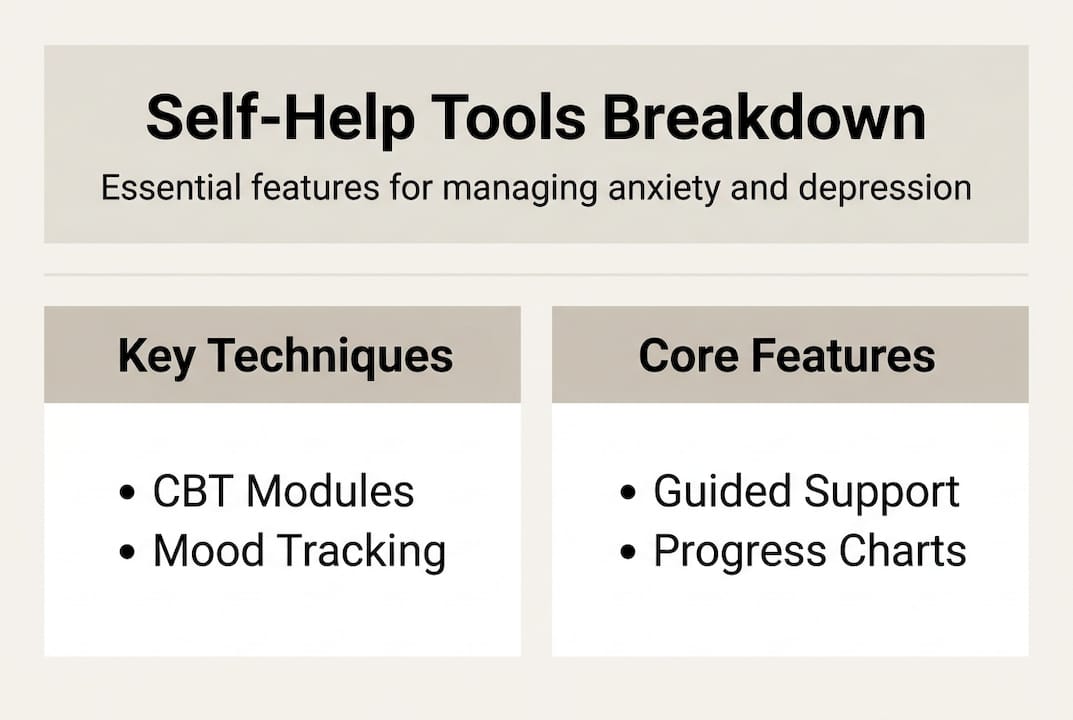
However, results vary. If you see no improvement after 6 to 8 weeks of regular engagement, it is time to seek professional help via your GP or escalate within your NHS talking therapies service.
Signs that you should escalate sooner include:
- Symptoms worsening rather than stabilising
- Thoughts of self-harm or suicide
- Difficulty managing daily responsibilities
- Feeling unable to engage with the tool at all
For guidance on what to expect when moving to professional support, preparing for therapy is a useful next read. The Mind mental health apps page also lists escalation pathways clearly, including crisis lines and NHS urgent referral routes.
A fresh perspective: Why consistent use and evidence-backed tools matter most
Most guides focus on which tool to choose. We think that misses the point. The tool matters far less than how consistently you use it.
Research and clinical experience both point to the same pattern: people who engage daily, even briefly, see significantly better outcomes than those who use a tool intensively for a week and then stop. The majority of people who do not benefit from self-help tools drop off within the first seven to ten days. That is not a failure of the tool. It is a failure of routine.
Choosing an NHS or ORCHA-vetted resource does matter for safety and data privacy, but beyond that threshold, the differences between tools are minor. What is not minor is whether you open the app on a Tuesday morning when you would rather stay in bed.
For mental health management tips that support long-term consistency, focus on integration rather than intensity. Build the tool into an existing habit. Expect variation in how you feel week to week. Regular check-ins with yourself, or with a professional, keep you honest about whether the approach is working.
Next steps: Professional support options and online therapy
Self-help tools are a strong starting point, but they are not the only option available to you.
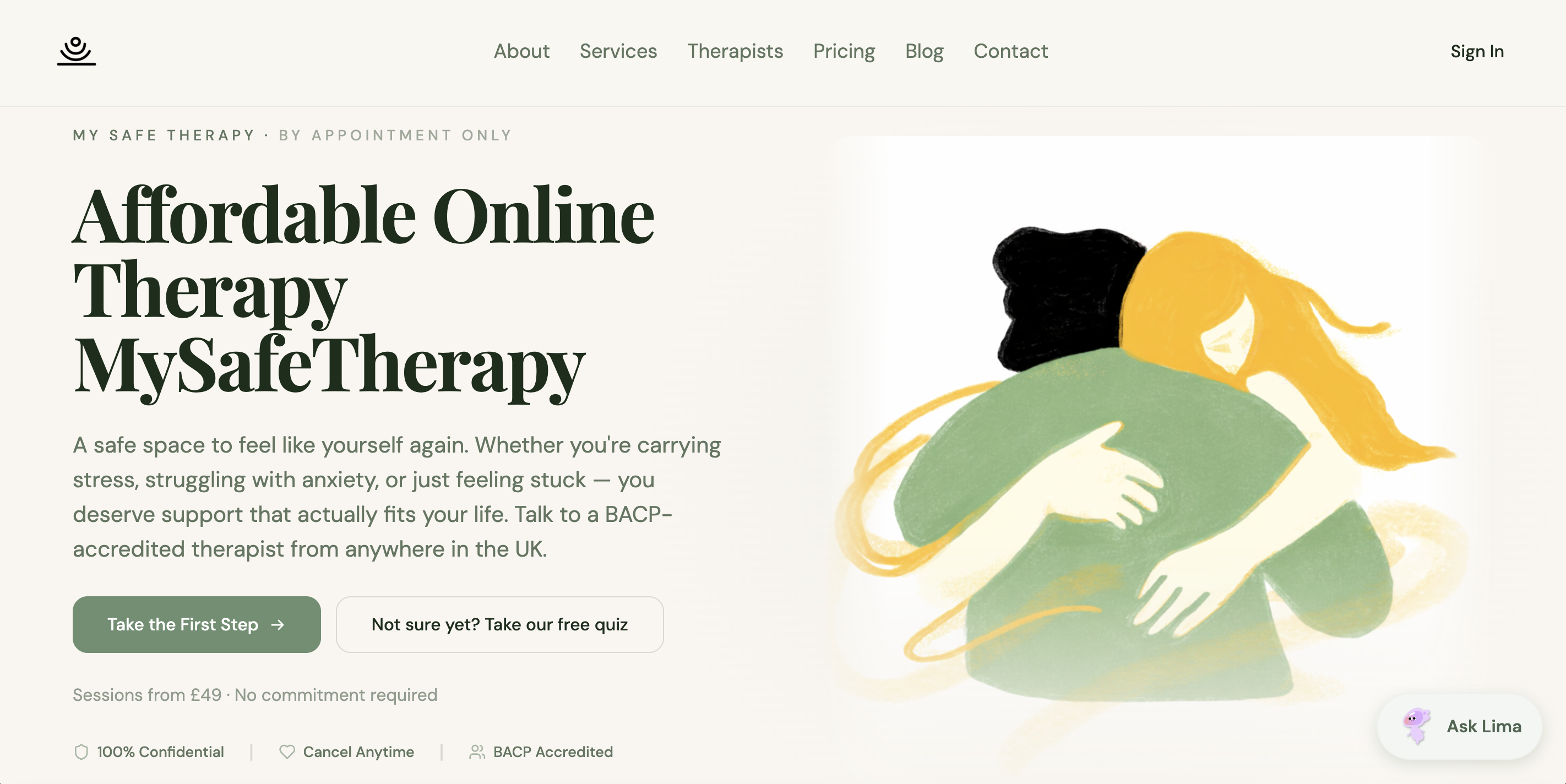
If you have worked through a self-help programme and still feel you need more structured support, MySafeTherapy connects you with UK-accredited therapists registered with BACP, UKCP, and NCPS. Sessions are available via video, chat, or avatar-based formats, including evenings and weekends. The platform also includes AI journalling and mood tracking tools that complement live therapy. To find out whether online therapy is right for you, take the therapy quiz or go directly to start online therapy to explore your options confidentially.
Frequently asked questions
Are self-help tools as effective as face-to-face therapy for anxiety and depression?
For many UK adults with mild to moderate symptoms, online CBT tools show comparable outcomes to face-to-face therapy, with SilverCloud reporting 65% recovery rates and 93% satisfaction among users.
How do I self-refer for guided self-help support via NHS?
You can complete a self-referral online through NHS talking therapies if you are aged 18 or over, with no GP referral required for most services.
Are mental health apps confidential and evidence-based?
Apps listed by NHS, Mind, or ORCHA are assessed for data security and clinical effectiveness, making them a safer choice than unvetted alternatives.
What if self-help tools are not improving my symptoms?
If you see no improvement after 6 to 8 weeks of consistent use, speak with your GP or request an escalation within your NHS talking therapies service.
Are online self-help tools suitable for severe or crisis-level symptoms?
No. These tools are designed for mild to moderate symptoms only. If you are in crisis, contact your GP, call 999, or visit NHS self-help limitations for guidance on urgent support pathways.
Recommended
- What is self-help therapy? A guide to mental health support
- How to prepare for therapy for anxiety and depression
- What is self-guided therapy? Mental health for UK adults
- Explore effective therapy techniques for mental health
- Featured Mindfulness Course | Mindful Self Compassion in Support of Psychedelic-Assisted Therapy
- The Caia Journal — Reflections on Overthinking, Emotions & Mental Clarity