

A good intake covers five things in one sitting: risk, the presenting problem, relevant history, current functioning, and the practical contract. Open every topic with a wide, empathic question, then narrow toward specifics with closed follow-ups. The question banks below are organised by category so you can lift a script straight into a session or an intake form.
TL;DR:
- Most intake sessions should be long enough to thoroughly assess risk, presenting problem, history, current functioning, and practical arrangements, often requiring multiple contacts in complex cases.
- Asking broad, open questions at first invites clients to tell their story in their own words, while structured follow-ups help gather specific details about onset, triggers, severity, and goals.
- Clarifying previous treatments, medication use, crisis history, substance use, and social support helps build an accurate picture and identify additional risks or needs.
- Direct, plain questions about suicidal thoughts and self-harm encourage honest disclosure and should be followed by safety planning co-produced with the client.
- Cultural background, identity, accessibility needs, and relationship context should be openly explored to tailor treatment and ensure clients feel understood and safe.
Table of Contents
- What is a therapy intake session for?
- How do you ask about the presenting problem in a first session?
- Mapping mental health and treatment history
- How do you ask about suicidal thoughts and self-harm at intake?
- Medical history, medications and daily functioning
- Screening for substance use without shutting the client down
- Family, relationships and the social picture around the client
- Cultural background, identity and accessibility at intake
- Adjusting intake for couples, children and neurodivergent clients
- A ready-to-use intake question bank by category
- What you must tell clients about privacy and the contract
- Interviewing technique: why funnelling builds a stronger alliance
- How MySafeTherapy supports intake workflows and ongoing monitoring
- Practitioner perspective: pacing intake without losing the person in the paperwork
- A practical option for clinicians managing secure intake
- Sources
- FAQ
What is a therapy intake session for?
A therapy intake exists to do four jobs at once: assess risk, understand the presenting problem, begin building the therapeutic relationship, and agree the practical terms of working together. It is not a diagnostic interrogation. Treating it as a checklist to complete rather than a conversation to have is the single most common mistake new clinicians make, and it shows up immediately in how guarded a client becomes.
Most UK practitioners allow between about an hour to an hour and a half for a first session, sometimes splitting it across two appointments when risk, trauma history, or diagnostic complexity demands more room. A single session rarely covers everything properly, and trying to force it usually means either the safety assessment gets rushed or the client leaves feeling processed rather than heard. Booking a second assessment session is a legitimate clinical decision, not a failure to be efficient.
An intake typically needs to establish:
- Why the client is seeking help now, and what changed
- Immediate risk to self or others
- Relevant psychiatric, medical, and treatment history
- Current functioning across work, relationships, and daily life
- The practical contract: fees, frequency, confidentiality, and cancellation terms
Some presentations signal that a single intake session is not enough. Active suicidal intent, dissociative symptoms during the session, disclosure of ongoing abuse, or a complexity of comorbid diagnoses all justify slowing down and extending the assessment across multiple contacts. Referring onward to a psychiatrist, a specialist trauma service, or a safeguarding team is sometimes the correct clinical outcome of an intake, not a shortfall in your own competence.
The order matters less than the coverage. Some clinicians prefer to open with rapport-building questions before risk; others screen for safety early so nothing urgent gets missed if time runs short. Either approach works provided the full list gets covered by the end of the session.
How do you ask about the presenting problem in a first session?
Open with a genuinely broad question and resist the urge to interrupt for detail too early. "What brings you here today?" or "What's been going on that made you reach out now?" gives the client control over the narrative, and how they choose to answer often tells you as much as the content itself.
Once the client has spoken, funnel toward specifics using this sequence:
- Timeline: "When did you first notice this?" followed by "Has it been constant, or does it come and go?"
- Onset and triggers: "Was there anything happening around the time this started?" This surfaces precipitating events the client may not have connected themselves.
- Frequency and severity: "How often would you say this happens in an average week?" and "On the days it's worst, what does that actually look like?"
- Variability: "Are there times it's better, or situations where it doesn't show up at all?" This question often reveals coping strategies the client does not recognise as such.
- Functional impact on work or study: "How has this affected your ability to concentrate or get things done?"
- Impact on relationships: "Have the people close to you noticed a change? How have they responded?"
- Impact on daily routine: "What does this do to your sleep, your appetite, how you spend your evenings?"
- Client's own explanation: "What do you think is driving this?" Clients often hold a working theory worth exploring even when it is clinically incomplete.
- Prior attempts to cope: "What have you already tried to make this better?"
- Goals for therapy: "If this goes well, what would be different in three months?"
That last question deserves more weight than most intake templates give it. A vague answer like "I just want to feel better" is a starting point, not a finished goal, and it is worth a gentle follow-up: "What would feeling better actually look like day to day, for you specifically?" Co-authoring a goal statement with the client, rather than writing one for them, tends to produce something they will actually recognise and buy into three sessions later.
Pro Tip: Write the client's own words for their goal directly into your notes, in quotation marks, alongside your clinical formulation. Reflecting their exact phrasing back to them in session six does more for the therapeutic relationship than any amount of technical accuracy.
Avoid stacking two questions into one sentence. "How long has this been going on and what do you think caused it?" forces the client to choose which half to answer, and you lose data either way.
Mapping mental health and treatment history
Establishing what has already been tried, and what actually helped, saves months of repeating interventions a client has already told you did not work. Ask directly:
- "Have you had therapy or counselling before? What kind, and for how long?"
- "What did you find useful about it, and what didn't land for you?"
- "Have you ever been given a mental health diagnosis? By whom, and when?"
- "Are you currently taking, or have you previously taken, any psychiatric medication?"
- "Who prescribes that, and are you still in contact with them?"
- "Has anyone in your family experienced mental health difficulties?" This is worth asking gently, since some clients have never been asked and find the question clarifying rather than intrusive.
Medication questions need a light touch. Clients sometimes read "are you on anything for this?" as a judgement about whether therapy alone is sufficient, so framing it as routine information gathering matters: "It helps me to know what other support is already in place, including medication, so I'm not duplicating or working against something else."
Prior crisis history deserves specific, unhurried questions rather than a single yes/no item. Ask about previous inpatient admissions, crisis team involvement, or emergency department attendances related to mental health, and when they occurred. Record what led to that episode and what happened afterwards; a client who was admitted once, five years ago, following a clearly identifiable stressor sits in a very different risk category to one with three recent admissions and an unclear precipitant. Ask, too, whether previous therapy ended well: "How did that come to an end? Was it your decision?" A client who left three previous therapists abruptly is not necessarily a difficult client, but you want to know before session four, not discover it there.
Document all of this clearly and briefly. A history section that runs to two pages of prose is less useful in a crisis than one that flags, in a sentence each, previous diagnosis, previous treatment response, medication status, and prior risk episodes.
How do you ask about suicidal thoughts and self-harm at intake?
Ask directly, plainly, and without euphemism. Research consistently shows that direct questioning about suicidal thoughts does not increase suicidal ideation; it tends to do the opposite, giving the client permission to disclose something they have been carrying alone. Softening the question with vague language ("Do you ever feel like giving up?") makes it easier for a client to give a socially acceptable answer that hides the real picture.
A workable sequence:
- "Have you had any thoughts of ending your life?"
- If yes: "How often do those thoughts come, and how long have you had them?"
- "Have you thought about how you might do it?" (plan)
- "Do you have access to that method?" (means)
- "Have you done anything to prepare?" (intent and preparation)
- "Has anything stopped you acting on these thoughts so far?" (protective factors, in the client's own words)
- Separately: "Have you hurt yourself in any other way, even if it wasn't about ending your life?"
A brief 5 Ps formulation gives you a structure to hold all of this together without it becoming a shapeless list of facts:
| Element | What it captures | Example prompt |
|---|---|---|
| Problem | The current presentation in the client's terms | "What's the main difficulty right now?" |
| Predisposing | Longstanding vulnerability factors | "Has anything like this happened before, going further back?" |
| Precipitating | What triggered the current episode | "What changed just before this got worse?" |
| Perpetuating | What keeps it going | "What do you think is keeping this going day to day?" |
| Protective | Resources, relationships, reasons to stay safe | "What's helped you get through difficult moments before?" |
Structured formulation templates like the 5 Ps give you something concrete to fall back on when a presentation feels too complex to hold in your head during the session itself.
Performing a full psychosocial assessment, rather than a brief risk checklist, is associated with a substantial reduction in the risk of a client repeating self-harm. That guidance is explicit that active listening, empathy, and collaborative goal-setting matter as much as the factual content collected. A rushed tick-box risk form, completed without warmth, may capture the same data points and still fail the client.
Safety planning should be built with the client, not handed to them. Competence frameworks for self-harm and suicide prevention treat co-produced safety planning as a core skill, not an optional extra bolted onto a risk-positive session. Ask: "If those thoughts got stronger again this week, what would you do? Who would you contact?" and write the answer down together, in the client's language, before they leave.

Pro Tip: Never end a risk-positive session without a written safety plan the client has helped draft themselves. A plan they wrote alongside you gets used; a plan you handed them on a printed sheet often does not.
Medical history, medications and daily functioning
Physical health and mental health intersect more often than intake forms usually acknowledge. Thyroid dysfunction mimics anxiety and depression convincingly; chronic pain reshapes mood and sleep; menopause-related hormonal shifts commonly present as new-onset anxiety in clients with no prior psychiatric history. Ask:
- "Do you have any ongoing physical health conditions I should know about?"
- "Any history of head injury, seizures, or neurological conditions?"
- "Do you have any sensory needs, such as hearing or visual impairment, that affect how we work together?"
- "Are you currently taking any medication, prescribed or otherwise, for physical or mental health?"
- "Have you noticed any side-effects that affect your mood, energy, or concentration?"
- "Who is your GP, and are you comfortable with me contacting them if it becomes clinically necessary?"
Functional impairment questions round out the picture and often reveal severity better than symptom counts alone:
- "How is your sleep at the moment, in terms of both getting to sleep and staying asleep?"
- "How would you describe your appetite and eating over the last month?"
- "Are you managing to get to work or study as usual?"
- "How's your energy for basic self-care, like washing or getting dressed?"
A client who reports moderate mood symptoms but has stopped showering for a week is functioning worse than the symptom score alone suggests, and that gap between reported severity and functional collapse is worth flagging explicitly in your notes.
Screening for substance use without shutting the client down
Ask about alcohol and drug use early enough that it does not feel like an accusation tacked onto the end of the session, but frame it as routine: "I ask everyone this, it's not specific to you." Then work through a simple sequence:
- "Do you drink alcohol? How often, and roughly how much on a typical occasion?"
- "Has anyone ever suggested your drinking or drug use might be a problem?"
- "Do you use any recreational drugs, or misuse any prescribed medication?"
- "Has your use changed recently, either up or down, alongside what's brought you here?"
- "Have you ever tried to cut down and found it harder than expected?"
That last question does more diagnostic work than a direct "do you have a problem?" because it sidesteps the client's own defensiveness and gets at dependence indirectly.
Shame is the biggest obstacle to accurate answers here. Clients routinely underreport, particularly when they suspect substance use might disqualify them from therapy. Reassure them plainly that disclosure will not end the relationship: "This helps me understand the whole picture, it doesn't change whether we can work together."
If use appears to be at a level that requires medical detox, or the substance use is clearly driving the presenting problem more than any underlying psychological issue, referral to an integrated drug and alcohol service alongside, or instead of, talking therapy is the appropriate next step. Trying to run standard psychotherapy alongside unaddressed dependence rarely produces durable change.
Family, relationships and the social picture around the client
Who a client goes home to after your session matters as much as what happens inside it. Map the support network directly:
- "Who would you say you're closest to at the moment?"
- "Is there anyone you'd call if things got difficult at 2am?"
- "Who lives with you, and how would you describe the atmosphere at home?"
- "Do you have caring responsibilities for children, a partner, or a parent?"
Caregiving load is easy to miss and often carries hidden strain: a client caring for a parent with dementia while also raising young children is operating with a functional load that reshapes what "recovery" realistically looks like in the time you both have available.
Domestic safety needs a direct, careful question, asked when you have some rapport established and, ideally, when you are confident the client is speaking without anyone else present: "Do you feel safe at home?" followed by, if anything hesitant comes back, "Has anyone close to you ever made you feel frightened, controlled, or unsafe?"
Wider social determinants shape outcomes as much as clinical factors do:
- "How's your current housing situation? Stable, or is anything uncertain there?"
- "Are you currently working, and how secure does that feel?"
- "Is money a source of stress at the moment?"
A client dealing with housing insecurity or unmanageable debt is not going to respond fully to cognitive restructuring alone while the underlying stressor remains active. Naming that gap honestly, and signposting to practical support alongside therapy, is often more clinically useful than pretending therapy alone will resolve it.
Cultural background, identity and accessibility at intake
Culture, faith, and identity shape how distress is expressed, what "getting better" is assumed to look like, and how comfortable a client feels being direct with you. Ask rather than assume:
- "Is there anything about your cultural or religious background that's important for me to understand as we work together?"
- "What name and pronouns would you like me to use?"
- "Is English your first language, or would you prefer we use particular terms or check understanding as we go?"
- "Is there anything about how your family or community views therapy that affects how you feel being here?"
Accessibility questions belong in the same conversation, not a separate afterthought: "Is there anything about how we work together, timing, format, or communication, that I should adjust to make this easier for you?" That single open question surfaces neurodivergence, sensory sensitivities, and physical access needs without forcing the client to self-diagnose or disclose a formal label they may not have.
Pro Tip: Ask identity and cultural questions in the same neutral tone you use for medication history. Treating them as a special, delicate category, rather than routine intake content, is what actually makes clients feel singled out.
Cultural context sometimes explains presentations that look unusual through a purely Western clinical lens, somatic expressions of distress being a common example, and it frequently shapes what kind of help a client will accept: some clients want directive, practical guidance; others expect a more exploratory, non-directive approach, and asking outright saves several sessions of misaligned expectations.
Adjusting intake for couples, children and neurodivergent clients
Standard intake structure needs real adaptation for specific populations, not just a lighter touch.
Couples work requires both a shared history and separate space for each partner's perspective. Ask jointly: "How did the two of you meet, and what drew you together?" then, addressing each partner in turn, "What would you like to see change in this relationship?" Watch the interaction pattern during the session itself, who interrupts whom, who defers, who goes quiet, as this is diagnostic data in its own right, not just background colour.
Children and adolescents bring consent and developmental complexity that adult intake does not. Confirm parental responsibility and consent before the first session. Gather a developmental overview: "Were there any concerns about their development as a baby or young child?" Ask directly about school: "How are things going at school, both academically and socially?" Teachers and parents often notice functional decline before the child can articulate it themselves.
Neurodivergent clients frequently need concrete, literal language rather than open metaphorical questions. "How does that make you feel?" can be genuinely difficult to answer for some autistic clients; offering a structured alternative, such as a scale or a list of physical sensations to choose from, often works better. Ask plainly about sensory needs: "Is there anything about lighting, sound, or the physical space that affects how comfortable you feel here?"
A ready-to-use intake question bank by category
Pulling every script above into one reference makes intake sessions faster to run and easier to standardise across a practice.
- Presenting problem: "What brings you here today?" / "How long has this been going on?" / "What would be different if this went well?"
- Risk, direct: "Have you had any thoughts of ending your life?" / "Have you thought about how you might do it?" / "What's stopped you acting on these thoughts so far?"
- Risk, self-harm: "Have you hurt yourself in any way recently, even if it wasn't about ending your life?" / "What usually happens just before you feel the urge to do that?"
- History: "Have you had therapy before? What helped and what didn't?" / "Has anyone in your family experienced mental health difficulties?"
- Medication: "Are you currently taking anything for your mental or physical health?" / "Have you noticed any side-effects affecting your mood or energy?"
- Substance use: "Do you drink alcohol or use any drugs? How often, roughly?" / "Has your use changed alongside what's brought you here?"
- Support network: "Who would you call if things got difficult at 2am?" / "How would you describe the atmosphere at home?"
- Cultural and identity: "Is there anything about your background or beliefs I should understand?" / "What name and pronouns would you like me to use?"
- Sensitive disclosures (abuse): "Has anyone ever made you feel frightened, controlled, or unsafe?" Follow with silence rather than a rapid next question; let the client fill the space.
- Goals: "What would feeling better actually look like for you, day to day?"
Converting spoken scripts into written intake form items need a small but important shift in wording. A spoken question like "have you had any thoughts of ending your life?" becomes, on a form, a scaled or yes/no item with a follow-up free-text box, since forms cannot read tone or hesitation the way a clinician in the room can. Any written form covering suicidal ideation should route straight to a same-day clinical review rather than sitting in a queue, and that routing needs to be built into the form's workflow, not left to chance. A structured digital intake form can standardise this collection while still flagging risk-positive answers for immediate human follow-up.
What you must tell clients about privacy and the contract
Every intake needs a plain-language privacy notice before any sensitive disclosure happens, not after. Cover, briefly:
- What personal data you collect, how it's stored, and for how long
- Who else might see it (supervisor, GP, safeguarding services) and under what circumstances
- The foreseeable limits to confidentiality: risk to self, risk to others, and safeguarding concerns involving children or vulnerable adults
- How clinical notes are used, including in supervision
The BACP ethical framework sets out that therapists must give clients a clear privacy notice covering data collection, storage, and confidentiality limits, in line with UK GDPR and the Data Protection Act 2018. Skipping this because it feels like an awkward interruption to rapport-building is a compliance gap, not a minor oversight, and clients generally respond better to it being stated plainly than assumed.
Contracting also needs the practical basics stated out loud: session length, fee, cancellation notice period, and what happens in an emergency between sessions, details you can effectively manage with dedicated Therapist SEO Services to grow your practice. A clear explanation of confidentiality in practice helps clients understand these limits before they disclose something they later worry was shared inappropriately.
Interviewing technique: why funnelling builds a stronger alliance
Open with a broad question, explore the client's own framing, then narrow toward specific closed questions only once you understand their language for the problem. This funnelling approach is a recognised technique for balancing structure with client-led narrative, and it matters clinically, not just stylistically.
The alliance formed during assessment predicts the alliance later in treatment, and stronger alliance correlates with better outcomes. Therapist interpersonal skill measurably affects that alliance, which means how you ask matters as much as what you ask. Reflective listening, naming what you notice, and building the formulation collaboratively rather than presenting it as a verdict all strengthen that early connection.
How MySafeTherapy supports intake workflows and ongoing monitoring
The platform connects clients with therapists through a secure intake process designed to capture the information covered above before the first live session. Clinicians using such platforms can draw on tools like mood tracking and AI-guided journaling to monitor how a client is doing between sessions, and clients can switch therapists if the initial match is not right.
None of this replaces clinical judgement. Digital tools speed up data collection and give you a continuous view of mood between appointments, but the formulation, the risk decision, and the therapeutic relationship still rest with you.
Practitioner perspective: pacing intake without losing the person in the paperwork
Balancing thoroughness against overwhelm is a judgement call in every single session, not a fixed rule. If a client is visibly flooded, pause the question list and sit with what they have just disclosed rather than pressing on to the next item, even if that means the history section waits until session two. Prioritise immediate safety over completeness every time those two things pull in different directions. Complex formulations, ambiguous risk pictures, and disclosures that sit outside your usual caseload are exactly what supervision exists for, and raising them there is a sign of good practice, not a gap in competence.
— MySafeTherapy
A practical option for clinicians managing secure intake
There are other ways to run a first session: paper forms, generic video platforms, or a practice management system bolted together from separate tools. This platform offers a different route, one built specifically around secure intake and continuous client monitoring rather than assembled from parts designed for something else.
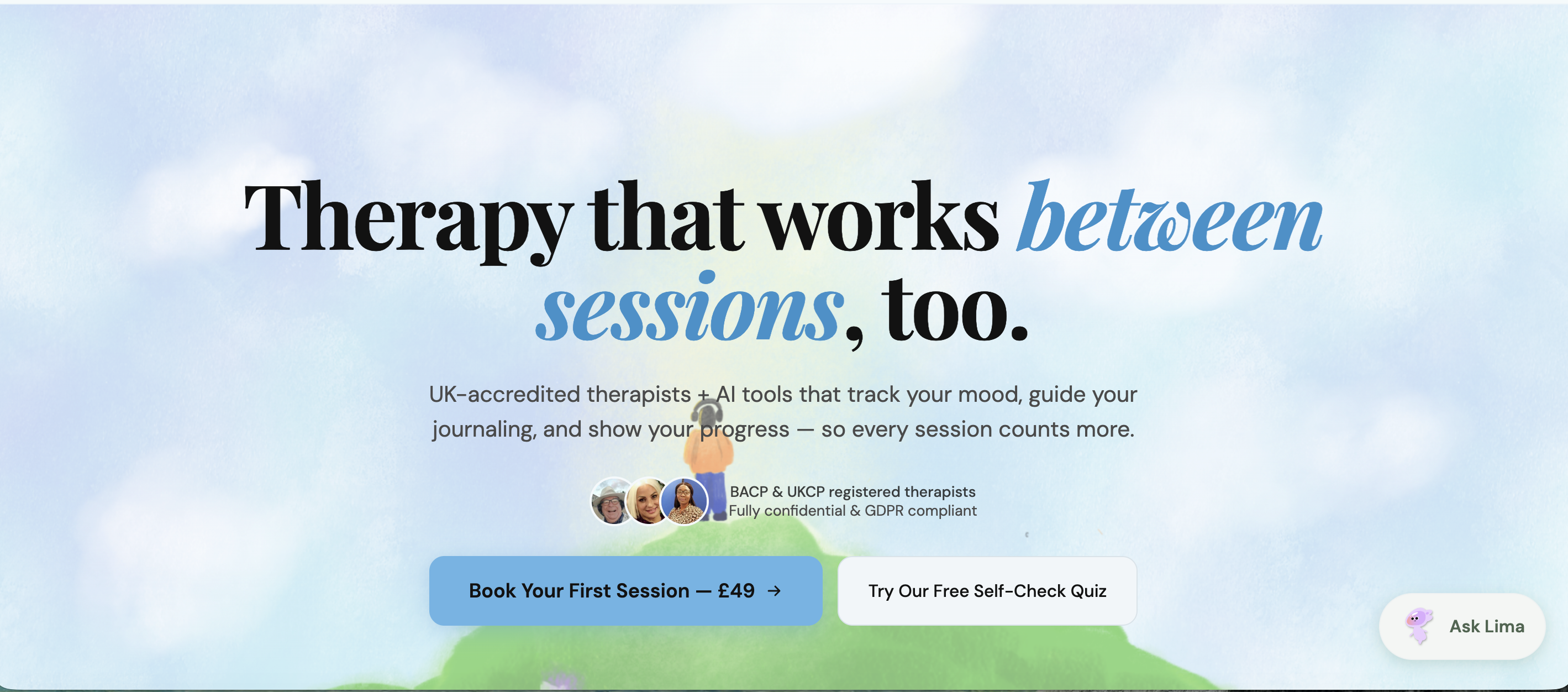
The platform pairs a secure client intake form with therapist matching and switching, so a client who is not the right fit for one clinician can move without starting the paperwork again from scratch. Between sessions, mood tracking and AI journaling give clinicians a fuller picture than a weekly appointment alone provides. Individual sessions on the platform run from £50, with tiered options up to Elite sessions from £200, detailed in full on the pricing page. If secure intake, therapist matching, and ongoing client monitoring in one place would simplify how you work, the services overview is the place to see what fits your caseload.
This article is general information, not a substitute for advice from a qualified doctor. Consult a qualified healthcare professional about your own circumstances before acting on anything here.
Sources
- Psychosocial assessment guide (Oxford Health, 2022)
- The development of therapeutic alliance during psychological assessment: patient and therapist perspectives
FAQ
What questions should you ask during a therapy intake?
A thorough intake covers the presenting problem and its timeline, risk to self or others, prior mental health history and treatment, current medication, substance use, functional impact on work and relationships, and the practical contract around fees and confidentiality. Structuring these as open questions followed by specific follow-ups, rather than a rigid checklist, tends to get more honest answers.
What do they ask you at a counselling intake appointment?
Expect questions about why you're seeking help now, how long the difficulty has lasted, any previous therapy or diagnoses, current medication, and basic safety questions about thoughts of self-harm. You will also be told how your information is stored and what the limits to confidentiality are, in line with the BACP ethical framework.
What are some common questions asked during a mental health intake interview?
Common questions include "What brings you here today?", "Have you had thoughts of ending your life?", "Have you had therapy or medication before?", and "How is this affecting your work, relationships, and sleep?" These map onto the core intake domains of presenting problem, risk, history, and functioning.
How do you ask about suicidal thoughts without making the client uncomfortable?
Ask directly and plainly rather than using euphemism, since direct questions about suicidal thoughts do not increase suicidal ideation and tend to make disclosure easier. A simple sequence, "Have you had thoughts of ending your life?", followed by questions about plan, means, and protective factors, covers the ground safely.
Does Mysafetherapy provide a secure intake form for clinicians?
Yes. Mysafetherapy's client intake form captures presenting problem, history, and risk information securely before the first session, and pairs with therapist matching and mood tracking tools for ongoing monitoring. Current pricing for individual sessions is listed on the pricing page.