
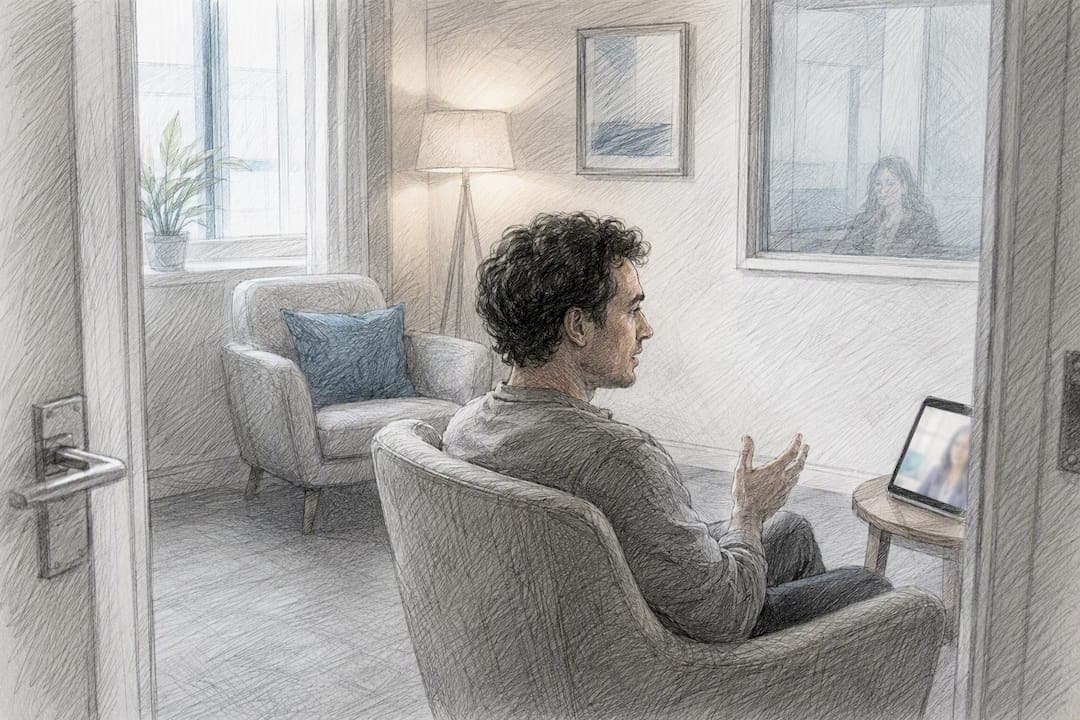
Yes. Clinician-supported online therapy in the UK produces outcomes broadly comparable with face-to-face care for common mental health conditions, provided it's delivered by an accredited practitioner. This holds across a major NHS-funded trial, several meta-analyses, and routine NHS Talking Therapies service data. The rest of this guide covers formats, evidence, access routes, safety checks, and how to get the most from a remote session.
TL;DR:
- Online therapy, when delivered by accredited clinicians, offers outcomes nearly identical to face-to-face care for common mental health conditions.
- Digital formats such as video and guided digital CBT are most effective when supported by qualified therapists, while unguided tools tend to have higher dropout rates.
- Accessing NHS online therapy is straightforward with self-referral, and private options vary from £50 to over £200 per session depending on seniority and format.
- Verifying a platform’s safety involves checking professional registration, data protection compliance, and clear crisis procedures, with a focus on remote-specific competence.
- Online therapy suits mild to moderate cases, but individuals facing acute crises, complex trauma, or lacking privacy should prefer in-person or blended care.
Table of Contents
- What is online therapy? Formats explained
- How effective is online therapy compared with face-to-face care?
- How do you access NHS or private online therapy in the UK?
- How do you check an online therapist or platform is safe?
- Who is online therapy suitable for, and who should avoid it?
- How can you get the most out of an online therapy session?
- MySafeTherapy's perspective on safe, UK-accredited online care
- Ready to start? Here's the practical next step
- Sources
- FAQ
What is online therapy? Formats explained
Online therapy covers a wider range of delivery methods than most people expect, and the format you choose changes how the therapy actually feels.
- Video sessions most closely mirror face-to-face therapy. You see facial expressions and body language, which helps rapport but requires a stable connection and private room.
- Phone sessions strip away visual cues, but some clients find this easier for disclosing difficult material. No screen, less self-consciousness.
- Chat or text-based therapy happens in real time via typed messages. It suits people who process thoughts better in writing, or who need sessions during a lunch break at work.
- Computerised CBT is structured, guided self-help delivered through an app or platform, often with light therapist support built in.
- Blended care mixes live sessions with digital homework, worksheets, or mood tracking between appointments.
NHS Talking Therapies services in England typically offer phone, video, and guided digital CBT programmes, with face-to-face still available where clinically appropriate. Chat-based and avatar-based sessions sit mostly within private platforms rather than NHS provision.
How effective is online therapy compared with face-to-face care?
The strongest UK evidence comes from a large multicentre trial called INTERACT, which tested therapist-delivered online CBT added to usual primary care for depression in England. It found a clinically meaningful reduction in depressive symptoms at six months, with the improvement holding at twelve months. That's a randomised trial, not a testimonial or a marketing claim, and it ran within NHS primary care rather than a private setting.
Internationally, an updated meta-analysis of 31 randomised trials found clinician-supported internet CBT produced almost identical outcomes to in-person CBT.
Statistic: the pooled effect size comparing internet CBT with face-to-face CBT was g≈0.02, a gap so small it points to near-equivalence between the two formats when a qualified therapist is involved.
NHS service data backs this up in routine practice, not just trial conditions:
- An evaluation of two London IAPT services covering roughly 5,360 patients found remote delivery maintained recovery rates and attendance, with some measures showing faster symptom improvement than pre-pandemic in-person care.
- A JMIR meta-analysis of NHS-recommended e-therapies found small but significant benefits for depression and anxiety, though it flagged that dropout rates run higher for digital programmes than for controls.
The caveats matter. Evidence quality varies between platforms, unguided digital-only tools tend to lose more users than therapist-supported ones, and none of this evidence covers complex trauma or acute crisis presentations well. Online therapy's strength lies in common, moderate presentations, not every clinical scenario.
How do you access NHS or private online therapy in the UK?
Access routes differ depending on whether you go through the NHS or pay privately, and cost varies enormously between the two; for therapists looking to grow their client base, specialist Therapist SEO services can help increase online visibility and practice growth.
In England, you can self-refer to NHS Talking Therapies without seeing a GP first, through your local service's website or the NHS digital access pages. Scotland, Wales, and Northern Ireland run separate but broadly similar psychological therapy services, usually accessed via GP referral or local NHS mental health teams. Waiting times vary by area and by how complex your referral is.
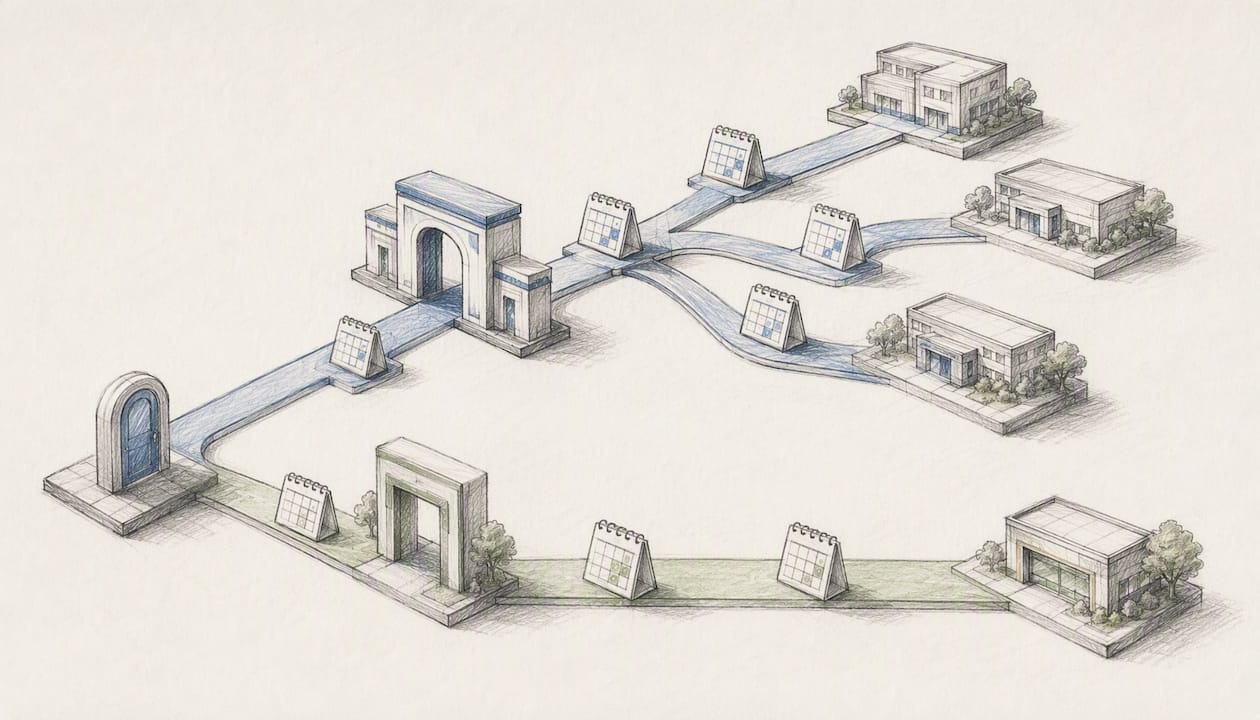
Private online therapy pricing depends mainly on session length, the therapist's seniority, and whether you pay per session or subscribe monthly. Pricing varies widely, with entry-level sessions typically starting at a certain range and more senior or specialist sessions costing more.
Free and low-cost options exist beyond the NHS:
- Local Mind branches often run free or subsidised counselling.
- Hub of Hope lists free UK mental health services searchable by postcode.
- University counselling services offer free sessions to enrolled students.
How do you check an online therapist or platform is safe?
Verifying credentials takes ten minutes and rules out most of the risk in choosing an online therapist.
- Check professional registration. Look for membership with BACP, UKCP, or HCPC, and ask specifically whether the therapist has completed online or phone therapy competence training, not just general clinical qualifications.
- Confirm data protection compliance. The platform should be ICO-registered and explain, in plain terms, how session recordings, notes, and messages are stored and secured.
- Ask for a written contract. This should cover cancellation policy, fees, confidentiality limits, and what happens in a safeguarding emergency.
- Watch for red flags. Avoid any therapist who won't confirm accreditation, resists giving a straight answer about data storage, or offers no clear process for crisis situations.
BACP's guidance for online and phone therapy is explicit that remote-working competence, not just general clinical skill, is what separates safe online practice from a video call with a stranger who happens to hold a qualification.
Pro Tip: Ask your prospective therapist how they handle a dropped call or lost connection mid-session. A clear, rehearsed answer tells you they've actually thought about remote-specific risk, not just adapted an in-person process on the fly.
Who is online therapy suitable for, and who should avoid it?
Online therapy fits most naturally with mild-to-moderate anxiety, depression, low-level relationship strain, and situations where access is genuinely the barrier: rural locations, shift work, mobility issues, or simply no local therapist with capacity.
It's a poorer fit in a few specific situations:
- Acute risk or crisis presentations, where in-person assessment and immediate safeguarding response matter more than convenience.
- Complex trauma, where building trust often benefits from in-person cues a screen can't fully carry.
- No private space at home, since confidentiality collapses if a session can be overheard.
Where risk is uncertain, blended care, mixing remote sessions with occasional in-person contact or a clear referral pathway to urgent NHS services, reduces the downside without giving up the accessibility online therapy offers.
How can you get the most out of an online therapy session?
Small preparation habits make a bigger difference to outcomes than most people expect.
- Set up a private, quiet space with a stable internet connection before the session starts, not five minutes into it.
- Treat the appointment like an in-person one. Sit somewhere you won't be interrupted, rather than joining from a car or a shared kitchen.
- Use homework and mood tracking between sessions. Structured digital worksheets extend the value of the live conversation rather than leaving progress to memory.
- Raise concerns directly with your therapist, and don't hesitate to switch clinicians if the fit isn't right after a session or two.
- Ask platforms plain questions about data use: who can see your notes, how long they're kept, and whether anything is shared with third parties.
Pro Tip: If a session felt rushed or disconnected, say so at the start of the next one. Therapists adjust pacing constantly, but only when they know something felt off.
MySafeTherapy's perspective on safe, UK-accredited online care
We work exclusively with UK-accredited therapists and build our practice around BACP and UKCP principles on remote competence, not just clinical qualification. Offering video, chat, and avatar-based formats alongside mood tracking reflects what the evidence actually supports: blended, therapist-led care. Transparent pricing and easy therapist switching exist because trust, not lock-in, is what keeps people in therapy long enough for it to work.
— MySafeTherapy
Ready to start? Here's the practical next step
MySafeTherapy meets every item on the checklist above: UK-accredited clinicians, multiple formats including video, chat, and avatar-based sessions, and blended tools like mood tracking to extend what happens in session. Unlike platforms that lock you into a single therapist or a long subscription before you know if the fit works, sessions are booked individually and switching clinicians is straightforward if the first match isn't right.
Full pricing across Essential, Standard, Premium, and Elite tiers is published upfront, so you can compare session costs before committing to anything. If you're ready to see what's available, you can start matching with a therapist today, or explore specific services like couples counselling or individual therapy to find the right starting point for your situation.
This article is general information, not a substitute for advice from a qualified doctor. Consult a qualified healthcare professional about your own circumstances before acting on anything here.
Sources
- Integrated therapist and online cognitive behavioural therapy in addition to usual care versus usual care for depression in primary care in England (INTERACT)
- Meta-analysis comparing ICBT and face-to-face CBT (updated review)
- Acceptability and effectiveness of NHS‑recommended e‑therapies for depression, anxiety and stress: meta‑analysis
- BACP online and phone therapy user guide
- Accessing NHS Talking Therapies digitally
FAQ
What does online therapy typically cost in the UK?
NHS Talking Therapies is free at the point of use. Private online sessions commonly range from around £50 to £75 at entry level, £80 to £110 mid-tier, £120 to £180 for senior practitioners, and from £200 for elite-tier specialists, such as MySafeTherapy's pricing.
Is there a UK equivalent to BetterHelp?
Several UK-based platforms, including MySafeTherapy, connect clients with BACP or UKCP-accredited therapists for video, chat, and phone sessions, built specifically around UK data protection and professional standards rather than a US model adapted for British users.
Is there free online therapy in the UK?
Yes. NHS Talking Therapies offers free self-referral in England, and charities such as Mind and directories like Hub of Hope list free or low-cost local options across the UK.
What is the most established way to check if an online platform is legitimate?
Confirm the therapist's registration with BACP, UKCP, or HCPC, check the platform is ICO-registered for data protection, and ask directly about their remote-working competence training before booking.
Does online therapy work as well as face-to-face for anxiety and depression?
For mild-to-moderate cases, UK trial and meta-analysis evidence shows clinician-supported online CBT produces outcomes very close to face-to-face therapy, though complex or high-risk presentations still benefit from in-person assessment.