

Workplace wellbeing programme cost in the UK typically falls into three bands: low tier (£3–£10 per employee per month, roughly £36–£120 a year), mid tier (£10–£20 per employee per month, often £2,000–£8,000 total for a 50 person pilot), and premium tier (bespoke contracts starting around £4,000 and rising well beyond that for full clinical support and dedicated account management). Most employers with 10 to 250 staff should pilot at the low or mid tier first, then scale once they can measure results.
The right starting point depends on what's driving the price:
- An Employee Assistance Programme typically costs £3–£5 per employee per month.
- Digital wellbeing platforms usually add £5–£10 per employee per month on top.
- Therapy sessions are often billed separately at £50–£150 each.
Industry benchmarking puts the average UK spend at around £240 per employee per year, with a typical return of roughly £3.20 for every £1 spent. Treat that as a guide figure, not a promise.
Key Takeaways
Most UK SMEs should pilot a low or mid tier wellbeing programme (£36–£240 per employee per year) for three to six months before committing to premium spend.
| Point | Details |
|---|---|
| Three cost bands exist | Low (£36–£120/year), mid (£120–£240+/year), and premium (£4,000+ total contract) suit different needs. |
| Pilot before scaling | Test one department for three to six months and track absence and uptake before wider rollout. |
| Ask about fully loaded pricing | Request setup fees, session top-up rates, and contract minimum terms before comparing quotes. |
| Legal duty underpins spend | The Health and Safety at Work etc. Act 1974 requires managing mental health risk, not just physical safety. |
| Mysafetherapy fits mid-tier pilots | UK-accredited clinicians and flexible session formats (video, chat, avatar) keep costs transparent from £49 a session. |
This article is general information, not a substitute for advice from a qualified doctor. Consult a qualified healthcare professional about your own circumstances before acting on anything here.
Table of Contents
- What each price band typically includes
- How suppliers usually charge for workplace wellbeing
- How to choose the right wellbeing provider
- How long does implementation take?
- Why employer wellbeing spend matters in UK law
- Worked example: what a 50-person budget buys
- How Mysafetherapy supports UK workplace wellbeing budgets
- Sources
What each price band typically includes
The gap between a £60 a year platform and a £4,000 bespoke contract isn't marketing spin. It reflects real differences in clinical access, reporting depth, and how much hand holding you get during rollout.
Low tier programmes sit at £3–£10 per employee per month. You're typically buying an EAP helpline, a basic digital portal, and perhaps a handful of self-help resources. Therapy sessions, if included at all, are usually capped at one or two per employee per year, with anything beyond that charged as a top-up. This band suits micro employers and small teams (under 30 people) who need a legal safety net and some visible support, without a big commitment.
Mid tier sits at £10–£20 per employee per month, or £2,000–£8,000 for a 50 person pilot including setup. This is where most growing SMEs land. Expect a proper digital portal with mood tracking, a set allowance of counselling sessions (often four to six per employee per year), manager training on spotting stress, and basic usage reporting. Watch for setup fees, which can run into four figures on their own, and for minimum contract terms that lock you in before you've seen results.
Premium tier starts around £4,000 for a structured programme and climbs from there depending on scope. You're paying for dedicated account management, leadership coaching, higher session allowances, and often bespoke reporting tied to specific HR metrics. This suits companies with higher clinical need, perhaps following a difficult restructure or a sector with known burnout risk, where the cost of doing nothing is higher than the cost of the programme.
| Tier | Typical cost per employee/year | What's usually included |
|---|---|---|
| Low | £36–£120 | EAP helpline, basic portal, limited self-help content |
| Mid | £120–£240+ | Counselling allowance, manager training, usage reports |
| Premium | £4,000+ total contract | Dedicated account manager, leadership coaching, bespoke reporting |
Pro Tip: Don't buy the premium tier to prove the concept. Pilot the low or mid tier with one department for three months, track uptake and absence data, then use that evidence to justify scaling up. It's far easier to get budget sign off for something that's already working.
How suppliers usually charge for workplace wellbeing
Quotes look wildly different because suppliers use different pricing models, not necessarily because one is more expensive than another once you compare fairly.
- Per-employee-per-month (PEPM): the most common model for digital platforms and EAPs.
- Per-user subscription: similar to PEPM but often tiered by how many staff actively log in.
- Flat fee for the whole programme: common for workshops and short structured courses.
- Pay-as-you-go per session: you pay only when someone books a therapy session.
- Licence plus per-session top-up: a low base licence fee with clinical sessions charged separately, the most common hidden-cost trap.
Before comparing quotes, ask each vendor for the fully loaded price including setup fees, minimum contract term, session top-up rates, and reporting costs. Two quotes that look £2 per employee apart can differ by thousands once these extras are factored in.
How to choose the right wellbeing provider
Getting this right starts before you speak to a single vendor.
- Run a short baseline survey to establish current stress levels and absence patterns.
- Define two or three measurable outcomes you want (lower absence, higher engagement scores, faster return to work).
- Work out your realistic budget per head, including a contingency for session top-ups.
- Design a three to six month pilot with a clear evaluation point before any wider rollout.
When you speak to vendors, ask direct questions: What exactly is included in the PEPM price? Are therapy sessions charged separately, and at what rate? Are your clinicians UK registered with BACP, UKCP, or NCPS? What reporting do we get, and how often?
Red flags worth walking away from:
- Session fees only revealed after signing.
- No named UK clinical accreditation for therapists.
- Vague or infrequent reporting with no usage breakdown.
- Long minimum terms with no early exit or trial period.
How long does implementation take?
Most SMEs move from vendor selection to a working pilot in six to ten weeks. Selection and contracting typically take two to three weeks, baseline surveying and onboarding another two, then the pilot itself runs for three to six months before you decide on scale-up.
Internally, budget for roughly 10 to 15 hours of HR or manager time during setup, a few hours of IT support for any digital rollout, and some comms time to launch the programme properly. A short checklist helps:
- Confirm data and confidentiality arrangements with the provider.
- Schedule a launch communication and manager briefing.
- Set a review date before the pilot starts, not after.
Why employer wellbeing spend matters in UK law
Under section 2 of the Health and Safety at Work etc. Act 1974, every UK employer has a legal duty of care to protect the health, safety and welfare of employees, and that duty now explicitly covers work-related mental health risk.
The HSE's Management Standards give you a practical framework for tackling stress, and they map closely to the core standards set out in the Thriving at Work review, the government-commissioned Stevenson/Farmer report that many UK employers now use as their benchmark. Where an employee's mental health condition meets the Equality Act 2010 definition of disability, you may also need to make reasonable adjustments, which doesn't always mean funding private therapy but does mean responding proportionately. Acas guidance is clear that mental and physical health must be treated equally in how you assess and respond to risk.
- HSAWA 1974 sets the baseline legal duty.
- Thriving at Work and HSE Management Standards give you the practical yardstick.
- Equality Act reasonable adjustments can require action regardless of your wellbeing budget.
Pro Tip: When pitching wellbeing spend to your finance team, frame it as risk management rather than a perk. A £2,000 pilot is considerably cheaper than a single contested grievance or a prolonged absence case.
Worked example: what a 50-person budget buys
At the low tier, a 50-person firm spending £5 per employee per month (£3,000 a year) gets an EAP plus a basic digital portal, typically live within three to four weeks. At the mid tier, £15 per employee per month (£9,000 a year) adds four to six counselling sessions per person and manager training, with onboarding closer to six weeks.
- Assume 30–40% uptake of counselling in year one, consistent with typical EAP usage patterns.
- Measure: sickness absence rate, self-reported stress scores, and session uptake.
- A short baseline survey (often £300–£800 as a one-off) sharpens what you measure against.
Author's brief perspective on best practice for SMEs
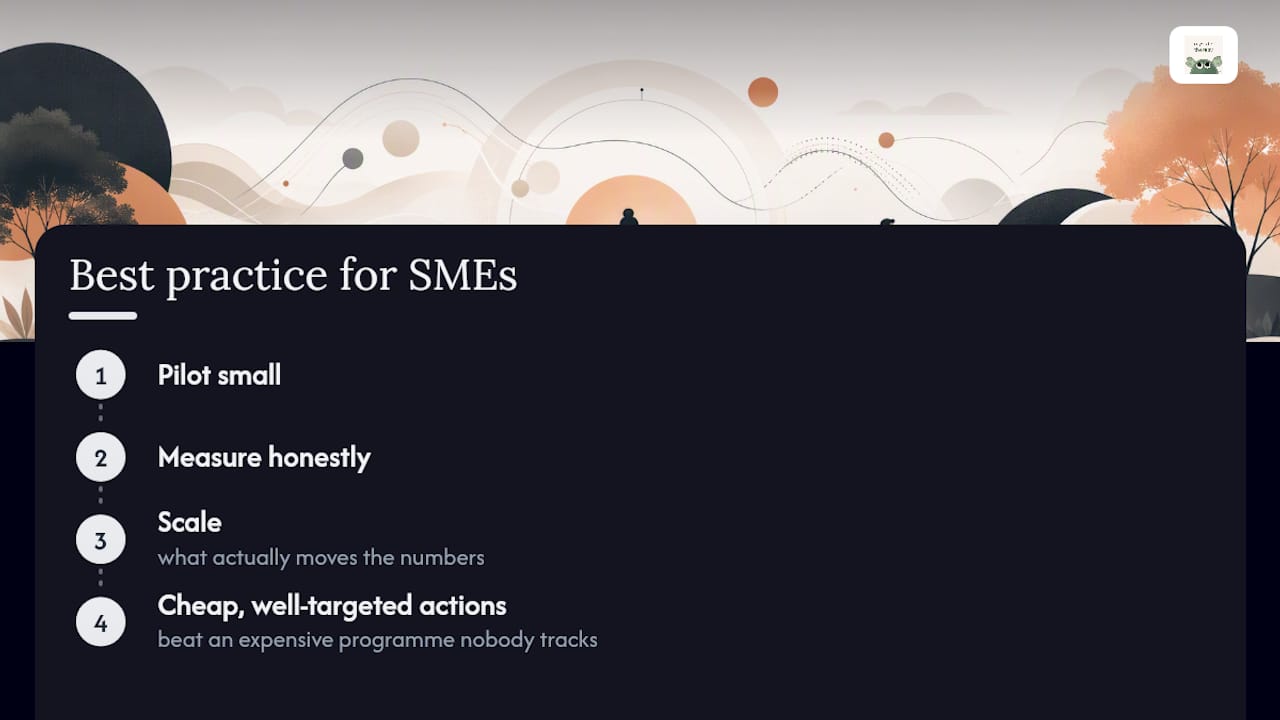
Pilot small, measure honestly, then scale what actually moves the numbers. Cheap, well-targeted actions beat an expensive programme nobody tracks.
How Mysafetherapy supports UK workplace wellbeing budgets
Mysafetherapy's workplace wellbeing service for UK teams gives SMEs a way to sit in the mid tier without the setup costs that usually come with bespoke contracts. Every clinician is UK-accredited through bodies such as BACP, UKCP, or NCPS, and sessions run as video, chat, phone, or avatar-based formats, so uptake doesn't stall because someone doesn't fancy a video call.
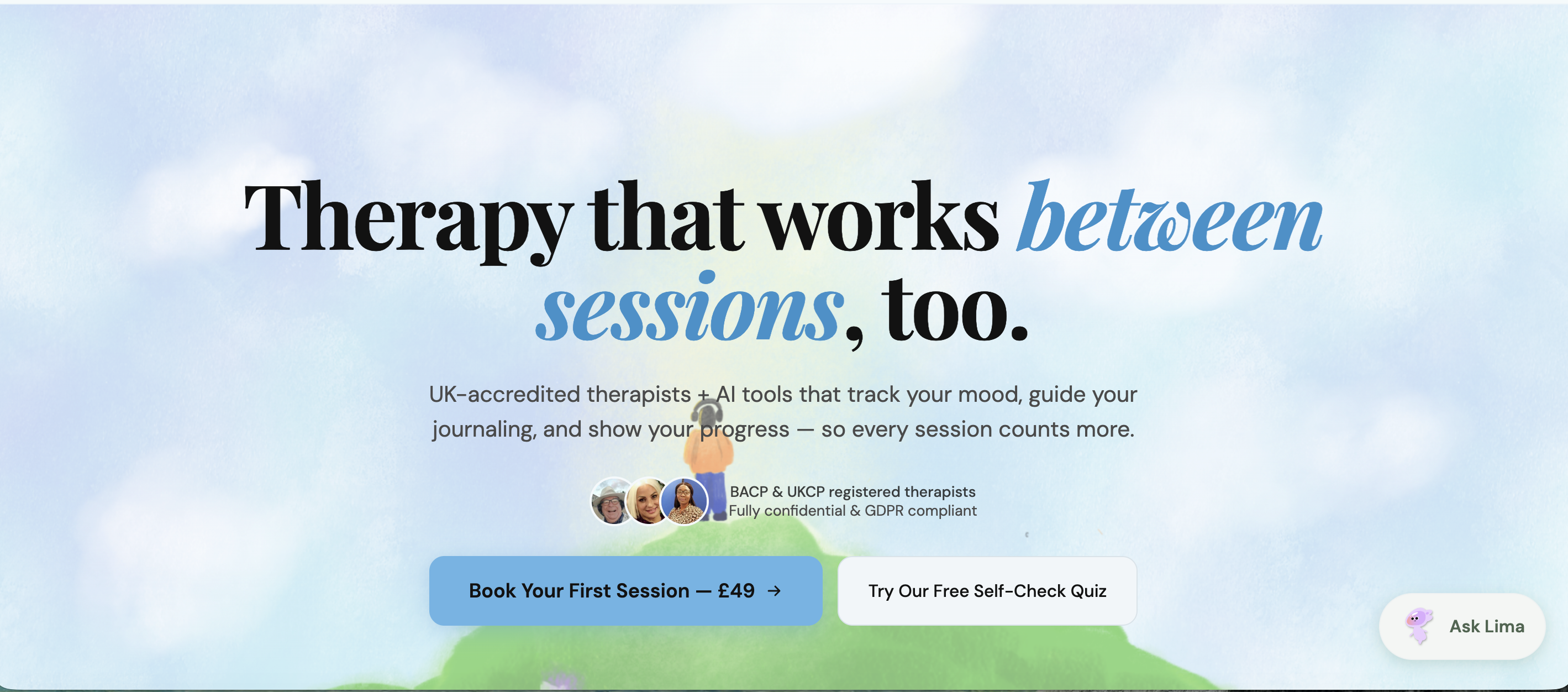
This suits businesses piloting their first structured programme: you get transparent per-session pricing rather than a hidden top-up fee buried in the contract, and staff can switch therapists without a lengthy handover process. For teams that want a lower-cost entry point before committing to a full counselling allowance, avatar therapy from £49 a session is worth a look. If you're ready to see how a pilot would work for your team, get in touch through the AI-supported workplace platform page and ask about a business demo.
Sources
- Health and Safety at Work etc. Act 1974
- Mental health overview (HSE)
- Corporate wellness programmes (Champion Health)
- Uk wellness industry statistics | Verified 2026 data (WorldMetrics)
- How to build an employee wellbeing strategy on a budget (PerkIQ)