
TL;DR:
- Effective mental wellbeing in 2026 combines quick coping techniques like box breathing and grounding with sustainable habits such as consistent sleep, regular movement, and deliberate social connection. Early professional support, including contacting NHS 111 or GPs, is crucial when anxiety or low mood significantly impairs daily functioning. Focused, manageable actions and early intervention significantly improve long-term mental health outcomes.
Effective mental wellbeing, defined by the NHS as a state in which you can cope with normal stresses and contribute to your community, depends on practical, manageable actions rather than sweeping lifestyle overhauls. For UK adults in 2026, the most reliable mental wellbeing tips combine immediate coping techniques with sustainable daily habits, supported by organisations such as Mind, CPSL Mind, and NHS 111. The UK government's 2026 mental health strategy has shifted focus toward preventive support and early intervention, meaning the tools you use today carry more clinical weight than ever. This guide covers what actually works, why it works, and where to find help when self-help is not enough.
1. Use box breathing to interrupt anxiety immediately
Deep breathing and grounding work by calming both the cognitive and physiological channels of anxiety simultaneously, making them more effective when combined than either technique alone. Box breathing is the most structured method: inhale for four counts, hold for four, exhale for four, hold for four, then repeat. This resets your nervous system within two to three minutes, which is faster than most people expect.
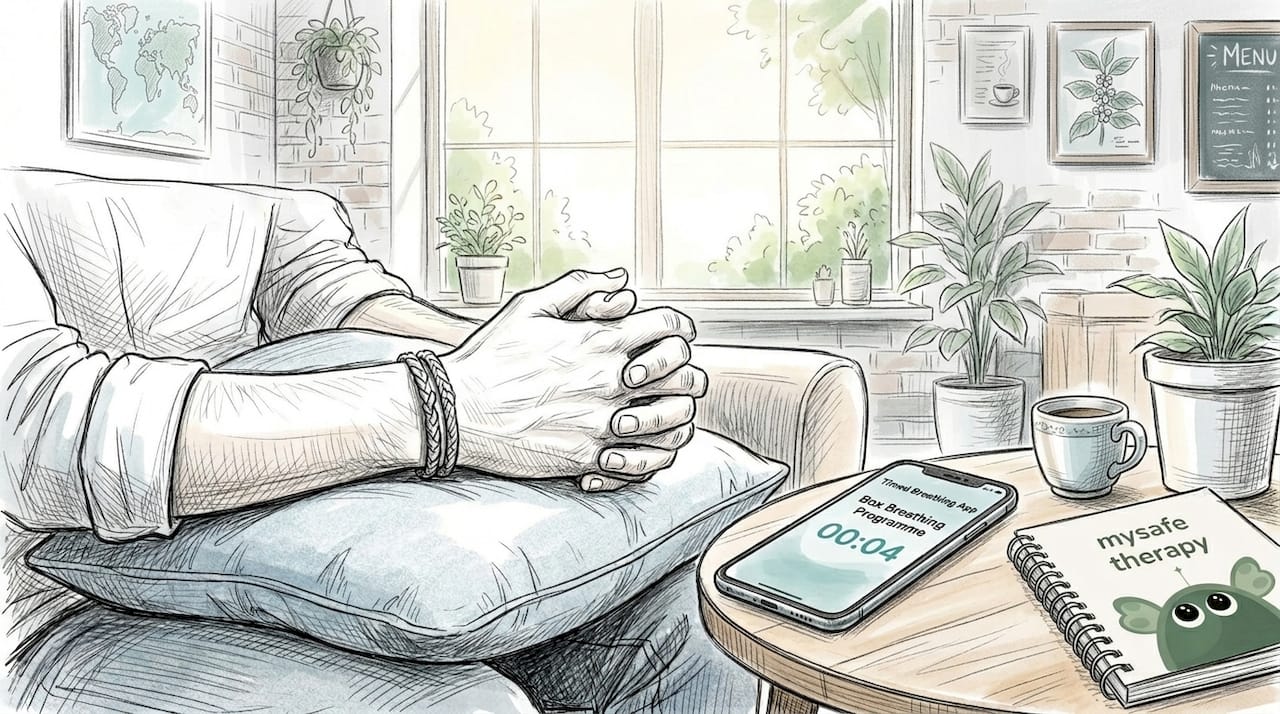
Mind recommends this technique alongside meditation and mindfulness as a first-line coping method for anxiety. The physiological effect is measurable. Slow, controlled breathing activates the parasympathetic nervous system, reducing cortisol and heart rate. You do not need an app or a quiet room. You can practise it at your desk, on the bus, or before a difficult conversation.
Pro Tip: Set a recurring phone reminder for 11am and 3pm labelled "4 counts." Two minutes of box breathing at these times, before stress peaks, is more effective than waiting until you feel overwhelmed.
2. Apply the 5-4-3-2-1 grounding technique
The 5-4-3-2-1 technique redirects attention from anxious thoughts to immediate sensory experience: name five things you can see, four you can touch, three you can hear, two you can smell, and one you can taste. Mindfulness shifts your relationship with anxiety rather than eliminating it, focusing attention on the present moment to reduce its impact. This technique is the most accessible form of that principle.
CPSL Mind includes grounding as one of its recommended immediate coping steps for people who feel they are not coping. It works because anxiety is future-oriented. Forcing your attention onto present sensory data interrupts the mental loop that sustains anxious thinking. The technique takes under two minutes and requires no equipment.
3. Simplify your task list when overwhelmed
Stepwise checklists help more than abstract advice when you are overwhelmed. CPSL Mind's guidance is direct: reduce your immediate load first, ground yourself second, then seek support if needed. Trying to maintain a full schedule during a period of high stress accelerates burnout rather than resolving it.
The practical application is straightforward. Write down everything you feel you must do today, then cross out anything that is not genuinely urgent. Most people find that two or three items remain. Completing those two or three items builds momentum and restores a sense of control, which is what anxiety erodes most quickly. This approach is supported by evidence-based strategies used across UK mental health services.
4. Build a consistent sleep routine
Sleep is the single most underrated factor in emotional wellbeing. Disrupted sleep worsens anxiety, reduces emotional regulation, and impairs decision-making. The Mental Health America 2026 guide identifies sleep as one of four core pillars of a sustainable wellbeing routine, alongside movement, nutrition, and connection.
The most effective sleep hygiene habits are:
- Set a fixed wake time, even at weekends, to regulate your circadian rhythm
- Avoid screens for 30 minutes before bed, as blue light suppresses melatonin production
- Keep your bedroom cool and dark, ideally between 16 and 18 degrees Celsius
- Avoid caffeine after 2pm, as its half-life is approximately five to six hours
- Use a brief wind-down routine such as reading or light stretching to signal sleep onset
Consistency matters more than duration. Seven hours at the same time each night produces better outcomes than nine hours at irregular intervals.
5. Exercise for at least 20 minutes daily
Physical activity is one of the most evidence-backed 2026 mental health strategies available without a prescription. Exercise increases serotonin and dopamine, reduces cortisol, and improves sleep quality. CPSL Mind lists physical activity and fresh air among its 17 practical stress-reduction actions, alongside breathing and social connection.
You do not need a gym membership. A 20-minute walk at a moderate pace produces measurable mood improvements. For UK adults with desk-based jobs, a lunchtime walk is one of the highest-return habits available. If motivation is low, pair the walk with a podcast or a phone call to reduce the activation energy required to start.
6. Prioritise social connection deliberately
Social isolation is a direct risk factor for anxiety and depression, yet it is often the first thing people cut when they feel stressed. CPSL Mind's stress guidance specifically includes social connections as a protective factor, noting community-based resources such as Calm Spaces and Good Mood Cafes as practical options for UK adults. This reflects a broader recognition that connection is not a luxury but a clinical need.
Deliberate connection means scheduling it rather than waiting for it to happen. One meaningful conversation per day, whether in person, by phone, or via video call, is sufficient to maintain the social regulation that reduces anxiety. The quality of the interaction matters more than the quantity. A ten-minute call with a trusted friend outperforms an hour of passive social media scrolling in terms of mood benefit.
7. Practise gratitude without making it a chore
Gratitude practice is one of the most misunderstood tips for emotional wellness in 2026. The research-backed version is not a lengthy journal entry. It is a brief, specific reflection: name one thing that went well today and why it happened. This trains the brain to notice positive evidence rather than defaulting to threat detection, which is the cognitive bias that sustains anxiety.
The Mental Health America 2026 guide stresses defining what a "good day" means personally, rather than applying someone else's standard. This is the key distinction. Gratitude works when it is grounded in your own values and experience, not when it is performed as a wellness obligation. Two minutes before sleep is the most effective time, as it influences the emotional tone of the following morning.
Pro Tip: Write your gratitude note in a notes app rather than a dedicated journal. Removing the ritual reduces the barrier to doing it consistently, which matters more than the format.
8. Set digital and workplace boundaries
Routine overload and perfectionist mindsets worsen overwhelm. The 2026 shift in self-care practices reflects this directly. Experts now recommend short, doable actions over comprehensive routines, because the pressure to maintain a perfect wellness schedule is itself a source of stress. Setting boundaries is the structural version of this principle.
Digital boundaries include turning off non-essential notifications after 7pm, removing work email from your personal phone, and designating one screen-free hour per day. Workplace boundaries include communicating your availability clearly, declining non-urgent requests during focused work periods, and taking your full lunch break. These are not indulgences. They are the conditions under which sustained mental health is possible. For more on preventing the cumulative effects of overwork, the Mysafetherapy guide on burnout prevention covers this in detail.
9. Engage in one creative or leisure activity weekly
Creative and leisure activities reduce cortisol and provide a psychological counterweight to obligation-driven tasks. The activity does not need to be productive or skilled. Cooking a new recipe, sketching, gardening, playing an instrument, or doing a jigsaw puzzle all qualify. The defining feature is absorption: the activity should require enough attention to displace rumination.
This is one of the most overlooked wellbeing tips for 2026. Adults in the UK consistently report leisure as the first thing they sacrifice when under pressure, which is the opposite of what the evidence supports. Scheduling one leisure activity per week, treating it as a non-negotiable appointment, produces measurable reductions in perceived stress within four weeks.
10. Recognise when to seek professional support
Professional support via GP and NHS 111 is recommended when anxiety or low mood begins to affect daily functioning. NHS 111 is sometimes a faster route than waiting for a GP appointment when symptoms escalate, and it is available 24 hours a day. Knowing this removes a practical barrier that stops many people from acting early.
The signs that indicate professional support is needed include:
| Sign | Recommended action |
|---|---|
| Anxiety preventing sleep or work for more than two weeks | Contact your GP or call NHS 111 |
| Feeling unable to cope with daily tasks | Use CPSL Mind's coping steps, then contact GP |
| Thoughts of self-harm or suicide | Call NHS 111 immediately or go to A&E |
| Persistent low mood with no clear cause | Book a GP appointment and consider a Samaritans call |
| Panic attacks occurring more than once per week | Seek GP referral for structured therapy |
Preventive support early in mental health improves outcomes and reduces the need for crisis care, per the UK government's 2026 strategy. Acting at the first sign of difficulty, rather than waiting for a crisis, is the most effective decision you can make for your long-term mental health. The Mysafetherapy guide on why to seek support explains the evidence behind early intervention clearly.
Key takeaways
Effective mental wellbeing in 2026 requires combining immediate coping techniques with consistent daily habits and a willingness to seek professional support before reaching crisis point.
| Point | Details |
|---|---|
| Immediate coping techniques | Box breathing and 5-4-3-2-1 grounding reduce anxiety within minutes by targeting both mind and body. |
| Sustainable daily habits | Sleep consistency, daily movement, and deliberate social connection are the highest-return habits for long-term wellbeing. |
| Boundary setting | Digital and workplace boundaries prevent the routine overload that undermines all other wellbeing efforts. |
| Early professional help | Contacting a GP or NHS 111 at the first sign of persistent difficulty produces better outcomes than waiting. |
| Small wins over perfection | Manageable, specific actions outperform comprehensive wellness routines that create pressure rather than relief. |
What we have learned from working with UK adults on mental wellbeing
The most common mistake we observe at Mysafetherapy is not a lack of knowledge. Most people seeking support already know they should sleep better, exercise more, and worry less. The gap is between knowing and doing, and that gap is almost always caused by the same thing: the expectation that change must be total to be valid.
The adults who make the most consistent progress are not those who overhaul their lives in January. They are those who pick one technique, apply it imperfectly for two weeks, and then add a second. Box breathing practised three times a day is worth more than a 30-step wellness routine attempted once. This is not a motivational claim. It is what the evidence on habit formation and cognitive bandwidth consistently shows.
We also see a persistent reluctance to seek professional support until the situation has become acute. The UK government's 2026 strategy is explicit on this point: earlier intervention produces better outcomes. Therapy is not a last resort. It is a tool that works best when used before the weight becomes unmanageable. Kindness toward yourself, including the decision to ask for help, is not weakness. It is the most practical thing you can do.
— MySafeTherapy
How Mysafetherapy supports your mental wellbeing in 2026
The self-help strategies in this article are a strong starting point. When you need structured, professional support, Mysafetherapy connects you with UK-accredited therapists registered with BACP, UKCP, and NCPS, available via video, chat, or avatar-based sessions to suit your schedule and comfort level.
Sessions are available evenings and weekends, with transparent pricing and no long waiting lists. Whether you are managing anxiety, stress, burnout, or low mood, you can start therapy today and be matched with a therapist suited to your specific needs. Taking that step is the most direct application of everything covered in this guide.
FAQ
What are the most effective mental wellbeing tips for 2026?
The most effective mental wellbeing tips for 2026 combine immediate techniques such as box breathing and grounding with sustainable habits including consistent sleep, daily movement, and deliberate social connection. Mind and CPSL Mind both recommend starting with the simplest available action rather than attempting a full routine change.
How does box breathing reduce anxiety?
Box breathing activates the parasympathetic nervous system by slowing the breath, which reduces cortisol and heart rate within two to three minutes. Targeting both cognitive and physiological anxiety channels makes it more effective than relaxation techniques that address only one.
When should I contact NHS 111 for mental health support?
NHS 111 is appropriate when anxiety or low mood escalates and you cannot wait for a GP appointment. It is available 24 hours a day and is the recommended route for urgent but non-emergency mental health advice, including situations where you feel unable to cope or are experiencing distressing thoughts.
Can small lifestyle changes genuinely improve mental health?
The Mental Health America 2026 guide confirms that defining a "good day" personally and focusing on sleep, movement, nutrition, and connection produces measurable improvements without requiring a complete lifestyle overhaul. Consistent small actions outperform ambitious routines that are difficult to sustain.
What is the difference between self-help and professional therapy?
Self-help techniques manage day-to-day stress and build resilience, while professional therapy addresses underlying patterns, trauma, and persistent conditions that self-help alone cannot resolve. The UK government's 2026 strategy recommends accessing professional support early, before difficulties become acute, for the best long-term outcomes.