

TL;DR:
- Many UK adults hesitate to seek mental health support due to concerns about privacy, access, and wait times.
- Evidence-based therapies like CBT and MBCT, delivered by accredited practitioners, can be accessed flexibly online or in person to suit individual needs.
Persistent anxiety or low mood can make daily life feel unmanageable, yet knowing where to turn for reliable, confidential support is not always straightforward. Many UK adults are put off by long waiting times, concerns about privacy, or uncertainty about which therapy is right for them. The good news is that NHS Talking Therapies deliver evidence-based support through accredited practitioners, carefully matched to individual needs and symptom severity to optimise results. This guide sets out clear, practical steps to help you assess your needs, select an appropriate approach, access support flexibly, and track your progress over time.
Table of Contents
- Understanding your mental health needs
- Choosing evidence-based approaches
- Making therapy flexible, confidential and accessible
- Monitoring progress and adjusting your plan
- What recovery really means: A practical perspective
- Take your next step with accredited online therapy
- Frequently asked questions
Key Takeaways
| Point | Details |
|---|---|
| Assess your needs | Carefully evaluate your mental health symptoms to choose the correct level of support. |
| Choose evidence-based therapies | Select proven approaches like CBT or MBCT, delivered by accredited professionals for best results. |
| Leverage flexible options | Make use of online and self-guided therapy to access convenient and confidential UK support. |
| Monitor and adjust | Regularly track progress and adjust your approach if symptoms persist to optimise recovery. |
Understanding your mental health needs
Before choosing a therapy or support pathway, it is important to develop a clear picture of what you are experiencing and how it is affecting your life. Mental health difficulties exist on a spectrum. Some people notice mild, intermittent worry or low mood that responds well to self-guided tools. Others experience persistent symptoms that interfere significantly with work, relationships, or everyday functioning. Knowing where you sit on that spectrum helps you match the level of support to your actual need, which directly influences how effective your care will be.
NHS guidance is clear that care is matched to the person's problem and its intensity and duration. This principle, known as stepped care, means that lower-intensity interventions are offered first, with access to more intensive support available when needed. Understanding this framework helps you advocate for the right level of care from the outset.
When assessing your own situation, consider the following areas:
- Duration: Have symptoms been present for more than two weeks consistently?
- Intensity: Are feelings of anxiety or low mood interfering with sleep, concentration, or daily tasks?
- Functioning: Has your ability to work, maintain relationships, or care for yourself changed noticeably?
- Physical symptoms: Are you experiencing physical signs such as fatigue, appetite changes, or tension headaches?
- Coping: Are your usual coping strategies still working, or do they feel less effective?
If several of these points resonate, professional assessment is a sensible next step. Reviewing mental health management tips can also provide a structured starting point for understanding your situation before you speak to a practitioner.
Pro Tip: Keep a brief daily log of your mood and any triggering situations for one to two weeks before your first appointment. This gives both you and your therapist a clearer baseline from which to plan your care.
It is also worth noting that emotional wellness sits within a broader context. Emotional wellness coaching tips from experienced practitioners highlight that factors such as relationships, lifestyle habits, and professional stress all interact with mental health. Assessing these areas alongside your core symptoms builds a fuller, more accurate picture.
Choosing evidence-based approaches
Once you have a clearer sense of your needs and their severity, the next step is selecting a therapy approach that is both evidence-based and suited to your particular difficulties. In the UK, the National Institute for Health and Care Excellence (NICE) sets clinical guidelines for mental health treatment. NICE-recommended care is delivered through NHS Talking Therapies by trained and accredited professionals, making these programmes a reliable benchmark for quality.
Two of the most widely used approaches for anxiety and depression are Cognitive Behavioural Therapy (CBT) and Mindfulness-Based Cognitive Therapy (MBCT). Both have strong research support, but they work differently and suit different presentations.
| Therapy type | Primary focus | Best suited for | Format |
|---|---|---|---|
| Cognitive Behavioural Therapy (CBT) | Identifying and changing unhelpful thought patterns and behaviours | Anxiety disorders, depression, OCD, phobias | Individual or group sessions |
| Mindfulness-Based Cognitive Therapy (MBCT) | Developing present-moment awareness to reduce relapse risk | Recurrent depression, chronic low mood | Group programme, 8 weeks |
| Interpersonal Therapy (IPT) | Addressing relationship difficulties and life transitions | Depression linked to grief, conflict, or change | Individual sessions |
| Acceptance and Commitment Therapy (ACT) | Building psychological flexibility and value-driven action | Anxiety, chronic stress, avoidance patterns | Individual sessions |
CBT is the most frequently offered option across NHS services. However, outcomes are variable and are benchmarked against NHS recovery thresholds, which means that individual results will differ. Knowing this in advance is useful. It reduces pressure to reach a specific benchmark within a set number of sessions and opens the door to exploring complementary or alternative approaches when needed.
"Not every person will respond to the same intervention. The mark of good clinical practice is not rigidly applying one protocol, but thoughtfully matching approach to individual presentation and revising when the evidence warrants it."
Accreditation is a non-negotiable factor when selecting a therapist. In the UK, the main professional bodies are the British Association for Counselling and Psychotherapy (BACP), the UK Council for Psychotherapy (UKCP), and the National Counselling and Psychotherapy Society (NCPS). A therapist registered with one of these bodies has met defined training standards and operates within a professional code of ethics. This provides a meaningful safeguard for the quality of care you receive.
For a detailed breakdown of which approach may suit your presentation, the guide to therapy options for anxiety is a useful resource. Similarly, an overview of proven therapy methods sets out the research base clearly so that you can make an informed choice.
Making therapy flexible, confidential and accessible
A significant barrier for many UK adults is not the availability of therapy in principle, but the practical challenges of accessing it. These include inflexible appointment times, concerns about confidentiality, geographical distance from services, and uncertainty about cost. Online therapy has substantially addressed each of these barriers, and its growth since 2020 has been substantial.
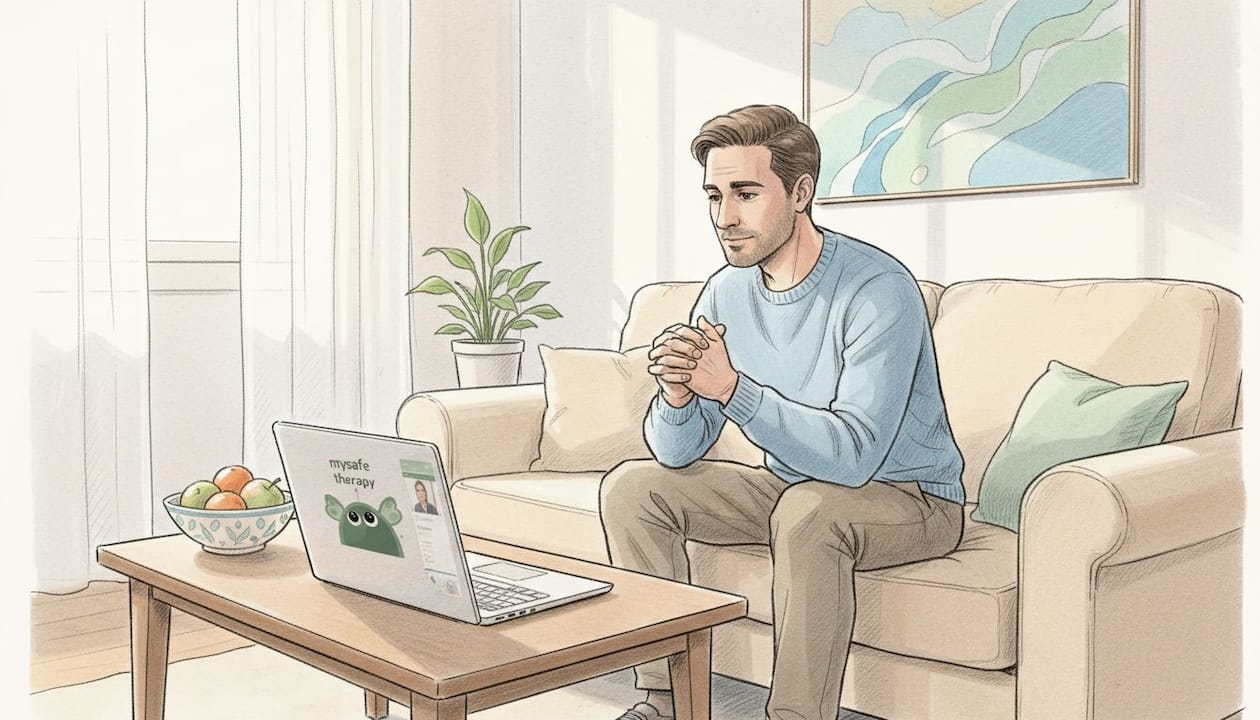
Therapy is delivered by fully trained practitioners through flexible options, including online platforms, to maximise accessibility. This reflects a deliberate policy shift towards meeting people where they are, rather than requiring them to navigate services that do not fit their lives.
The following table summarises the key practical differences between traditional face-to-face therapy and online alternatives:
| Factor | Face-to-face therapy | Online therapy |
|---|---|---|
| Location | Fixed clinic or office | Anywhere with internet access |
| Scheduling | Standard working hours typically | Evenings and weekends available |
| Confidentiality | Private room | User-controlled environment |
| Session format | In person only | Video, chat, or avatar-based |
| Travel requirement | Yes | No |
| Cost | Often higher | Frequently more affordable |
The confidentiality question deserves particular attention. Many adults are concerned that seeking therapy could affect their employment, insurance, or relationships. Reputable online platforms operate under the same legal and ethical frameworks as face-to-face services, meaning your information is protected to the same standard. Sessions are not recorded without your explicit consent, and therapists do not share your details with third parties except in defined safeguarding circumstances.
Key benefits of accessing therapy through an accredited online platform include:
- Anonymity: You can begin support from home without attending a physical location.
- Scheduling flexibility: Evening and weekend appointments remove the need to arrange time off work.
- Format choice: Video, chat, and avatar-based sessions cater to different levels of comfort with disclosure.
- Practitioner quality: Platforms listing only BACP, UKCP, or NCPS-registered therapists guarantee a consistent standard of care.
- Cost transparency: Clear pricing structures allow you to plan sessions without hidden fees.
For those who prefer to begin with independent resources before committing to live sessions, self-guided therapy options are available and can be effective for mild presentations. These typically include structured workbooks, mood-tracking tools, and guided exercises based on CBT or mindfulness principles. A practical overview of self-help therapy resources can help you identify which tools are most appropriate to your situation.
Pro Tip: When evaluating any online therapy platform, verify that listed therapists are individually searchable on the register of their stated professional body. This takes less than two minutes and confirms that accreditation is current and active.
The guide to accredited online therapists explains precisely what to look for when assessing practitioner credentials in an online context, including how to verify registration status and what questions to ask before your first session.
Monitoring progress and adjusting your plan
Beginning therapy is an important step. Monitoring how well it is working and being prepared to adjust your approach is equally important. Many people assume that if they are not feeling significantly better after a set number of sessions, therapy has failed. This is rarely an accurate conclusion. Progress in therapy is often non-linear, and different interventions suit different people and stages of recovery.
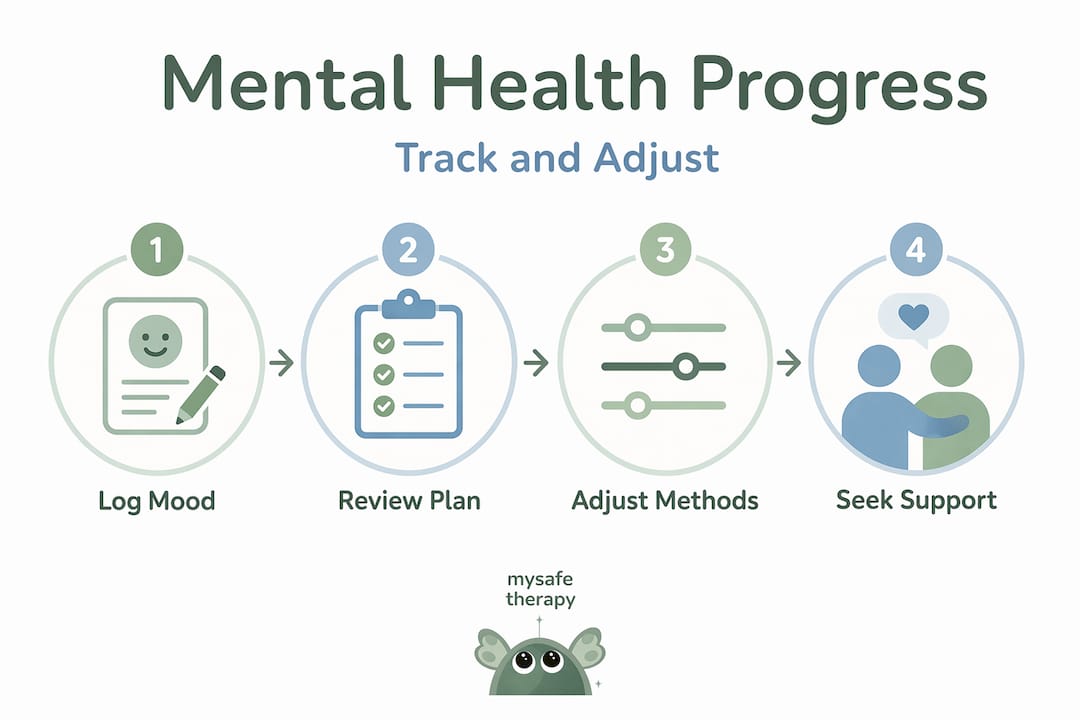
A structured approach to monitoring your progress can look like this:
- Set a baseline. Before your first session, rate your symptoms using a validated tool such as the PHQ-9 for depression or the GAD-7 for anxiety. Many therapists will administer these at the outset, but you can also complete them independently.
- Review at regular intervals. Repeat the same tool every four sessions. Small improvements are meaningful even when they do not feel dramatic in daily life.
- Discuss progress openly with your therapist. Share your ratings and any concerns about pace. A good therapist will adjust their approach based on your feedback.
- Understand the NHS recovery threshold. NHS Talking Therapies defines recovery as moving from above to below the clinical threshold on validated measures. This benchmark is useful but is not the only indicator that therapy is working.
- Explore adapted interventions if progress stalls. If your symptoms have not improved after a reasonable course of treatment, it is appropriate to consider a modified or additional approach rather than continuing unchanged.
UK clinical research supports this adaptive model. Adding mindfulness-based cognitive therapy after non-remission with standard NHS high-intensity therapy showed measurably better outcomes for people with depression, compared to continuing with treatment as usual. This finding has direct practical implications: not improving with one approach does not mean you are beyond help. It means a different approach, or a combination, may be more effective.
"The trial demonstrates that systematically updating care for non-remitters is both clinically effective and cost-effective within the NHS context. Passive continuation of the same intervention is not the most defensible clinical choice."
Understanding effective therapy techniques and how different methods can be combined or sequenced gives you a stronger basis for those conversations with your practitioner. The resource on therapist support guidance is also useful for understanding what to expect from a well-structured therapeutic relationship.
What recovery really means: A practical perspective
There is a tendency in mental health services, and in the way people talk about therapy generally, to treat recovery as a binary outcome. Either you meet the threshold or you do not. Either therapy worked or it failed. This framing is not only unhelpful but is also inconsistent with what the evidence actually shows.
Outcomes are variable across UK services, benchmarks are applied consistently, but not meeting a defined threshold does not mean therapy has been ineffective. A person who enters therapy with severe depression and exits with moderate symptoms has made clinically meaningful progress, even if the system records them as a non-remitter. Their life may have changed substantially. Their risk may have reduced. Their capacity to manage future episodes may have improved.
Recovery is more accurately understood as a direction of travel rather than a fixed destination. Self-compassion is not a soft add-on to clinical treatment. It is a functional skill that research consistently links to lower relapse rates and better long-term outcomes. Expecting linear improvement, or treating a temporary setback as evidence of failure, is one of the most common ways people disengage from therapy prematurely.
The practical implication is this: stay engaged with your care even when progress feels slow. Advocate for adjustments when an approach is not working. Understand that therapy's real impact is often most visible in retrospect, in the quality of daily decisions, the stability of relationships, and the ability to recover from difficulty more quickly than before. These are not captured neatly in a score on a questionnaire, but they are real and significant.
Take your next step with accredited online therapy
If the steps outlined in this guide have clarified what you need and you are ready to act on that, the next practical move is connecting with a qualified, accredited therapist who can work with your specific situation.
MySafeTherapy connects UK adults with BACP, UKCP, and NCPS-registered therapists through a secure, confidential online platform. Sessions are available via video, chat, or avatar-based formats, with evening and weekend appointments to fit around your existing commitments. Pricing is transparent, therapist switching is straightforward, and your privacy is protected throughout. Whether you are managing anxiety, low mood, burnout, or relationship difficulties, you can start online therapy and be matched with a practitioner who suits your needs, without waiting lists or unnecessary delays.
Frequently asked questions
How do I know if I need professional mental health support?
If anxiety or depression is interfering significantly with your daily activities, relationships, or work, consulting an accredited practitioner is the appropriate course of action. Care is matched to individual need and symptom intensity, so even a brief assessment can clarify the right level of support for you.
Are online therapy sessions in the UK confidential and safe?
Yes. Sessions delivered by accredited professionals follow strict confidentiality and quality standards. Therapy by accredited practitioners adheres to established ethical codes, meaning your personal information is protected and your safety is a primary concern throughout.
What if my symptoms do not improve after therapy?
If recovery benchmarks are not met, interventions should be adapted rather than simply continued. MBCT added to standard care demonstrated measurably lower depression symptoms for non-remitters, confirming that adjusted approaches can still produce meaningful improvement.
How can I find accredited therapists in the UK?
You can access support through NHS Talking Therapies or reputable online platforms that list practitioners registered with BACP, UKCP, or NCPS. Therapies delivered by accredited practitioners provide a reliable standard of quality and ethical practice that protects you as a client.
Is self-guided therapy effective?
Self-guided approaches can be effective for mild symptoms and are a useful complement to professional support. For persistent or severe mental health challenges, working with a qualified therapist provides the level of assessment, personalisation, and clinical oversight that self-guided tools alone cannot offer.