

TL;DR:
- Modern therapy, especially CBT, produces measurable improvements in mood, thinking, and daily functioning.
- Therapy involves structured steps like assessment, cognitive restructuring, and homework, often delivered online.
- Evidence shows therapy is effective for many conditions, with tailored approaches benefiting complex needs.
Despite the growing conversation around mental health, many people remain unclear about what therapy truly offers beyond simply talking about their feelings. There is a common assumption that therapy is reserved for those in crisis, or that its benefits are vague and hard to measure. In reality, modern therapy, particularly cognitive behavioural therapy (CBT), produces measurable changes in mood, thinking patterns, and daily functioning. This article sets out the evidence behind how therapy improves well-being, what sessions actually involve, who benefits most, and how you can access confidential support in the UK without leaving your home.
Table of Contents
- Understanding how therapy improves well-being
- What happens in therapy: The steps and what to expect
- How effective is therapy? Facts, results, and who benefits most
- Adapting therapy: Tailored support for complex needs
- Why real-world therapy results matter more than the sales pitch
- Take the next step: Confidential therapy that fits your life
- Frequently asked questions
Key Takeaways
| Point | Details |
|---|---|
| Therapy changes mindsets | Evidence shows therapy isn’t just talking but helps you rethink patterns and manage emotions for better well-being. |
| Clear structure benefits most | CBT’s practical steps and structure work well for many, with improvements often seen in 8–12 sessions. |
| Results vary by context | Young adults and people with complex health needs may benefit from adapted therapy forms and extra support. |
| Track progress, not perfection | Small gradual improvements, not quick fixes, are the real markers of success with therapy. |
Understanding how therapy improves well-being
Therapy, in the context of mental well-being, is a structured process in which a trained professional helps you identify and change unhelpful patterns of thought and behaviour. It is not simply a conversation. It is an evidence-based intervention with clear goals, measurable outcomes, and a defined process.
One of the most widely used and researched forms is CBT. According to research, CBT modifies thinking and behaviour to improve mood and everyday functioning. This means sessions do not just explore how you feel. They actively work to change the mental processes that maintain distress.
"The goal of CBT is not to eliminate difficult emotions, but to change your relationship with them so they no longer control your choices."
Therapy improves well-being in several practical, day-to-day ways:
- Mood regulation: Identifying triggers and reducing the intensity of low mood or anxiety responses
- Cognitive flexibility: Challenging rigid or distorted thinking that feeds worry and self-doubt
- Behavioural change: Breaking cycles of avoidance that maintain fear or low motivation
- Emotional skills: Building tools for managing stress, conflict, and uncertainty
- Self-awareness: Recognising patterns early and responding with intention rather than habit
A common myth is that therapy is only necessary when someone is seriously unwell. In practice, therapy is equally effective for managing stress, improving relationships, and building resilience before problems become severe. You do not need to be in crisis to benefit. Exploring effective therapy techniques early can prevent difficulties from escalating.
Pro Tip: Before your first session, write down two or three specific areas of your life you want to improve. Clear goals help your therapist tailor the work and give you a reference point to track progress.
What happens in therapy: The steps and what to expect
For many people, uncertainty about the process itself is a barrier to starting. Knowing what to expect makes a real difference.
A standard course of CBT typically involves 8 to 12 sessions, each lasting approximately 60 minutes. CBT sessions are structured, incorporating psychoeducation, cognitive restructuring, and between-session homework. This structure is intentional. It ensures that each session builds on the last and that progress is tracked consistently.
Here is a breakdown of what typically happens across a course of therapy:
- Assessment and goal setting: Your therapist gathers information about your situation, history, and goals. Together, you agree on what success looks like.
- Psychoeducation: You learn how the mind and body respond to stress, anxiety, or depression. Understanding the mechanics reduces shame and builds motivation.
- Identifying unhelpful thoughts: Sessions focus on specific thought patterns, helping you notice when your thinking is distorted or unhelpful.
- Cognitive restructuring: You work with your therapist to challenge and reframe those thoughts using evidence and logic.
- Behavioural experiments and homework: Between sessions, you test new ways of thinking or behaving in real situations. This is where the learning sticks.
- Review and consolidation: Towards the end of the course, you review progress, identify remaining challenges, and build a relapse prevention plan.
| Feature | Traditional in-person sessions | Online and flexible sessions |
|---|---|---|
| Location | Clinic or office | Home or any private space |
| Scheduling | Fixed office hours | Evenings, weekends available |
| Privacy | Limited by travel/visibility | Fully confidential from home |
| Format | Face-to-face | Video, chat, or avatar-based |
| Accessibility | Requires travel | Immediate access |
Feeling nervous before your first session is normal. Most people report that the anticipation is worse than the reality. Preparing for therapy with a few notes about your concerns can ease that first conversation considerably.

Pro Tip: Ask your therapist at the outset to outline your session plan. Knowing the structure in advance reduces uncertainty and helps you feel more in control of the process.
How effective is therapy? Facts, results, and who benefits most
The evidence for therapy, particularly CBT, is substantial. Large-scale studies show CBT reduces depression and anxiety with effect sizes of d=0.75 to 0.95, and NHS recovery rates sit at approximately 50%. A meta-analysis of 153 studies confirmed that CBT significantly reduces symptoms of depression, anxiety, and stress across a broad range of populations.
These are meaningful numbers. An effect size above 0.7 is considered large in psychological research, meaning the improvement observed is clinically significant, not just statistically notable.
| Condition | Average improvement rate | Effect size (d) |
|---|---|---|
| Depression | 50-60% recovery | 0.75-0.95 |
| Generalised anxiety | 45-65% improvement | 0.80-0.90 |
| Social anxiety | 60-70% improvement | 0.85+ |
| Stress and burnout | Moderate improvement | 0.60-0.75 |
That said, results vary. Several factors influence how much someone benefits:
- Type and severity of the problem: Mild to moderate anxiety and depression respond well. Severe or long-standing conditions may require longer or more intensive support.
- Single vs. multiple conditions: People managing one primary issue tend to see faster progress than those with overlapping diagnoses.
- Engagement with homework: Research consistently shows that completing between-session tasks significantly improves outcomes.
- Therapeutic relationship: The quality of the working relationship between client and therapist is one of the strongest predictors of success.
You can find more detail on what works for specific presentations in our overview of therapy for anxiety. For those with variable schedules or access challenges, flexible therapy sessions can reduce the barriers that lead people to drop out prematurely.
Not everyone improves at the same rate. Personal context, life circumstances, and the fit with your therapist all shape what progress looks like for you. This is not a failure of therapy. It is a prompt to adapt the approach.
Adapting therapy: Tailored support for complex needs
One of the most important findings in recent research is that standard therapy does not work equally well for everyone. Therapy is less effective00207-X/fulltext) in cases involving comorbidities or young adults, and blended or tailored approaches tend to produce better outcomes in these groups.
Comorbidity means having more than one condition at the same time. For example, someone managing both chronic pain and depression, or anxiety alongside an eating disorder, may find that a standard 12-session CBT course does not fully address their needs. This is not uncommon, and it does not mean therapy cannot help.
Tailored options available through modern therapy services include:
- Low-intensity CBT: Guided self-help with therapist check-ins, suited to mild presentations or as a first step
- High-intensity CBT: More frequent sessions over a longer period, suited to severe or persistent conditions
- Mindfulness-based CBT (MBCT): Particularly effective for recurrent depression and anxiety with a strong physical component
- Blended delivery models: Combining live sessions with digital tools such as mood tracking, AI journaling, and structured self-help resources
- Avatar-based or chat therapy: Useful for individuals with social anxiety or those who find face-to-face formats difficult
If your situation feels complicated or previous therapy has not delivered the results you hoped for, asking your therapist about adapted approaches is a reasonable and important step. Accessing personalised therapy through a service that can adjust formats and intensity makes a practical difference.
Pro Tip: If you have multiple concerns or a complex history, ask your therapist directly: "Is this approach adapted for someone in my situation?" A good therapist will welcome the question.
It is also worth understanding your rights and protections as a client. Knowing about therapy regulations and safety in the UK helps you make informed choices and ensures you engage with an accredited professional.
Why real-world therapy results matter more than the sales pitch
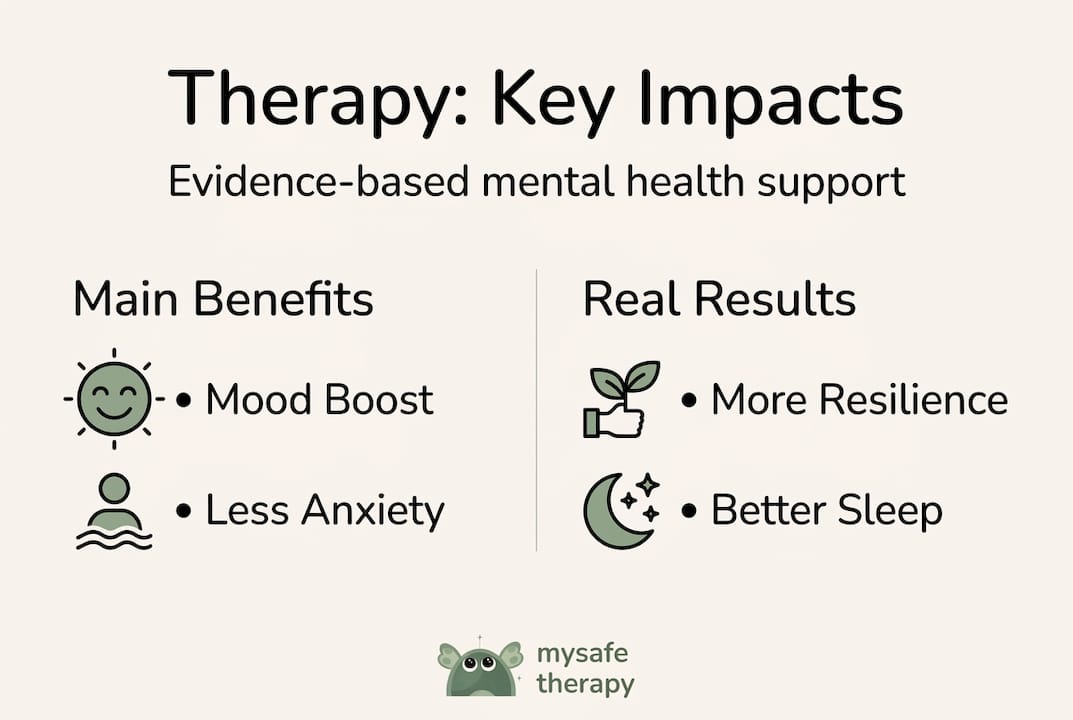
There is a tendency in public conversations about mental health to present therapy as a near-universal solution. The evidence is genuinely strong, but it is worth being direct: therapy takes time, requires consistent effort, and does not produce transformation overnight.
Many people quit within the first few sessions, often because they expect to feel better immediately and interpret early discomfort as a sign that therapy is not working. In fact, early sessions frequently surface difficult material before relief arrives. This is part of the process, not evidence of failure.
What matters most is tracking small, specific changes. Are you sleeping slightly better? Responding differently in situations that used to trigger you? Catching unhelpful thoughts earlier? These incremental shifts are the real indicators of progress, and they tend to appear before any dramatic change in overall mood.
The clients who benefit most are those who stay with the process through the uncomfortable middle phase, complete the between-session tasks, and communicate openly with their therapist when something is not working. Accessing therapy self-help resources between sessions extends the benefit of live work and keeps momentum going when motivation dips.
Realistic expectations, not enthusiasm, are what sustain progress.
Take the next step: Confidential therapy that fits your life
Understanding the evidence is the first step. Acting on it is what changes things.
MySafeTherapy connects you with UK-accredited therapists registered with BACP, UKCP, and NCPS, all available online from the privacy of your home. Sessions run via video, chat, or avatar format, with evening and weekend availability to suit your schedule. Whether you are managing anxiety, depression, burnout, or relationship difficulties, the platform is designed to match you with the right therapist quickly and confidentially. You can start therapy today without a referral, without a waiting list, and without compromise on quality or safety.
Frequently asked questions
What types of issues can therapy help with?
CBT is effective for depression and anxiety, and therapy more broadly helps with stress, relationship concerns, trauma, burnout, and adjusting to significant life changes.
How long does it take to see results from therapy?
Many people notice meaningful improvement within 8 to 12 weekly sessions, though CBT typically lasts 8 to 12 sessions of 60 minutes each, and individual progress depends on the nature and complexity of the issue.
Is online therapy as effective as in-person sessions?
For many common mental health concerns, online therapy produces comparable outcomes to face-to-face work. Flexible therapy supports00207-X/fulltext) a range of needs, and adapted approaches help those with more complex presentations.
What if I do not feel better after therapy?
Not every approach suits every individual. Blended or tailored support00207-X/fulltext) can help when standard therapy has not produced the expected results, and discussing your circumstances openly with your therapist is the most direct path to finding what works.