

TL;DR:
- Mental health conditions affect one in five UK adults weekly, impacting daily life and productivity.
- Seeking early, confidential support like therapy and lifestyle changes improves recovery outcomes.
- Online therapy reduces barriers and stigma, offering flexible, private mental health care options.
Mental health conditions are far more common than most people realise. Prevalence among UK adults has risen from 15% in 1993 to 23% in 2024 for those aged 16 to 64, with one in five adults reporting symptoms in any given week. These figures are not abstract. They represent colleagues, family members, and neighbours managing anxiety or depression quietly and often without support. This article sets out why mental health matters for everyone, what the evidence shows about its impact on daily life, and which practical steps are most effective for those ready to seek improvement.
Table of Contents
- Why mental health matters for everyone
- Understanding the impact: Mental health by the numbers
- Steps towards better mental health: What works?
- Breaking the stigma: Seeking support confidentially
- Why common advice about mental health isn't enough
- Take your next step towards better mental health
- Frequently asked questions
Key Takeaways
| Point | Details |
|---|---|
| Mental health is universal | One in five adults in the UK faces mental health challenges, making support relevant for everyone. |
| Evidence-based help works | Half of adults with common mental health conditions now receive effective treatment, with online options growing. |
| Stigma is decreasing | Confidential, accessible therapy helps more people overcome fear and seek support without judgment. |
| Taking action matters | Small, practical steps can make a measurable difference to mental well-being and quality of life. |
Why mental health matters for everyone
Mental health is not a separate concern from physical health. It shapes how you think, how you relate to others, and how you function at work and at home. When mental health is neglected, the consequences extend well beyond mood. Relationships suffer, productivity falls, and physical health often deteriorates alongside.
The scale of the issue in the UK makes this relevant to virtually every adult. One in five UK adults now reports symptoms of anxiety or depression each week. That figure has more than doubled since the early 1990s. It means that in any workplace, classroom, or social group, multiple people are likely experiencing significant mental health challenges at any given time.
Unmanaged conditions carry real costs. Consider what untreated anxiety or depression can affect:
- Concentration and decision-making, reducing effectiveness at work
- Sleep quality, which in turn worsens mood and physical health
- Relationships, as withdrawal and irritability strain personal connections
- Physical health, since chronic stress is linked to cardiovascular and immune issues
- Motivation, making it harder to maintain healthy routines
Addressing mental health proactively, rather than waiting for a crisis, builds resilience. People who access support early tend to recover faster and experience fewer recurring episodes. Good mental health management tips can make a measurable difference to daily functioning, even before formal therapy begins.
One persistent barrier to seeking help is the belief that struggling is a personal failing. It is not. Mental health conditions are medical issues with identifiable causes and effective treatments. The data confirm that they are widespread across all demographics, income levels, and backgrounds.
"Mental health struggles are not a sign of weakness. They are a sign that support is needed, just as a broken bone signals the need for medical attention."
Recognising this shifts the conversation from shame to practicality. The question is not whether mental health matters, but what to do about it.
Understanding the impact: Mental health by the numbers
The numbers behind the UK's mental health landscape tell a clear story. Prevalence has risen steadily over three decades, and the consequences are visible across the NHS, the economy, and individual lives.
| Year | Prevalence (16-64 age group) | Adults affected per week |
|---|---|---|
| 1993 | 15% | Approx. 1 in 7 |
| 2007 | 17% | Approx. 1 in 6 |
| 2024 | 23% | Approx. 1 in 5 |
The rise from 15% to 23% over three decades represents millions of additional people experiencing conditions such as generalised anxiety disorder, depression, and mixed anxiety and depressive disorder. These are not mild inconveniences. For many, they are conditions that significantly impair daily life.
The societal burden is substantial:
- Mental health conditions account for a significant proportion of long-term sickness absence in the UK
- NHS demand for mental health services has grown considerably, with waiting lists a persistent challenge
- Lost productivity linked to poor mental health costs the UK economy billions of pounds annually
- Emergency presentations related to mental health have increased year on year
"The economic and human cost of untreated mental health conditions is not a future risk. It is a present reality affecting millions of UK adults right now."
At an individual level, these statistics translate to real disruptions. People miss work, cancel plans, and avoid situations that feel overwhelming. Relationships become strained. Sleep deteriorates. Over time, untreated conditions can become more complex and harder to address.
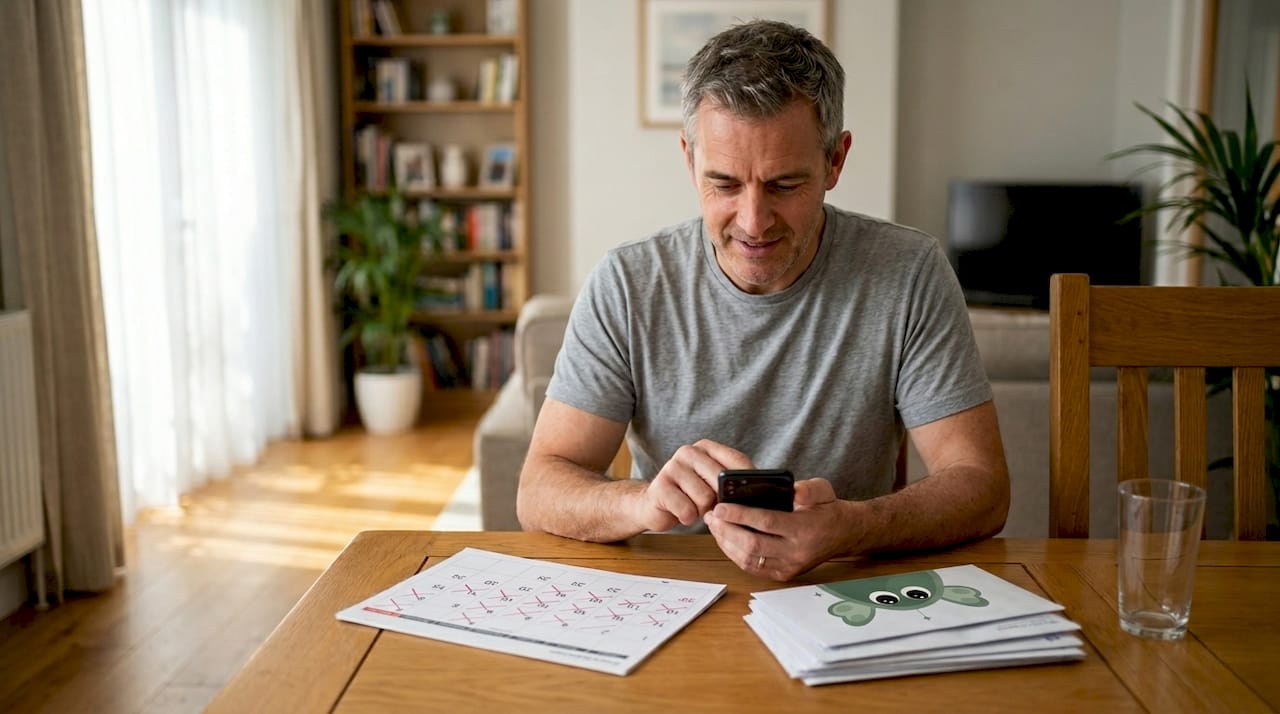
Understanding the scale of the problem is not intended to cause alarm. It is intended to normalise the experience and reinforce that seeking support is a rational, evidence-based response to a common condition.
Steps towards better mental health: What works?
Knowing that mental health conditions are common is one thing. Knowing what to do about them is another. The evidence points clearly to several effective approaches.
- Access professional therapy. Cognitive behavioural therapy (CBT) and other evidence-based approaches have strong records for treating anxiety and depression. Nearly 50% of those with common mental health conditions now receive treatment, up from just 25% in 2007, reflecting both improved access and reduced stigma.
- Use NHS Talking Therapies. This programme treated 670,000 people in 2025 and reports a 50% recovery rate. It is free at the point of access and available without a GP referral in many areas.
- Explore online support options. Platforms offering online support options provide flexible, confidential access to accredited therapists, often with evening and weekend availability that suits working adults.
- Adopt lifestyle adjustments. Regular physical activity, consistent sleep patterns, and reduced alcohol consumption all have measurable effects on mood and anxiety levels.
- Combine approaches. Using therapy techniques alongside self-help tools such as journalling, mood tracking, and mindfulness produces better outcomes than any single method alone.
- Consider affordability. Cost-effective therapy is increasingly available through online platforms, making professional support accessible without requiring significant financial outlay.
Pro Tip: Do not wait until symptoms feel unmanageable before seeking support. Early intervention consistently produces better outcomes. Even a single assessment session can clarify what kind of support would be most useful.
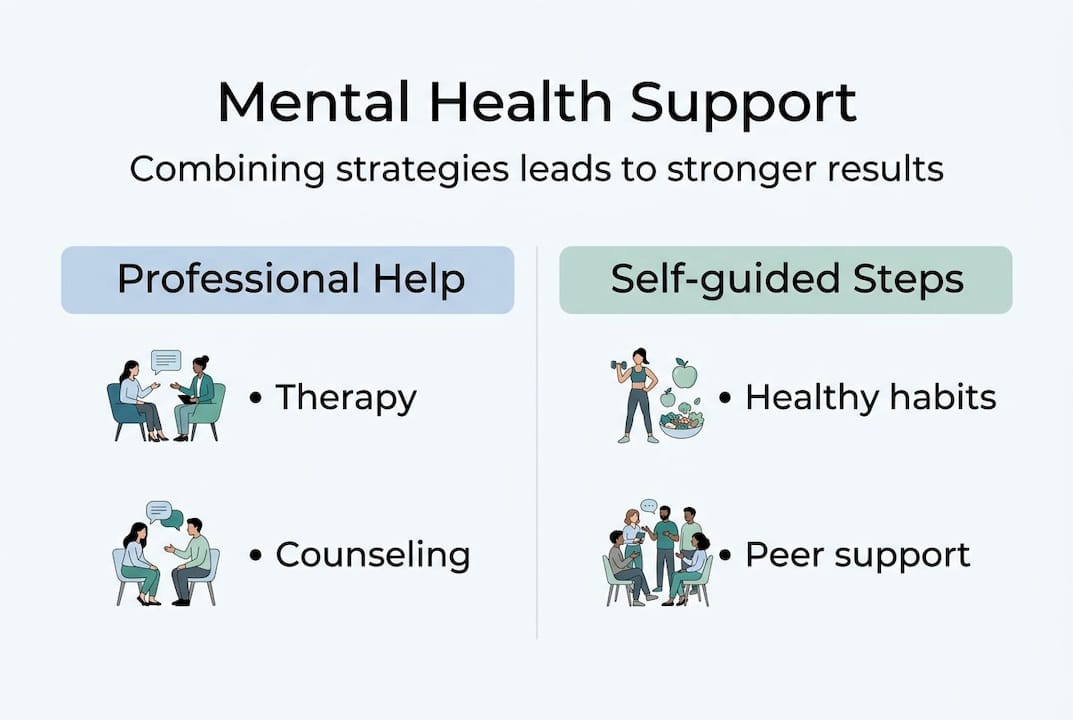
The evidence is consistent: combining professional support with self-directed strategies produces the strongest results. Neither alone is as effective as both together.
Breaking the stigma: Seeking support confidentially
Even with improved awareness, seeking help for mental health can still feel difficult. Concerns about privacy, fear of judgement, and previous negative experiences all act as barriers. These are understandable responses, not character flaws.
While treatment uptake is rising, certain groups, including young adults and those with long-term conditions, continue to face poorer outcomes. This suggests that generic encouragement to "seek help" is not sufficient. The type, format, and accessibility of support matters.
Online therapy has changed the landscape significantly. It removes many of the practical and emotional barriers associated with traditional face-to-face services.
| Factor | Traditional face-to-face therapy | Online therapy |
|---|---|---|
| Location | Fixed clinic or office | Anywhere with internet access |
| Scheduling | Standard office hours | Evenings and weekends available |
| Anonymity | Lower, seen entering a clinic | Higher, accessed privately at home |
| Cost | Often higher | Frequently more affordable |
| Waiting times | Can be lengthy | Often shorter |
| Therapist choice | Limited by geography | Broader selection |
For many adults, the ability to start online therapy from home removes the most significant obstacle. There is no waiting room, no commute, and no visible sign of attendance. This matters for those who value discretion.
Key benefits of confidential online support include:
- Sessions conducted in a private, familiar environment
- Secure, encrypted communication platforms
- No requirement to disclose attendance to employers or social contacts
- Flexible formats including video, chat, and avatar-based sessions
Pro Tip: If starting therapy feels overwhelming, a guide to accessible therapy can help you understand what to expect before your first session, reducing uncertainty and making the first step easier.
Stigma is reducing, but it has not disappeared. Confidential, flexible online support is one of the most practical responses to the barriers that remain.
Why common advice about mental health isn't enough
The standard guidance, "talk to someone" or "seek help," is well-intentioned but incomplete. For many UK adults, the obstacles are not a lack of awareness but a lack of accessible, appropriate, and confidential options that fit real life.
People with previous negative experiences of mental health services, or those who fear professional or social consequences, do not respond to generic calls to action. What actually makes a difference is personalised support that acknowledges individual circumstances, respects privacy, and removes logistical barriers.
The data show that treatment uptake has improved, but outcomes remain uneven. That gap is not closed by awareness campaigns alone. It closes when support is genuinely accessible: affordable, available outside working hours, and delivered without requiring someone to navigate a complex system under pressure.
What years of evidence and client experience show is that self-agency matters. People engage more consistently with support when they choose their therapist, control the format, and can switch if the fit is not right. Flexibility is not a luxury. It is a clinical asset.
Take your next step towards better mental health
Understanding the scale and impact of mental health conditions is a starting point. Acting on that understanding is what produces change.
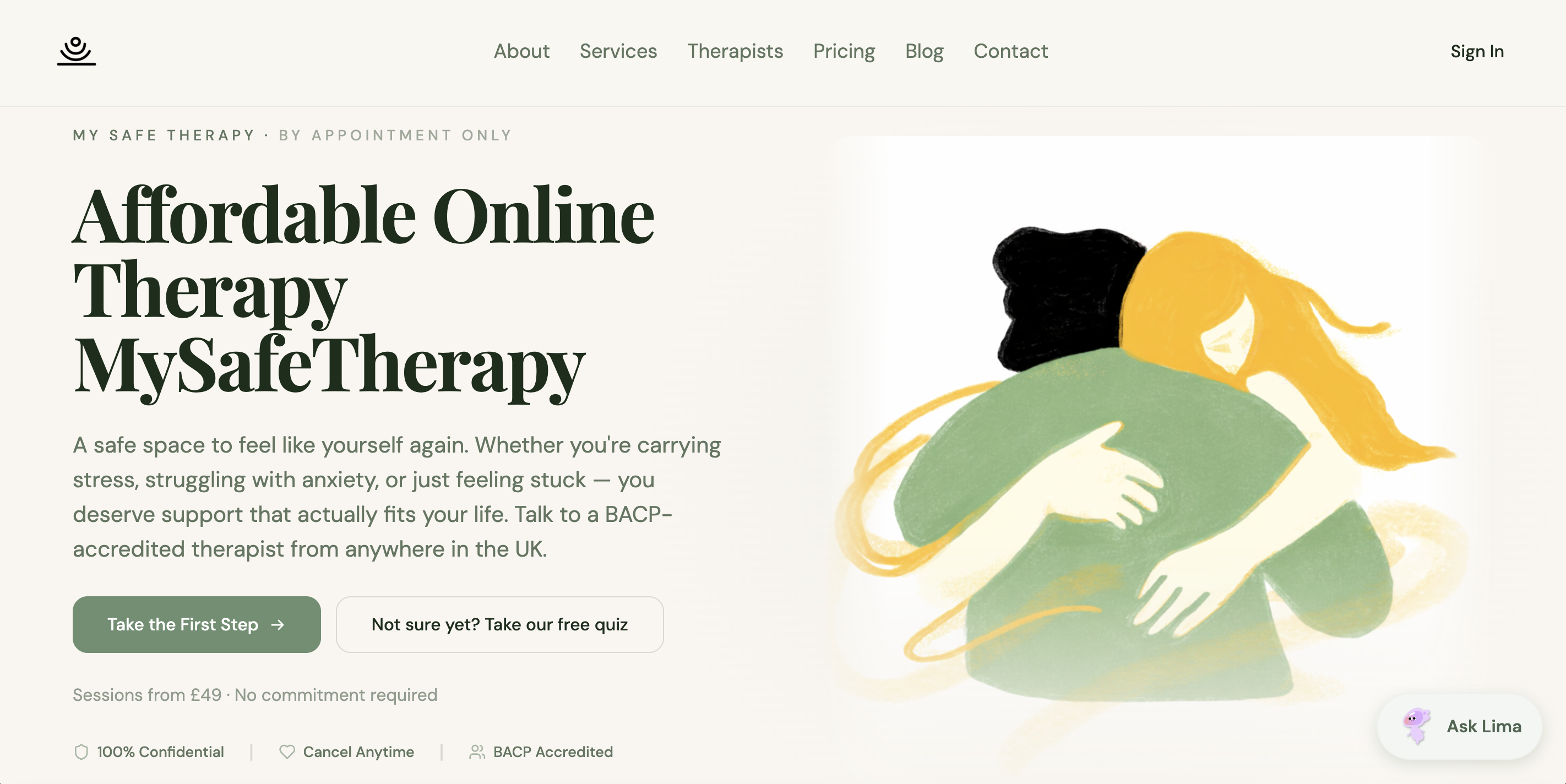
MySafeTherapy connects UK adults with accredited therapists registered with BACP, UKCP, and NCPS, offering video, chat, and avatar-based sessions that fit around your schedule, including evenings and weekends. Sessions are confidential, pricing is transparent, and switching therapists is straightforward if needed. If you are ready to explore what professional support looks like for your situation, you can start therapy securely at a time and pace that suits you. Taking that first step does not require certainty. It only requires a decision to find out more.
Frequently asked questions
How common are mental health conditions among UK adults?
Recent surveys show approximately one in five UK adults reports symptoms of anxiety or depression each week, with overall prevalence among 16 to 64 year-olds reaching 23% in 2024.
What are the most effective first steps to improve mental health?
Accessing therapy, adopting consistent healthy habits, and exploring NHS or online options are all evidence-based starting points, with nearly half of those with common conditions now receiving some form of treatment.
Is online therapy really confidential and effective?
Yes. UK-regulated online therapy platforms use secure, encrypted systems and are bound by the same professional confidentiality standards as face-to-face services, with demonstrated effectiveness for anxiety and depression.
Why does stigma still stop people from seeking help?
Fears about privacy and judgement persist despite rising treatment uptake, but confidential online therapy reduces these barriers by allowing people to access support privately, without visible attendance or disclosure to others.