

TL;DR:
- Burnout is a clinical condition involving emotional exhaustion, depersonalisation, and reduced effectiveness.
- Therapy, especially art-based and digital CBT, effectively reduces burnout symptoms over time.
- Early, active engagement in therapy is crucial for recovery and improving overall wellbeing.
Burnout is not simply feeling tired after a long week. It is a recognised clinical state that affects your emotional health, physical wellbeing, and ability to function at work or at home. A meta-analysis of 7 RCTs found that therapy, including art-based and digital cognitive behavioural therapy (CBT), produces meaningful reductions in burnout symptoms. Yet many UK adults still dismiss burnout as something they should push through alone. This guide explains what burnout actually is, what the research says about therapy as a solution, and how you can take practical steps towards recovery.
Table of Contents
- What is burnout and why does it matter?
- How therapy addresses burnout: The evidence
- Types of therapy for burnout: What are your options?
- What to expect and how to get started
- A fresh perspective: What most guides get wrong about therapy for burnout
- Take action: Confidential, flexible therapy for burnout
- Frequently asked questions
Key Takeaways
| Point | Details |
|---|---|
| Therapy reduces burnout | Well-studied therapies like art therapy and digital CBT lead to measurable improvements in emotional exhaustion and mindset. |
| Multiple therapy options | UK adults can choose from in-person, digital, art-based, or self-help therapies to suit their lifestyle and needs. |
| Evidence matters | The most effective therapies are evidence-based, ideally with sessions held regularly for sustained benefit. |
| Start where you are | Small, practical steps such as booking a session or exploring digital support can help tackle burnout today. |
What is burnout and why does it matter?
Burnout is more than exhaustion. The World Health Organisation classifies it as an occupational phenomenon characterised by three core features: persistent energy depletion, growing mental distance from your work, and a decline in professional effectiveness. It is not a mood that passes after a holiday. Left unaddressed, it can become entrenched and affect every area of your life.
Research confirms that burnout involves emotional exhaustion, depersonalisation, and a reduced sense of personal accomplishment. Depersonalisation here means feeling detached or cynical towards the people and responsibilities around you. It is a psychological distancing mechanism, and it can damage relationships, reduce empathy, and erode your sense of identity over time.
In the UK, burnout is widespread but frequently underreported. Stigma around mental health still prevents many adults from seeking help, particularly in high-pressure professional environments. People often normalise their symptoms, attributing them to a busy period rather than recognising a pattern that requires intervention. This delay makes recovery harder and longer.
Common symptoms of burnout include:
- Persistent physical and emotional fatigue that sleep does not resolve
- Feeling detached, cynical, or emotionally numb towards your work or relationships
- Difficulty concentrating or making decisions
- Reduced performance despite continued effort
- Increased irritability, anxiety, or low mood
- Physical symptoms such as headaches, disrupted sleep, or frequent illness
"Burnout is not a sign of weakness. It is a signal that sustained demands have exceeded your capacity to recover. Recognising it early is the single most important step you can take."
For practical guidance on managing your mental health alongside these symptoms, essential mental health management tips offer a useful starting point. The key message is this: burnout does not resolve on its own, and waiting rarely helps.
How therapy addresses burnout: The evidence
Therapy works for burnout because it targets the underlying psychological patterns, not just the surface symptoms. It builds emotional resilience, helps you identify and change unhelpful thought patterns, and restores a sense of control and purpose. These are not abstract benefits. They are measurable outcomes supported by clinical trials.
Art therapy and digital CBT reduce burnout, particularly when sessions are held bi-weekly and maintained over time. The evidence shows reductions in both emotional exhaustion and depersonalisation, with improvements in personal accomplishment. These are the three core dimensions of burnout, and therapy addresses all three.
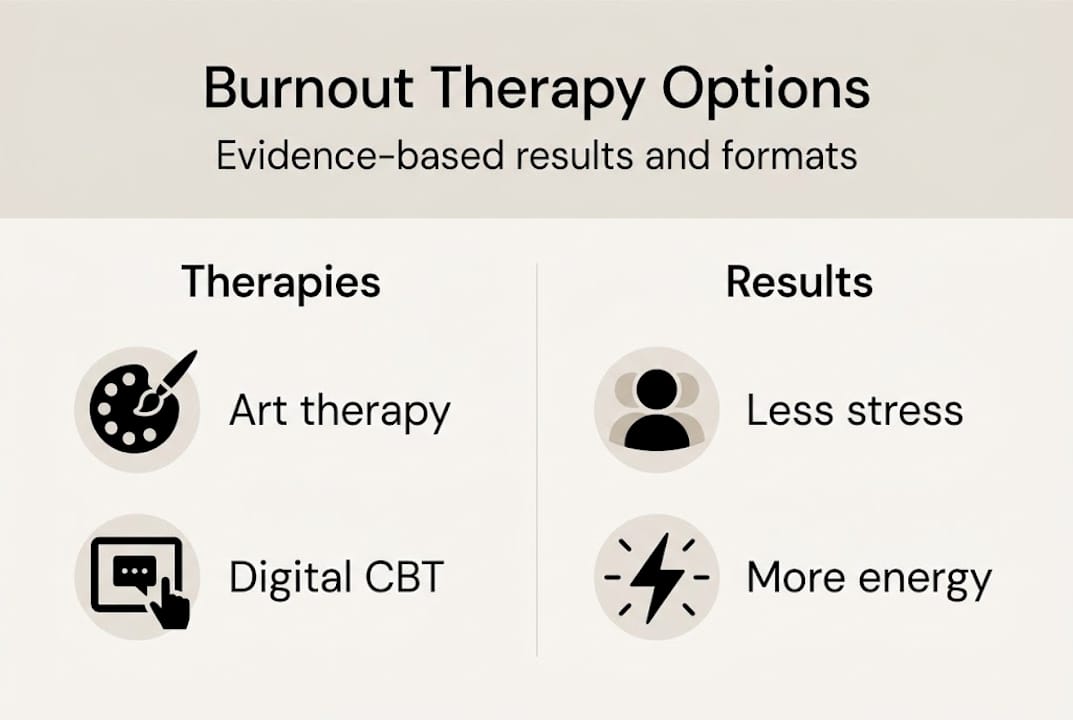
Digital CBT in particular has shown strong results. Digital CBT interventions show continued improvement over six months, with medium effect sizes that increase the longer the intervention continues. This matters because it tells us that therapy is not a quick fix. It is a process that compounds over time.
| Therapy type | Effect on burnout | Session format | Evidence strength |
|---|---|---|---|
| Art therapy | Reduces exhaustion and depersonalisation | Group or individual | Strong (RCT meta-analysis) |
| Digital CBT | Medium effects, improving over 6 months | Self-guided or supported | Strong (RCT and digital trials) |
| Talking therapy (CBT) | Improves resilience and accomplishment | One-to-one | Moderate to strong |
| Group therapy | Reduces isolation and depersonalisation | Group | Moderate |
Key statistic: Across seven randomised controlled trials, therapy produced statistically significant reductions in all three burnout dimensions, with effect sizes ranging from small to medium depending on the modality and duration.
Therapy also improves workplace satisfaction and interpersonal functioning, which are areas that burnout consistently damages. Understanding effective therapy techniques can help you identify which approach suits your situation. If consistency is a concern, flexible therapy sessions are now widely available and designed to fit around demanding schedules.
Pro Tip: If you are unsure where to start, bi-weekly sessions with a structured approach such as CBT tend to show the most consistent results in research trials. Regularity matters more than intensity.
Types of therapy for burnout: What are your options?
Not all therapy is the same, and the right choice depends on your preferences, schedule, and the severity of your symptoms. The good news is that the range of options available to UK adults has expanded considerably, particularly with the growth of digital and online platforms.
Art therapy and digital CBT are both proven to help with burnout and improve personal accomplishment. Here is a summary of the main options:
Cognitive behavioural therapy (CBT)
- Focuses on identifying and changing unhelpful thought patterns
- Strong evidence base for burnout, anxiety, and depression
- Available face-to-face, via video, or through digital programmes
- Typically structured over 6 to 20 sessions
Art therapy
- Uses creative expression to process emotions and reduce stress
- Particularly effective for those who find verbal expression difficult
- Often delivered in group settings, though individual sessions are available
- Evidence shows reductions in emotional exhaustion
Talking therapies (person-centred or psychodynamic)
- Focuses on self-understanding, values, and emotional processing
- Less structured than CBT but valuable for deeper personal exploration
- Well-suited to those experiencing identity loss or chronic detachment
| Therapy type | Accessibility | Cost range | Best suited to |
|---|---|---|---|
| Digital CBT | High (online, flexible) | Low to moderate | Mild to moderate burnout |
| Art therapy | Moderate (group settings) | Moderate | Emotional processing |
| Talking therapy | High (online and in-person) | Moderate | Deeper personal exploration |
| Group therapy | Moderate | Lower | Isolation and peer support |
When choosing a therapist, always check that they are accredited by a recognised UK body such as BACP, UKCP, or NCPS. Accreditation ensures ethical practice and professional standards. Confidentiality is also non-negotiable. Your sessions should be private, and a reputable therapist will explain their confidentiality policy clearly from the outset.
For those who prefer to tailor their approach, flexible mental health support can help you find a format that works for your lifestyle. If you want to supplement therapy between sessions, self-help therapy resources can reinforce your progress.
Pro Tip: Match your therapy format to your daily routine. If evenings are the only time you have, choose a platform that offers evening appointments. Consistency is more important than the perfect modality.
What to expect and how to get started
Starting therapy can feel daunting, particularly if you have never done it before. Understanding what the process looks like removes much of the uncertainty and makes it easier to take the first step.
- Recognise the signs. Acknowledge that what you are experiencing is burnout, not simply tiredness. This recognition is itself a meaningful step.
- Research your options. Identify whether you prefer face-to-face, video, or digital therapy. Consider your schedule and budget.
- Check therapist credentials. Look for BACP, UKCP, or NCPS registration. UK-accredited therapists provide safer, evidence-based care.
- Book an initial session. Most platforms allow you to book a first session quickly, often within days. This session is typically an assessment where you discuss your goals and concerns.
- Set realistic expectations. Therapy is not a single conversation that resolves everything. Progress is gradual, and that is normal.
- Use supplementary tools. Between sessions, self-help tools such as mood tracking and journalling can support your recovery.
A typical therapy session lasts 50 minutes. Your therapist will ask questions, listen carefully, and work with you to identify patterns and develop coping strategies. You will not be judged. Confidentiality is protected by professional codes of conduct.

Common concerns include cost, privacy, and whether therapy will actually work. On cost, many online platforms offer transparent pricing and flexible payment options. On privacy, reputable therapists operate under strict confidentiality obligations. On effectiveness, evidence-based digital options make starting easier than ever and have demonstrated real results in clinical trials.
Pro Tip: You do not need to have everything figured out before your first session. Simply turning up and describing how you feel is enough to begin.
A fresh perspective: What most guides get wrong about therapy for burnout
Most articles about therapy for burnout frame it as a passive process. You attend sessions, you feel better, and you move on. This framing is misleading and, frankly, unhelpful.
Therapy for burnout requires active engagement. You will be asked to reflect, challenge your assumptions, and practise new behaviours outside of sessions. The research supports this. Burnout interventions show small to medium effects with effect sizes of around 0.3 to 0.4, which may sound modest but translate into meaningful real-world change when maintained consistently.
The other thing most guides miss is the value of early intervention. UK adults tend to wait until burnout is severe before seeking help. But therapy is most effective when started early, before exhaustion becomes entrenched and depersonalisation becomes habitual.
Small, steady progress over months is not a failure. It is how recovery from burnout actually works. Understanding online therapy safety can also help you engage with digital options confidently, knowing your privacy is protected throughout.
Take action: Confidential, flexible therapy for burnout
If what you have read resonates, the next step is straightforward. MySafeTherapy connects you with UK-accredited therapists registered with BACP, UKCP, and NCPS, all within a confidential, secure environment.
Sessions are available via video, chat, or avatar format, including evenings and weekends, so you can fit therapy around your life rather than the other way around. Pricing is transparent, therapist switching is simple, and your privacy is protected at every stage. Whether you are just beginning to recognise burnout or have been struggling for some time, start therapy for burnout today with a platform built around your needs. MySafeTherapy confidential support is available whenever you are ready to take that first step.
Frequently asked questions
How quickly can therapy help with burnout?
Improvements can appear within a few weeks, but greater effects appear after 6 months of consistent therapy, making sustained engagement the most reliable path to recovery.
Is digital therapy as effective as in-person therapy for burnout?
Yes. Digital CBT shows similar medium effects to in-person trials, making it a clinically credible option for UK adults who prefer online access.
What types of therapy work best for burnout?
Art therapy and digital CBT are the most evidenced options, particularly when sessions are personalised, consistent, and maintained over several months.
How do I know if I need therapy for burnout?
If you feel persistently exhausted, detached from daily life, and your usual coping strategies are no longer working, these are core signs of burnout that therapy is well-placed to address.