
TL;DR:
- Self-screening tools like PHQ-9 and GAD-7 help assess depression and anxiety quickly and confidentially.
- Scores above 10 on these checklists indicate the need for professional evaluation or treatment.
- Checklists serve as a starting point for conversations with healthcare providers and self-help resources.
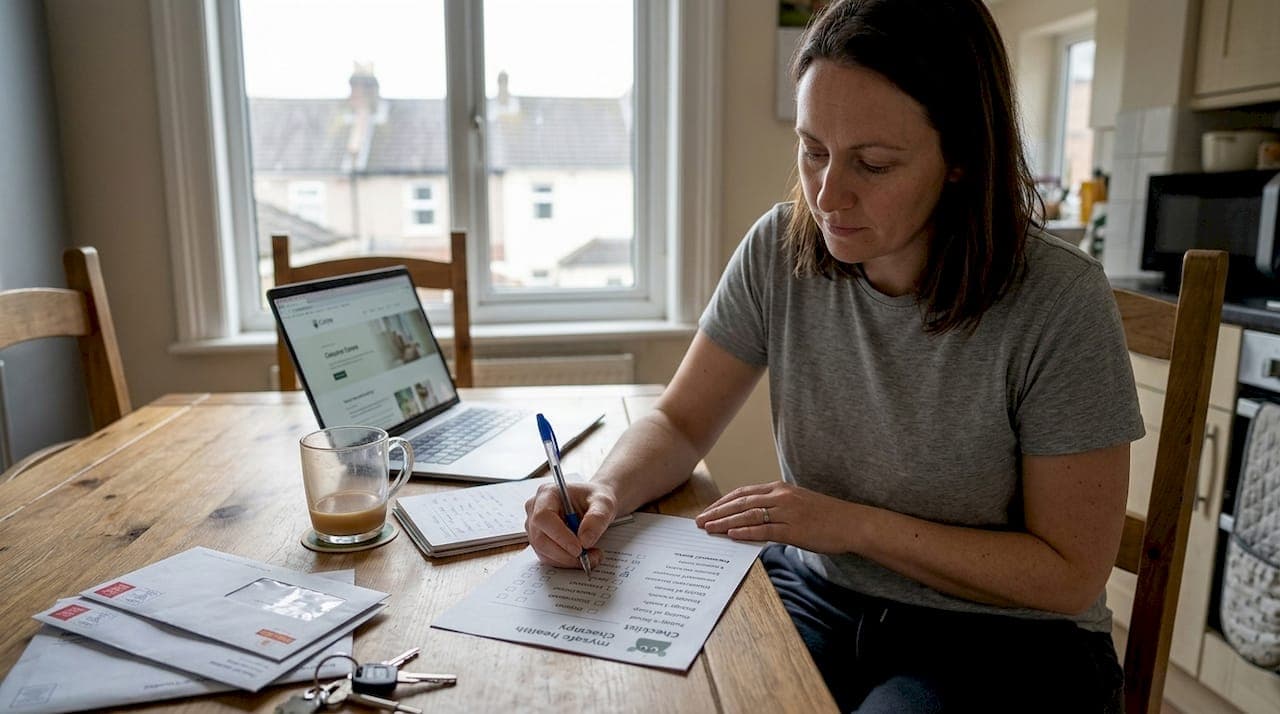
Recognising when your mental health needs attention is not always straightforward. Many UK adults spend months feeling low, anxious, or overwhelmed before taking any action, often because they are unsure whether their symptoms are serious enough to warrant support. Standardised self-screening tools such as the PHQ-9 and GAD-7 offer a practical, confidential starting point. These evidence-based checklists are used by GPs, NHS services, and therapists across the UK. This article explains what these tools are, how to score them, what your results mean, and the concrete steps you can take next to access confidential, flexible support.
Table of Contents
- What is a mental health checklist and why use one?
- The PHQ-9 checklist for depression
- The GAD-7 checklist for anxiety
- How to use your results and what to do next
- Why a checklist alone isn't enough: Our take on balanced mental health support
- Take the next step: Confidential therapy and self-help made easy
- Frequently asked questions
Key Takeaways
| Point | Details |
|---|---|
| PHQ-9 and GAD-7 essentials | Both checklists offer fast, confidential ways to screen for depression or anxiety symptoms at home. |
| Scores guide next steps | A total score of 10 or more means you should seek further support, such as NHS Talking Therapies. |
| Limitations apply | Checklists do not diagnose—always combine results with professional advice, especially in severe or urgent situations. |
| Support is accessible | UK adults can self-refer to free online therapy or find digital tools for flexible, confidential help. |
What is a mental health checklist and why use one?
A mental health checklist is a standardised set of questions designed to help you assess how frequently you have been experiencing symptoms of conditions such as depression or anxiety. These tools are not diagnostic. They do not replace a clinical assessment by a GP or therapist. What they do is give you a clear, structured picture of your current state, using validated questions that have been tested across large populations.
The two most widely used tools for UK adults are the PHQ-9 (Patient Health Questionnaire, 9 items) for depression, and the GAD-7 (Generalised Anxiety Disorder scale, 7 items) for anxiety. Both are PHQ-9 and GAD-7 tools recommended by NHS services and used routinely in GP surgeries. They require no registration, cost nothing, and can be completed privately in under five minutes.
Why do they matter? Because many adults find it difficult to articulate their symptoms to a doctor without some prior framework. A checklist helps you organise your experience into concrete terms.
Here are the primary benefits of using a mental health checklist:
- Accessible: Available online, free of charge, with no appointment needed
- Confidential: Self-administered, with no obligation to share results unless you choose to
- Quick: Most take under five minutes to complete
- Validated: Both PHQ-9 and GAD-7 are backed by substantial clinical research
- Actionable: Scores provide a clear threshold for deciding whether to seek further help
"A checklist does not tell you what is wrong. It tells you whether the conversation is worth having, and it gives you the words to start it."
For anyone feeling low, anxious, or simply uncertain about their mental wellbeing, these tools are a logical first step. You can also explore self-help tools for anxiety and depression to complement your self-screening.
Pro Tip: Complete the checklist at a time when you are unlikely to be interrupted. Rushing through the questions reduces accuracy. Five calm minutes will give you more reliable results than ten distracted ones.
The PHQ-9 checklist for depression
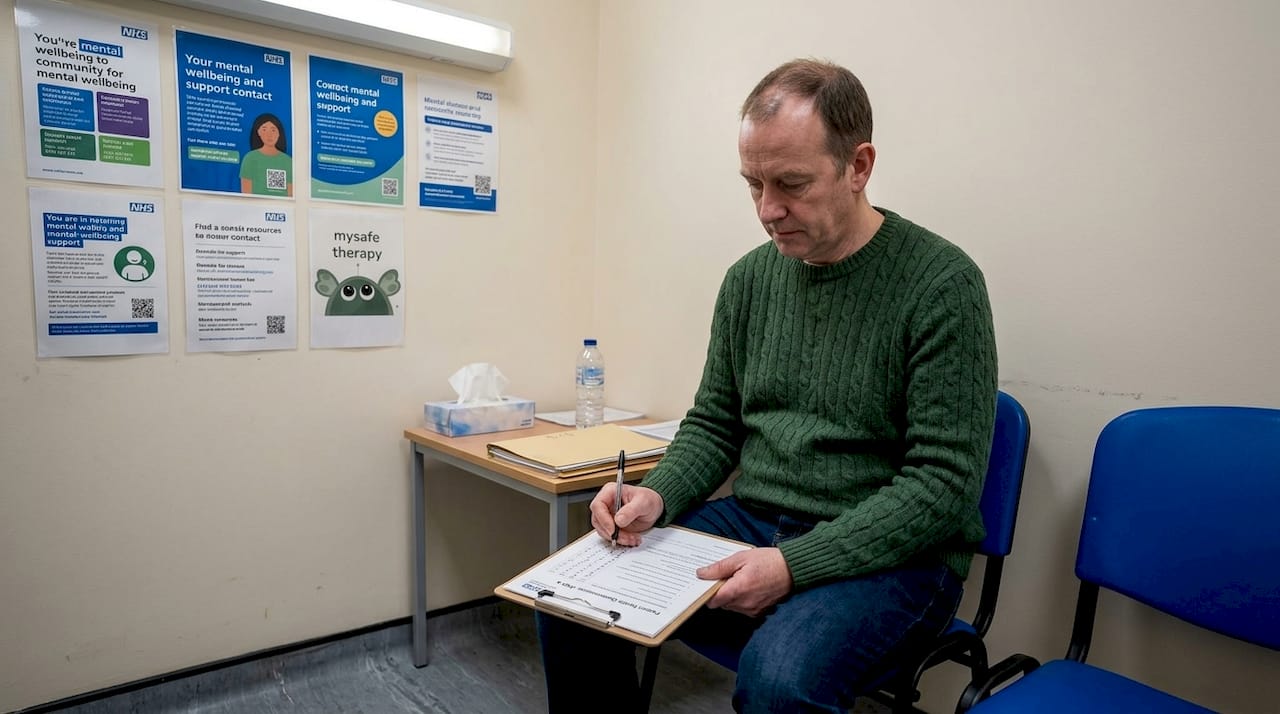
The PHQ-9 is one of the most rigorously validated tools available for detecting depressive symptoms in adults. It consists of nine questions, each asking how often you have experienced a specific symptom over the past two weeks. Responses are scored on a four-point scale: 0 (not at all), 1 (several days), 2 (more than half the days), and 3 (nearly every day).
PHQ-9 score ranges and what they indicate
| Total score | Depression severity | Recommended action |
|---|---|---|
| 0 to 4 | None or minimal | Monitor; no immediate action needed |
| 5 to 9 | Mild | Self-help resources and watchful waiting |
| 10 to 14 | Moderate | GP assessment or self-referral to talking therapy |
| 15 to 19 | Moderately severe | Active treatment; GP or therapist recommended |
| 20 to 27 | Severe | Urgent clinical assessment required |
A score of 10 or above is widely considered the threshold at which further professional assessment is warranted. At this level, the PHQ-9 demonstrates 88% sensitivity for major depression, meaning it correctly identifies the majority of those experiencing a clinical depressive episode.
Here is how to use the PHQ-9 effectively:
- Answer each question honestly, based on the past 14 days
- Assign the correct numeric score (0 to 3) for each response
- Add up all nine scores to get your total
- Locate your total on the scoring table above
- Use the recommended action column as your next step guide
One question requires specific attention: question 9 asks about thoughts of self-harm or suicide. If you score anything above 0 on this item, it is important to contact your GP, NHS 111, or a crisis support line promptly, regardless of your overall total.
You can use the quick self-assessment tool provided by NHS talking therapy services to complete this online. For broader guidance on managing your mental health day to day, mental health management tips offer practical strategies alongside your checklist results.
Pro Tip: Print or screenshot your PHQ-9 results before your GP appointment. Having a numeric score gives your doctor a concrete reference point and can make it significantly easier to describe how you have been feeling.
The GAD-7 checklist for anxiety
The GAD-7 follows a very similar structure to the PHQ-9. It contains seven questions, each asking how often specific anxiety symptoms have troubled you over the past two weeks. Scoring is identical: 0 to 3 for each item, giving a maximum possible total of 21.
GAD-7 score bands
| Total score | Anxiety severity | Suggested next step |
|---|---|---|
| 0 to 4 | Minimal | No immediate action needed |
| 5 to 9 | Mild | Self-help and monitoring |
| 10 to 14 | Moderate | Consider GP referral or online therapy |
| 15 to 21 | Severe | Seek professional assessment promptly |
A GAD-7 score of 10 or above is the recognised threshold indicating a strong likelihood of generalised anxiety disorder. At this level, clinical guidelines recommend further evaluation from a GP or qualified therapist.
The GAD-7 is particularly useful because anxiety often presents in ways that are easy to dismiss. Racing thoughts, sleep disruption, and physical tension can all seem like ordinary stress. The questionnaire forces a structured review, asking about specific patterns such as inability to control worrying or feeling on edge.
Key strengths and limitations of the GAD-7:
- Validated across UK and European adult populations
- Quick to complete, typically under three minutes
- Widely accepted by NHS and private therapy services as an intake tool
- Not diagnostic: a high score indicates symptoms, not a confirmed disorder
- Not suitable for complex presentations involving trauma or co-occurring conditions without professional support
You can access the NHS quick self-assessment to take the GAD-7 online. If your results suggest moderate to severe anxiety, it is worth reading about types of therapy for anxiety to understand which treatment approaches are most effective for your situation.
Pro Tip: Take both the PHQ-9 and GAD-7 if you are uncertain which applies to you. Depression and anxiety frequently overlap, and completing both tools gives a more complete picture of your current mental state.
How to use your results and what to do next
Completing a checklist is only the first step. What matters most is what you do with your score. Here is a clear sequence to follow once you have your results:
- Note your total score for each checklist you completed
- Locate your score band using the tables above
- If your score is below 10: explore self-help resources and monitor your symptoms over the next two to four weeks
- If your score is 10 or above: consider contacting your GP, self-referring to an NHS talking therapy service, or accessing private online therapy
- Save or print your results before any appointment to share with a clinician
NHS Talking Therapies offers free, confidential support for adults in England experiencing anxiety and depression. These services accept self-referrals, meaning you do not need a GP letter to access help. You can also find your nearest service via the NHS talking therapies finder.
For those who prefer online options, there are several routes available:
- Free NHS digital programmes for mild to moderate symptoms
- Private online therapy platforms offering evening and weekend appointments
- Structured self-help programmes supported by a therapist or coach
"Your score is not a verdict. It is information. Use it to start a conversation, not to close one."
If question 9 of the PHQ-9 (thoughts of self-harm or suicide) returns any score above 0, or if you feel at immediate risk, do not wait. Contact NHS 111 or call Samaritans on 116 123 immediately.
For those ready to act, guidance on how to start online therapy outlines the practical steps involved. You may also find therapy self-help resources useful if you are managing milder symptoms independently, or explore the best types of mental health support online to compare your options.
Why a checklist alone isn't enough: Our take on balanced mental health support
Checklists have become popular precisely because they are fast, private, and require no prior knowledge of mental health terminology. For first-time therapy seekers, or adults who have been quietly struggling, they remove a significant barrier to self-awareness.
But there is a real risk in treating a score as a conclusion. A PHQ-9 total of 12 tells you something is worth addressing. It does not tell you why, or what combination of factors is driving your symptoms. Further clinical evaluation is required for complex or severe presentations, and no algorithm substitutes for a skilled clinician's assessment.
The most effective use of these tools is as a catalyst. Take the checklist, note your score, and then use it to start an honest conversation: with yourself, your GP, or a qualified online therapist. In 2026, with mental health services facing significant demand, accessible self-screening plays a vital role in helping people identify and articulate their needs earlier.
We recommend pairing any checklist with ongoing support. A single score captures one moment. Recovery and wellbeing are processes. For a thorough review of what to expect from digital support, the online therapy safety guide is a reliable reference point.
Take the next step: Confidential therapy and self-help made easy
If your checklist results have given you clarity, the natural next step is connecting with qualified support. MySafeTherapy makes that process straightforward.
MySafeTherapy connects UK adults with BACP, UKCP, and NCPS-registered therapists through secure video, chat, and avatar-based sessions. Appointments are available in the evenings and at weekends, removing the scheduling barriers that often delay help-seeking. Whether you want to start therapy now or simply explore confidential support options at your own pace, the platform is designed to meet you where you are. Clear pricing, flexible session frequency, and easy therapist switching are built in from the start.
Frequently asked questions
Are mental health checklists like PHQ-9 and GAD-7 accurate?
PHQ-9 and GAD-7 are both well-validated tools with high internal reliability and good validity across UK adult populations. They are effective for screening but are not diagnostic instruments.
Can I use a mental health checklist confidentially online?
Yes. These self-administered checklists are freely available online via NHS-endorsed sites and require no registration or personal details to complete.
What should I do if I score high on a checklist?
A score of 10 or above on either the PHQ-9 or GAD-7 indicates you should seek further evaluation from a GP or NHS talking therapy service as a priority.
What immediate help is available if I feel at risk?
If you are experiencing thoughts of self-harm or suicide, contact NHS 111 or Samaritans (116 123) immediately for urgent, confidential support.