

CBT is free through the NHS for many people in England, and private sessions typically cost around £50 to £120 per hour depending on format and location. A full course, whether NHS or private, commonly runs to 6 to 20 sessions, which puts a private course anywhere from roughly £300 to £2,000 or more. The route you choose depends on how quickly you need support, your budget, and how complex the difficulty is.
- Free route: NHS Talking Therapies, accessed by self-referral or GP referral
- Private route: £50 to £120 per session, London and senior therapists at the top end
- Typical course: 6 to 20 sessions depending on the presenting problem
Headline figure: A moderate anxiety or depression course of 12 private sessions at an average £80 rate comes to roughly £960, before any assessment premium.
The sections below break down NHS access and waits, private pricing mechanics, cheaper alternatives, and how to vet a therapist before you commit any money.
Key Takeaways
CBT costs nothing through NHS self-referral for many people, while private sessions run £50 to £120 depending on format and location, and course length drives total spend more than the per-session rate.
| Point | Details |
|---|---|
| NHS route is free | Self-refer to NHS Talking Therapies or ask your GP; expect 6 to 20 sessions and regional waits of weeks to months. |
| Private rates vary by format | Online sessions often run £50 to £80, in-person £60 to £120, with London and senior therapists at the top. |
| Course length sets total cost | 6 sessions for mild issues, 12 to 16 for moderate depression or anxiety, 16 to 20+ for complex cases. |
| Cheaper routes exist | Trainee clinics and charities sometimes charge £10 to £40, with supervision providing the safety net. |
| Always verify registration | Check BACP, UKCP or BABCP before booking any private therapist, regardless of price. |
| Mysafetherapy offers accredited access | Video, chat and avatar sessions with upfront pricing, from £49 for avatar therapy, and free therapist switching. |
Table of Contents
- How much does free CBT cost through the NHS?
- What does private CBT cost per session in the UK?
- Are there cheaper ways to access CBT?
- How do you choose and budget for a CBT therapist?
- What the cost debate misses
- Book accredited CBT online without the waitlist or the guesswork on price
- Sources
How much does free CBT cost through the NHS?
Nothing, if you're eligible and can access it through NHS Talking Therapies. Services in England cover anxiety and depression as standard, and most people can self-refer online without waiting for a GP appointment first. A GP referral works too, and is worth doing if your situation is more complex or overlaps with a physical health condition.
What you're offered varies by need. Some people start with guided self-help, a structured, lower-intensity programme often delivered digitally, before stepping up to full CBT if that isn't enough. NHS England has deliberately expanded digital delivery of talking therapies specifically to reach people who struggle with in-person appointments, so don't assume "NHS" means a waiting room and a paper referral form.
Waiting times are the real trade-off. They vary sharply by area, from a few weeks in some services to several months elsewhere, and that regional gap is often the deciding factor for people who end up paying privately instead.
- Self-refer directly through NHS Talking Therapies where your area allows it
- Ask your GP for a referral if your case involves other health factors
- Expect 6 to 20 sessions once treatment starts, depending on severity
- Check whether your employer, university or a local charity also runs a free scheme, since many do alongside the NHS
What does private CBT cost per session in the UK?
Expect to pay between £50 and £120 per session for private CBT, with online sessions at the lower end and London-based, senior practitioners at the top. Online CBT commonly sits around £50 to £80, in-person work often runs £60 to £120, and a highly experienced accredited therapist in central London can charge above that range.
The first meeting usually costs more than a standard session, and that's not a pricing quirk. Assessments involve formulation work, mapping your history, symptoms and goals into a treatment plan, which takes longer and demands more from the clinician. There's no single mandated figure for this, but most practitioners price it as a premium session rather than folding it into the standard rate.
Quick maths: at an average £80 per session, a 6 session course for a mild, single issue costs around £480; a 12 session course for moderate depression or anxiety comes to about £960; a 16 to 20 session course for a more complex or long standing problem can reach £1,280 to £1,600.
Those figures track roughly with clinical guidance on course length: treatment length varies from several sessions for mild difficulties to a larger number for moderate to complex presentations. What actually moves the price:
- Therapist seniority and years post-accreditation
- Format (video and chat tend to undercut in-person)
- Session length (some run 50 minutes, others a full hour)
- Location, with London carrying a consistent premium
If you're weighing formats, it's worth reading how video and chat therapy differ before assuming one is automatically cheaper for your needs.
Are there cheaper ways to access CBT?
Yes, and they're more credible than most people assume. Trainee clinics, where therapists working towards accreditation see clients under supervision, often charge low-cost options are available, often charging less than standard private session fees, a fraction of the standard private rate.
- Trainee and low-fee clinics. Usually attached to a university or training body, with a qualified supervisor overseeing every case.
- Charity-run services. Local mental health charities frequently offer subsidised or sliding-scale CBT, particularly for specific issues like bereavement or trauma.
- University counselling. Free if you're a student, and often includes CBT-based short courses.
- Employee Assistance Programmes. Many employers fund a set number of free sessions, worth checking before you pay privately.
- Group CBT. Delivered to several people at once for a shared issue such as anxiety, cheaper than one-to-one and clinically effective for many presentations.
Pro Tip: Before you book anything cut-price, ask directly who supervises the trainee and whether that supervisor is registered with BACP, UKCP or BABCP. A genuine training placement will have a clear answer ready; a vague one is a red flag.
Our guide to affordable therapy options covers payment plans and sliding-scale arrangements in more depth.
How do you choose and budget for a CBT therapist?
Verifying credentials takes five minutes and protects you from an expensive mistake. Registration with BACP, UKCP or BABCP means a therapist has met training standards and sits under a complaints procedure, a check Mind explicitly recommends before booking anyone privately, alongside asking your GP about NHS referral routes.
Before you book, ask:
- How long is the initial assessment, and what does it cost?
- How many sessions do you typically recommend for my type of issue?
- What's the cancellation policy if I need to reschedule?
- Do you measure progress during treatment, and how?
- Do you specialise in my specific concern (trauma, health anxiety, OCD)?
To budget realistically:
- Get the per-session rate and the assessment fee separately, they're rarely the same.
- Ask whether block-booking a set number of sessions brings the rate down.
- Check if your health insurance or employer scheme covers any private sessions.
- Ask about sliding-scale pricing if cost is a genuine barrier, many therapists have some flexibility.
If NHS waiting times in your area stretch past a few months and your symptoms are affecting daily life now, private or low-cost routes are worth the spend. If your case is mild and you can tolerate a wait, self-referring to NHS Talking Therapies and starting with guided self-help costs nothing and often works. Many people do both: an NHS referral while they start privately, then cancel the NHS place if private treatment is working.
What the cost debate misses
Most cost guides treat NHS and private CBT as a binary choice: free but slow, or fast but expensive. That framing misses the middle ground where most people actually end up, trainee clinics, workplace schemes, university services, and accredited online platforms that sit well below London private rates without the multi-month NHS queue.
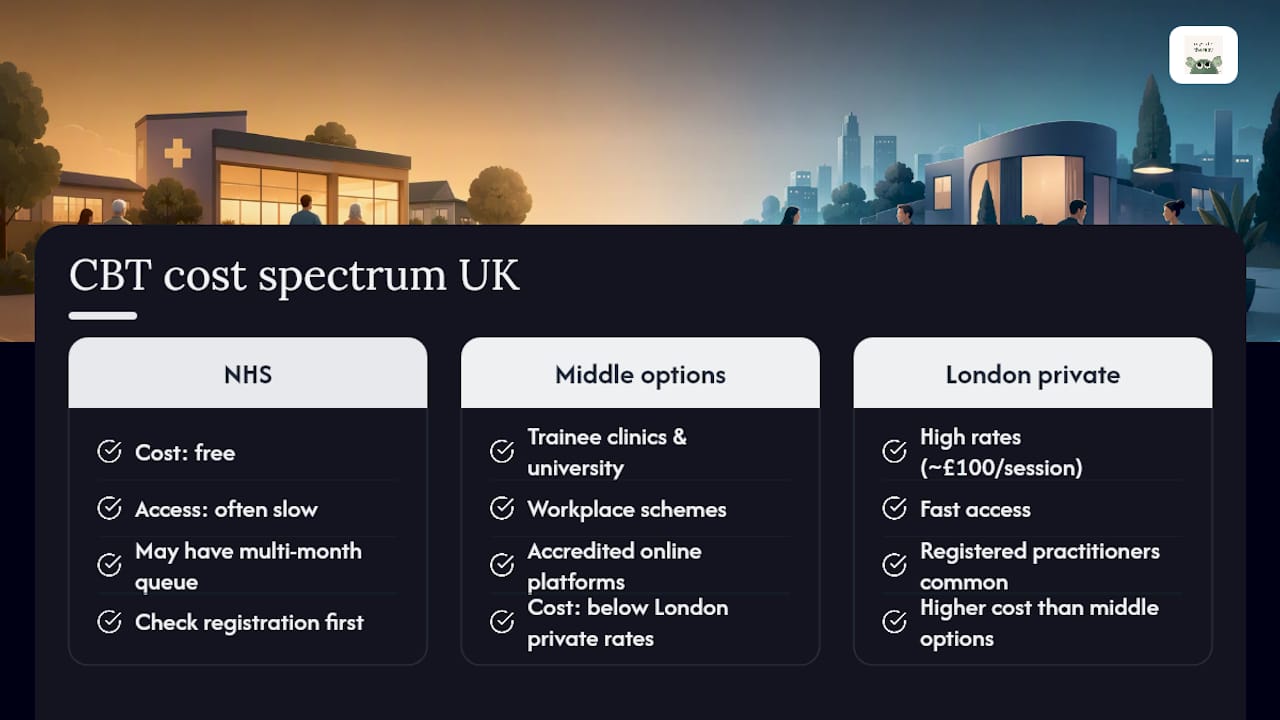
The bigger failure in conventional advice is treating price as the main risk. It isn't. An unregistered practitioner charging £45 a session is a worse outcome than a registered one charging £90, because the thing you're actually buying is competent, supervised clinical judgement, not a room or a login. Checking BACP, UKCP or BABCP registration should happen before comparing a single price.
If there's one thing worth prioritising over cost, it's fit and access speed. A therapist you can actually see within two weeks, working in a format you'll show up for consistently, delivers more value than the cheapest option that leaves you waiting or dreading the format. Online, accredited services solve exactly that problem for a lot of people who'd otherwise fall between NHS waiting lists and £100-a-session London clinics.
— MySafeTherapy
Book accredited CBT online without the waitlist or the guesswork on price
Mysafetherapy connects you with UK-accredited therapists registered with BACP, UKCP or NCPS, so the credential check this guide recommends is done before you ever see a profile.
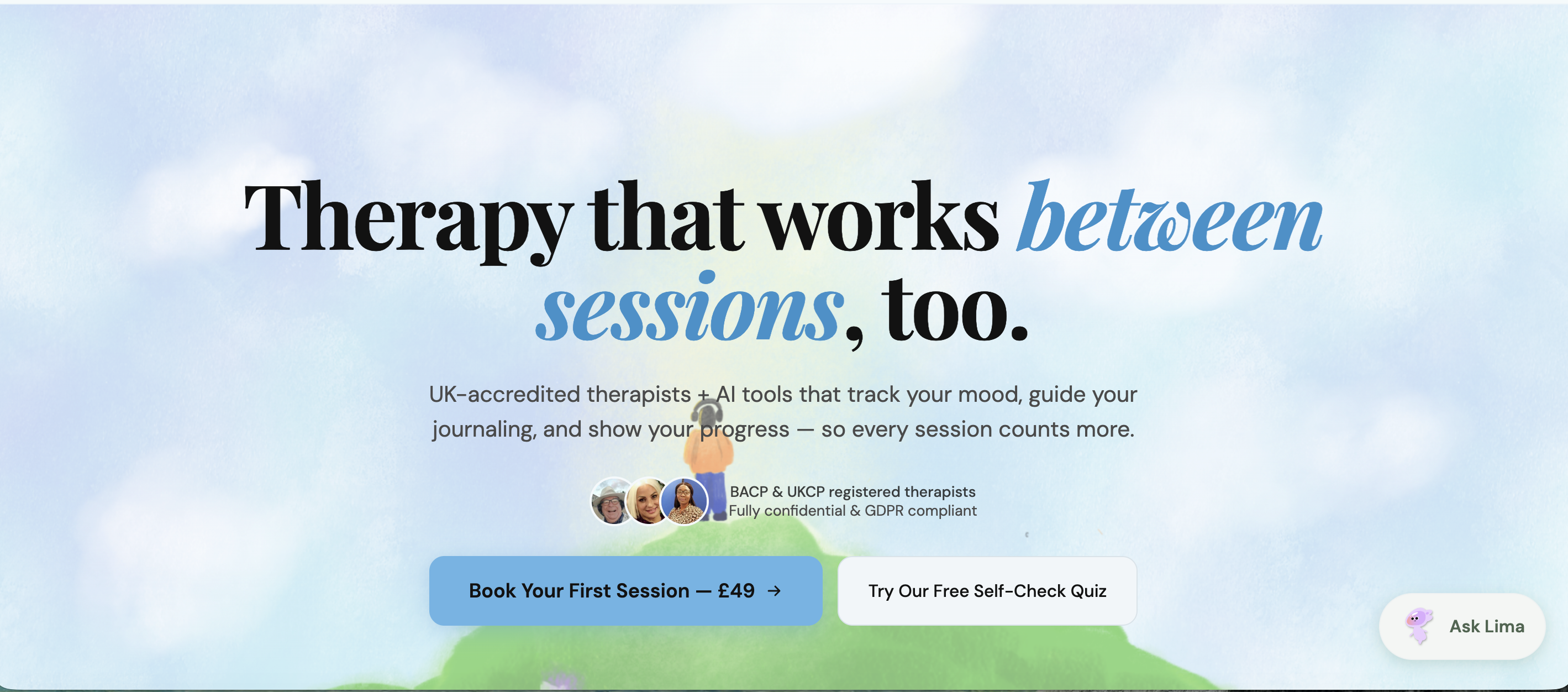
Sessions run as video, chat, or avatar-based therapy, whichever format you'll actually stick with, and you can book evenings or weekends around work or family. Pricing is shown upfront per session with no hidden assessment surprise, you can adjust how often you meet, and switching therapist if the fit isn't right costs nothing extra. AI journaling and mood tracking sit alongside your sessions to support progress between appointments. If budget is the main barrier, avatar therapy starts from £49, one of the lower-cost accredited formats available online in the UK. To get matched with a therapist and see live availability, start therapy here.
Sources
- Cognitive behavioural therapy (CBT) - NHS
- How Much Does Private Therapy Cost in the UK? 2026 Price Guide | TreatCompare
- CBT Therapy Cost in the UK Explained - Private Therapy Clinics
This article is general information, not a substitute for advice from a qualified doctor. Consult a qualified healthcare professional about your own circumstances before acting on anything here.