
TL;DR:
- Confidential online support offers UK adults legal protection for their shared information, similar to in-person therapy. It relies on therapist duty, platform security, and environmental privacy, with strict restrictions on confidentiality disclosures. Enhancing privacy involves both secure platforms and individual measures, ensuring honest, stigma-free dialogue that promotes effective mental health treatment.
Confidential online support is defined as mental health assistance delivered via digital platforms, where your identity and all shared information are protected under the same strict ethical and legal standards that govern in-person therapy. For UK adults managing anxiety, depression, or other mental health challenges, this form of private virtual support removes two of the biggest barriers to seeking help: fear of being seen and fear of being judged. Platforms registered with bodies such as BACP, UKCP, and NCPS are bound by professional codes that make confidentiality a legal duty, not a courtesy. Understanding how that protection works is the first step toward using it with confidence.
How is confidentiality maintained in online mental health support?
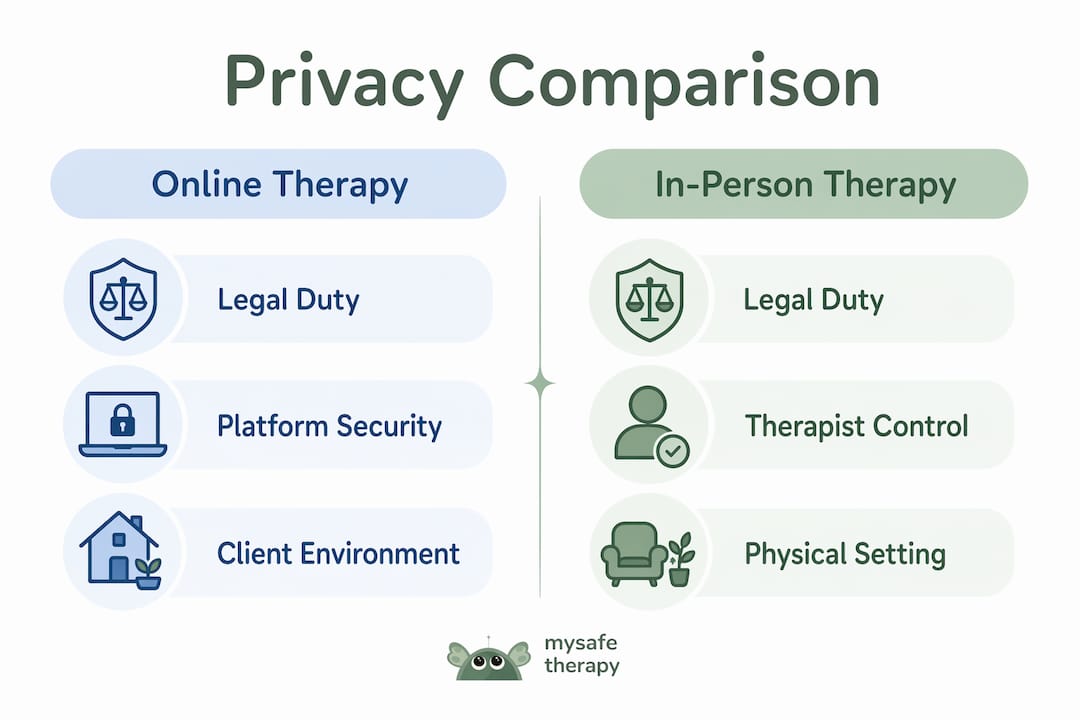
Confidentiality in online therapy rests on three pillars: the therapist's legal obligations, the platform's technical safeguards, and your own environment. All three must hold for privacy to be genuine.
The therapist's duty
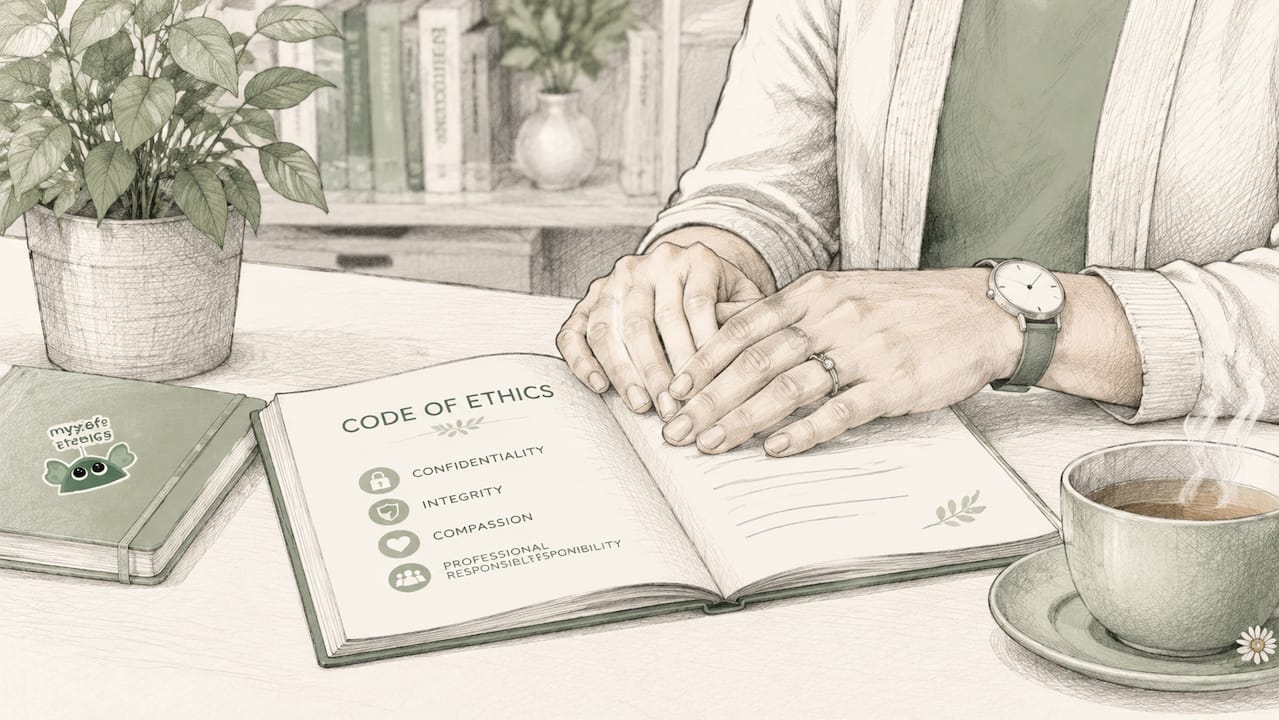
Licensed therapists are legally and ethically required to protect every detail you share, including the fact that you are receiving therapy at all. That protection does not expire when therapy ends. Even confirming or denying to a third party that you are a client constitutes a breach without your written consent. This level of protection is not discretionary. It is written into the professional codes of BACP, UKCP, and NCPS, and violations carry formal disciplinary consequences.
Platform security
Secure online therapy depends on encrypted video platforms and protected data storage. Reputable platforms use end-to-end encryption for video and chat sessions, restrict access to session records, and store notes in systems that comply with UK GDPR and the Data Protection Act 2018. A therapist working through a properly governed platform will also explain what happens if technology fails mid-session, including how any data is handled and what emergency procedures exist. That transparency is a clear marker of professional privacy management.
Key technical safeguards to look for include:
- End-to-end encryption on all video, chat, and voice channels
- UK GDPR-compliant data storage with restricted staff access
- Clear data retention and deletion policies
- Two-factor authentication for therapist and client accounts
- Written procedures for technology failures and data breaches
Your environment matters too
Most clients overlook environmental factors that are just as critical as platform security. A secure app cannot prevent someone in the next room from overhearing your session. Your physical space, your device, and your internet connection all form part of the privacy picture.
Pro Tip: Before your first session, do a sound check. Speak at your normal therapy volume and ask someone outside the room whether they can hear you. If they can, use headphones and find a more private space.
When can a therapist break confidentiality?
Confidentiality is not absolute. Therapists are legally obliged to disclose information in specific, defined circumstances. These exceptions exist to protect you and others, and every reputable therapist will explain them before your first session begins.
The standard exceptions recognised across UK professional bodies are:
- Risk of serious harm to yourself. If a therapist believes you are at imminent risk of suicide or severe self-harm, they are required to act. This may involve contacting emergency services or a named next of kin.
- Risk of harm to another person. If you disclose a credible intention to harm someone else, the therapist has a duty to take protective action.
- Child or vulnerable adult safeguarding. Any disclosure suggesting abuse or neglect of a child or vulnerable adult triggers a mandatory reporting obligation under UK law.
- Court orders. A therapist may be legally compelled to release records if ordered by a court, though this is rare in practice.
- Public interest disclosures. In exceptional cases involving serious crime or public safety, disclosure may be justified.
"Confidentiality guarantees enable non-judgemental conversations, reducing stigma and building the trust that makes therapy effective." — Therapist Confidentiality: Your Privacy Rights Explained
These exceptions are narrow by design. The goal is to preserve the safe space for honest dialogue that makes therapy work for conditions like anxiety and depression, while preventing serious harm. A good therapist will discuss each exception clearly during the informed consent process, so you know exactly where the boundaries are before you share anything sensitive.
Online support vs in-person therapy: how do the privacy protections compare?
The legal and ethical framework governing confidentiality is identical for online and in-person therapy in 2026. Both modalities fall under the same UK GDPR rules, the same professional codes, and the same mandatory disclosure obligations. The differences are practical, not legal.
| Factor | Online Therapy | In-Person Therapy |
|---|---|---|
| Legal confidentiality duty | Identical to in-person | Identical to online |
| Technology risk | Encryption, platform security required | No digital transmission risk |
| Client environment | Client controls privacy of their space | Therapist controls the clinic environment |
| Anonymity options | Higher: avatar, chat, and text formats available | Lower: face-to-face identification required |
| Accessibility | Available evenings, weekends, from home | Limited by location and clinic hours |
| Risk of data breach | Present if platform is poorly secured | Present if physical records are poorly stored |
The most significant practical difference is who controls the environment. In a clinic, the therapist manages the private room. Online, you manage your space. That shift of responsibility is not a weakness of online therapy. It is simply a different distribution of duty. Platforms like Mysafetherapy address this by providing anonymous therapy options such as avatar-based sessions, which add an extra layer of privacy for clients who want it.
Pro Tip: If you are concerned about being recognised by a therapist in your local area, avatar or chat-based therapy removes that risk entirely. You receive the same clinical support without any face-to-face identification.
What steps can you take to protect your privacy during online sessions?
Privacy in online therapy is a collaboration between you and your therapist. The platform provides the secure framework. You provide the secure environment. The following steps cover both sides of that responsibility.
Before your session
- Use a personal device that only you have access to. Shared family computers or work laptops carry significant privacy risks.
- Connect via a private, password-protected Wi-Fi network. Public Wi-Fi can compromise confidentiality even when the platform itself is fully encrypted.
- Choose a room where you cannot be overheard. A locked door and headphones are the minimum standard.
- Review the platform's privacy policy before registering. Look specifically for UK GDPR compliance, data retention periods, and whether sessions are recorded.
During your session
- Close all other applications on your device to reduce the risk of notifications revealing your session to others nearby.
- If someone unexpectedly enters the room, it is entirely acceptable to pause the session. Your therapist will understand.
- Ask your therapist directly about their data handling practices. Specifically, ask about session recording, note storage, and what happens if the connection drops. A professional therapist will answer these questions without hesitation.
After your session
- Log out of the therapy platform fully rather than simply closing the browser tab.
- Delete any session-related emails or notifications from shared devices.
- If you use the platform's journaling or mood tracking tools, check whether those entries are visible to your therapist or stored separately.
Understanding online therapy safety standards in the UK gives you the knowledge to ask the right questions and make informed choices about the platform you use.
Key takeaways
Confidential online support is as legally protected as in-person therapy, provided both the platform and the client's environment meet the required privacy standards.
| Point | Details |
|---|---|
| Confidentiality is a legal duty | Therapists registered with BACP, UKCP, or NCPS are legally bound to protect all client information. |
| Platform security is non-negotiable | End-to-end encryption and UK GDPR compliance are the minimum standards for any reputable online therapy service. |
| Your environment is part of the protection | No platform can guarantee privacy if sessions take place in shared or overheard spaces. |
| Exceptions are narrow and disclosed upfront | Therapists must explain all confidentiality limits before treatment begins, covering harm, safeguarding, and court orders. |
| Online therapy offers greater anonymity | Avatar and chat-based formats provide privacy options that in-person therapy cannot match. |
Why confidentiality is the whole point, not just a feature
At Mysafetherapy, we have seen a consistent pattern: the clients who benefit most from online support are those who felt they could not seek help through traditional routes. Not because they lacked motivation, but because visibility felt too risky. A colleague might recognise them in a waiting room. A family member might answer a callback from a clinic. These are not irrational fears. They are the lived reality of mental health stigma in the UK.
What we have learned is that confidentiality is not simply a compliance requirement. It is the condition that makes honest conversation possible. When clients know that their privacy is protected at every level, including the fact that they are in therapy at all, they speak more openly. They disclose more accurately. And therapy works better as a result.
The part that surprises most people is how much of that protection depends on them. Therapists and platforms can do everything correctly, and a session can still be compromised by a shared laptop or a thin wall. We encourage every client to treat their environment as seriously as they treat their choice of therapist. The two are equally important.
Technology will keep changing. Encryption standards will improve. New formats like avatar therapy will become more widely available. What will not change is the fundamental principle: you have the right to seek help privately, and that right deserves to be actively protected by everyone involved.
— Mysafetherapy
Start your confidential online therapy with Mysafetherapy
Mysafetherapy connects UK adults with therapists accredited by BACP, UKCP, and NCPS, all working through a platform built to UK GDPR standards. Sessions are available via video, chat, and avatar formats, with evening and weekend appointments to fit around your schedule.
Whether you are managing anxiety, depression, or simply need a private space to talk, Mysafetherapy offers confidential online counselling with clear pricing and no waiting lists. For those who want maximum anonymity, avatar-based sessions from £49 remove the need for face-to-face identification entirely. Your first step toward private, professional support is one click away.
FAQ
What does confidential online support mean?
Confidential online support means that all information shared during digital therapy sessions, including your identity and the fact that you are receiving therapy, is protected under strict ethical and legal obligations. Therapists registered with BACP, UKCP, or NCPS are bound by professional codes that make this protection mandatory.
Is online therapy as private as in-person therapy?
The legal and ethical confidentiality standards are identical for both formats in the UK. The practical difference is that online therapy requires the client to manage their own environment, while a clinic controls the physical space.
Can a therapist share what i say in sessions?
A therapist can only break confidentiality in specific circumstances: imminent risk of harm to yourself or others, safeguarding concerns involving children or vulnerable adults, or a court order. All exceptions must be explained to you before therapy begins.
Is online support safe if i use public wi-fi?
Using public Wi-Fi introduces a significant privacy risk even when the therapy platform itself is fully encrypted. Always use a private, password-protected connection for online therapy sessions.
How do i know if an online therapy platform is secure?
Look for UK GDPR compliance, end-to-end encryption on all communication channels, and a clear data retention policy. Ask your therapist directly about how session notes are stored and what happens if the technology fails mid-session.