
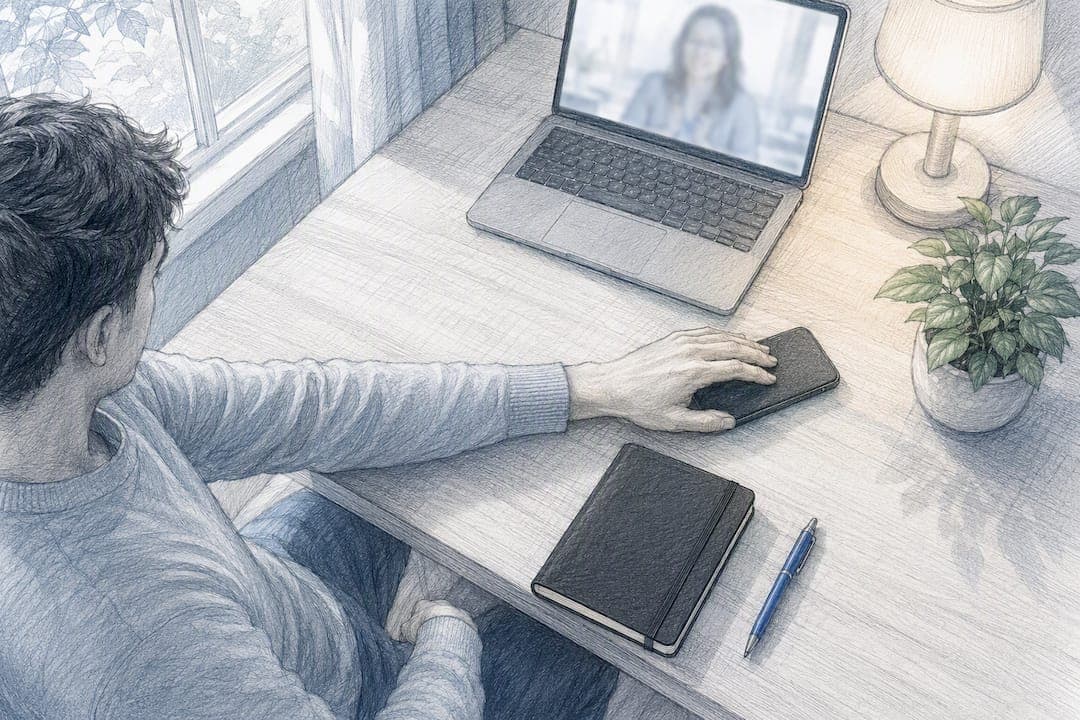
Yes. Structured therapy, usually cognitive behavioural therapy (CBT), helps most people whose digital use is causing real harm, and clinicians measure success by restored control rather than zero screen time. Formal diagnosis, such as gaming disorder under the World Health Organization's ICD-11, only applies to specific patterns of impairment. The practical next step is a brief clinical assessment through the NHS, a self-referral route, or an accredited online therapist.
TL;DR:
- Therapy primarily targets control and harm reduction through CBT, with most sessions structured over several months and involving family when necessary.
- A formal diagnosis like gaming disorder requires impairments lasting at least 12 months, but problematic online behaviors can still be effectively treated based on their impact.
- Signs such as sleep loss, secrecy, withdrawal from offline activities, and deteriorating performance often appear before an official diagnosis is made.
- Self-referral options and online therapy platforms offer accessible, flexible routes to treatment without waiting lists or needing a formal diagnosis.
- Safety considerations include verifying app claims with regulatory marks and prioritizing clinical assessment over self-diagnosis or low-quality tools.
Table of Contents
- What digital addiction therapy actually treats
- Signs of digital addiction and who is most at risk
- What happens during a clinical assessment
- Evidence-based treatments for digital addiction
- The NHS pathway for gaming disorder
- Choosing digital wellbeing apps and tools safely
- How to choose a therapist and prepare for your first session
- Mysafetherapy's view on accessible support for problematic digital use
- Ready to talk to someone about your digital habits?
- Sources
- FAQ
What digital addiction therapy actually treats
Heavy use and diagnosable disorder are not the same thing, and conflating them is where most self-diagnosis goes wrong. The World Health Organization's ICD-11 recognises gaming disorder specifically, defined by impaired control over gaming, giving it priority over other life interests, and continuing despite negative consequences, usually evident for at least 12 months. High screen time on its own does not meet that bar.
Most other problematic online behaviour, compulsive scrolling, shopping, pornography use, or general internet overuse, is not coded as a single named disorder in ICD-11. Clinicians still assess and treat it, but they do so by function and harm rather than by matching it to a checklist. That distinction matters for anyone searching for "digital addiction therapy": the treatment exists and works, even where the label does not.
You will encounter several overlapping terms while researching this, and it helps to know what each implies clinically:
- Gaming disorder: the only ICD-11-recognised diagnosis in this space, requiring sustained impaired control and functional harm.
- Problematic internet use: a broader, informal clinical description covering compulsive browsing, social media, or shopping that disrupts daily life.
- Compulsive social media use: typically assessed as a behavioural pattern linked to mood regulation, not a standalone diagnosis.
Whatever the label, the Royal College of Psychiatrists treats this as a heterogeneous clinical area, meaning the right treatment depends on the individual formulation, not the terminology.
Signs of digital addiction and who is most at risk
Clinicians look for three core markers, borrowed directly from the ICD-11 framework: loss of control (repeatedly failing to cut down despite intending to), priority (online activity displacing work, relationships, or sleep), and continuation despite harm (carrying on even as consequences mount). These show up in ordinary ways: cancelling plans to keep gaming, checking a phone the moment anxiety spikes, or lying about time spent online.
Behavioural and functional signals often appear before someone would call it an addiction:
- Sleep loss from late-night use, followed by daytime fatigue that affects work or study.
- Secrecy about how much time is spent online, or defensiveness when asked.
- Withdrawal from offline hobbies, friendships, or exercise that used to matter.
- Falling performance at work or school tied directly to online activity.
Risk is not evenly distributed. Younger people, particularly adolescents, feature heavily in NHS referral data. So do people with ADHD, depression, chronic loneliness, or a personal history of other addictive behaviours. The UK Chief Medical Officers' review is careful to note that screen time correlates with poorer mental health without proving it causes it, which is precisely why assessment has to look past the hours logged and ask what the behaviour is doing for the person underneath it.
What happens during a clinical assessment
A proper assessment for digital addiction therapy is not an hours-per-day interrogation. It is closer to a structured conversation about triggers, emotional patterns, daily routines, what the online activity actually does for the person, and how it is affecting relationships and goals.
- Mapping triggers and routines. The clinician asks when and why the behaviour escalates, often tied to stress, boredom, or social anxiety.
- Understanding function. Is gaming an escape from a difficult home life? Is scrolling filling a gap left by social isolation? This shapes everything that follows.
- Building a formulation. The clinician pulls the picture together into a working explanation that determines whether CBT alone will help, or whether family involvement or specialist referral is needed.
- Screening for risk. This includes checking for self-harm, suicidal thoughts, or signs of exploitation linked to online contact.
Pro Tip: If self-harm, suicidal thoughts, or grooming or exploitation risk come up during any conversation about digital use, treat that as urgent. Contact a GP, NHS 111, or emergency services immediately rather than waiting for a scheduled assessment.
The point of this depth is that two people with identical screen time can need entirely different treatment plans. One might need stimulus control and better sleep hygiene; another might need trauma-informed therapy because the online behaviour is masking something else entirely.
Evidence-based treatments for digital addiction
CBT is the most consistently supported treatment. A systematic review of psychosocial interventions for technological addictions found CBT to be commonly used and beneficial, often improving co-occurring depression and anxiety symptoms alongside the primary behaviour. Core techniques include cognitive restructuring (challenging the thoughts that justify excessive use), stimulus control (reducing exposure to triggers), and relapse prevention planning. The NHS's specialist programme structures this into roughly eight CBT-based sessions following an initial preparation phase.

Family involvement is not an optional extra for many cases, especially with younger people. Where a young person's gaming or internet use is disrupting the household, structured family workshops teach parents de-escalation, boundary-setting, and communication skills, rather than leaving them to manage conflict alone. Family therapy sessions often run alongside individual work rather than replacing it.
Group programmes and motivational approaches suit people who benefit from shared experience or need help building the initial motivation to change. Where anxiety, depression, or ADHD sit alongside the digital behaviour, psychiatric input or medication review may run in parallel with talking therapy, since treating only the surface behaviour rarely holds if the underlying condition goes unaddressed.
Realistic expectations matter here. Treatment aims for greater control and balance, not necessarily complete abstinence, particularly for behaviours like gaming or social media use that most people continue at a manageable level after treatment. That framing, control rather than elimination, is central to how the NHS specialist pathway is designed.
The NHS pathway for gaming disorder
England's National Centre for Gaming Disorders, run through CNWL, follows a two-phase model. Phase one focuses on preparation for change, building motivation and understanding what the gaming is actually doing for the person, before any behaviour change work begins. Phase two moves into CBT-based sessions targeting values, goals, and concrete behaviour change.
Starting with motivation rather than jumping straight to an abstinence plan matters more than it sounds. If gaming is functioning as an escape from distress, demanding immediate abstinence without addressing that distress tends to fail, or simply shifts the escape elsewhere.
Access routes are broader than many expect:
- Self-referral is accepted directly, without needing a GP letter first.
- Family referrals are accepted, useful when a parent or partner is the one raising the concern.
- Professional referrals come through GPs, schools, or other services.
NHS England reported 745 referrals to the clinic between October 2019 and March 2023, delivered mainly online across England, which makes it accessible regardless of where in the country someone lives. Treatment length varies by individual, but the phase-based structure means most people move through preparation and CBT sessions over a period of months rather than weeks, with parent support groups running alongside for families who need it.
Choosing digital wellbeing apps and tools safely
Plenty of apps promise to fix screen addiction, and the MHRA's guidance draws a line that is worth understanding before downloading one. A simple mood tracker or journalling app is not the same thing, regulatorily, as an app claiming to diagnose or treat a mental health condition. If a product makes the latter claim, it should carry a CE or UKCA mark, or MHRA registration, showing it has met device-level standards.
Before trusting any app with something as personal as your digital habits, check a few things:
- Does it cite any clinical evaluation, or just testimonials and star ratings?
- How is your data stored, and is that spelled out clearly?
- Is it appropriate for the age of the person using it?
- Is there a way to report a problem, such as through the Yellow Card scheme for adverse effects?
Pro Tip: Treat mood tracking and journalling apps as a supplement between sessions, never a substitute for clinical assessment. They're useful for spotting patterns a therapist can then work with, not for replacing the formulation a clinician builds.
How to choose a therapist and prepare for your first session
Credentials are not a formality here, they are the difference between structured, safe treatment and someone winging it. In the UK, look for registration with BACP, UKCP, or NCPS. These bodies require accredited training, ongoing supervision, and adherence to an ethical framework, which matters when you are discussing something as personal as compulsive online behaviour.
Before booking, it is worth asking a short set of practical questions:
- What therapy model do they use, and is it CBT-based or something else more suited to your situation?
- How frequently are sessions, and is there a waiting list?
- What online formats are available, video, chat, or another option, and does that suit your comfort level?
- How is confidentiality handled, and what does the service cost per session?
For gaming disorder specifically, the NHS specialist pathway is worth pursuing first, since it is built around that exact diagnosis and includes structured family support. For broader problematic internet use, anxiety-linked scrolling, or where NHS waiting times are a barrier, private or accredited online therapy fills a real gap. Family members do not need to wait for the person struggling to seek help either; they can pursue self-referral routes or independent support in their own right.
Mysafetherapy's view on accessible support for problematic digital use
Waiting lists shouldn't be the reason someone's digital use gets worse before it gets better. Mysafetherapy matches people with UK-accredited therapists, registered with BACP, UKCP, or NCPS, across video, chat, and avatar-based formats, which matters for anyone who finds the idea of a video call about their phone habits too exposing to start with.
AI journalling and mood tracking tools can sit alongside live therapy sessions, offering people a way to notice patterns between appointments. This approach may help those bridging the gap while waiting for a specialist NHS place, or whose digital use does not meet a formal diagnostic threshold but still needs addressing. Our addiction support pages outline how that structure works in practice.
— MySafeTherapy
Ready to talk to someone about your digital habits?
If you are in crisis, dealing with thoughts of self-harm, or worried about a child's immediate safety online, contact your GP, NHS 111, or emergency services before considering any private option. For some cases, accredited online therapy platforms offer a faster route into therapy with no waitlist and no requirement to meet a formal diagnosis first.
Sessions start from £50 as a one-off booking, with no ongoing contract forcing your hand, and you can switch therapists if the first match is not right. It is advisable to check a therapist's registration with professional bodies such as BACP, UKCP, or NCPS before booking, as with any private therapist. Your first session focuses on understanding what your digital use is doing for you, the same formulation-first approach NHS services use, before agreeing a plan together. Between sessions, the platform's mood tracking and journalling tools help you notice patterns worth raising next time. If chat feels more comfortable than video to start with, chat therapy is available from the same price point. Start therapy today and get matched with a therapist this week, not next month.
This article is general information, not a substitute for advice from a qualified doctor. Consult a qualified healthcare professional about your own circumstances before acting on anything here.
Sources
- WHO — Gaming disorder (frequently asked questions)
- National Centre for Gaming Disorders — treatment details (CNWL)
- NHS England — NHS treats hundreds with gaming disorders
- Gov
- Psychosocial interventions for technological addictions (PMC)
FAQ
How is digital addiction treated?
The main first-line treatment is CBT, which helps identify triggers, restructure the thoughts driving compulsive use, and build relapse prevention skills. The NHS specialist pathway structures this into a preparation phase followed by around eight CBT-based sessions, often with family involvement.
What are the signs of technology addiction?
The core clinical signs are loss of control over use, giving it priority over other responsibilities, and continuing despite clear harm to sleep, work, or relationships. Sleep loss, secrecy about time spent online, and withdrawal from offline activities are common accompanying signals.
How can I reduce my screen time if it feels compulsive?
Stimulus control techniques, reducing exposure to triggers and rebuilding offline routines, work better than willpower alone for most people. Where use feels genuinely out of control, a brief assessment with a therapist or the NHS gaming disorder service helps identify what the behaviour is actually doing for you before building a plan.
What counts as digital addiction versus just heavy use?
Formal diagnosis under ICD-11 currently exists only for gaming disorder, requiring impaired control, priority over other activities, and continued use despite harm for at least 12 months. Other problematic online behaviour is assessed by the harm and impairment it causes, not by hours logged.
Can I get digital addiction therapy without an NHS referral?
Yes. Self-referral to the NHS gaming disorder pathway is accepted directly, and accredited online therapists offer an alternative route without needing a diagnosis first. Mysafetherapy sessions start from £50 and can begin without a waiting list.