
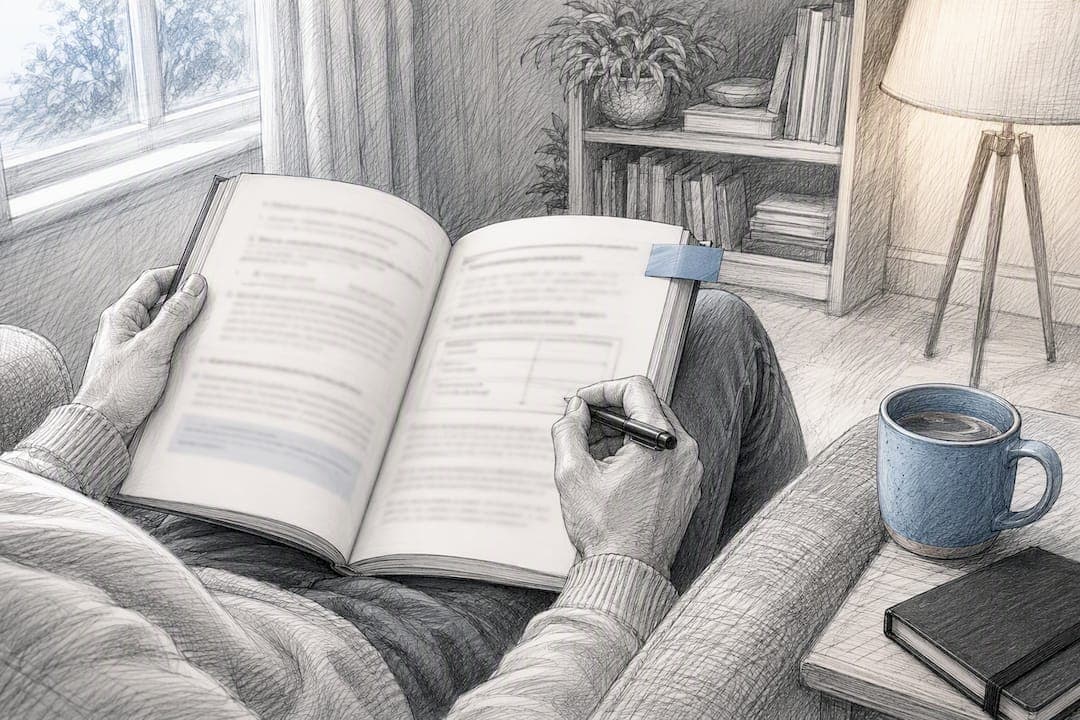
Guided self-help CBT is a structured, low-intensity therapy for mild to moderate anxiety, depression, panic, or phobia, combining CBT workbooks or digital programmes with brief support from a trained practitioner. It suits people who are motivated to complete tasks between short sessions rather than needing intensive, weekly face-to-face therapy. If your symptoms are severe or you feel at risk, contact your GP or self-refer to talking therapies for a fuller assessment first.
TL;DR:
- Guided self-help CBT mainly benefits those with mild to moderate anxiety and depression willing to practice techniques independently between sessions.
- The therapy involves short, structured sessions of up to 30 minutes focusing on outcome measures, reviewing tasks, and introducing specific skills.
- In-person or online programmes with high task completion rates show similar outcomes to face-to-face therapy for mild cases, with about half of patients recovering or reducing symptoms significantly.
- Success relies heavily on guide fidelity and consistent in-between task completion, with dropout rates increasing if protocols are not followed precisely.
- It is unsuitable for severe symptoms, active suicidality, or complex conditions, which require higher-intensity or specialist care from the start.
Table of Contents
- What is guided self-help CBT and how does it fit into care?
- Who suits guided self-help, and when should you choose something else?
- What happens in a guided self-help session?
- Core CBT techniques and the tasks that actually create change
- Does guided self-help actually work? What the evidence shows
- How do you access guided self-help CBT?
- How MySafeTherapy fits the guided self-help model
- When guided self-help earns its place, and when it does not
- Start guided self-help CBT with flexible, therapist-led support
- Sources
- FAQ
What is guided self-help CBT and how does it fit into care?
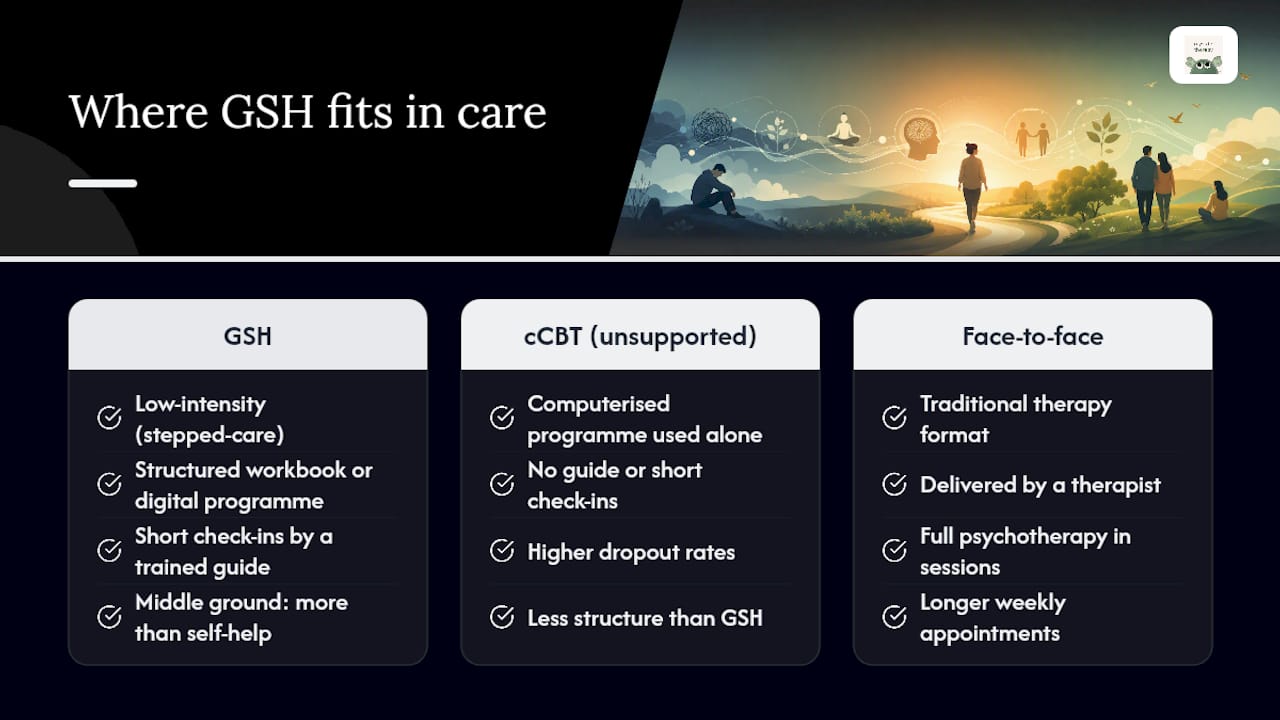
Guided self-help (GSH) sits in the "low-intensity" tier of the stepped-care model the NHS uses for common mental health problems. Rather than open-ended talk therapy, it pairs a structured CBT workbook or digital programme with short check-ins from a trained guide.
That guide is not delivering full psychotherapy. Their job is to keep you on track, explain techniques clearly, and troubleshoot when a task feels too hard. This differs from computerised CBT (cCBT) used without support, which has higher dropout rates, and from traditional face-to-face CBT, which runs longer sessions and covers more ground per appointment. GSH occupies the middle ground: more structure than a self-help book, less time commitment than weekly therapy.
Who suits guided self-help, and when should you choose something else?
GSH works best for mild to moderate anxiety, depression, panic, or specific phobias, particularly when you are willing to practise techniques independently between appointments and explore supplementary strategies like animal therapy benefits for mental health and healing. It assumes a degree of motivation and reading comprehension that pure crisis support does not.
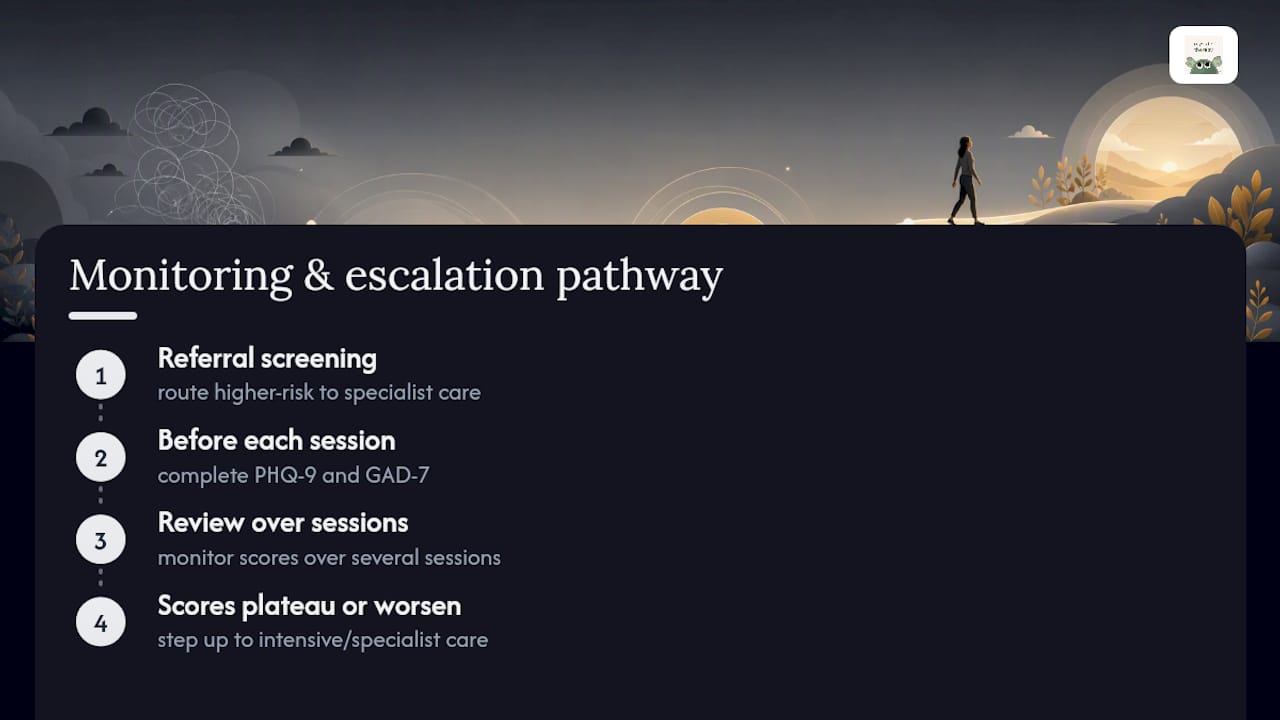
It is not the right route if you are experiencing severe symptoms, active suicidal risk, psychosis, or complex, overlapping conditions that need coordinated specialist input. Services typically screen for this at referral, and route higher-risk presentations straight to higher-intensity or specialist care instead.
Once you are in treatment, progress is not just a feeling. Practitioners use validated questionnaires, the PHQ-9 for depression and the GAD-7 for anxiety, completed before each session. If scores plateau or worsen over a few sessions, that is the trigger to step up to a more intensive intervention rather than persist with a model that is not shifting things.
What happens in a guided self-help session?
Guided self-help sessions are short by design. Sessions typically last up to 30 minutes, which forces a tight agenda rather than open-ended conversation. A typical structure looks like this:
- Outcome measures first. You complete the PHQ-9 or GAD-7 shortly before the session, giving the guide a snapshot before you even speak.
- Review the previous task. What did you try, what worked, what got in the way?
- Introduce or refine one technique. The guide teaches or adjusts a specific skill, such as a thought record or an activity schedule.
- Set the next task and a concrete goal. You leave with something specific to attempt before the following session.
A common delivery pattern is a small number of sessions, sometimes structured as two closely spaced early sessions followed by a later review appointment to check the gains have held. Courses often run over several weeks and can be delivered by phone, video call, or through structured online modules, which suits people juggling work or caring responsibilities.
Core CBT techniques and the tasks that actually create change
The techniques themselves are not exotic. What makes GSH effective is applying them consistently between sessions, not just discussing them for half an hour.
- Behavioural activation: scheduling small, achievable activities to counter the withdrawal that depression drives.
- Cognitive restructuring: catching an automatic negative thought, checking the evidence for and against it, then framing a more balanced alternative.
- Graded exposure: approaching a feared situation in manageable steps rather than avoiding it entirely, which usually maintains phobia and panic long-term.
- Structured problem solving: breaking an overwhelming issue into defined steps with a realistic action plan.
Guides consistently report that completing in-between tasks is the single strongest predictor of whether GSH works. If you find the word "homework" off-putting, that is worth reframing.
Pro Tip: Treat each task as a small experiment, not a test you can pass or fail. A thought record that reveals your prediction was wrong is just as useful as one that confirms a fear was overblown, both give the guide real data to work with.
Does guided self-help actually work? What the evidence shows
The evidence base is stronger than many assume for a "low-intensity" intervention. A systematic review comparing guided self-help with face-to-face therapy found no significant difference in clinical outcomes or dropout rates for mild to moderate depression and anxiety, provided guidance was included.
A randomised controlled trial of guided self-help CBT for depression found significantly greater reductions in depressive symptoms than treatment as usual, with more participants reaching recovery by four months. Real-world service data backs this up: one primary care evaluation recorded roughly a 51% reduction in depression scores and a 49% reduction in anxiety scores over a course of treatment.
None of this means GSH suits everyone. Outcomes depend heavily on task completion, and dropout tends to rise when guides drift from the structured protocol instead of following it with fidelity. The guidance element is not a formality, it is what the evidence is actually measuring.
How do you access guided self-help CBT?
In the UK, the standard entry point is self-referral to your local NHS talking therapies service, or a referral from your GP if you would rather discuss it with someone first. Waiting lists vary by area, which is part of why private and online options have grown.
If you are considering a private or online provider instead, check for a few things before committing:
- Therapists or guides registered with a recognised body such as BACP, UKCP, or NCPS.
- Routine use of outcome measures like PHQ-9 or GAD-7, not just a general "check-in".
- Clear session length and structure, so you know what a 30-minute appointment will actually cover.
At assessment, expect to be asked about symptom duration, current risk, and what you hope to achieve, questions that help decide whether GSH is the right starting point or whether you need something more intensive from the outset.
How MySafeTherapy fits the guided self-help model
Mysafetherapy's structure mirrors several features of the GSH model: short, focused therapist-led sessions, self-help tools including AI journaling and mood tracking between appointments, and progress reports that function like routine outcome monitoring. Therapists are UK-accredited, matched to your needs, and available across video, chat, and avatar-based formats. Compare that structure against your local NHS service or a private clinic before deciding what fits your schedule and budget.
When guided self-help earns its place, and when it does not
Guided self-help is efficient precisely because it does not try to be everything. For someone with mild to moderate anxiety or depression who can carve out small pockets of practice each week, it can produce real, measurable change without months of waiting or a heavy weekly commitment.
But it is a tool with limits, and a good service treats stepping up to more intensive support as a planned safety feature, not a failure. If your scores are not moving, say so.
— MySafeTherapy
Start guided self-help CBT with flexible, therapist-led support
Mysafetherapy gives you short, structured sessions with a UK-accredited therapist alongside self-help tools you use between appointments, without the waiting lists that often come with local services. Chat therapy, video sessions, and avatar-based formats all start from £50 per session, and if you want ongoing self-help support alone, the Self-Help subscription runs £14.99 a month.
You can switch therapists freely if the fit isn't right, book evenings or weekends, and see full pricing across all session tiers before committing to anything. If anxiety or low mood is the main issue, the anxiety therapy page outlines formats in more detail. The next step is simple: check the pricing page and book an initial assessment.
This article is general information, not a substitute for advice from a qualified doctor. Consult a qualified healthcare professional about your own circumstances before acting on anything here.
Sources
- Guided self help - City & Hackney NHS Talking Therapies
- Systematic review on guided self‑help vs face‑to‑face (PubMed)
FAQ
Can I do CBT by myself, without a therapist?
You can use self-help CBT materials unguided, but evidence suggests unguided programmes have higher dropout rates than guided self-help, where brief practitioner support keeps you accountable and helps troubleshoot stuck points.
What are the 5 steps of CBT?
Definitions vary between programmes, but most guided self-help follows a similar cycle: identify the problem, set a specific goal, learn a technique such as cognitive restructuring or exposure, practise it as a task between sessions, and review progress against outcome measures like the PHQ-9 or GAD-7.
What are some self-help CBT techniques I can try?
Behavioural activation, thought records for cognitive restructuring, graded exposure for feared situations, and structured problem solving are the core techniques used in most guided self-help programmes.
How long does a course of guided self-help CBT usually last?
Sessions typically run up to 30 minutes each, often over a handful of appointments across several weeks, with delivery by phone, video, or online modules depending on the service.
Can Mysafetherapy provide guided self-help style support?
Yes. Mysafetherapy combines short, therapist-led sessions with self-help tools such as journaling and mood tracking, and pricing for sessions and the Self-Help subscription is published on its site.