

Therapy as an employee benefit reduces absenteeism and presenteeism, supports staff retention and typically returns around £4.70 for every £1 invested, against an estimated very large annual cost of poor mental health to UK employers. Employers also carry a legal duty of care under the Health and Safety at Work etc. Act 1974, and must consider reasonable workplace accommodation under the Equality Act 2010 where a mental health condition meets the disability threshold.
The first practical step is not choosing a provider. It's running a short internal audit.
- Check current absence and turnover data against sector benchmarks.
- Ask staff (anonymously) whether they know what support already exists.
- Confirm whether any current provision meets HSE Management Standards for work-related stress.
Pro Tip: Before you approach any provider, pull twelve months of sickness-absence data by team. It tells you where to target support before you spend a penny.
Key Takeaways
Employee therapy benefits work when legal duty, clinical accreditation and active promotion are treated as one connected system, not three separate boxes to tick.
| Point | Details |
|---|---|
| Legal duty is non-negotiable | Employers must meet duty of care under the 1974 Act and consider adjustments under the Equality Act 2010. |
| ROI is well documented | Deloitte reports an average return near £4.70 per £1 spent, against £51 billion in annual costs. |
| Delivery mix matters | CIPD data shows counselling, phased returns and EAPs are the three most common measures UK employers use. |
| Promotion drives uptake | A strong platform fails if staff don't know it exists, so manager training and internal comms are essential. |
| MySafeTherapy fits phased rollouts | Accredited therapists, flexible formats and pilot-friendly contracts suit employers testing before scaling. |
Table of Contents
- Employee therapy benefits UK employers can expect from delivery partners
- What MySafeTherapy offers employers building this benefit
- Authoritative UK resources to read next
- Frequently asked questions
- Sources
Employee therapy benefits UK employers can expect from delivery partners
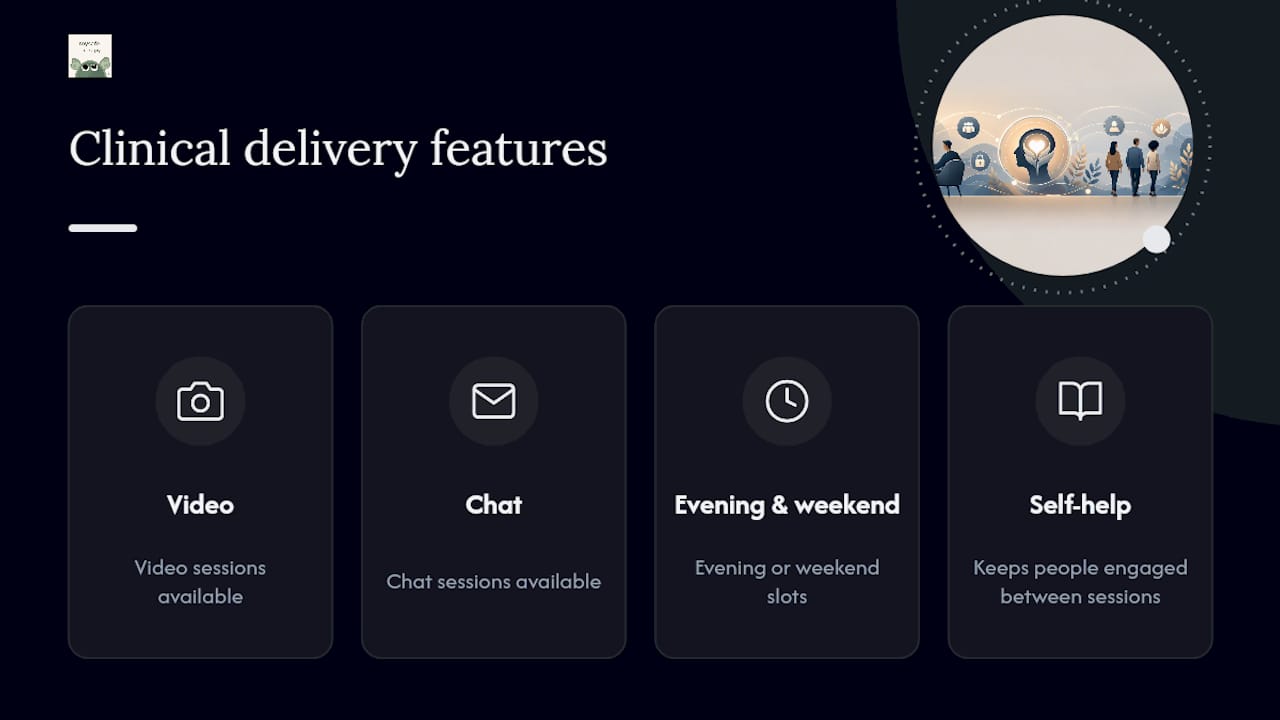
I've watched enough employer rollouts to know the ones that work share a pattern: HR sets the policy, a clinical partner delivers it, and nobody tries to do the other's job. Reputable providers offer video, chat and evening or weekend slots so shift workers and parents aren't locked out, alongside self-help tools that keep people engaged between sessions. Every therapist should carry accreditation from BACP, UKCP or NCPS, which is non-negotiable for quality assurance.
Occupational Health input matters more than most HR teams expect. A phased return after a mental health absence goes far more smoothly when OH signs off the pace of adjustments rather than HR guessing, a point SOM's research on OH and HR collaboration makes clearly. On confidentiality: clinical notes stay with the therapist, HR sees only what's needed to manage adjustments, and that boundary is what makes staff trust the benefit enough to use it.

What MySafeTherapy offers employers building this benefit
MySafeTherapy matches employees with UK-accredited therapists (BACP, UKCP, NCPS) across video, chat and avatar-based sessions, which suits staff who want support but aren't ready to appear on camera.
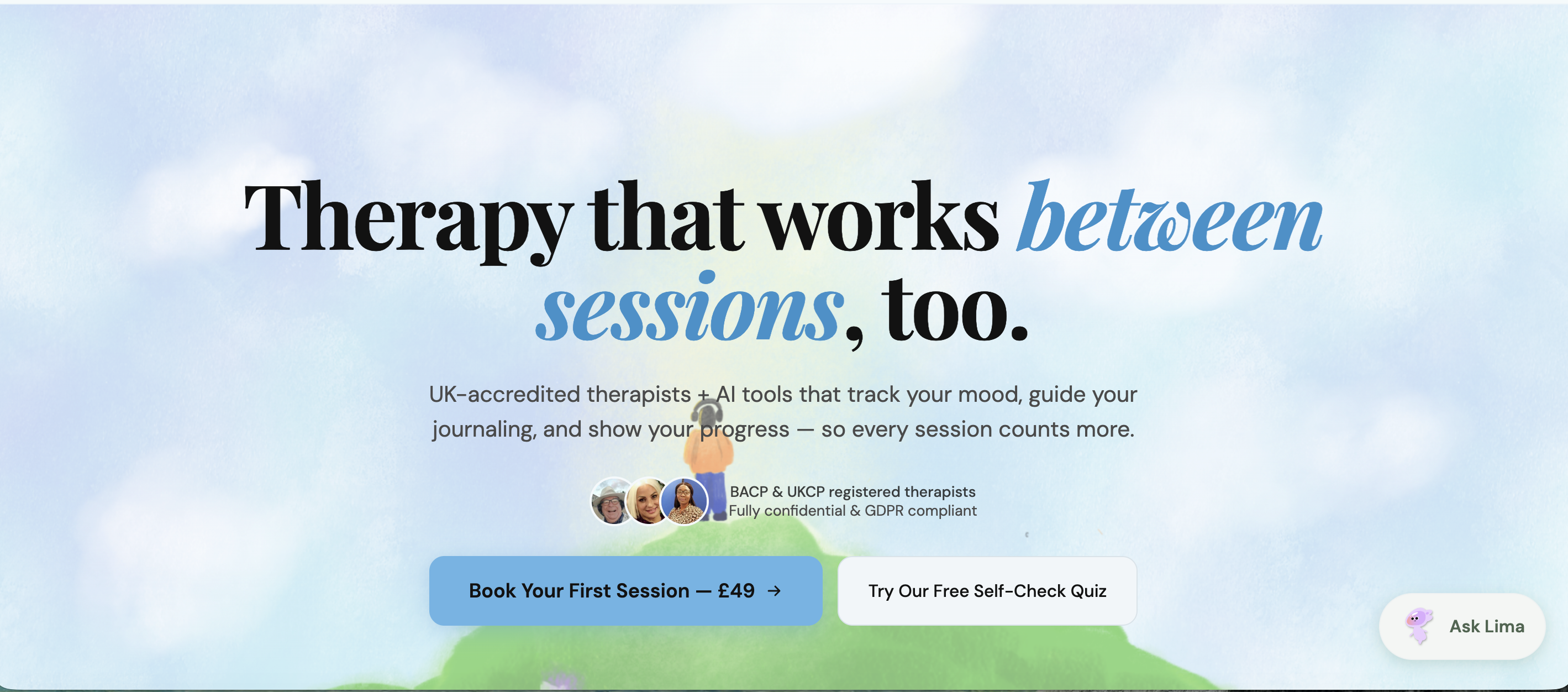
Scheduling covers evenings and weekends, so shift workers, part-time staff and remote employees get the same access as anyone in a nine-to-five role. AI-guided journaling and mood tracking sit alongside live sessions, giving employees continuity between appointments rather than a six-week gap. For a phased return after long-term absence, that continuity often makes the difference between a smooth reintegration and a repeat absence.
Pricing is transparent and contracts can flex around a pilot with one team before wider rollout, which suits HR teams who need to show impact before committing budget. If you're ready to explore a pilot or procurement call, book a session or start the process here to see how it fits your workforce.
Authoritative UK resources to read next
Follow up with HSE's guidance on stress risk assessments, ACAS on supporting mental health at work, NICE's workplace recommendations on CBT and NHS IAPT signposting, and CIPD's 2025 survey on employer provision. BACP and UKCP accreditation registers confirm therapist quality; involve occupational health early for complex cases.
Frequently asked questions
Do UK employers have to offer therapy as a benefit? There's no direct legal requirement to fund therapy, but the duty of care under the 1974 Act and reasonable adjustment obligations under the Equality Act 2010 mean employers must act when work is contributing to mental ill health.
How much does an employee therapy benefit typically cost? Costs vary by headcount, session volume and provider model. PLOS Mental Health's economic modelling shows even low-cost interventions can produce net savings once reduced absence and turnover are factored in.
What's the difference between an EAP and therapy sessions? An EAP typically offers short-term counselling and advice lines, while a dedicated therapy platform provides ongoing, accredited one-to-one sessions matched to specific conditions.
Do part-time or remote staff qualify for the same access? They should. Eligibility criteria that exclude part-time, remote or contract staff risk both poor uptake and potential discrimination claims under the Equality Act.
This article is general information, not a substitute for advice from a qualified doctor. Consult a qualified healthcare professional about your own circumstances before acting on anything here.
Sources
- Mental health conditions, work and the workplace - HSE
- Health and wellbeing at work 2025 - CIPD
- Economic modelling of workplace mental wellbeing interventions - PLOS Mental Health
- Poor mental health costs UK employers £51 billion a year for employees | Deloitte UK