
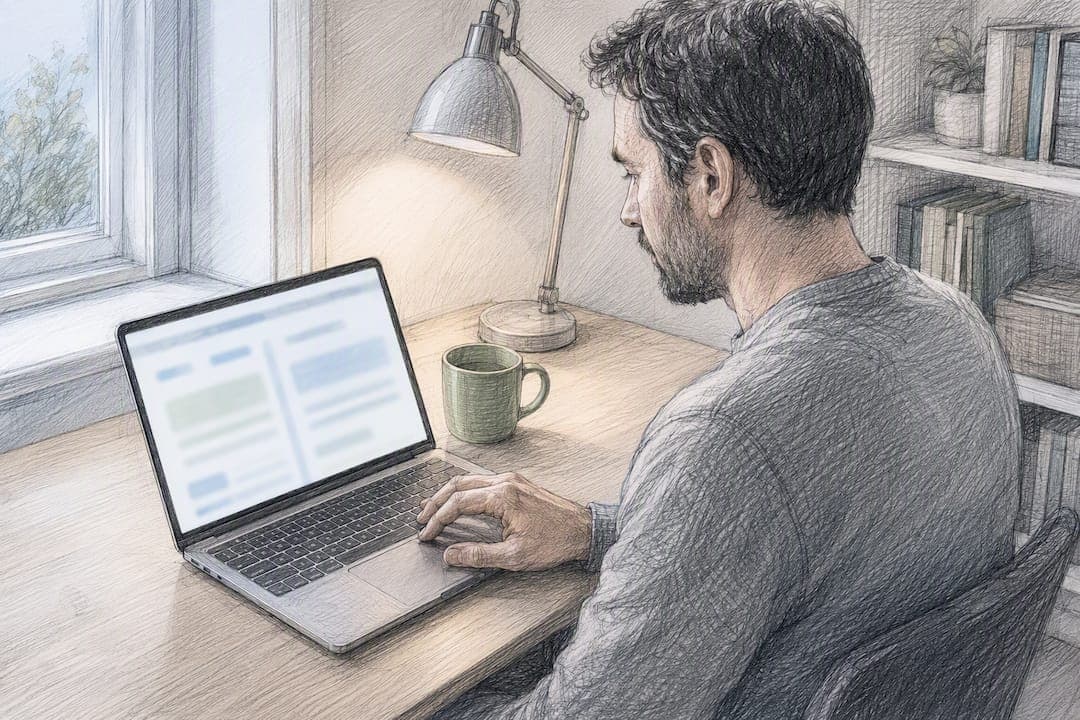
Adults in England can usually access NHS talking therapies online without waiting for a GP appointment. The quickest step is to use the NHS psychological therapies service finder and self-refer directly. Eligibility generally starts at 18, with some local services accepting referrals from 16.
TL;DR:
- Most NHS talking therapies for anxiety and depression are accessible online through self-referral, often cutting waiting times by skipping GP appointments.
- Therapy formats include telephone, video, messaging, or online modules, with digital tools vetted for safety and effectiveness before use.
- Practical steps involve using the NHS services finder to locate local support, completing an online form, and preparing for an assessment that varies in duration and focus.
- Waiting times and service availability differ by postcode, so alternative providers or private options can be considered if NHS wait times are too long.
- Eligibility primarily starts at age 18, but some areas accept referrals from 16 and 17 year olds, and the process can be influenced by local service capacity.
Table of Contents
- What NHS talking therapies online cover
- How to get NHS talking therapies online
- What digital delivery options are available?
- How does the NHS assure quality and safety online?
- What happens in your first online session and beyond?
- Finding your local service and getting help fast
- When private online therapy fits alongside NHS care
- Where to check the official guidance
- Our view on accessing NHS talking therapies digitally
- Sources
What NHS talking therapies online cover
NHS Talking Therapies services treat a defined range of common mental health conditions rather than every psychological difficulty. You don't usually need a formal diagnosis to be referred; describing your symptoms is enough for a service to assess whether talking therapy is the right fit.
Services typically cover:
- Anxiety, generalised worry, and panic
- Depression, including low mood and loss of motivation
- Obsessive compulsive disorder (OCD)
- Post-traumatic stress disorder (PTSD)
- Specific phobias and social anxiety
- Postnatal depression and related perinatal difficulties
NHS Talking Therapies for anxiety and depression delivers NICE-recommended psychological interventions matched to your specific problem, whether that's cognitive behavioural therapy for panic attacks or guided self-help for low-level depression. Eligibility sits at 18 and over in most of England, though some areas extend self-referral to 16 and 17 year olds, so it's worth checking your local service rather than assuming a national rule applies everywhere.
How to get NHS talking therapies online
You have two routes in: self-referral or a GP referral. Most people now go straight to self-referral because it's faster and cuts out the GP appointment altogether.
- Find your local service. Use the NHS talking therapies finder and enter your GP surgery name or postcode. This matches you to the service covering your area.
- Complete the online form. You'll be asked about your mood, sleep, daily functioning, and what's troubling you. Contact preferences (phone or email) are also collected so the service can reach you.
- Wait for contact. A practitioner or administrator usually calls or emails within a few working days to arrange an initial assessment.
- Ask your GP instead if you'd rather. A GP referral suits people who want a clinician's input first, who have complex physical and mental health needs, or who aren't confident filling in an online form alone. GPs can also flag urgency.
- Attend your assessment. This is where waiting times, format options, and next steps get discussed directly with you.
Self-referral and GP referral both feed into the same local service. Neither route is inherently faster everywhere, though self-referral typically shaves days off the process because it skips the GP booking queue.
Pro Tip: Have your GP surgery name ready before you start the self-referral form. Some services use it to check which local team is responsible for your care, and typing the wrong one can delay first contact.
What digital delivery options are available?
NHS Talking Therapies doesn't mean one fixed format. Sessions are delivered by telephone, video call, secure messaging, or through structured online programmes supported by a practitioner, so the format can flex around what suits you and what your local service offers.
- Telephone sessions work well if you're short on private space for video or prefer not to be on camera.
- Video calls run through secure platforms, often Microsoft Teams, and feel closest to face-to-face therapy.
- Secure messaging suits people who process thoughts better in writing or need flexible timing around work.
- Digitally enabled therapies (DETs) are structured online programmes where you complete guided modules independently, with a therapist reviewing your progress and checking in periodically.
DETs differ from generic self-help apps because a named practitioner is tracking your work, not just an algorithm. NHS-backed research into online therapy programmes notes that this model can shorten waits and widen access precisely because much of the work happens independently between practitioner check-ins.
Practically, you'll need a stable internet connection and a private space for video or phone work. If you have accessibility needs, mention this at assessment. You can also request a specific delivery mode. NHS England's equalities strategy confirms patients have a right to express a provider or format preference, so don't assume you're stuck with whatever's offered first.
How does the NHS assure quality and safety online?
Digital therapy within the NHS isn't a free-for-all of apps and chatbots. Every digitally enabled therapy product used in the service has to pass through DET assessment criteria, which check clinical content, evidence of effectiveness, and safety before a product ever reaches patients. These criteria were reviewed and tightened in 2024, so the bar for a DET tool has risen, not fallen.
Three safeguards worth knowing about include the use of standardised questionnaires and care workflows to monitor patient progress digitally:
- DET assessment and clinical assurance — digital programmes are vetted before deployment, not left to prove themselves on patients.
- Routine outcome monitoring — you'll complete short standardised questionnaires at almost every session, tracking mood and anxiety scores over time so your therapist can see whether treatment is working.
- Qualified practitioners — therapists deliver NICE-recommended interventions and are accountable to their service, so if something feels off, you can raise it with the service directly.
What happens in your first online session and beyond?
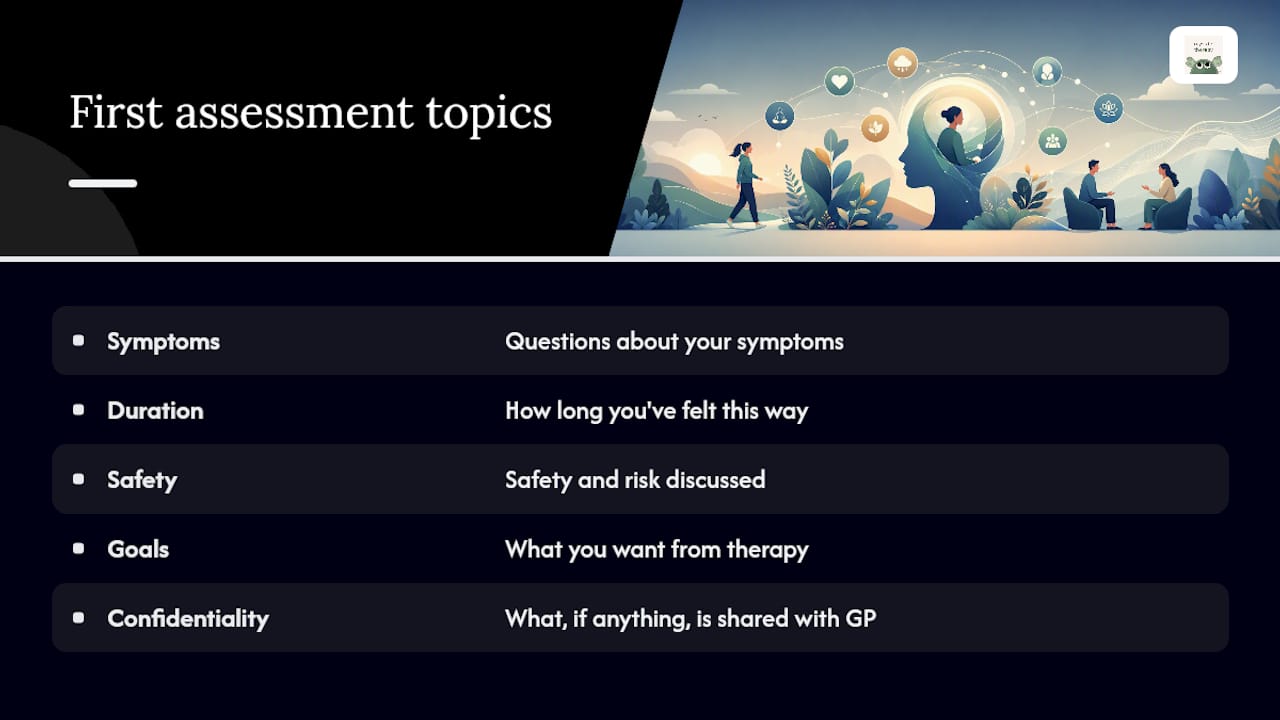
Your first appointment is an assessment, not treatment. Expect questions about your symptoms, how long you've felt this way, safety and risk, and what you want from therapy. Confidentiality is explained upfront, including what, if anything, gets shared back with your GP.
Individual sessions usually run between half an hour to about an hour, weekly or fortnightly, while group programmes may run longer with more participants. Course length varies by condition and intensity, from a handful of guided self-help sessions to 12 or more weeks of structured CBT.
Between-session tasks matter more than people expect. Therapists consistently point to homework and outside-session practice as the real engine of progress, not the sessions alone. If you skip the worksheets or thought diaries, expect slower movement.
Pro Tip: Test your video link and audio a day before your first appointment rather than five minutes before. Local Trust guidance on video therapy flags connection problems as one of the most common reasons first sessions run short.
Finding your local service and getting help fast
Locating the right service starts with the same tool you'd use to self-refer.
- Open the NHS talking therapies finder and search by your GP surgery name or postcode to find the service covering you.
- If waiting times feel long, ask the service about alternative local providers, charity-run support such as Mind, or request your GP escalate the referral if your situation has worsened.
- For anything urgent, contact your GP surgery, call 111 and select the mental health option, or go to A&E if there's immediate risk to life. These routes exist entirely separately from talking therapy waiting lists and shouldn't be delayed while you wait for a callback.
Our guide on self-referral for NHS talking therapy breaks the process down further if you want a second look before you start.
When private online therapy fits alongside NHS care
NHS Talking Therapies is free and clinically assessed, but waiting times and fixed formats don't suit everyone. Private platforms tend to offer faster starts, evening and weekend slots, and more control over format, at a cost the NHS route doesn't carry. Our comparison of NHS therapy versus private counselling sets out the trade-offs on cost and waiting times in more detail.
Private platforms connect people in the UK with therapists accredited by professional bodies, offering various session types alongside AI-supported journaling and mood tracking between appointments. That flexibility suits anyone wanting a specific format the NHS's local service doesn't currently run, or who simply can't wait out a queue.
Choosing private care is a legitimate decision, not a failure to access NHS support. Whichever route you take, check therapist accreditation and ask about total cost upfront before committing.
Where to check the official guidance
Start with the NHS talking therapies finder to self-refer and locate your local service. Read the DET assessment criteria if you want to understand how digital programmes are vetted. NHS England's talking therapies overview explains the service model in full, and Mind offers independent support if you need guidance outside NHS channels.
Our view on accessing NHS talking therapies digitally
Digital delivery has genuinely widened who can get help, not just made an old process faster. A parent who can't get childcare for a daytime appointment, a shift worker whose hours never align with clinic openings, someone whose anxiety makes a waiting room unbearable: all of these people have a realistic route into treatment now that didn't exist a decade ago.
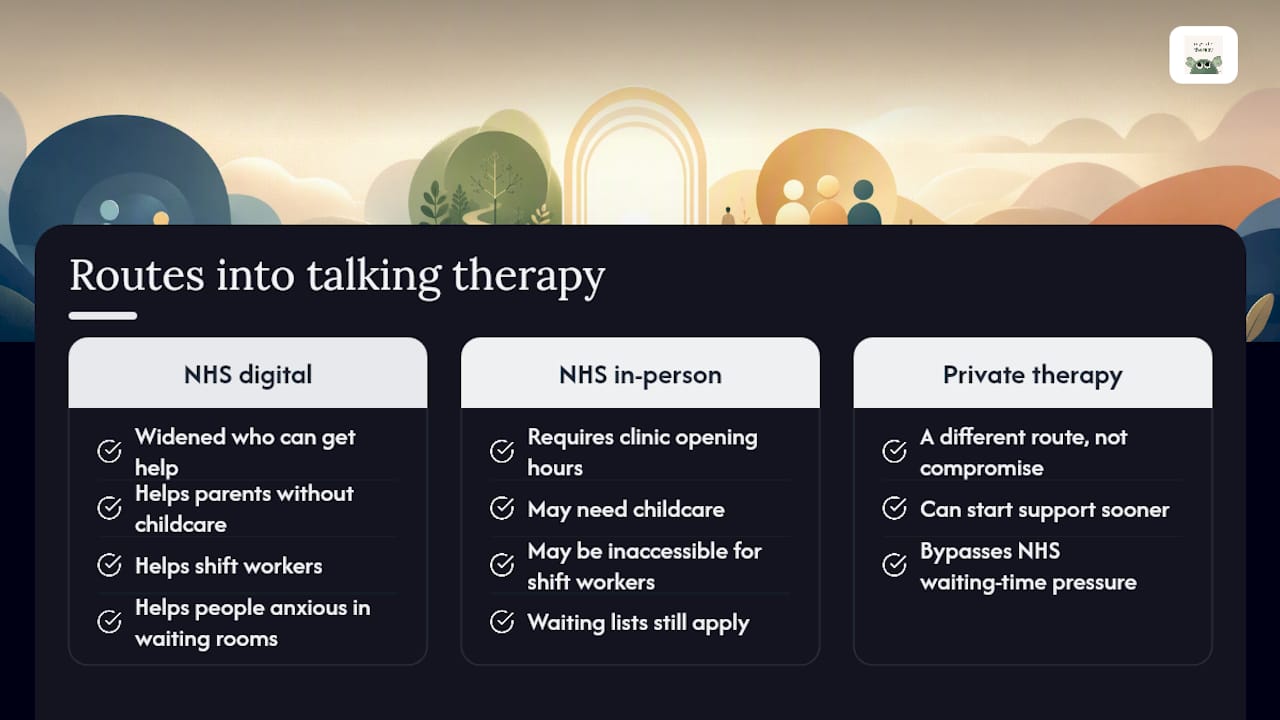
Where we'd push back on the conventional framing is the assumption that digital always means quicker. DETs and video slots widen capacity, but they don't eliminate local waiting list pressure, and the format choice on offer still depends heavily on where you live. Two people with identical symptoms in different postcodes can get very different waits and very different formats, and that inconsistency is worth knowing about before you self-refer, not after.
If NHS waiting times don't work for your situation, a private option such as starting therapy with Mysafetherapy isn't a compromise. It's simply a different route to the same goal: getting proper support started sooner rather than later.
— MySafeTherapy
This article is general information, not a substitute for advice from a qualified doctor. Consult a qualified healthcare professional about your own circumstances before acting on anything here.