
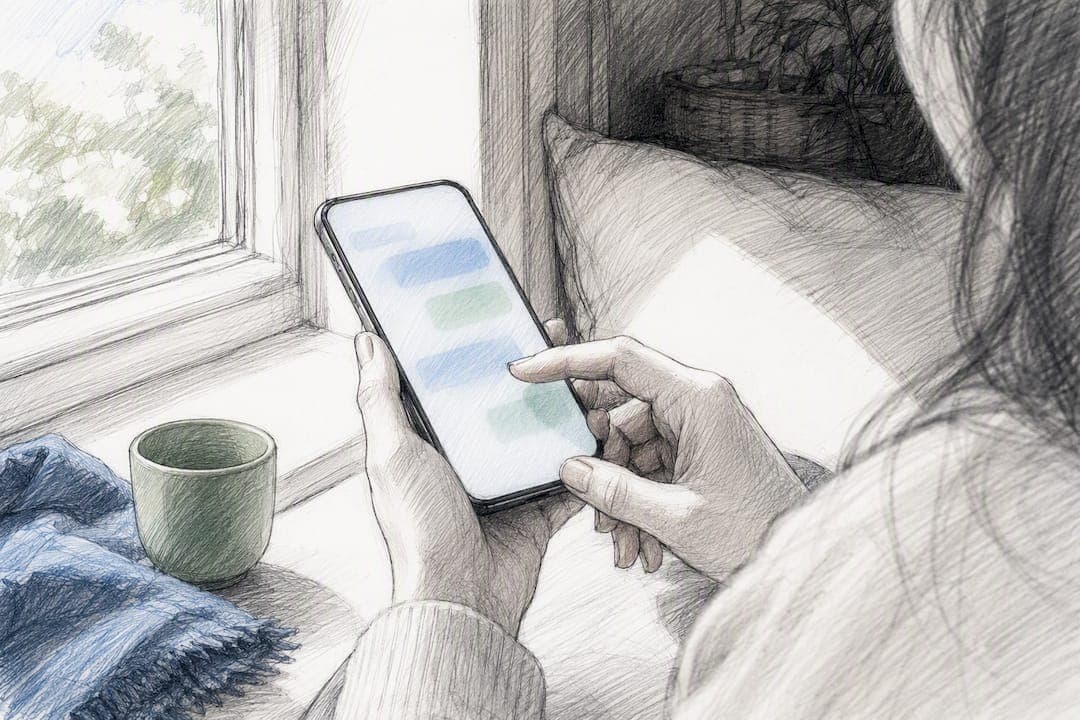
Text-based therapy is a sound option for many people who need flexible, low-barrier mental health support, but it is not the right fit for everyone. A 2023 randomised controlled trial found asynchronous message-based treatment produced noninferior outcomes to weekly video therapy, and BACP guidance confirms it can work well within clear contractual boundaries. Severity and risk level, not preference alone, should decide the format.
TL;DR:
- Message-based therapy produces similar moderate clinical outcomes to video therapy, with effect sizes around d=1.04 for depression and d=0.61 for anxiety.
- Asynchronous messaging keeps clients engaged longer during the initial weeks, reducing early dropout rates compared to video sessions.
- Clear response windows, safety protocols, and licensed therapists are essential safeguards before starting text therapy.
- It suits individuals with social anxiety, mobility issues, or irregular schedules, but is less appropriate for crises or severe cases needing immediate contact.
- Proper contractual agreements and setting realistic expectations about response times help prevent misunderstandings and boundary issues.
Table of Contents
- What is text therapy and how does it actually work?
- What are the benefits of text therapy?
- What are the drawbacks and risks of text therapy?
- What does the research say: message-based versus video-based therapy?
- Is text therapy right for you?
- What safeguards should you check before starting?
- How do you actually try text therapy?
- Author perspective from MySafeTherapy
- How MySafeTherapy can help you decide
- Sources
- FAQ
What is text therapy and how does it actually work?
Text therapy splits into two distinct models, and confusing them causes most of the disappointment people report. Synchronous chat means you and your therapist message in real time, in a scheduled slot, much like a spoken session typed out. Asynchronous messaging means you send thoughts whenever they arise, and your therapist replies within an agreed window, often once or twice a day rather than instantly.
Most UK platforms build sessions around a few core mechanics:
- A defined session thread or ongoing contact window, agreed in advance
- A stated response time (commonly within 24 to 48 hours for asynchronous work)
- End-to-end encryption and secure storage for message history
- The option to attach documents, voice notes, or mood-tracking exports
- Written session summaries that both parties can refer back to later
Platforms vary in how long transcripts are retained, which matters more than most people expect before they start.
What are the benefits of text therapy?
The advantages of online therapy delivered by text go well beyond convenience, though convenience is real: no commute, no waiting room, and sessions that fit around shift work or childcare.
- Lower disclosure barrier. Many people find it easier to write about shame, sexuality, or trauma than to say the words aloud, which can speed up honest disclosure.
- Reflection built into the format. Writing forces you to slow down and structure a thought before sending it, a process explored in research on creative writing and the power of painting that shows how art can help release emotions.
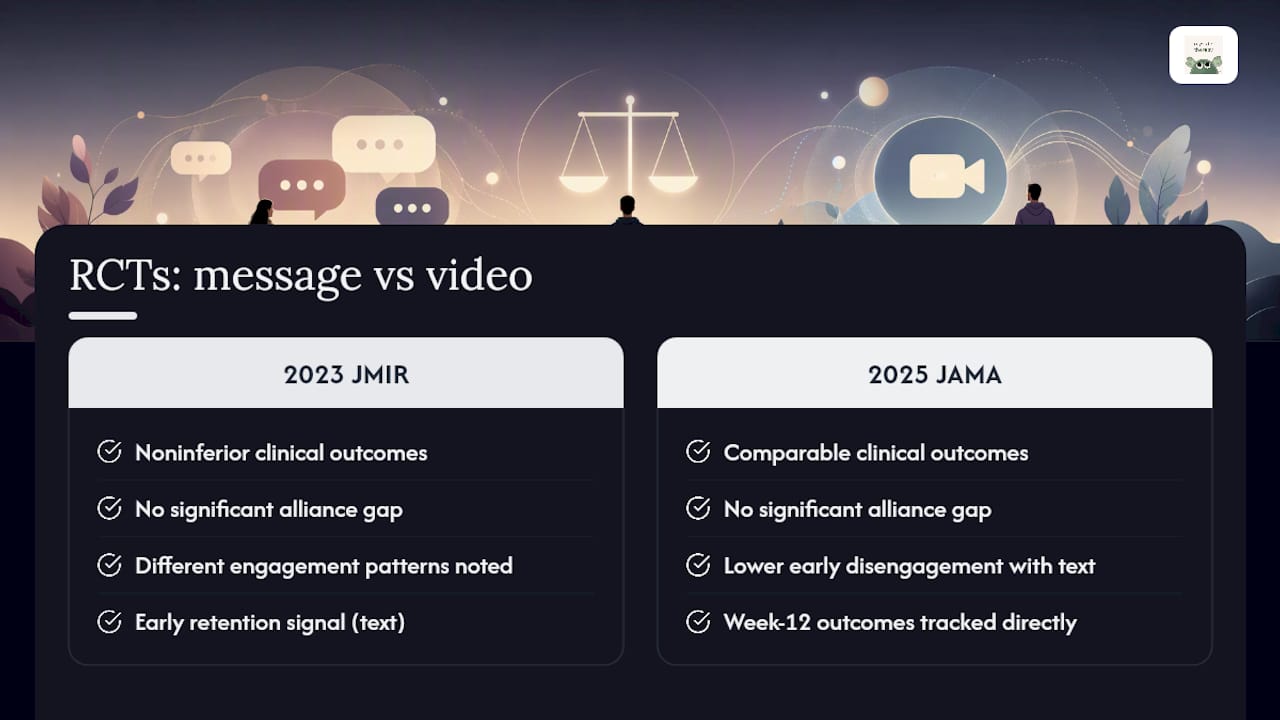
- Comparable clinical outcomes. The same 2023 JMIR trial found message-based care produced effect sizes of d=1.04 for depression and d=0.61 for anxiety, statistically noninferior to video care.
- Stronger early engagement. A 2025 JAMA Network Open trial recorded 13.2% disengagement for message-based care by week 5, against 21.3% for video.
- A written record you can revisit, useful for tracking patterns between sessions.
Pro Tip: Keep a running note of themes that come up in your messages between sessions. It gives your therapist a head start and often reveals patterns you would not spot in the moment.
What are the drawbacks and risks of text therapy?
The main drawback of text therapy is what gets lost when tone of voice, pauses, and facial expression disappear. A flat "okay" can read as dismissive when it was meant as relief, and therapists cannot correct that misreading in real time the way they would in a room.
Boundary confusion is the second recurring problem. Clients sometimes expect near-instant replies and interpret silence as neglect, even when the therapist is working exactly within an agreed response window.
In numbers: A 2023 comparison of asynchronous and synchronous telepsychiatry found 84% of asynchronous patients reported complete satisfaction, against 97% for synchronous care, even though clinical outcomes did not differ significantly (p=0.51).
Other risks worth weighing before you commit:
- Crisis moments are harder to manage safely without real-time contact
- Text formats can exclude people with low literacy, limited English, or certain neurodiverse needs
- Ambiguous wording can drift into misunderstanding without an explicit check-in protocol
- Written intensity can either intensify or blunt emotional processing, depending on the person
What does the research say: message-based versus video-based therapy?
Two trials now anchor the clinical case for text therapy, and both point the same direction: comparable outcomes, different engagement patterns. The 2023 JMIR RCT found message-based treatment noninferior to weekly video sessions across depression, anxiety, and functional impairment, with no significant gap in therapeutic alliance.
The 2025 JAMA Network Open trial went further by tracking week-12 outcomes directly.
The gap in disengagement is the detail worth sitting with. It suggests text formats keep people in treatment longer during the early weeks, when dropout risk is highest. Neither trial, though, covers severe or complex cases over the long term, and most existing reviews of text-based interventions still flag small samples and platform-specific designs as limits. Read the headline effect sizes as encouraging, not conclusive, for anything beyond moderate presentations.
Is text therapy right for you?
Text therapy tends to suit people who find spoken disclosure difficult, who juggle irregular schedules, or who process emotion better on the page than out loud. If social anxiety makes eye contact draining, or mobility issues make weekly video calls impractical, message-based care removes a real barrier. UKCP guidance notes some clients experience an "online calming effect", lower arousal that makes anxious material easier to approach.
That same calming effect is a caution for others.
- Active suicidal ideation or a recent self-harm crisis needs real-time risk management, not a message thread
- Psychosis or acute dissociation usually requires in-person or video assessment
- Complex trauma work often needs the arousal and immediacy that text can blunt
Pro Tip: Before your first session, ask yourself whether you would feel safe waiting several hours for a reply during a bad moment. If the honest answer is no, ask your provider about blended video and text care instead.
What safeguards should you check before starting?
A proper text therapy contract is not paperwork, it is the thing that prevents most of the drawbacks above.
- Confirm the exact response-time window in writing, not as a vague promise.
- Ask what happens if a message signals immediate risk, including who gets contacted and how fast.
- Check therapist accreditation with BACP or UKCP, the bodies that set online-practice standards in the UK.
- Ask how long transcripts are retained and how they are deleted on request.
- Request accessibility adjustments upfront if literacy, language, or neurodivergence affects how you communicate.
- Save a local crisis line number separately from the platform, in case you need it outside your therapist's hours.
Reading a provider's confidentiality and safety practices before booking tells you more than any marketing page will.
How do you actually try text therapy?
Start with questions, not commitment. Before booking, ask a provider what their standard response time is, whether therapists are individually registered with a professional body, what the escalation plan looks like if you are struggling between messages, and what the fee structure covers.
- Confirm registration and years of practice for the specific therapist, not just the platform
- Agree two or three concrete goals for the first month
- Set a review point at four to six weeks to judge fit honestly
- Ask explicitly what happens if text alone is not enough, and whether switching to video sessions is straightforward
Pricing shapes vary by provider and by format, so check exact current fees on the provider's own page rather than relying on a general figure.
Author perspective from MySafeTherapy
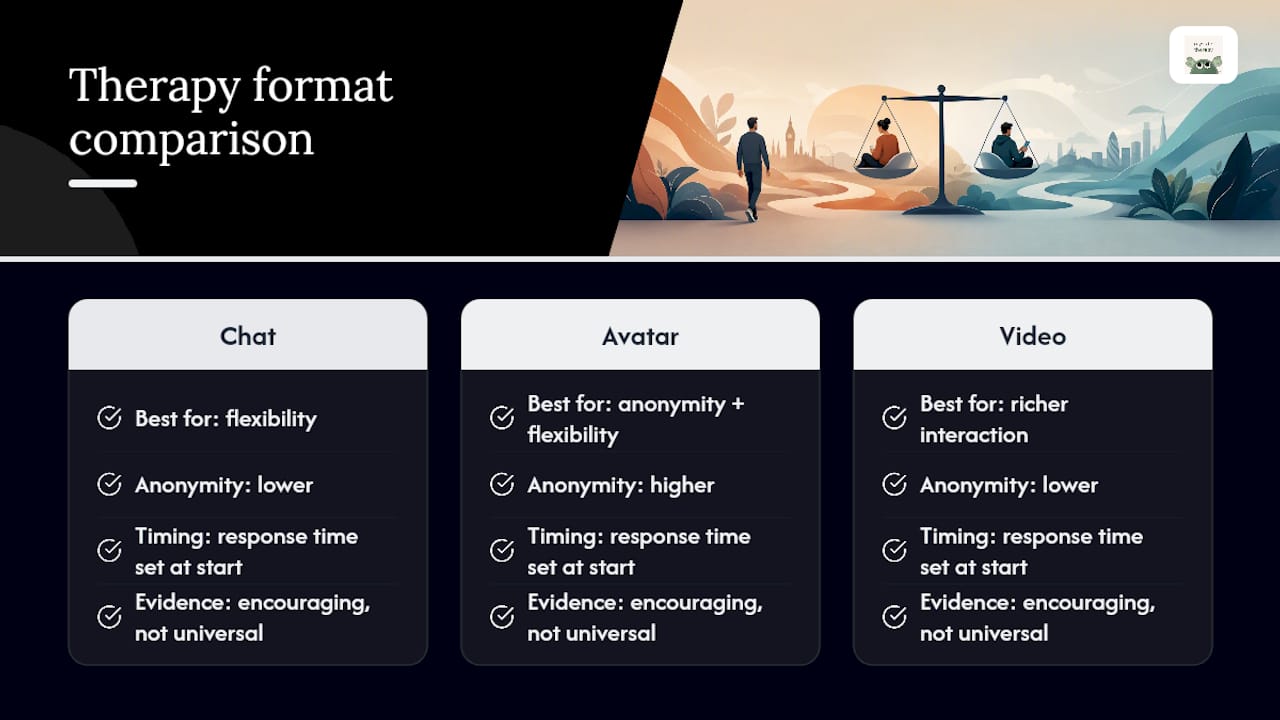
The debate around text therapy pros and cons usually treats the format as a binary choice, chat instead of video, when the more useful question is what mix a person actually needs. Some online therapy platforms offer chat, avatar-based, and video sessions to accommodate changing client needs over time.
Response-time expectations are often set explicitly at the start of therapy engagements, and many therapists hold accreditation through recognized professional bodies. That structure exists because the evidence is genuinely encouraging, not because text therapy suits everyone equally. Explore the avatar therapy option if anonymity matters as much as flexibility.
— MySafeTherapy
How MySafeTherapy can help you decide
If the evidence above has you leaning towards trying a written format, MySafeTherapy's chat and avatar therapy options start from £49, with accredited therapists and response windows agreed before your first message is sent. Proper therapy contracts generally set response times, confidentiality limits, and escalation plans upfront, which are important safeguards recommended to check.
Avatar therapy suits readers who want the disclosure benefits of writing without attaching their face or name to sessions, useful if social anxiety or stigma has kept you from booking before. If you would rather test the waters with mood tracking first, MySafeTherapy's free check-in tool takes a minute and needs no commitment. When you are ready, book a chat therapy session and see how the format fits your week.
This article is general information, not a substitute for advice from a qualified doctor. Consult a qualified healthcare professional about your own circumstances before acting on anything here.
Sources
- Comparing message-based psychotherapy to once-weekly video-based psychotherapy (JMIR, 2023)
- Message-based psychotherapy vs video-based psychotherapy (JAMA Network Open, 2025)
- Patient satisfaction with asynchronous vs synchronous telepsychiatry (2023)
- BACP online and phone therapy guidance
FAQ
What are the advantages and disadvantages of texting a therapist?
The advantages include lower disclosure barriers, flexible timing, and a written record; the disadvantages include lost tone of voice, response-time anxiety, and weaker real-time crisis handling.
What counts as a red flag in therapy?
Red flags include a therapist ignoring agreed response times, avoiding clear contracting on confidentiality and boundaries, or dismissing safety concerns you raise, all points BACP guidance asks providers to address explicitly.
Is texting 741741 a genuine crisis service?
Text-based crisis lines exist in several countries as real, staffed services, but they are designed for immediate crisis support rather than ongoing therapy, so check your local emergency and crisis line details rather than assuming international numbers apply where you live.
What are the downsides of online counselling generally?
Beyond text-specific issues, online counselling can struggle with unstable internet access, reduced non-verbal information even on video, and platform variation in therapist vetting, which is why checking accreditation with bodies like BACP or UKCP matters.
Is text therapy as effective as video therapy?
Evidence from the 2023 JMIR trial and the 2025 JAMA Network Open trial both found message-based care noninferior to video therapy for moderate depression and anxiety, though long-term and severe-case evidence remains thinner.