

If you are looking for alternatives to theinspiredmind.health, several credible options are available in the UK, ranging from NHS-funded services to regulated online platforms and complementary therapies. The most relevant choices include:
- NHS Talking Therapies (formerly IAPT): free, evidence-based psychological treatment for anxiety and depression, accessible via self-referral in England without a GP appointment.
- Mysafetherapy: a UK-based online platform connecting you with therapists registered with BACP, UKCP, or NCPS, offering video, chat, and avatar-based sessions from £49.
- Evidence-based self-help apps: tools offering CBT-based exercises, mood tracking, and structured self-help for mild to moderate needs.
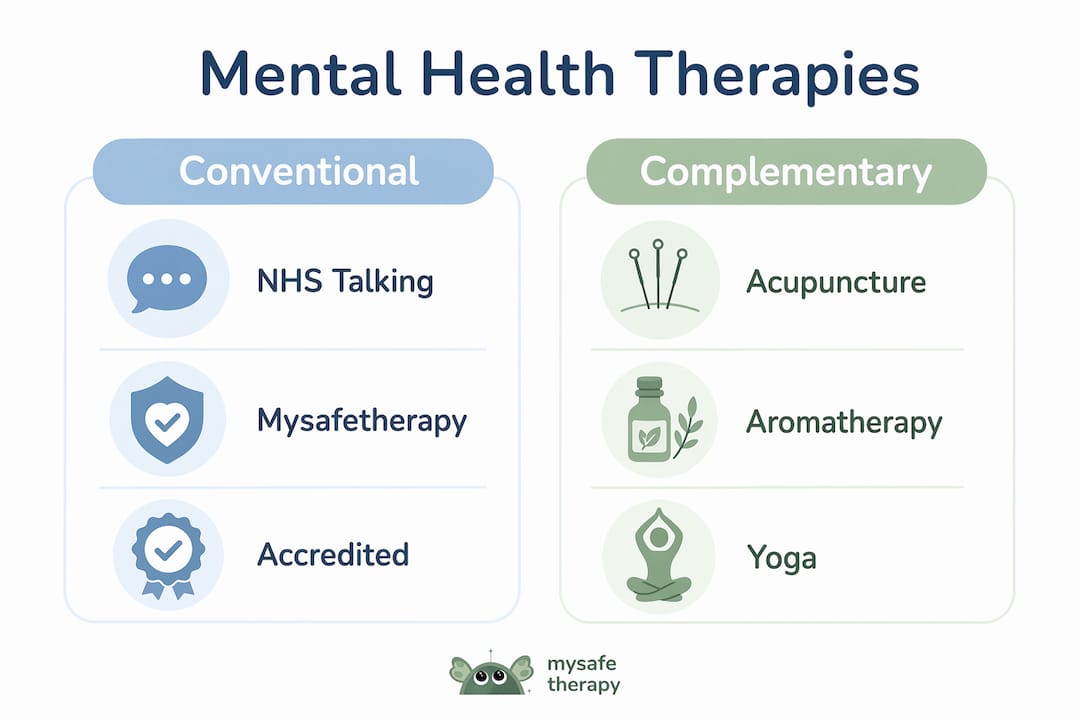
- Complementary therapies: acupuncture, meditation, yoga, hypnotherapy, and aromatherapy, used as supportive additions to clinical care rather than replacements.
- Community and social prescribing: NHS-supported routes connecting you to local groups, arts activities, and peer support.
When selecting any provider, verify registration with a Professional Standards Authority (PSA)-accredited body such as the British Association for Counselling and Psychotherapy (BACP), the UK Council for Psychotherapy (UKCP), or the National Counselling and Psychotherapy Society (NCPS). Accreditation is the clearest indicator that a practitioner meets defined professional and ethical standards.
Table of Contents
- What are complementary and alternative therapies for mental health?
- Which complementary therapies are most commonly used in the UK?
- How effective and safe are complementary therapies alongside NHS care?
- What self-help tools and community support are available in the UK?
- How does Mysafetherapy compare as a UK online therapy option?
- How do you choose safe mental health support in the UK?
- How does theinspiredmind.health compare to other UK providers?
- What do users say about alternative mental health services?
- Does the NHS fund complementary or alternative mental health therapies?
- Mysafetherapy: professional online therapy without the waiting list
- Key takeaways
What are complementary and alternative therapies for mental health?
Complementary and alternative therapies (CATs) cover a broad range of non-pharmaceutical, non-surgical approaches used alongside or outside conventional medical care. In the UK mental health context, they typically fall into a few distinct categories: physical or body-based practices (yoga, acupuncture), sensory or substance-based approaches (aromatherapy, herbal medicine), and mind-focused techniques (hypnotherapy, meditation, guided imagery).
The critical distinction is the word complementary. These therapies are intended to work alongside evidence-based treatment, not replace it. The NHS recognises social prescribing as a formal mechanism for connecting patients to non-clinical community resources, which reflects a broader acceptance that mental wellbeing is influenced by social, environmental, and lifestyle factors, not only clinical ones.
Common examples used in the UK include:
- Acupuncture: insertion of fine needles at specific body points, sometimes used for stress and chronic pain.
- Meditation and mindfulness: structured attention practices, including NHS-endorsed Mindfulness-Based Cognitive Therapy (MBCT).
- Yoga: combines physical posture, breathing, and relaxation; widely available in community settings.
- Pet therapy: structured animal-assisted interaction used in care settings.
- Energy healing: practices such as Reiki, which lack strong clinical evidence but are used for relaxation.
- Aromatherapy: use of essential oils for mood and stress management.
- Herbal medicine: plant-based preparations, some of which interact with prescribed medications.
None of these should be treated as a primary intervention for serious mental health conditions. Their value lies in supporting wellbeing, managing stress, and complementing clinical treatment.
Which complementary therapies are most commonly used in the UK?
The range of therapies available in the UK is wide, and the format, cost, and evidence base vary considerably between them. Understanding what each involves helps you make a more informed comparison.
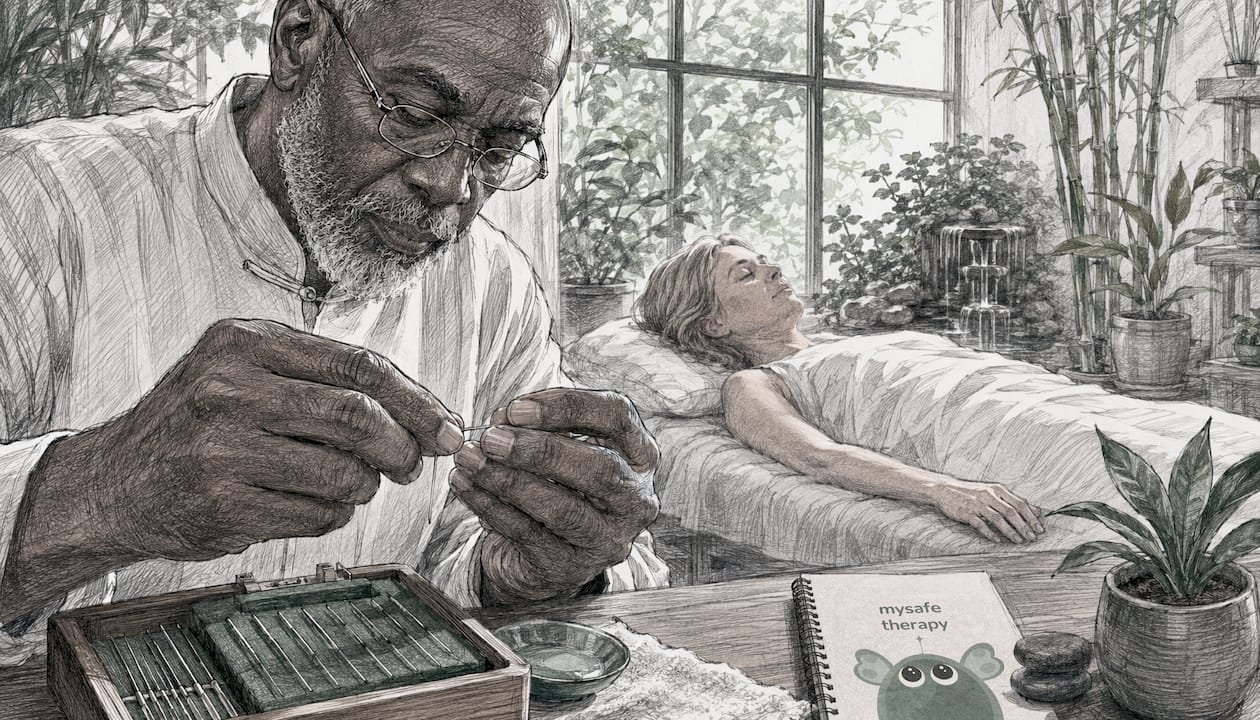
Acupuncture is delivered in-person by a trained practitioner, typically in private clinics. Sessions usually last 45–60 minutes. The NHS offers acupuncture for some chronic pain conditions, though its use for mental health specifically remains limited to private practice in most areas.
Aromatherapy uses essential oils applied through massage, inhalation, or baths. It is widely available in spas, private clinics, and some NHS palliative care settings. Sessions are generally relaxing rather than therapeutic in a clinical sense, and there is no requirement for practitioners to hold regulated qualifications.
Herbal medicine ranges from over-the-counter supplements (such as St John's Wort for low mood) to prescribed preparations from a qualified medical herbalist. St John's Wort is known to interact with antidepressants, anticoagulants, and contraceptives, so disclosure to your GP is non-negotiable before use.
Hypnotherapy uses guided relaxation and focused attention to address specific issues such as phobias, anxiety, or habit change. It is delivered in-person or online. The General Hypnotherapy Register and the National Hypnotherapy Society are among the voluntary registers in the UK, though hypnotherapy is not a statutorily regulated profession.
Meditation and mindfulness can be self-guided via apps or structured through group programmes such as MBCT, which has a strong evidence base for preventing depressive relapse. Many NHS trusts now offer MBCT directly.
Yoga is available in group classes, one-to-one sessions, and online formats. Trauma-sensitive yoga is a growing specialism, delivered by instructors with additional training in psychological safety.
Pro Tip: Before booking any complementary therapy, check whether the practitioner holds voluntary registration with a PSA-accredited register. This is the clearest way to verify that they meet defined standards of training and professional conduct in the UK.
How effective and safe are complementary therapies alongside NHS care?
The evidence base for complementary therapies as primary mental health treatments is limited. The Royal College of Psychiatrists and organisations such as Rethink Mental Illness note that large-scale evidence supporting most holistic therapies as standalone interventions remains weak. That does not mean they are without value. Many people find them genuinely helpful for relaxation, stress reduction, and managing the day-to-day burden of living with a mental health condition.
Individual response varies considerably. Research published in Frontiers in Medicine confirms that complementary therapy experiences are highly personal: a practice that one person finds calming may cause distress in another. This makes transparent communication with your GP or psychiatrist particularly important before starting any new therapy.
Key safety considerations include:
- Do not stop prescribed medication or clinical treatment to pursue a complementary approach without medical advice.
- Disclose all therapies to your prescribing clinician, particularly herbal remedies, which can interact with psychiatric medications.
- Check registration: many UK complementary therapists are not legally required to register with any body, so voluntary registration with a PSA-accredited register is the primary quality indicator available to you.
- Be cautious of unverified claims: any practitioner promising to cure a diagnosed mental health condition through a complementary method alone warrants scepticism.
Pro Tip: The NHS website provides condition-specific guidance on therapies such as acupuncture and hypnotherapy. Checking NHS pages for your specific condition before booking a private complementary therapy is a straightforward way to assess whether there is any clinical endorsement for your situation.
Integration with NHS care is possible and encouraged. Some GP surgeries and NHS trusts work with social prescribing link workers who can refer you to community-based activities, including yoga, arts groups, and nature programmes, as part of a broader care plan.
What self-help tools and community support are available in the UK?
For mild to moderate mental health needs, self-directed tools and community support can be genuinely effective, particularly while waiting for clinical appointments or as an ongoing maintenance strategy.

Apps and digital tools offer structured CBT exercises, mood tracking, and psychoeducation. The NHS App Library lists tools that have been reviewed against NHS standards, providing a starting point for identifying credible options. Mysafetherapy also offers AI journaling and mood tracking as supplementary features alongside live therapy.
Social prescribing is an NHS-supported model in which a link worker connects you to local, non-clinical resources. These might include community arts groups, nature-based activities, or peer support networks. Social prescribing addresses the social determinants of mental health, including isolation, inactivity, and lack of purpose, which clinical therapy alone does not always reach.
Online peer support forums such as those run by Mind and Rethink Mental Illness provide moderated spaces for shared experience. These are not substitutes for clinical care but can reduce isolation significantly.
Useful community-based options include:
- NHS social prescribing via your GP surgery or primary care network.
- Local Mind branches offering counselling, peer support, and wellbeing activities.
- Samaritans for crisis listening support (116 123, free, 24 hours).
- Cruse Bereavement Support for grief-specific needs.
- Togetherall, an NHS-funded online peer support platform available in many areas.
For online mental health support that goes beyond self-help, structured therapy with an accredited practitioner remains the most evidence-backed route.
How does Mysafetherapy compare as a UK online therapy option?
Mysafetherapy is a UK-based online therapy platform built around accredited practitioners registered with BACP, UKCP, or NCPS. It is designed for people who need professional mental health support but want flexibility in how and when they access it.
The platform offers three session formats: one-to-one video therapy, text-based chat therapy, and avatar-based sessions for those who prefer anonymity. Evening and weekend availability means sessions fit around work and family commitments. Pricing starts from £49 per session, with no subscription or long-term contract required.
Therapeutic approaches available through Mysafetherapy include Cognitive Behavioural Therapy (CBT), trauma-focused therapy, counselling for anxiety, depression, relationship difficulties, and burnout. Between sessions, users have access to AI journaling, mood tracking, and curated self-help resources.
| Feature | Mysafetherapy | NHS Talking Therapies | Generic complementary therapy |
|---|---|---|---|
| Cost | From £49 per session | Free | Varies (typically £49/session minimum) |
| Accreditation | BACP, UKCP, NCPS | NHS-regulated | Voluntary registers only |
| Session format | Video, chat, avatar | In-person, telephone, online | Typically in-person |
| Waiting time | Immediate access | Weeks to months | Varies |
| Evidence base | CBT, trauma therapy | NICE-approved therapies | Limited for most modalities |
| Therapist switching | Yes, flexible | Limited | Practitioner-dependent |
Mysafetherapy's therapist-switching policy is a practical differentiator. Patients have the right to seek a different therapist if the current one is not a good fit, and Mysafetherapy makes this straightforward without requiring you to re-register or restart the process.
Pro Tip: If you are unsure whether video or text-based therapy suits you better, Mysafetherapy's video vs. chat therapy guide sets out the practical differences clearly, including which format tends to work better for specific concerns.
How do you choose safe mental health support in the UK?
Selecting a mental health service, whether conventional or complementary, requires a structured approach. The volume of options available in the UK makes this more complex than it might initially appear.
Start with accreditation. For talking therapies, verify that the practitioner is registered with BACP, UKCP, or NCPS. These bodies maintain public registers, so you can check a therapist's status directly on their websites. For complementary therapists, look for voluntary registration with a PSA-accredited register, as statutory regulation does not apply to most complementary professions in the UK.
Consider the following when evaluating any provider:
- Evidence basis: does the therapy have published clinical support for your specific condition, or is it primarily used for general wellbeing?
- NHS vs private: NHS Talking Therapies are free and self-referral is available online in England, though waiting times vary by area. Private services offer faster access but at cost.
- Session format and frequency: consider whether in-person, online, or hybrid delivery suits your circumstances. Session frequency should match clinical need, not commercial pressure.
- Confidentiality and data security: for online services, check that the platform uses encrypted communication and holds data in accordance with UK GDPR.
- Exit flexibility: avoid providers that lock you into long-term contracts or make it difficult to change therapist.
For evidence-based therapy options that meet UK professional standards, the BACP, UKCP, and NCPS therapist directories are reliable starting points alongside platforms such as Mysafetherapy.
How does theinspiredmind.health compare to other UK providers?
Theinspiredmind.health positions itself as a wellness and mental health resource. For those seeking alternatives, the comparison that matters most is not feature-by-feature but rather the regulatory and evidence framework each option operates within.
| Provider type | Regulatory status | Evidence base | Cost | Access route |
|---|---|---|---|---|
| NHS Talking Therapies | NHS-regulated, NICE-approved | Strong (CBT, EMDR, MBCT) | Free | Self-referral online |
| Mysafetherapy | BACP/UKCP/NCPS accredited | CBT, trauma therapy | From £49/session | Direct online booking |
| BACP-registered private therapist | BACP accredited | Varies by modality | £49/session minimum | Direct or via directory |
| UKCP-registered psychotherapist | UKCP accredited | Varies by modality | — | Direct or via directory |
| NCPS-registered counsellor | NCPS accredited | Counselling-based | — | Direct or via directory |
| Complementary therapy provider | Voluntary registers only | Limited for mental health | — | Direct booking |
The key differentiator across these options is the regulatory framework. NHS Talking Therapies and platforms like Mysafetherapy operate within defined professional accountability structures. Complementary therapy providers, including those offering mindfulness programmes or wellness coaching, may not be subject to the same oversight. When evaluating any wellness programme, the absence of accreditation from BACP, UKCP, NCPS, or an NHS-regulated body is a relevant factor in your decision.
For those specifically seeking holistic health solutions that combine professional therapy with self-help tools, Mysafetherapy's model, which pairs accredited therapists with AI journaling and mood tracking, offers a structured middle ground between purely clinical and purely complementary approaches.
What do users say about alternative mental health services?
User experience across mental health services in the UK varies considerably, and published reviews reflect that variation. Several consistent themes emerge from publicly available feedback on online therapy platforms and complementary services.
For NHS Talking Therapies, users frequently cite the value of free access and the structured nature of CBT programmes. The most common criticism is waiting time, which in some areas extends to several months. The self-referral route, available directly online in England, has improved access speed for many, but capacity constraints remain a real limitation.
For private online therapy platforms, users consistently highlight flexibility and speed of access as primary advantages. The ability to choose a therapist, switch if the relationship is not working, and attend sessions from home removes several practical barriers. Concerns raised in reviews tend to centre on cost sustainability over time and the variability of therapist quality even within accredited platforms.
For complementary therapies, user feedback is more mixed and more personal. Yoga and meditation receive broadly positive responses for stress management and general wellbeing. Hypnotherapy reviews are polarised, with strong positive responses for specific phobias and habit change, and more sceptical responses for broader anxiety or depression. Herbal medicine reviews frequently include notes of caution around interactions with prescribed medications.
The consistent finding across user feedback is that therapeutic fit matters as much as the modality itself. A well-matched therapist within an accredited framework tends to produce better outcomes than the specific technique used. This is why therapist-switching flexibility, as offered by Mysafetherapy, is a practically significant feature rather than a marketing point.
Does the NHS fund complementary or alternative mental health therapies?
NHS funding for complementary therapies is limited and condition-specific. The NHS does not routinely fund aromatherapy, herbal medicine, Reiki, or most other complementary modalities for mental health conditions. Acupuncture is available on the NHS for certain chronic pain conditions but not as a primary mental health treatment in most areas.
The therapies that do receive NHS funding for mental health are those approved by the National Institute for Health and Care Excellence (NICE). These include CBT, EMDR (Eye Movement Desensitisation and Reprocessing), MBCT, interpersonal therapy, and counselling. NHS Talking Therapies delivers these free of charge to adults in England with anxiety or depression.
For private health insurance, coverage of mental health therapy has expanded in recent years, but policies vary significantly. Most major UK insurers, including Bupa and AXA Health, now include some level of mental health cover, typically for a defined number of sessions with a registered therapist. Complementary therapies are rarely covered unless specifically listed in the policy. Checking your policy's mental health schedule before booking is advisable.
Key points on funding:
- NHS Talking Therapies are free and cover NICE-approved psychological therapies.
- Private insurance may cover sessions with BACP, UKCP, or NCPS-registered therapists; check your policy.
- Complementary therapies are almost never NHS-funded for mental health and are rarely covered by standard insurance.
- Some employers offer Employee Assistance Programmes (EAPs) that include a limited number of free counselling sessions.
- Mysafetherapy's pricing from £49 per session is positioned below many private therapy rates, with no subscription required.
Mysafetherapy: professional online therapy without the waiting list
For those who have assessed the options and need professional support now, Mysafetherapy offers a direct route to accredited therapy without NHS waiting times or long-term financial commitments. Every therapist on the platform holds registration with BACP, UKCP, or NCPS, which means the same professional standards apply as with any regulated private practitioner.
The practical advantages are clear. Sessions start from £49, available via video, chat, or avatar format, including evenings and weekends. There is no subscription, no minimum number of sessions, and no barrier to switching therapist if the initial match is not right. AI journaling and mood tracking tools are available between sessions, providing continuity without requiring additional appointments. For those who find the idea of face-to-face therapy difficult, anonymous avatar therapy offers a confidential alternative that still connects you with a qualified professional.
If you are ready to begin, you can start therapy directly through the Mysafetherapy platform, select a therapist, and book your first session at a time that suits you.
Key takeaways
The most reliable mental health support in the UK combines professional accreditation with a format and cost structure that you can sustain over time.
| Point | Details |
|---|---|
| NHS Talking Therapies are free and self-referral is available | Adults in England can refer themselves online without a GP appointment for CBT and related therapies. |
| Accreditation is the primary quality indicator | Check BACP, UKCP, or NCPS registration for talking therapists; PSA-accredited registers for complementary practitioners. |
| Complementary therapies work best alongside clinical care | Evidence supports their use for relaxation and wellbeing, but not as standalone treatments for diagnosed conditions. |
| Therapist fit matters as much as modality | Switching therapist when the relationship is not working is a right, and Mysafetherapy makes this straightforward. |
| Mysafetherapy provides accredited online therapy from £49 | Video, chat, and avatar sessions with BACP/UKCP/NCPS-registered therapists, with no subscription required. |