
TL;DR:
- Digital mental health uses apps, online platforms, and wearable devices to provide support, screening, and intervention. Evidence shows that structured digital therapies produce results comparable to face-to-face treatment, especially when integrated with clinical oversight. Choosing evidence-based tools, verifying privacy policies, and combining digital support with professional care enhance treatment effectiveness and safety.
Digital mental health is defined as the use of smartphone apps, online therapy platforms, AI chatbots, and wearable devices to deliver mental health support, screening, and clinical intervention. The field, formally known as digital mental health intervention (DMHI), covers information provision, symptom monitoring, structured therapy, and peer social support. For UK adults, this means access to evidence-based care at any hour, without a GP referral or a waiting list. Mysafetherapy sits within this space, connecting users with BACP, UKCP, and NCPS-registered therapists through video, chat, and avatar-based sessions.
What is digital mental health and does it actually work?
Digital mental health interventions produce measurable clinical results. A meta-analysis of 168 studies covering more than 22,000 patients found moderate to large effect sizes for treating specific phobias, panic disorder, anxiety, and depression, with dropout rates typically below 20%. Those figures are comparable to outcomes seen in face-to-face therapy for the same conditions.
The evidence is strongest for structured, protocol-based programmes. Cognitive behavioural therapy (CBT) delivered via app or video consistently outperforms waitlist control groups. The benefit is not simply convenience. Digital tools provide cost-effective, immediate, and anonymous support for anxiety and depression, which matters most for people facing financial, geographical, or social barriers to traditional care.
Limitations exist. Adherence drops when tools lack personalisation or clinical oversight. Apps designed without therapeutic structure tend to show weaker results. The strongest outcomes come from platforms that combine multiple evidence-based components rather than relying on a single feature.
"Digital mental health is evolving towards patient-centred, purpose-driven solutions rather than technology-first products." — Nature Human Behaviour, 2026
That shift matters for UK adults choosing between dozens of available tools. A product built around a clinical pathway will outperform one built around engagement metrics.
What are the main types of digital mental health tools?
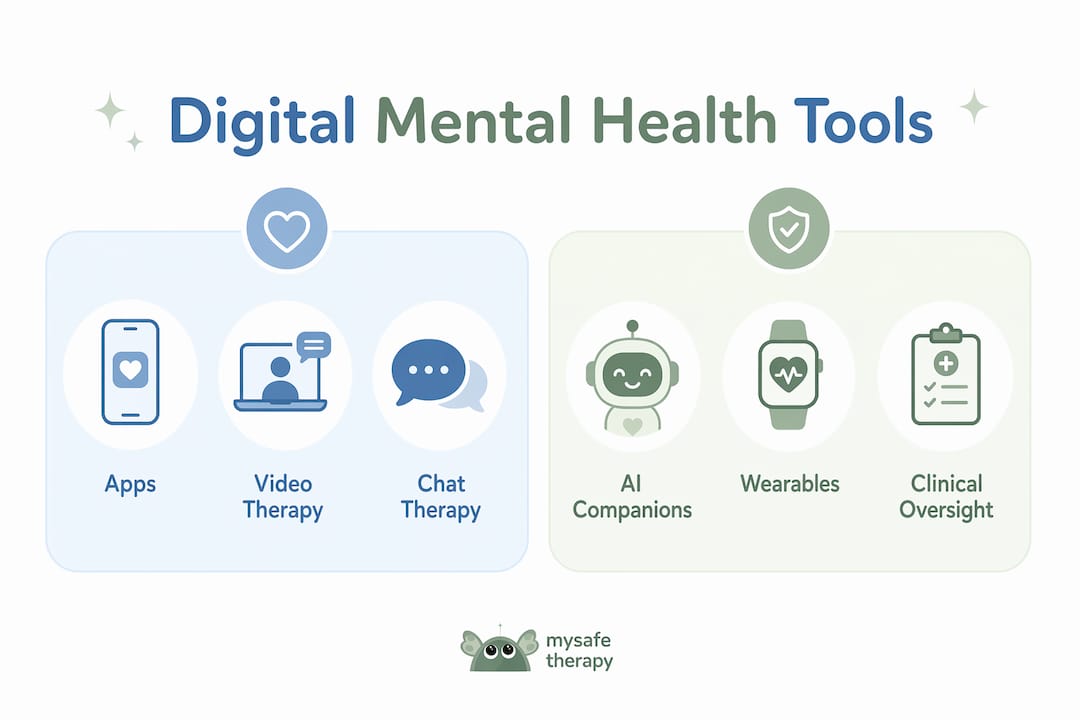
The category is broad. Understanding what each tool type does helps you match the right resource to your actual need.

Mobile apps are the most widely used entry point. They range from guided CBT programmes and mindfulness courses to mood trackers and psychoeducation libraries. Apps like Unblend offer structured therapy support, while AI companion tools such as Onsen provide conversational check-ins between sessions.
Video therapy platforms deliver live, one-to-one sessions with qualified therapists. This format replicates the clinical experience of in-person therapy most closely. Mysafetherapy offers video therapy for anxiety and depression with accredited therapists available evenings and weekends.
Chat and text therapy allows asynchronous communication with a therapist or counsellor. Sessions happen via typed messages rather than spoken conversation, which suits users who find verbal communication difficult or who need flexibility around work schedules.
AI-powered companions use natural language processing to simulate supportive dialogue. Onsen and similar tools are not replacements for clinical therapy. They serve as between-session support, helping users practise coping techniques or log emotional states.
Wearable devices track physiological data such as heart rate variability, sleep patterns, and activity levels. When integrated with a mental health platform, this data can inform a therapist's understanding of a client's baseline and stress responses.
| Tool Type | Primary Use | Clinical Oversight |
|---|---|---|
| CBT apps | Structured skill-building | Low to moderate |
| Video therapy | Live clinical sessions | High |
| Chat therapy | Flexible text-based support | Moderate to high |
| AI companions | Between-session check-ins | Low |
| Wearables | Physiological monitoring | Low |
Pro Tip: If you are new to digital therapy options, start with a video vs. chat comparison before committing to a format. The right modality affects how comfortable you feel disclosing personal information.
How does digital mental health work alongside traditional therapy?
Digital tools function best as supplements to human-led clinical care, not as standalone replacements. Purpose-driven digital tools integrated into clinical pathways consistently outperform isolated consumer apps. The distinction is significant. An app used in conjunction with a therapist produces better outcomes than the same app used alone.
The reason is clinical judgement. Human empathy remains irreplaceable for managing complex trauma, crisis situations, and conditions requiring nuanced assessment. A CBT app can teach breathing techniques. It cannot assess suicide risk, adapt to a client's cultural context, or hold space for grief in the way a trained therapist can.
UK-specific quality frameworks are relevant here. The NHS App Library and NICE digital evidence standards both assess tools against clinical safety criteria. When choosing a platform, look for:
- Registration with a recognised professional body such as BACP or UKCP
- Transparent clinical methodology, including which therapeutic models are used
- Clear escalation pathways if a user's risk level increases
- Compliance with UK GDPR for data handling and storage
AI-driven platforms carry specific risks, including algorithm bias and the potential for personality manipulation in unguided conversational agents. Ethical oversight and technical safeguards are not optional features. They are the baseline for responsible digital mental health provision.
Pro Tip: Before starting any digital mental health programme, check whether technology is transforming therapy in the way the provider claims. Look for published outcome data, not just user testimonials.
What should you look for when choosing digital mental health tools?
Choosing the right tool requires more than reading app store reviews. The benefits of digital mental health are only realised when the tool you select is built on sound clinical foundations and handles your data responsibly.
Follow these steps when evaluating any platform:
- Check for evidence-based active elements. Apps combining psychoeducation, self-monitoring, and CBT techniques show significantly higher efficacy than simpler single-feature tools. Ask whether the app is based on a named therapeutic model.
- Read the privacy policy in full. Many free mental health apps collect extensive personal emotional data. End-to-end encryption and a clear data retention policy are non-negotiable for sensitive mental health information.
- Verify therapist credentials. On any live therapy platform, confirm that practitioners are registered with BACP, UKCP, or NCPS. These bodies set professional and ethical standards for UK counsellors and psychotherapists.
- Assess accessibility and cost. Free apps vary widely in quality. Paid platforms should offer transparent pricing without hidden fees. Consider whether evening and weekend availability matters to your schedule.
- Look for clinical safety standards. Transparent clinical methodologies and rigorous data privacy are the markers of a trustworthy platform. Regulatory compliance signals that a provider takes user safety seriously.
A useful starting point for UK adults is the mental health tools guide for 2026, which covers regulation, quality indicators, and platform comparisons specific to the UK market.
Pro Tip: Preparing well before your first session improves outcomes. A step-by-step preparation guide can help you get the most from your first online therapy appointment.
Key takeaways
Digital mental health tools produce clinically meaningful results when they are evidence-based, privacy-compliant, and integrated with qualified human support rather than used in isolation.
| Point | Details |
|---|---|
| Clinical evidence is strong | Meta-analyses of 22,000+ patients show moderate to large effect sizes for anxiety and depression. |
| Tool type determines fit | Video therapy, chat therapy, apps, and AI companions each serve different needs and risk levels. |
| Integration beats isolation | Digital tools work best alongside qualified therapists, not as standalone replacements. |
| Privacy is non-negotiable | Check for end-to-end encryption, clear data policies, and UK GDPR compliance before signing up. |
| Active elements drive results | Apps combining CBT, psychoeducation, and self-monitoring consistently outperform single-feature tools. |
Mysafetherapy's view on digital mental health in the UK
The most common mistake people make with digital mental health is treating it as an either/or choice. Either you use an app, or you see a therapist. That framing misses the point entirely.
From our experience at Mysafetherapy, the adults who benefit most are those who use digital tools to extend and deepen their therapeutic work, not to avoid it. Mood tracking between sessions, AI journaling to process thoughts before a video call, or a chat session on a difficult evening: these are not substitutes for clinical care. They are the connective tissue that makes clinical care more effective.
The data privacy concern is real and often underestimated. Free mental health apps are not free. The cost is your emotional data. We have seen users share deeply personal information with platforms that have no clear policy on how that data is stored, sold, or used. That is not a minor technical detail. It is a clinical safety issue.
The future of digital mental health in the UK is genuinely promising. Personalised, purpose-driven tools that adapt to individual clinical profiles will make quality care more accessible than ever. The condition is that they must be built around the person, not around the product. Technology that serves human empathy will always outperform technology that tries to replace it.
— Mysafetherapy
Start therapy with Mysafetherapy
Mysafetherapy offers a range of digital therapy options designed for UK adults who want professional, confidential support without the barriers of traditional services.
Whether you prefer the anonymity of avatar-based counselling, the flexibility of text-based chat therapy, or the depth of a live video session, Mysafetherapy connects you with BACP, UKCP, and NCPS-registered therapists at transparent prices from £49. Sessions are available evenings and weekends. Therapist switching is straightforward, with no pressure to continue if the fit is not right. If you are ready to take the next step, start your therapy today and find the format that works for you.
FAQ
What is digital mental health in simple terms?
Digital mental health is the use of apps, online therapy, AI tools, and wearable devices to support mental well-being. It covers everything from mood tracking apps to live video sessions with a qualified therapist.
Are mental health apps for anxiety actually effective?
Yes, when they incorporate evidence-based components such as CBT, psychoeducation, and self-monitoring. A 2026 meta-regression found that apps combining multiple active therapeutic elements show significantly higher efficacy than simpler tools.
How does digital therapy differ from face-to-face therapy?
Digital therapy delivers the same evidence-based models, such as CBT or person-centred counselling, through video, chat, or app-based formats. Clinical outcomes are comparable for anxiety and depression, though complex trauma and crisis situations typically require in-person or closely supervised care.
Is my data safe with digital mental health platforms?
Not automatically. Many free apps collect extensive personal data without clear privacy policies. Look for platforms that use end-to-end encryption, comply with UK GDPR, and publish transparent data retention policies before sharing sensitive information.
Do i need a GP referral to access digital therapy in the UK?
No. Platforms such as Mysafetherapy allow you to book directly with a registered therapist without a GP referral, making access faster and more private than NHS routes for many adults.