

TL;DR:
- Avatar-based therapy involves interaction with a digitally animated avatar to help reduce distress from hallucinations and social anxiety. It requires a skilled therapist to animate the avatar live, guiding the patient through structured sessions that foster control and assertion. Access in the UK remains limited outside research settings, but online platforms like Mysafetherapy offer affordable, accredited sessions directly.
Avatar-based therapy is defined as a clinical intervention in which a patient interacts in real time with a digital avatar, voiced and animated by a trained therapist, to reduce distress caused by auditory hallucinations or social anxiety. The industry term for the most researched form is AVATAR therapy, developed at King's College London. This explainer on avatar-based sessions covers how the method works, what the clinical evidence shows, and how UK adults can access it. Mysafetherapy offers this format alongside traditional video and chat therapy, making it one of the few UK platforms where you can book an avatar session without joining a research waiting list.
How do avatar-based therapy sessions work?
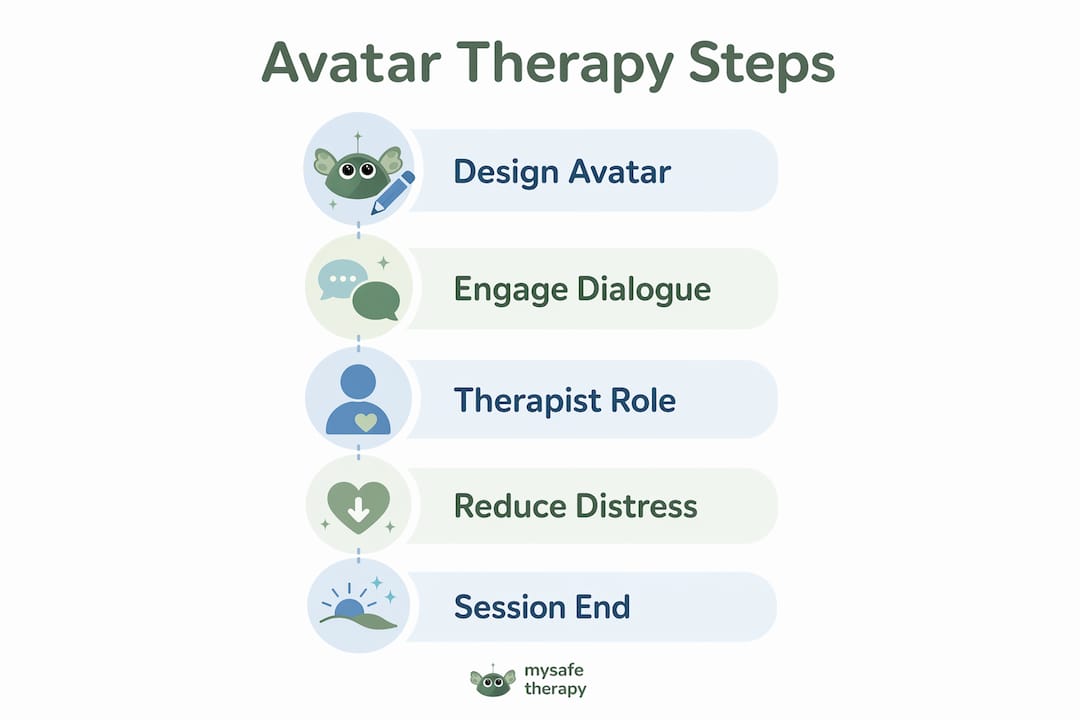
The session structure is specific and deliberate. A patient first designs a digital avatar that represents the source of their distress, whether that is the face and voice of a persecutory hallucination or a social scenario that triggers severe anxiety. The therapist then voices and animates the avatar live during the session, using voice modulation software that synchronises facial movements and vocal tone in real time.
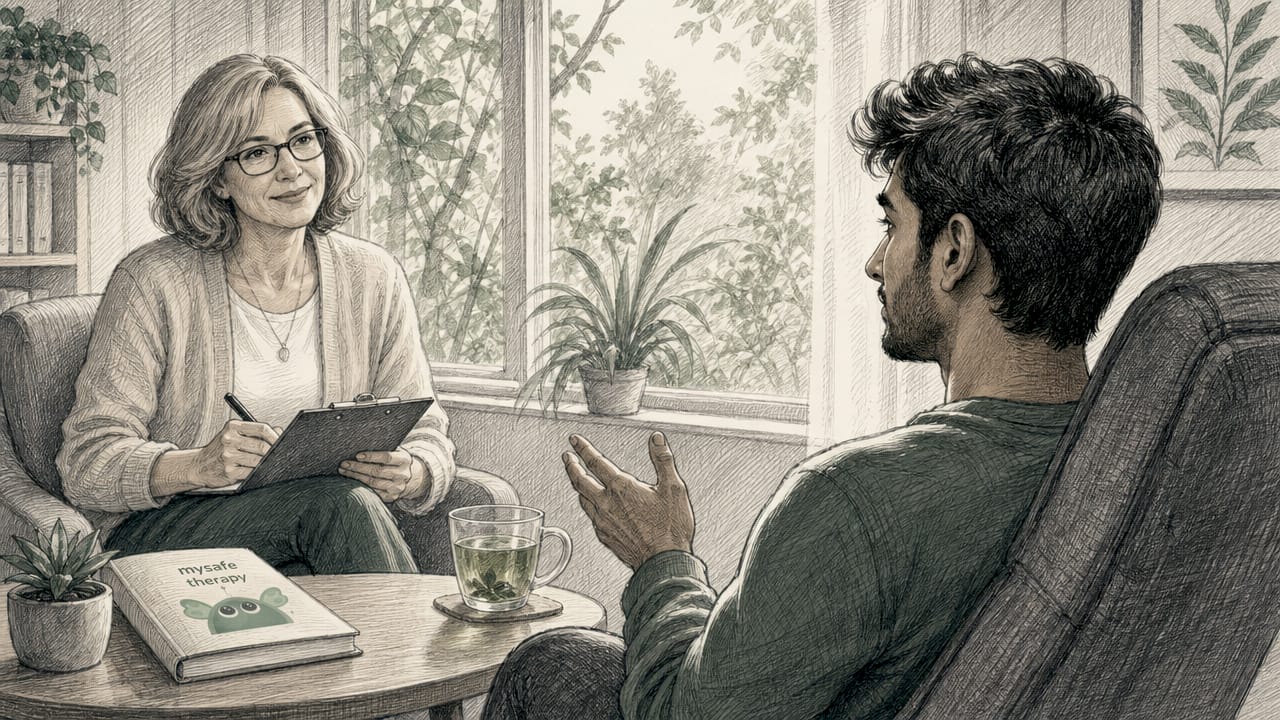
What happens next is the core of the method. The patient speaks directly to the avatar, and the therapist shifts between voicing the avatar and speaking as themselves to guide the patient's responses. This dual role requires considerable skill. Therapist animation quality, including synchronised facial and vocal cues, is critical to patient trust and effective exposure.
A typical course runs for 6–8 sessions. That is notably shorter than standard cognitive behavioural therapy for psychosis (CBTp), which often requires significantly more contact time. Sessions follow a structured arc: early sessions build familiarity with the avatar, middle sessions increase assertiveness in the dialogue, and later sessions consolidate the patient's sense of control.
Key elements of a standard avatar session include:
- Avatar design: The patient selects the avatar's appearance and voice characteristics at the outset.
- Live therapist animation: The therapist controls the avatar's speech and facial expressions throughout.
- Structured dialogue: Exchanges move from passive listening to active, assertive responses over the course of treatment.
- Therapist coaching: Between avatar exchanges, the therapist steps out of the avatar role to offer direct guidance.
- Session recordings: Patients may listen back to recordings between sessions to reinforce progress.
Pro Tip: If you feel apprehensive before your first session, tell your therapist. Starting with a less detailed or lower-intensity avatar is a recognised clinical technique, not a compromise.
What does research say about the effectiveness of avatar-based sessions?
The clinical evidence for avatar therapy is strong and growing. Avatar-based CBT for social anxiety produces statistically significant symptom reduction compared to control groups using standard exposure alone. The mechanism combines controlled exposure with cognitive restructuring, which means patients are not just habituating to a stimulus; they are actively rewriting their relationship with it.
For auditory hallucinations specifically, the results are particularly notable. Research published in Psychological Medicine shows that therapeutic alliance and frequent patient-avatar interaction strongly correlate with better outcomes in psychotic symptom reduction. That finding matters because it places the quality of the human relationship at the centre of a technology-assisted treatment.
"AVATAR therapy aims to shift the patient's relationship with their voice from one of fear and dominance to one of control and assertive interaction, reducing overall life distress." — Professor Philippa Garety, King's College London, as cited in Fondation FondaMental
The comparison with CBTp is worth examining directly.
| Measure | AVATAR therapy | Standard CBTp |
|---|---|---|
| Typical session count | 6–8 sessions | Significantly more sessions required |
| Primary mechanism | Exposure plus cognitive restructuring | Cognitive restructuring alone |
| Target symptoms | Auditory hallucinations, social anxiety | Broad psychotic and anxiety symptoms |
| Sustained benefit | Demonstrated post-therapy | Variable, depends on engagement |
| Therapist skill demand | High (animation and clinical) | High (clinical only) |
One point that often surprises people is what avatar therapy does not aim to do. AVATAR therapy targets distress reduction and improved control rather than the complete elimination of hallucinations. That is a clinically honest goal. Reducing the power a voice holds over a person's daily life is a meaningful outcome, even when the voice itself persists.
Research also points to future applications. Future AVATAR therapy adaptations may expand to target negative symptoms through behavioural activation and social skills role-play, broadening the method well beyond its current primary use cases.
What are the nuances and limitations of avatar-based therapy?
Avatar therapy is not a simple or universally straightforward treatment. Anxiety activation is a necessary mechanism in exposure-based work. Manageable distress triggers the habituation that produces change. However, excessive stimulus intensity increases dropout rates. That tension requires careful clinical management throughout every session.
Patients commonly experience initial intimidation when they first face a digital representation of their distressing voice. Building trust before exposure is not optional; it is a clinical prerequisite. Therapists typically spend the early sessions establishing rapport and explaining the process before the avatar interaction begins in earnest.
The following factors shape how well avatar therapy works in practice:
- Therapist competence: The therapist must manage voice modulation, pacing, and clinical guidance simultaneously. This is a demanding skill set that not all practitioners hold.
- Exposure calibration: Starting with less detailed or 'invisible' avatars lowers initial anxiety and reduces the risk of early dropout, particularly for social anxiety presentations.
- Technology requirements: Effective sessions require reliable software, a stable internet connection, and a private space for the patient.
- Limited mainstream availability: AVATAR therapy remains scarce outside specialist UK research settings, which restricts access for most adults seeking it through standard NHS pathways.
- Not suitable for all presentations: Patients in acute crisis or with very high baseline anxiety may need stabilisation before avatar work begins.
Pro Tip: Ask any prospective therapist directly whether they have specific training in avatar therapy. General digital therapy experience is not the same as AVATAR therapy competence.
How can UK adults access avatar-based sessions?
Access is the most practical barrier for most people in the UK. Outside research settings such as King's College London, avatar therapy is not routinely available through NHS community mental health teams. Waiting lists for specialist services are long, and the training and technology requirements mean that few private practitioners offer it independently.
The steps below give you a clear path to accessing avatar-based sessions in the UK:
- Clarify your presenting issue. Avatar therapy has the strongest evidence base for auditory hallucinations and social anxiety. Knowing which applies to you helps you find the right therapist and approach.
- Check therapist accreditation. Any therapist offering avatar sessions should be registered with a recognised professional body such as BACP, UKCP, or NCPS. Mysafetherapy lists therapist accreditation standards clearly for every practitioner on its platform.
- Consider online delivery. Teletherapy removes geographical barriers. Mysafetherapy's avatar therapy service starts from £49 per session, making it one of the most accessible entry points in the UK.
- Ask about session frequency and length. A standard course runs 6–8 sessions. Knowing this upfront helps you plan financially and logistically.
- Discuss compatibility with existing treatment. Avatar therapy can run alongside medication or other psychological support. Confirm this with your GP or psychiatrist if you are already receiving care.
- Use supplementary tools between sessions. An AI journalling tool can help you track mood shifts and symptom patterns between appointments, giving your therapist richer data to work with.
Mysafetherapy's perspective on avatar therapy's promise
Avatar therapy represents one of the most clinically specific tools we have seen enter the mental health space in recent years. What makes it genuinely different is not the technology itself. It is the way the method forces a direct, structured confrontation with the source of distress, under the guidance of a skilled clinician who can modulate the intensity in real time.
The therapist's role is more demanding here than in most other formats. Voicing an avatar convincingly, while simultaneously reading the patient's distress signals and adjusting the pace of exposure, requires a level of clinical attunement that goes beyond standard training. When it works well, patients describe a shift that is hard to articulate: the voice or the feared scenario loses its authority. That is a meaningful clinical outcome.
The honest challenge is availability. Most UK adults cannot access this therapy through standard NHS routes today. Technology and training costs remain real barriers. Mysafetherapy's decision to offer avatar-based therapy online reflects a view that waiting for NHS-wide adoption is not a reasonable ask of people who need support now. The evidence is strong enough to act on. The infrastructure to deliver it safely online exists. The remaining variable is finding a therapist with the right training, and that is exactly where platform-level quality standards matter most.
— Mysafetherapy
Avatar therapy sessions with Mysafetherapy
Mysafetherapy connects UK adults with accredited therapists who are trained in avatar-based sessions, available online from £49.
Every therapist on the platform holds registration with BACP, UKCP, or NCPS. Sessions are confidential, and you can book evenings or weekends to fit around work. If you are ready to try this format, you can start avatar therapy directly through the platform without a GP referral. For those who want to explore broader therapy options first, book a session and discuss which format suits your needs with a qualified therapist.
FAQ
What is avatar-based therapy?
Avatar-based therapy is a clinical method in which a patient interacts with a therapist-animated digital avatar to reduce distress from auditory hallucinations or social anxiety. The therapist voices and controls the avatar live during each session.
How many sessions does avatar therapy typically take?
A standard course runs for 6–8 sessions, which is fewer sessions than traditional CBTp requires for comparable presentations.
Is avatar therapy available on the NHS?
Avatar therapy is currently limited to specialist research settings in the UK and is not routinely available through standard NHS community mental health services.
Can avatar therapy help with social anxiety?
Yes. Avatar-based CBT for social anxiety produces statistically significant symptom reduction by combining controlled exposure with cognitive restructuring in a structured virtual environment.
How do I know if a therapist is qualified to deliver avatar sessions?
Check that your therapist is registered with BACP, UKCP, or NCPS, and ask directly whether they have specific training in avatar therapy delivery, not just general online therapy experience.
Key takeaways
Avatar-based therapy is a clinically evidenced, short-course intervention that reduces distress by placing patients in structured, therapist-guided dialogue with a digital avatar representing their symptoms.
| Point | Details |
|---|---|
| Session structure | A therapist voices and animates a patient-designed avatar live across 6–8 structured sessions. |
| Clinical evidence | Research shows significant symptom reduction for auditory hallucinations and social anxiety, with fewer sessions than standard CBTp. |
| Therapist skill is central | Effective avatar animation requires voice modulation and clinical attunement beyond standard therapy training. |
| Exposure must be calibrated | Starting with less detailed avatars reduces dropout; anxiety activation is necessary but must stay manageable. |
| UK access is limited but growing | NHS availability is restricted to research settings; Mysafetherapy offers accredited avatar sessions online from £49. |