

Directive therapy is a clinical approach in which the therapist takes an active, structured role: setting the session agenda, teaching specific skills, assigning tasks between sessions, and offering recommendations where clinically indicated. The term "directive counselling" is formally indexed in MeSH (Medical Subject Headings) as a recognised category in which the practitioner plays an active part in decision-making. In UK practice, directive strategies appear most prominently in cognitive behavioural therapy (CBT), solution-focused brief therapy (SFBT), and behavioural activation programmes.
Three things to understand before reading further:
- When it helps: directive strategies are well-suited to skill acquisition, crisis stabilisation, and clear behaviour-change targets such as managing panic or improving sleep.
- When it can harm: a directive stance without adequate collaboration can feel imposing, particularly for clients with trauma histories or strong preferences for reflective, exploratory work.
- Collaboration matters: even the most structured therapies depend on informed consent and shared formulation. Direction without agreement is not good practice.
Pro Tip: When contacting a prospective therapist, ask directly: "How do you structure sessions, and will you set homework or tasks?" The answer tells you immediately whether their style is directive, non-directive, or somewhere between.
Key takeaways
Directive therapy is most effective when the approach is matched to the client's presenting need, delivered by a trained and supervised practitioner, and grounded in informed consent at every stage.
| Point | Details |
|---|---|
| Definition | Directive therapy involves the therapist actively setting agendas, teaching skills, and assigning tasks, as indexed in MeSH. |
| Main models | CBT, SFBT, and behavioural activation are the most common directive approaches in UK clinical practice. |
| Clinical fit | Directive strategies suit crisis stabilisation, skill deficits, and clear behaviour-change targets; less suited to exploratory grief or trauma processing. |
| Ethical safeguards | BACP and BABCP standards require competence, informed consent, and a clear therapeutic rationale for any directive input. |
| Mysafetherapy | Mysafetherapy connects UK adults with BACP, UKCP, and NCPS-accredited therapists across multiple directive modalities, with transparent pricing and flexible formats. |
Table of Contents
- What directive therapy is and where it comes from
- Common therapies that use directive techniques
- How directive and non-directive therapy differ in practice
- When directive strategies are clinically appropriate
- Benefits, risks, and practical limitations
- How directive therapy fits into UK practice and professional standards
- How to find a UK-accredited therapist who uses directive methods
- A note on balancing directive and non-directive practice
- Mysafetherapy: access UK-accredited therapy online
- Sources
What directive therapy is and where it comes from
At its core, directive therapy rests on four principles: the therapist sets or co-creates the session agenda; skills are taught explicitly rather than discovered through open-ended reflection alone; structured tasks or behavioural experiments are assigned between sessions; and the therapist offers interpretations, suggestions, or guidance where clinically justified.
These methods sit on a continuum. At one end, person-centred counselling places client autonomy and self-directed exploration at the centre, with the therapist offering minimal guidance. At the other end, highly structured protocols such as exposure and response prevention for OCD specify session content in considerable detail.
Historically, directive methods gained clinical traction through the work of practitioners such as Jay Haley, whose writing on structural and strategic family therapy documented paradoxical and directive techniques as deliberate clinical tools. The rise of CBT from the 1970s onwards brought directive methods into mainstream NHS practice, where structured sessions, agenda-setting, and homework became standard components of evidence-based treatment.
Pro Tip: If you are reading a therapist's profile and they describe their work as "structured" or "skills-based," that is a reliable signal of a directive orientation. "Exploratory" or "relational" language usually indicates a less directive style.
Common therapies that use directive techniques
Several well-established models use directive strategies as a core feature. Understanding which model fits which problem helps when choosing a therapist. For a broader overview of how these models compare, see this guide to types of counselling approaches.
- Cognitive behavioural therapy (CBT): The most widely used directive approach in UK services. NHS guidance describes CBT as a structured, problem-focused therapy that uses agenda-setting and between-session tasks to help clients challenge unhelpful thoughts and behaviours. Sessions follow a clear format, and homework is a standard expectation.
- Solution-focused brief therapy (SFBT): Directive in technique even while centring client goals. The therapist actively steers dialogue using specific questions such as the "miracle question" and scaling exercises, keeping attention on solutions rather than problems.
- Behavioural activation: A targeted directive approach used primarily for depression. The therapist and client collaboratively schedule activities that are likely to improve mood, with explicit monitoring and review of outcomes between sessions.
- Motivational interviewing (MI): Partially directive. The therapist uses structured techniques such as reflective listening, decisional balancing, and change-talk elicitation to guide the client toward committing to behaviour change, while respecting ambivalence.
- Family and structural therapies: Drawing on Haley's work and structural family therapy, therapists assign tasks, reframe interactions, and direct communication patterns within sessions. Directive moves here may include prescribing specific conversations or changing seating arrangements to shift relational dynamics.
- Hybrid and integrative practice: Many UK therapists draw directive elements from CBT or SFBT within a broader integrative framework. Goal-setting, behavioural experiments, and structured homework appear across models and are not exclusive to any single approach.
A useful point of distinction: guided discovery within CBT is framed by trainers as an active, collaborative method intended to help clients test and learn from their own thinking, rather than simply receiving instructions. This distinction matters: directive does not mean didactic.
How directive and non-directive therapy differ in practice
The practical differences between directive and non-directive approaches show up most clearly in what the therapist does during a session and what the client is expected to do between sessions.
| Feature | Directive approach | Non-directive approach |
|---|---|---|
| Session agenda | Set by therapist or jointly agreed in advance | Follows client's lead in the moment |
| Therapist role | Active, teaching, guiding | Reflective, facilitating, witnessing |
| Between-session tasks | Homework or behavioural experiments assigned | Rarely assigned; client-led reflection |
| Goal orientation | Specific, measurable targets | Open-ended personal growth |
| Therapist input | Offers suggestions, interpretations, psychoeducation | Primarily reflects and validates |
| Typical models | CBT, SFBT, behavioural activation | Person-centred, psychodynamic, existential |
Two short scenarios illustrate when each stance is usually chosen:
- Panic disorder: A client presenting with frequent panic attacks and avoidance behaviours typically benefits from a directive approach. The therapist teaches the physiology of panic, introduces breathing techniques, and assigns graded exposure tasks. Structure accelerates skill acquisition.
- Grief work: A client processing bereavement rarely needs a skills protocol. A non-directive stance, offering space to explore loss without an agenda, tends to be more appropriate. Direction here can feel dismissive of the client's experience.
Contemporary clinical commentary advises tailoring the level of direction to context: crisis and skill needs often call for directive moves, while stable clients ready for exploration may benefit from less structured space. Therapist flexibility, rather than rigid adherence to one style, is what characterises skilled practice.
When directive strategies are clinically appropriate
Directive strategies are not universally suitable. The following list covers the main indications and contraindications.
Directive strategies are generally appropriate when:
- The client is in acute crisis and needs stabilisation, safety planning, or clear guidance on immediate steps.
- The presenting problem involves a specific skill deficit, such as anxiety management, sleep hygiene, or OCD response prevention techniques.
- There is a clear, agreed behaviour-change target with measurable outcomes.
- The client has limited prior experience of therapy and benefits from structure and psychoeducation.
- Time is limited and a brief, focused intervention is required (for example, NHS Talking Therapies typically offers 6–20 sessions).
Directive strategies are less appropriate when:
- The client's primary need is to feel heard and understood, rather than to acquire skills.
- There is a history of coercive or controlling relationships, where a directive stance may replicate harmful dynamics.
- The client has expressed a clear preference for exploratory, reflective work.
- The therapeutic relationship is fragile and the client is not yet ready to engage with structured tasks.
NHS Talking Therapies services, which deliver NICE-recommended treatments including CBT and SFBT, use structured, directive protocols as standard. NHS self-help workbooks used within these services reflect the practical, here-and-now skill focus that characterises directive intervention.
Pro Tip: Ask your therapist at the outset: "How will we decide what to focus on each session?" A collaborative answer, where your input shapes the agenda alongside clinical judgement, is a good sign. A purely top-down answer warrants further discussion.
Benefits, risks, and practical limitations
Directive therapy offers clear advantages in the right clinical context, but it carries specific risks when applied without adequate collaboration.
Benefits include efficient skill teaching, measurable outcomes, and a clear structure that many clients find reassuring. NICE recommends CBT for a range of conditions including depression, generalised anxiety disorder, panic disorder, OCD, and PTSD, precisely because structured, directive methods produce reliable, replicable results. The BACP Ethical Framework acknowledges that directive input can be ethical when grounded in competence and a clear therapeutic rationale.

Risks and limitations are real. A therapist who moves too quickly to give answers, without allowing the client to generate their own conclusions, risks creating dependency rather than building autonomy. Clients from cultural backgrounds where expert authority is expected may accept directive input uncritically, which can undermine genuine engagement. Equally, clients who feel "told what to do" without adequate explanation may disengage or comply superficially.
Practical mitigations include shared formulation (explaining the clinical reasoning behind each directive move), periodic review of whether the approach is working, and explicit informed consent before introducing structured tasks. Guided discovery as practised in CBT is one model for how directive structure and client autonomy can coexist: the therapist guides the process, but the client reaches their own conclusions through structured questioning rather than instruction.
Transparency about the therapist's approach is directly relevant here. Understanding the role of transparency in therapy helps clients know what to expect and when to raise concerns about the level of direction they are receiving.
How directive therapy fits into UK practice and professional standards
In the UK, directive and structured therapies occupy a central position in both NHS provision and NICE guidance. CBT is recommended by NICE for depression, generalised anxiety disorder, panic disorder, social anxiety, OCD, PTSD, and several eating disorders. NHS Talking Therapies (formerly IAPT) delivers these treatments at scale, with structured protocols and outcome measurement as standard features of every episode of care.
The HEE national curriculum for high-intensity CBT specifies competency expectations for CBT delivery, with formulation, skills training, and outcome measurement as core requirements. This curriculum defines what a competent directive CBT practitioner looks like in NHS practice and sets the benchmark against which private practitioners are also often assessed.
Statistic callout: NHS Talking Therapies treated a large number of people in England in recent years, with CBT-based interventions forming the majority of high-intensity treatment delivered.
Professional standards reinforce the ethical use of directive input:
- The BACP Ethical Framework requires that any directive input be grounded in competence, a clear therapeutic rationale, and respect for client autonomy.
- The BABCP (British Association for Behavioural and Cognitive Psychotherapies) sets accreditation standards for CBT practitioners, including requirements for supervised practice and continuing professional development.
- Both bodies expect practitioners to obtain informed consent before introducing structured tasks or directive techniques.
For a detailed look at how evidence-based, directive methods are applied within UK service workflows, see this guide to evidence-based therapy in UK practice.
How to find a UK-accredited therapist who uses directive methods
Finding a therapist with the right training and approach requires a few specific steps.
- Check accreditation first. Look for registration with BACP, BABCP (for CBT specifically), or UKCP. BABCP accreditation is the most specific indicator that a therapist has met competency standards for CBT and directive, skills-based work.
- Read the therapist's profile carefully. Phrases such as "structured sessions," "CBT," "solution-focused," "skills-based," or "homework" in a bio indicate a directive orientation. "Integrative," "relational," or "person-centred" language suggests a less directive style.
- Ask about supervision and outcome measures. A therapist working to professional standards will be in regular clinical supervision and will use a validated outcome measure (such as the PHQ-9 or GAD-7) to track progress.
- Consider online options. Online therapy removes geographical barriers and often offers more flexible scheduling, including evenings and weekends. This matters particularly if you are seeking a specialist modality such as SFBT or structured trauma therapy.
- Clarify costs and session frequency upfront. NHS Talking Therapies is free at the point of use for eligible adults in England; self-referral is available via the NHS website. Private therapy costs vary; transparent pricing before booking avoids later confusion.
Questions to ask when first contacting a therapist:
- How do you structure a typical session?
- Do you set homework or tasks between sessions?
- How many sessions would you typically expect for my presenting concern?
- How do you measure whether therapy is working?
- Are you currently in clinical supervision?
- What is your experience with [specific condition or concern]?
For relationship-focused work where directive techniques such as clear task-setting and boundary work are relevant, therapist guidance on affair recovery offers a practical illustration of how directive moves are used in couples contexts.
Mysafetherapy connects adults in the UK with accredited therapists registered with BACP, UKCP, and NCPS. Therapist profiles include modality information, so you can filter for CBT, SFBT, or other directive approaches before making contact. Individual therapy options are available via video, chat, and avatar formats, with transparent pricing and the ability to switch therapists if the fit is not right.
A note on balancing directive and non-directive practice
The debate about how much direction a therapist should offer is not settled, and it should not be. Directive methods produce strong outcomes for specific presentations, but the evidence also shows that the therapeutic relationship, the client's sense of being understood, and their active participation in setting goals are themselves therapeutic. A therapist who is highly directive but relationally cold is unlikely to achieve the outcomes that structured protocols promise.
What the evidence supports is flexibility: matching the level of direction to the client's needs, the presenting problem, and the stage of treatment. A client in acute crisis needs clear guidance. The same client, six months later and in a stable phase, may need space to reflect rather than another task list. Therapist authenticity and the capacity to shift style are central to this.
Mysafetherapy's position is straightforward: clients should know what approach their therapist uses, why, and what to expect from each session. Transparency about method is not a luxury; it is a basic condition of informed consent. When choosing a therapist, ask about their approach before the first session, not after.
Mysafetherapy: access UK-accredited therapy online
Structured, evidence-based therapy is more accessible than most people realise. Mysafetherapy connects adults across the UK with accredited therapists who are registered with BACP, UKCP, and NCPS, with no waiting lists and transparent session pricing.
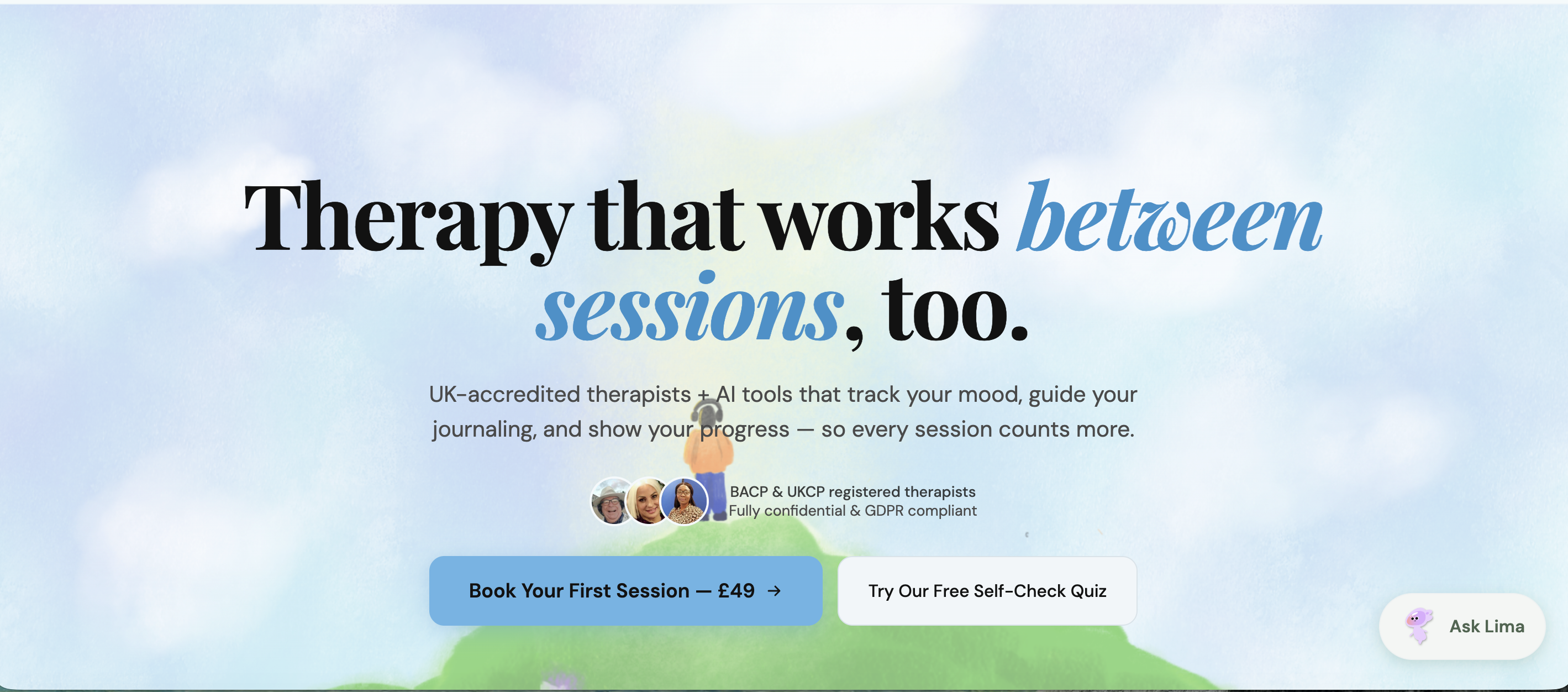
Start therapy online and choose a therapist whose profile matches the approach you are looking for, whether that is CBT, SFBT, trauma-focused work, or another directive modality.
- UK-accredited therapists registered with BACP, UKCP, or NCPS
- Multiple session formats: video, chat, and avatar-based therapy
- Modality filtering so you can select CBT, SFBT, or other approaches
- Transparent pricing with no long-term commitment
- Evening and weekend availability
- Easy therapist switching if the fit is not right
Book an individual therapy session or explore the full range of conditions supported to find the right starting point.
Sources
The following UK authorities provide primary guidance on directive and structured therapies:
- Cognitive behavioural therapy (CBT) – NHS
- National curriculum for cognitive behavioural therapy for severe mental health – HEE (2022/2025 doc)
- Directive counseling – MeSH (NCBI)
This article is general information, not a substitute for advice from a qualified doctor. Consult a qualified healthcare professional about your own circumstances before acting on anything here.