
TL;DR:
- Evening and weekend therapy provide flexible mental health support outside traditional hours, often serving as the only practical option for adults managing work or caregiving. These services include NHS Talking Therapies, private counselling, and structured evening intensive outpatient programmes designed to meet diverse clinical needs. Recent NHS improvements in 2026 have expanded immediate evening and weekend access, reducing barriers and promoting consistent engagement.
Evening and weekend therapy is defined as scheduled mental health treatment delivered outside standard working hours, typically after 6pm on weekdays or at any point on Saturdays and Sundays. For adults managing anxiety, depression, or burnout alongside full-time work or caregiving, this scheduling model is not a convenience. It is often the only realistic route into consistent care. The NHS, private counsellors registered with BACP and UKCP, and specialist providers offering evening intensive outpatient programmes (IOPs) all now operate outside the traditional 9-to-5 window. Understanding what each option involves, how to access it, and what to expect is the practical starting point for anyone considering out-of-hours support.
Evening and weekend therapy explained: what it is and why it matters
Evening and weekend therapy refers to any structured psychological treatment, counselling, or mental health support session scheduled outside conventional daytime hours. The term is descriptive rather than a formal clinical category. The recognised industry terms are "out-of-hours therapy" or "after-hours counselling," and you will encounter both when searching NHS and private provider directories.
The significance of this scheduling model is straightforward. A working adult with a standard Monday-to-Friday job cannot attend a 2pm CBT session without taking annual leave or negotiating with an employer. For caregivers, the barrier is even higher. Out-of-hours services help close the gap when daytime appointments are unavailable or genuinely impractical, improving outcomes for those managing anxiety or depression alongside work and family life.
The range of providers now operating in this space includes NHS Talking Therapies (formerly IAPT), private therapists listed on directories such as the BACP's Find a Therapist tool, and structured evening IOPs run by specialist mental health organisations. Each differs substantially in cost, intensity, and clinical focus.
What types of evening and weekend therapy sessions are available in the UK?
Three distinct formats cover the majority of out-of-hours provision in the UK.
NHS Talking Therapies offers evidence-based treatments including cognitive behavioural therapy (CBT), counselling for depression, and guided self-help. Many NHS Talking Therapies services now offer some evening and weekend slots, though availability varies significantly by region. You can self-refer via the NHS website without a GP referral, and waiting times range from a few weeks to several months depending on local demand.
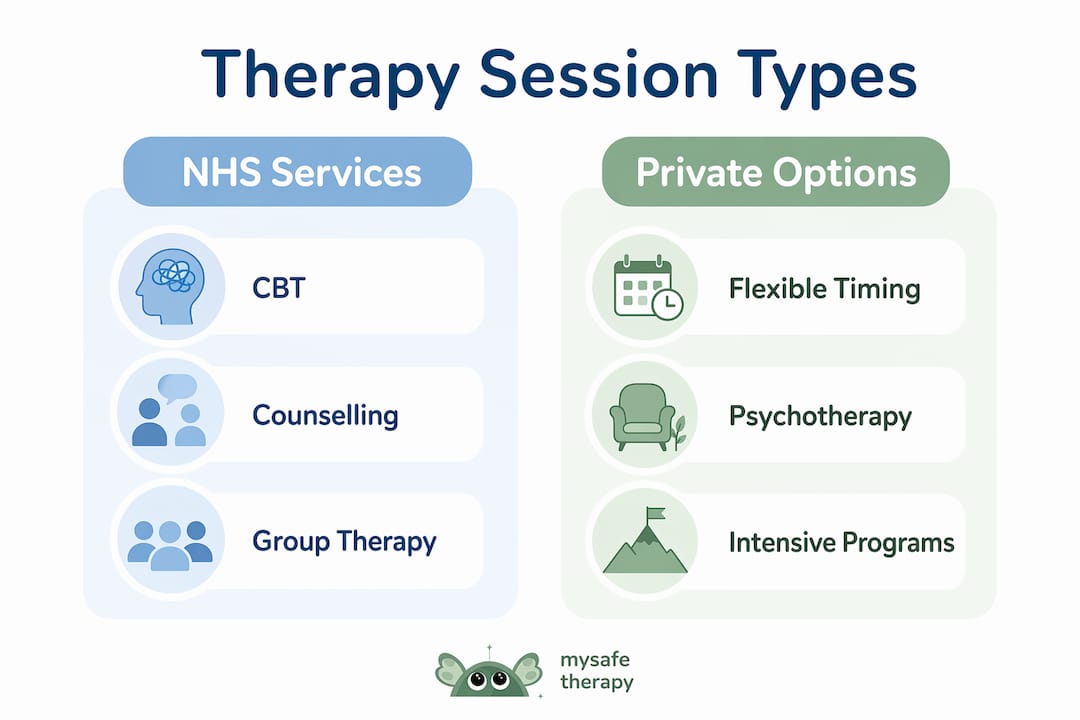
Private counselling and psychotherapy is the most flexible option. Therapists registered with BACP, UKCP, or NCPS frequently offer evening and weekend appointments as standard, particularly those working online. Booking private therapy through online portals allows you to filter by availability, speciality, and session format, including video, phone, or chat-based sessions.
Evening intensive outpatient programmes (IOPs) represent the most structured format. Evening IOPs provide structured mental health and addiction therapy after work hours, with three to five sessions per week totalling nine to fifteen hours of therapeutic support. This is significantly more intensive than a standard weekly session. IOPs are designed for people who need more than weekly therapy but do not require inpatient care.
| Option | Access route | Typical cost | Structure | Intensity |
|---|---|---|---|---|
| NHS Talking Therapies | Self-referral online or via GP | Free | Weekly sessions, fixed programme | Low to moderate |
| Private counselling | Online booking or direct contact | £50 to £120 per session | Flexible, client-led | Low to moderate |
| Evening IOP | Referral or self-referral to specialist provider | Variable, often funded | Multiple sessions per week | High |
| Online therapy platforms | Direct booking via platform | £40 to £90 per session | Flexible, evening/weekend slots | Low to moderate |
Pro Tip: If you are on an NHS waiting list, consider booking one or two private evening sessions in the interim. This maintains therapeutic momentum and reduces the risk of crisis during the waiting period.
How have NHS evening and weekend appointments improved in 2026?
The NHS has made concrete changes to out-of-hours access in 2026. From 1 April 2026, same-day NHS appointments in Leicestershire became available during consistent evening and weekend hours: Monday to Friday 6:30pm to 8:30pm, Saturday 9am to 5pm, and Sunday and bank holidays 10am to 2pm. These appointments are exclusively with GPs and last fifteen minutes, which is longer than the standard ten-minute slot.
"Out-of-hours access isn't only about scheduled therapy sessions. System-level changes that enable same-day evening and weekend appointments complement scheduled mental health therapy and reduce crisis risks during waiting periods." — NHS Leicestershire, Leicestershire and Rutland ICB, 2026
These same-day appointments are distinct from scheduled therapy sessions. They are designed for urgent but non-life-threatening concerns, including acute mental health presentations where someone needs immediate clinical assessment rather than ongoing treatment. You can book via NHS 111 or directly through your GP practice.
The practical relevance for mental health is significant. Someone experiencing a sharp deterioration in anxiety or a depressive episode on a Saturday afternoon now has a route to a GP without attending A&E. This matters because:
- It reduces unnecessary emergency department attendance for mental health concerns
- It provides a clinical record that can support onward referral to NHS Talking Therapies
- It offers a point of contact for medication review outside standard hours
- It reduces the isolation that often accompanies mental health crises at weekends
These improvements are currently confirmed for Leicestershire, but the NHS Long Term Plan signals a broader national direction toward extended access. Checking with your local integrated care board (ICB) will confirm what is available in your area.
What are the benefits and challenges of evening and weekend therapy?
Evening therapy sessions offer greater flexibility and privacy, reduce daytime conflicts, and can improve therapy adherence. For working adults managing anxiety or depression, these are not minor advantages. Consistency is one of the strongest predictors of positive therapy outcomes, and a scheduling model that fits your life makes consistency achievable.
The privacy benefit is underappreciated. Attending a therapy session during a lunch break or leaving the office early raises questions from colleagues. An evening or weekend session removes that visibility entirely. For people who are concerned about stigma or simply value discretion, out-of-hours appointments reduce the social friction around seeking help.
Evening IOPs carry a specific advantage for people with complex needs. Integrated dual diagnosis evening IOPs address co-occurring mental health and substance use disorders using evidence-based modalities, maintaining flexibility while supporting clinically complex presentations. This means someone managing both depression and alcohol dependency can receive coordinated care without taking extended leave from work.
The challenges are real and worth naming directly:
- Therapist availability at evenings and weekends is more limited than daytime, particularly for in-person sessions
- Evening IOP sessions typically last three hours each, which requires sustained energy after a full working day
- Private evening and weekend sessions often carry a small premium over standard daytime rates
- Online therapy requires a stable internet connection and a private space, which is not always available in shared households
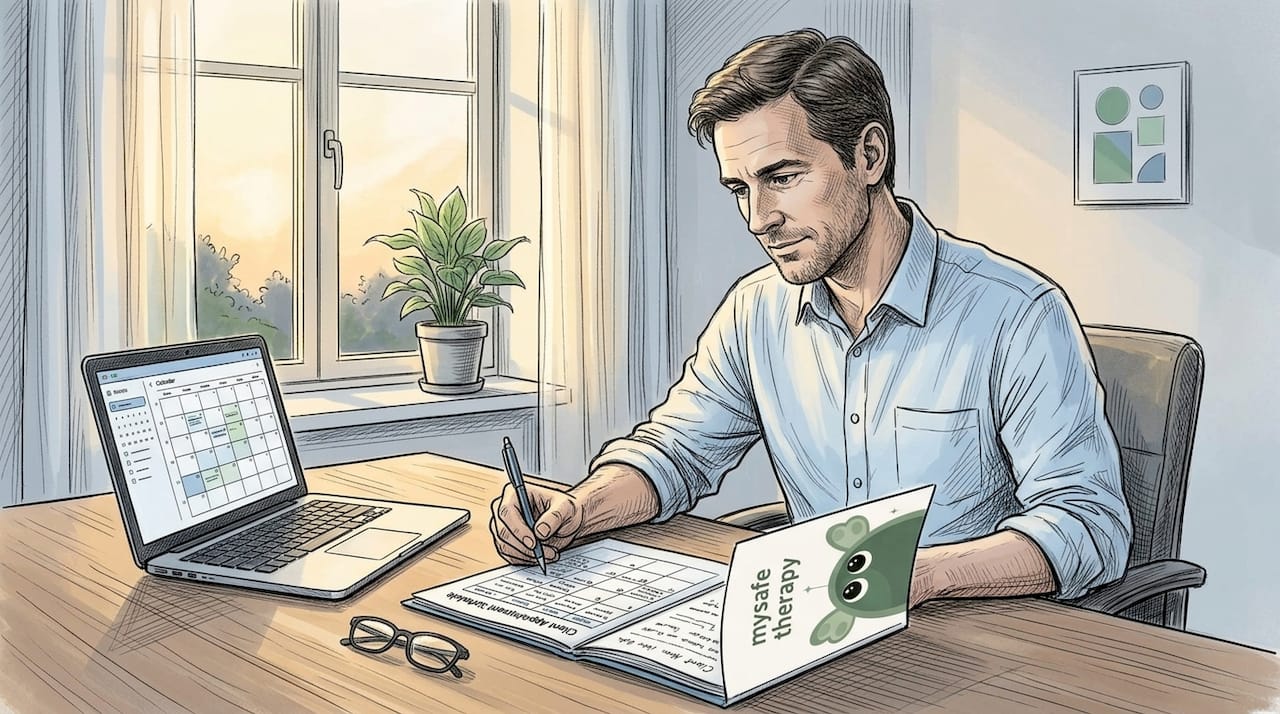
Pro Tip: Block your therapy time in your work calendar as a recurring appointment before you book. Treating it with the same weight as a work meeting is the single most effective way to protect session consistency.
How to access evening and weekend therapy: practical steps
Finding the right out-of-hours option requires matching your clinical needs, budget, and schedule. The following steps apply regardless of which format you choose.
- Clarify what you need. A single presenting issue such as work-related anxiety is well-suited to weekly private counselling or NHS Talking Therapies. More complex or persistent difficulties, including trauma, co-occurring conditions, or severe depression, may warrant an IOP assessment.
- Check NHS Talking Therapies first. Self-refer at nhs.uk/mental-health/talking-therapies-medicine-treatments/talking-therapies-and-counselling/nhs-talking-therapies. Ask explicitly about evening and weekend availability when you complete the referral form.
- Use the BACP Find a Therapist directory. Filter by "evenings" and "weekends" under availability. Every therapist listed is registered with a recognised professional body.
- Book through an online therapy platform. Platforms such as Mysafetherapy connect you with BACP, UKCP, and NCPS-registered therapists who offer flexible session scheduling, including evenings and weekends, via video, chat, or avatar-based formats.
- Contact NHS 111 for urgent out-of-hours support. If you need same-day clinical contact rather than a scheduled session, NHS 111 can direct you to the appropriate service, including the new GP-led evening and weekend appointments where available.
When choosing between online and in-person formats for out-of-hours sessions, consider the following:
- Online therapy removes travel time, which matters significantly when sessions end at 8:30pm
- In-person sessions may feel more contained for people processing trauma or grief
- Video-based therapy with a BACP-registered therapist carries the same clinical standards as face-to-face work
- Affordable therapy options exist across both formats, including sliding-scale fees from some private practitioners
Key takeaways
Evening and weekend therapy is the most accessible route into consistent mental health care for adults whose daytime commitments make standard appointment times impractical.
| Point | Details |
|---|---|
| Definition is descriptive, not clinical | "Out-of-hours therapy" is the recognised term; evening and weekend therapy describes the scheduling model. |
| Three main formats exist | NHS Talking Therapies, private counselling, and evening IOPs each serve different levels of clinical need. |
| NHS access improved in 2026 | Same-day GP appointments now run evenings and weekends in Leicestershire, with broader national expansion signalled. |
| Evening IOPs are highly structured | Three-hour sessions, three to five times per week, totalling nine to fifteen hours of support. |
| Online therapy removes key barriers | Video and chat-based sessions eliminate travel time and reduce stigma for out-of-hours appointments. |
The case for treating scheduling as a clinical decision
At Mysafetherapy, we have observed a consistent pattern: people who find a session time that genuinely fits their life attend more regularly, engage more deeply, and report better outcomes. This is not a soft observation. It reflects what the research on therapy adherence shows repeatedly.
The conventional assumption is that the quality of the therapeutic relationship is the primary driver of outcomes, and that is largely true. But a therapeutic relationship cannot develop if sessions are repeatedly cancelled because of work conflicts or childcare gaps. Scheduling is not an administrative detail. It is a clinical variable.
What concerns us about the current landscape is the uneven distribution of out-of-hours provision. NHS Talking Therapies evening slots exist in some regions and are effectively absent in others. Private evening therapy is accessible to those who can afford £60 to £100 per session, but remains out of reach for many. The NHS improvements in Leicestershire from April 2026 are a meaningful step, but they address urgent primary care rather than ongoing psychological treatment.
The practical implication is this: if you are serious about starting therapy, do not let scheduling feel like a secondary concern. Ask every provider directly about evening and weekend availability before you commit. If the answer is vague, keep looking. The right therapist at the wrong time is still the wrong arrangement.
Start therapy at a time that works for you with Mysafetherapy
Mysafetherapy connects UK adults with BACP, UKCP, and NCPS-registered therapists who offer evening and weekend sessions across video, chat, and avatar-based formats.
Whether you are managing anxiety, depression, burnout, or relationship difficulties, Mysafetherapy's therapists are available outside standard working hours to fit around your schedule. You can start therapy online in minutes, with transparent pricing and no long-term commitment required. If you are ready to book directly, view available therapists and filter by evening and weekend availability. Complete the client intake form to match with a therapist suited to your specific needs and preferred session times.
FAQ
What is evening therapy and how does it differ from standard sessions?
Evening therapy refers to counselling or psychological treatment scheduled after 6pm on weekdays. The clinical content is identical to daytime sessions; the only difference is the appointment time.
Is weekend therapy available on the NHS in the UK?
Some NHS Talking Therapies services offer Saturday appointments, though availability varies by region. From April 2026, same-day GP appointments are also available on Saturdays and Sundays in Leicestershire for urgent but non-life-threatening concerns.
How much does private evening or weekend therapy cost in the UK?
Private evening and weekend sessions typically cost between £50 and £120 per session, depending on the therapist's qualifications and location. Some practitioners offer sliding-scale fees, and online platforms often provide more competitive pricing than in-person providers.
What is an evening intensive outpatient programme?
An evening IOP is a structured mental health programme delivering three to five sessions per week, each lasting approximately three hours, for a total of nine to fifteen hours of therapeutic support weekly. It is designed for people who need more than weekly therapy but do not require inpatient admission.
How do I book evening or weekend therapy in the UK?
You can self-refer to NHS Talking Therapies via nhs.uk and request evening slots, use the BACP Find a Therapist directory filtered by availability, or book directly through an online platform such as Mysafetherapy, which lists therapists with confirmed evening and weekend availability.