
TL;DR:
- Many UK adults find daytime therapy difficult due to work, caregiving, and social stigma, making evening sessions essential.
- Flexible, online evening therapy offers privacy, convenience, and suitability for managing mental health conditions outside standard hours.
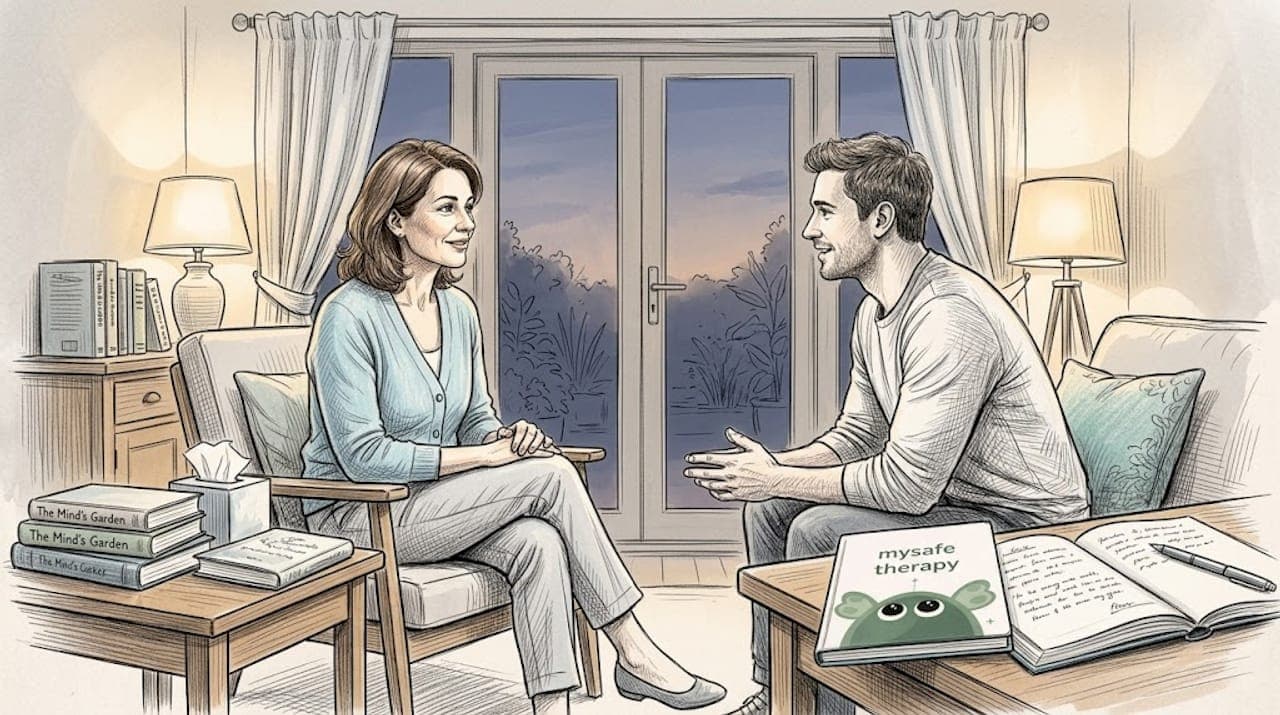
Accessing therapy during standard working hours is not realistic for most UK adults. Between nine-to-five jobs, school runs, caring responsibilities, and the everyday demands of modern life, fitting a therapy appointment into a Tuesday afternoon simply is not an option for a large portion of the population. NHS talking therapies are increasingly offered across flexible formats precisely because providers recognise these barriers. Evening therapy sessions address scheduling conflicts while also offering something less discussed but equally important: genuine privacy.
Table of Contents
- Why do many adults need evening therapy sessions?
- The role of confidentiality and stigma-free environments
- How evening sessions are delivered: in-person, online, and more
- Considerations and potential challenges with evening therapy
- Making evening therapy work for your life
- Why evening therapy is more than just a scheduling fix
- Begin your flexible evening therapy journey
- Frequently asked questions
Key Takeaways
| Point | Details |
|---|---|
| Flexibility for busy adults | Evening therapy sessions enable working adults and carers to get support without missing daytime commitments. |
| Increased confidentiality | Evening and remote sessions allow for private, stigma-free participation, helping sensitive issues be addressed in comfort. |
| Variety of delivery modes | NHS and private providers offer evening sessions in-person, online, or by phone to suit different privacy and lifestyle needs. |
| Consistent routines are vital | To maximise benefits from evening sessions, maintaining regular attendance and clear boundaries is essential for progress. |
| Real-world solutions available | With plenty of UK options, adults can choose formats that fit their lives and get started with evening therapy whenever they're ready. |
Why do many adults need evening therapy sessions?
The structure of working life in the UK makes daytime therapy difficult to access for the majority of adults. A standard therapy session runs between 50 minutes and one hour. For someone working a nine-to-five role, that window would require taking time off, leaving early, or negotiating with an employer — none of which feel straightforward when mental health carries stigma in many workplace cultures.
Consider the practical picture for a working parent. They finish at five, collect children from school or a childminder, manage dinner and bedtime routines, and only have uninterrupted time from around eight or nine o'clock in the evening. That is precisely when mental health support online becomes most relevant, because it can be accessed from home, on their own schedule, without any of the additional logistics of travelling to a clinic.
The adults most likely to seek therapy often live with anxiety, depression, or ongoing relationship stress. These are also conditions that affect sleep, concentration, and motivation — meaning that by the time a midday appointment becomes available, the individual may have already spent considerable energy just managing their day. Evening sessions allow people to approach therapy after settling their immediate obligations.
Key reasons UK adults choose evening therapy sessions:
- Work commitments that make daytime attendance impossible without disclosing the appointment to an employer
- Caregiving responsibilities for children, elderly relatives, or those with disabilities that occupy daytime hours
- Commuting schedules that rule out early afternoon slots
- Financial constraints that prevent taking unpaid leave for appointments
- Preference for privacy by accessing therapy from home rather than a clinical waiting room
Flexible therapy sessions that operate during evenings directly respond to these documented barriers, and the demand is reflected in growing provider adoption of extended hours across both NHS and private services.
The role of confidentiality and stigma-free environments
Privacy is not simply a convenience in therapy. For many people, it is the deciding factor in whether they seek help at all. The concern about being seen entering a counsellor's office, or having a colleague notice a recurring midday absence, is real and well-founded. Stigma around mental health persists in the UK, particularly in certain professional sectors, communities, and age groups.
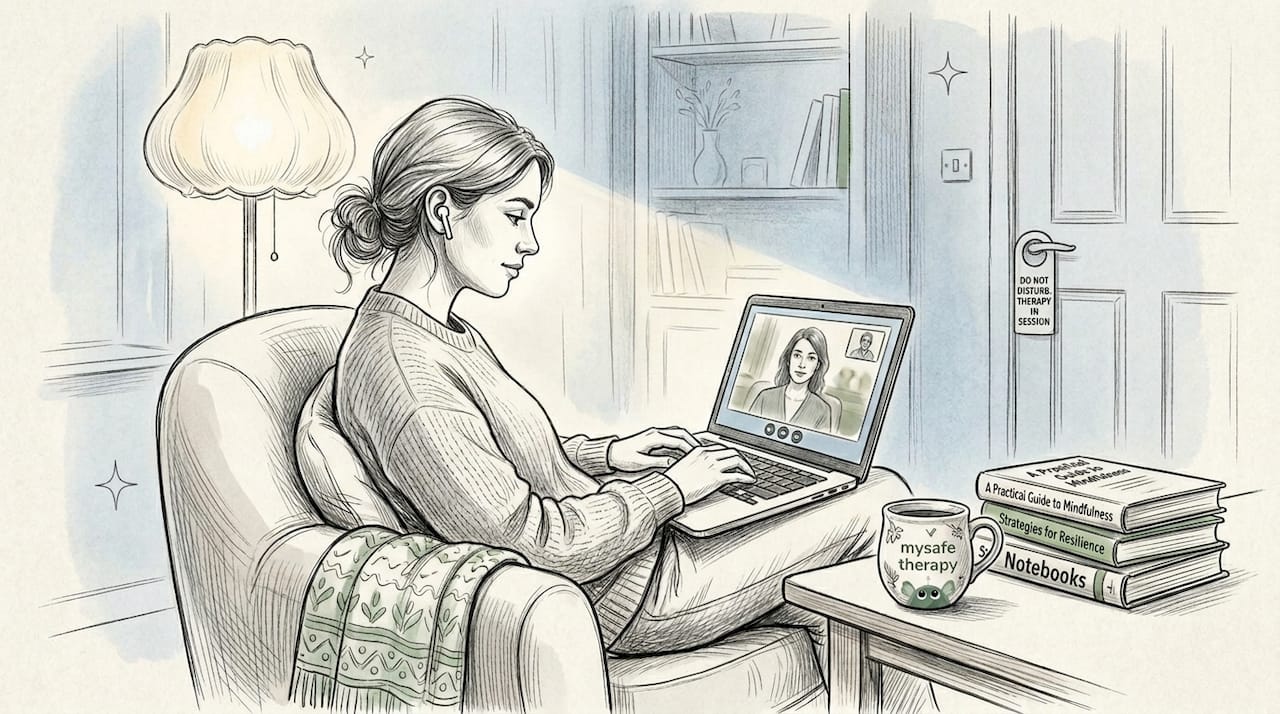
Evening therapy removes several of these social exposure risks. When a session takes place at home via video or telephone, no one in a waiting room sees you. No receptionist knows your name. There is no car parked outside a therapy centre. This practical invisibility matters enormously to people who want support but feel uncomfortable advertising that need publicly.
As noted in research from Private Psychiatry, evening sessions can support confidentiality and stigma-free help-seeking by enabling private online participation and providing a structured, non-judgemental space for adults to discuss anxiety, depression, and relationship difficulties. The non-judgemental aspect is significant. When a person feels they can speak freely, without physical exposure in a shared space, the therapeutic relationship tends to be more open from the outset.
"Stigma is not just a social inconvenience. It is an active barrier that prevents people from seeking the support they need. Evening therapy, delivered remotely, removes several of the visible signals that can trigger that barrier."
Key ways evening therapy supports privacy and stigma reduction:
- Home-based access removes the social visibility of attending a clinic
- After-hours timing means colleagues, neighbours, and family members are less likely to notice or enquire
- Online formats allow session participation without leaving the house
- Flexible scheduling enables individuals to arrange therapy around their own disclosure preferences rather than around public-facing appointment times
For those navigating starting online therapy for the first time, the evening format often feels more manageable precisely because it mirrors the private, low-stakes environment of talking to someone after the day has ended. Similarly, for those seeking online relationship counselling, evening sessions allow couples to attend together without coordinating daytime leave from separate workplaces.
How evening sessions are delivered: in-person, online, and more
Understanding your delivery options is essential before committing to a format. Not all evening therapy looks the same, and the format you choose directly affects your experience of privacy, comfort, and therapeutic outcomes.
NHS talking therapies can be delivered in-person, by video, by phone, or as online courses, with specific availability depending on local provision and individual need. Private providers typically offer greater flexibility in format and timing, with more consistent access to evening appointments.
| Delivery format | Privacy level | Convenience | Therapeutic depth | Evening availability |
|---|---|---|---|---|
| In-person clinic | Low | Low (travel required) | High | Variable |
| Video session | High | High | High | Widely available |
| Telephone session | High | High | Moderate | Widely available |
| Online course | Very high | Very high | Self-directed | Fully flexible |
| Chat-based therapy | Very high | High | Moderate | Widely available |
Each format carries trade-offs. In-person sessions offer a distinct physical boundary between daily life and therapy, which some people find beneficial for mental separation. However, they require travel and carry greater social visibility. Video sessions replicate the face-to-face quality of in-person work while maintaining home-based privacy. Telephone sessions remove visual self-consciousness, which some individuals find helpful when discussing sensitive topics for the first time.
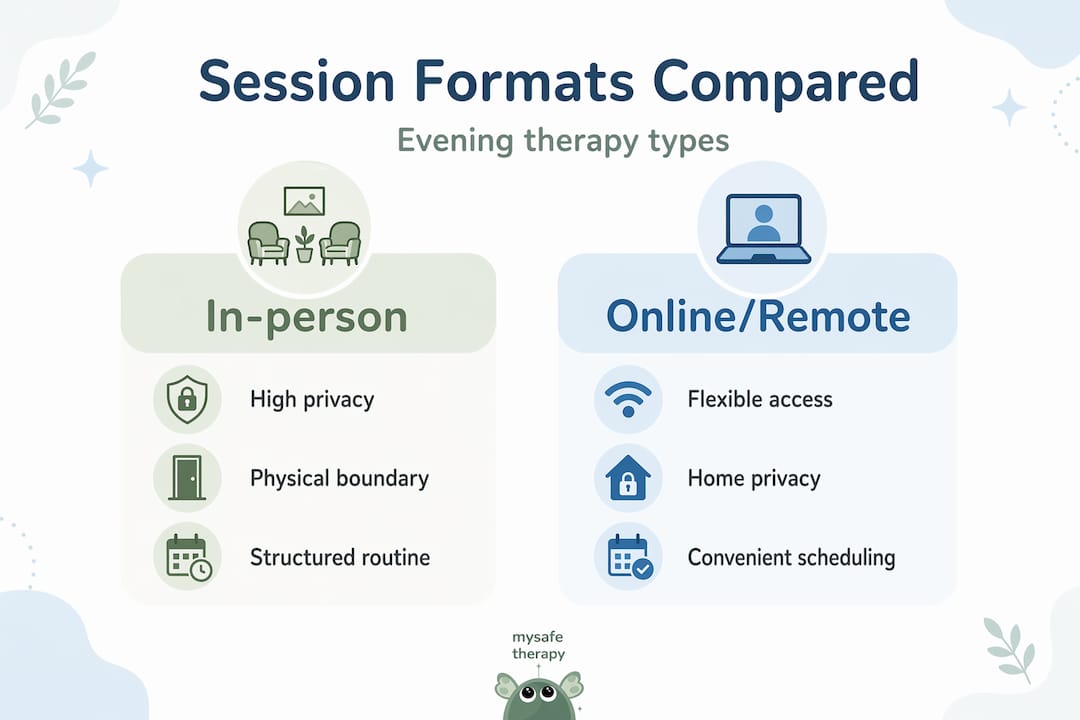
Explore the full range of types of online therapy to understand which format aligns best with your circumstances, and use a step-by-step accessible therapy guide if you are unsure where to begin.
Pro Tip: If you are new to therapy and uncertain about format, start with a video session. It closely mirrors in-person therapy but removes travel time and waiting-room anxiety, making it a lower-barrier starting point for evening use.
Considerations and potential challenges with evening therapy
Evening therapy is not without its practical complications. Understanding these in advance helps you plan more effectively and communicate your needs to a therapist before sessions begin.
The most commonly reported challenge is fatigue. After a full working day, particularly one involving high cognitive demand, stress, or interpersonal complexity, many people arrive at an evening session feeling mentally depleted. Therapy requires active engagement — reflection, honesty, and emotional presence. These are harder to access when exhausted.
Irregular scheduling is another risk factor. If sessions are spaced too far apart or moved frequently due to evening conflicts, the therapeutic process can lose momentum. NHS guidance on talking therapies indicates that evening-only availability is helpful when daytime attendance is not possible, but it may create a need for additional structure, such as a consistent therapist and clear between-session routines, to prevent therapy from drifting.
| Challenge | Impact on therapy | Mitigation strategy |
|---|---|---|
| Post-work fatigue | Reduced engagement | Schedule wind-down time before sessions |
| Irregular attendance | Loss of therapeutic progress | Set recurring weekly slot |
| Home distractions | Reduced concentration | Designate a private, quiet space |
| Therapist inconsistency | Weakened therapeutic relationship | Choose a platform with guaranteed continuity |
Steps to manage evening therapy effectively:
- Set a consistent weekly slot and treat it as a firm, non-negotiable appointment
- Allow 20 to 30 minutes of transition time between your work day and your session
- Communicate openly with your therapist about your energy levels and pacing preferences
- Use between-session tools such as journalling or mood tracking to maintain continuity
- Review your schedule monthly to ensure your chosen time slot continues to work
Pro Tip: Build a brief pre-session routine — a short walk, a cup of tea, or five minutes of quiet — to mentally shift from work mode to therapy mode. This simple transition helps the brain move out of task-focus and into the kind of reflective state that makes therapy more productive.
Consider reviewing online therapy safety guidance to ensure your digital setup protects your privacy during remote evening sessions.
Making evening therapy work for your life
Effective therapy does not happen automatically. The format and timing are enablers, but consistent outcomes depend on how well you integrate sessions into your existing life structure. For evening therapy specifically, this requires deliberate planning.
The most effective approach is to treat your therapy session as a fixed commitment equal to any other standing obligation. Rescheduling frequently undermines the therapeutic relationship and disrupts the continuity that allows progress to accumulate over time. If your schedule is genuinely unpredictable, discuss this with your therapist at the outset so they can build in appropriate flexibility.
Practical steps for integrating evening therapy into your routine:
- Complete household tasks before your session so that you are not mentally preoccupied with unfinished obligations during therapy
- Inform a trusted household member about your session time so they can avoid interruptions, without necessarily disclosing the nature of the session
- Create a consistent physical space for sessions, even if it is simply a bedroom with the door closed and headphones in place
- Use digital reminders set 30 minutes before the session to begin your transition routine
- Keep a brief therapy notebook to jot down thoughts, feelings, or questions between sessions so you arrive prepared
As noted by Private Psychiatry, evening sessions support confidentiality and structure, provided routines and therapist continuity are established. The combination of those two factors — routine and consistency with the same therapist — is what separates productive evening therapy from a series of disconnected conversations.
Access self-help resources for flexible support to supplement your sessions with tools that maintain momentum between appointments.
Why evening therapy is more than just a scheduling fix
There is a tendency to frame evening therapy as a pragmatic workaround. It is presented as the option for people who cannot manage daytime. That framing undervalues what evening availability actually represents.
Evening therapy is a structural challenge to the assumption that mental health support should conform to office hours. When therapy is only available between nine and five, the implicit message is that mental health is a matter to be managed within professional parameters, during designated hours, in designated spaces. That model serves clinicians more than it serves the people who need help.
The shift to evening and remote provision is not just logistical. It is a shift in who gets to access support at all. Research on accessible online therapy consistently shows that flexible timing increases engagement from groups that are traditionally underserved: shift workers, carers, people in rural areas, and those from communities where attending a clinic carries cultural stigma.
However, evening therapy carries a risk that is worth stating plainly. Flexibility without structure can erode the therapeutic process. NHS guidance confirms that evening-only availability increases flexibility but means clients must work proactively to avoid inconsistency and loss of momentum. The responsibility is partly with the individual. Choosing evening therapy means choosing to self-advocate — to protect that time, communicate your needs, and maintain the routine that makes progress possible.
The professionals we work with at MySafeTherapy understand this. They are trained to establish clear structures from the outset, set realistic expectations, and adapt therapeutic approaches to the realities of an adult life that does not pause for scheduled appointments. That is not a workaround. That is modern, effective mental health care.
Begin your flexible evening therapy journey
Finding the right time for therapy should not feel like another obstacle. MySafeTherapy connects you with UK-accredited therapists registered with BACP, UKCP, and NCPS, all of whom offer evening and weekend appointments across a range of formats including video, chat, and avatar-based sessions.
Whether you are managing anxiety, navigating a relationship challenge, or working through burnout, evening access means support fits around your life rather than disrupting it. Pricing is clear, therapist switching is straightforward, and your privacy is built into every part of the platform. Take the first step and start your therapy journey today, or visit MySafeTherapy to explore formats, therapist profiles, and everything you need to make an informed choice.
Frequently asked questions
Are evening therapy sessions as effective as daytime sessions?
Yes, evening therapy sessions can be just as effective as those held during the day, provided sessions are consistent and a clear routine is maintained. NHS guidance notes that structure and therapist continuity are the key factors in preventing drift, regardless of session timing.
How can I ensure privacy during evening online therapy at home?
Choose a quiet room, use headphones, and schedule sessions when you are least likely to be interrupted, typically after other household members have settled for the evening. Private Psychiatry research confirms that online participation supports confidentiality by removing the visibility of attending a clinic.
Do NHS and private therapy providers both offer evening appointments?
Yes, both NHS and private providers in the UK commonly offer evening sessions across in-person, video, and online formats. NHS talking therapies are available through multiple delivery modes, with local availability determining the specific options in your area.
What if I get too tired for therapy after a long day?
Plan a brief wind-down routine before your session and discuss your energy levels with your therapist so they can adjust the pace accordingly. NHS guidance recommends clear between-session routines to maintain focus and prevent sessions from losing momentum during evening-only arrangements.