
TL;DR:
- Talk therapy involves structured conversations with trained professionals to explore thoughts, feelings, and behaviors for lasting mental health change. It includes approaches like CBT and counselling, available in various formats such as online, in-person, or telephone, often without needing a GP referral. Evidence shows talk therapy effectively treats conditions like anxiety and depression, promoting self-awareness, resilience, and improved relationships.
Many adults searching for mental health support encounter the term "talk therapy" and find themselves unsure what it actually involves. Is it simply chatting with someone? Do therapists tell you what to do? What is talk therapy, precisely, and does it genuinely work? These are reasonable questions, and the confusion is common. This guide clarifies what talk therapy is, how it works, which types are available in the UK, and what to expect when you begin, whether you access support through the NHS or a confidential online platform.
Table of Contents
- What is talk therapy and how does it work
- Common types of talk therapy available in the UK
- How to access confidential online talk therapy in the UK
- What to expect during talk therapy sessions
- Benefits and outcomes of talk therapy for anxiety, depression and relationships
- Rethinking talk therapy: what most people miss
- Getting started with confidential online talk therapy today
- Frequently asked questions
Key Takeaways
| Point | Details |
|---|---|
| Talk therapy explained | Talk therapy involves talking with a trained professional to understand and change thoughts, feelings, and behaviours. |
| Types available | Common UK talk therapies include cognitive behavioural therapy and counselling, offered in various formats including online. |
| Access and confidentiality | You can self-refer to free NHS talking therapies online privately without a GP referral for anxiety and depression. |
| Session structure | Therapy typically lasts 8-16 sessions with focus on practical skills and homework for lasting change. |
| Proven benefits | Talk therapy effectively reduces anxiety, depression, and relationship issues, with benefits lasting beyond treatment. |
What is talk therapy and how does it work
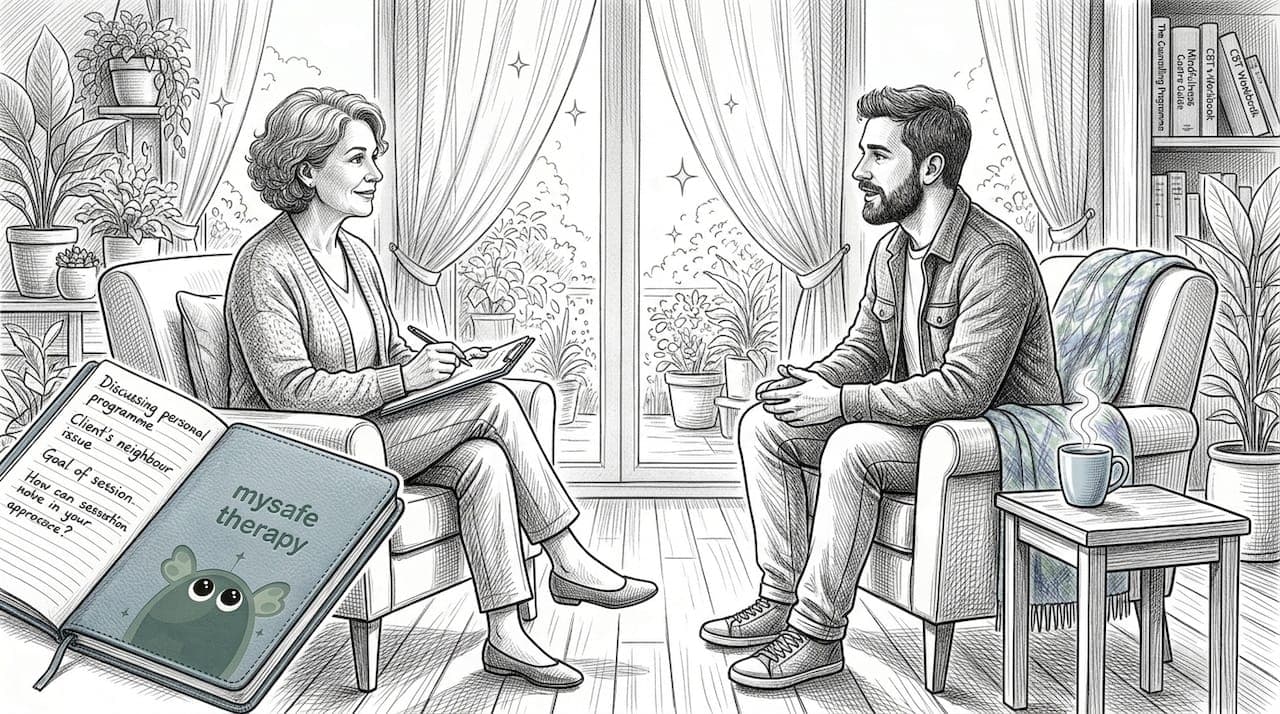
Talk therapy is, at its core, a structured conversation between you and a trained professional. The purpose is not to vent without direction. Instead, sessions focus on identifying the connections between your thoughts, feelings, and behaviours, then using those insights to foster real, lasting change.
Talking therapies involve talking to a trained professional about thoughts, feelings, and behaviours to treat issues including anxiety, depression, and relationship problems, as NHS guidance confirms. That definition is useful because it signals something important: this is a clinical process, not informal advice.
One of the most misunderstood aspects of talk therapy is the therapist's role. Therapists do not instruct you on what to do. They guide you toward finding your own answers. This is deliberate. The goal is to build your capacity to understand and manage your mental health independently, not to create reliance on a professional. Understanding how therapists support mental health clarifies why this approach produces more durable outcomes.
Talk therapy addresses a wide range of conditions, including:
- Anxiety and panic disorders
- Depression and low mood
- Relationship difficulties and communication breakdowns
- Trauma and post-traumatic stress
- Burnout and work-related stress
- Obsessive thoughts and compulsive behaviours
"Talk therapy works because it treats the person, not just the symptom. When you understand the thought pattern driving your anxiety, you gain the ability to interrupt it, not just endure it."
Sessions can be delivered in person, by telephone, via video call, or through structured online programmes. This range matters, particularly for adults managing busy schedules or seeking support without visiting a clinic.
Common types of talk therapy available in the UK
Not all talk therapy is the same. Different approaches suit different conditions and personalities. Knowing the distinctions helps you make an informed choice.
Cognitive behavioural therapy (CBT) is the most widely used and researched form. CBT sessions typically involve 8 to 16 sessions over several weeks, focusing on changing unhelpful thoughts and actions, with homework practice between each session. The homework element is significant. CBT asks you to apply skills in real situations, not just discuss them in a room.
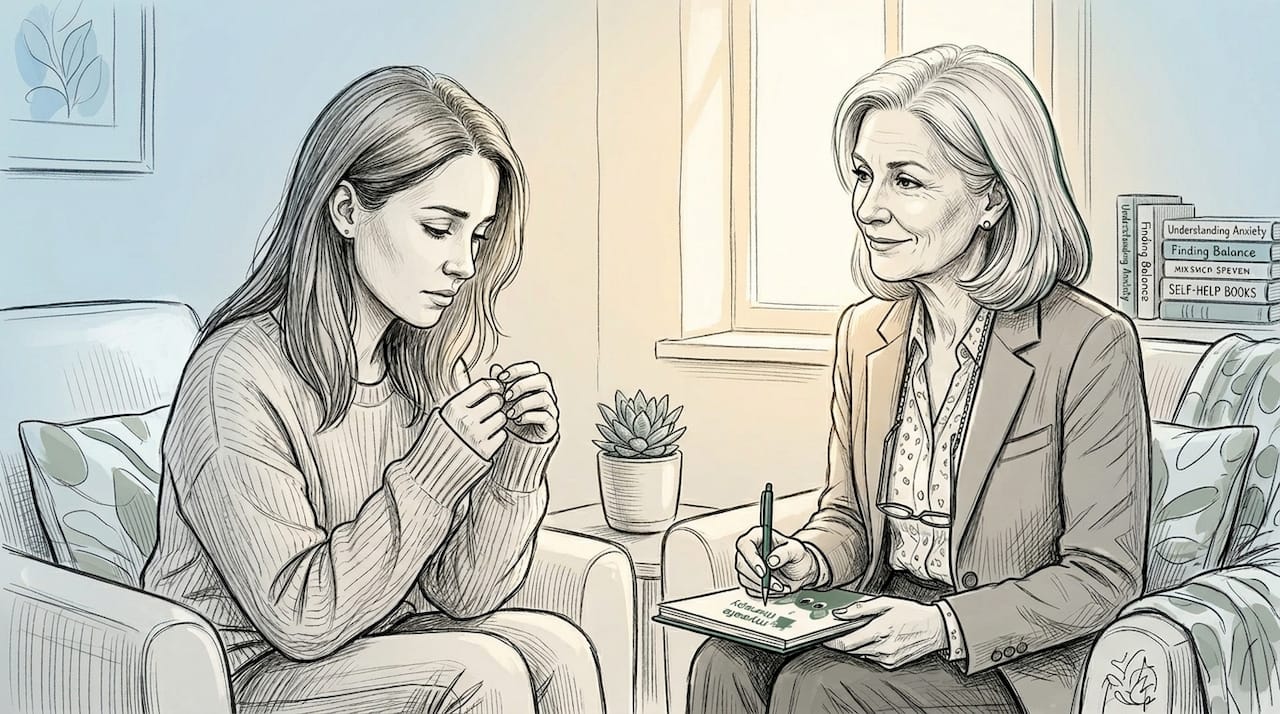
Counselling takes a different approach. Counselling involves supportive, non-judgmental listening to help you find personal solutions for challenges such as depression or relationship stress. It is less structured than CBT and more focused on emotional understanding and self-acceptance.
Other approaches available in the UK include mindfulness-based cognitive therapy (MBCT), interpersonal therapy (IPT), and guided self-help programmes, several of which are available on the NHS. Exploring effective therapy techniques gives a broader view of what each method involves.
| Therapy type | Structure | Best suited for | Session length |
|---|---|---|---|
| CBT | Highly structured | Anxiety, depression, OCD | 8 to 16 sessions |
| Counselling | Flexible, supportive | Grief, relationships, stress | Varies |
| MBCT | Structured with mindfulness | Recurrent depression | 8 weeks |
| Guided self-help | Self-paced with check-ins | Mild to moderate anxiety | Flexible |
| IPT | Structured, relationship-focused | Depression, eating disorders | 12 to 16 sessions |
Pro Tip: Many people find that combining talk therapy with digital self-help tools, such as mood tracking or journalling, accelerates progress between sessions.
How to access confidential online talk therapy in the UK
Accessing talk therapy in the UK is more straightforward than many people assume. You do not always need a GP referral. You do not need to be in crisis. You simply need to take the first step.
NHS talking therapies for adults with anxiety and depression are free at the point of use, and self-referral is available without a GP, often beginning with guided self-help online programmes. This means you can initiate support today, without waiting for an appointment.
For those using guided self-help, the process is structured and self-paced: you work through online modules at your own speed, supported by weekly professional check-ins via email or telephone. This requires internet access and a genuine commitment to completing the exercises.
Here is a practical sequence for accessing confidential online talk therapy in the UK:
- Identify your needs. Note which issues you want to address, whether anxiety, low mood, relationship difficulties, or something else.
- Choose your access route. Decide between NHS self-referral, a private platform, or a workplace employee assistance programme.
- Self-refer or register. Use your local NHS talking therapies service finder, or register directly with a private provider. No GP letter is required for most services.
- Complete an initial assessment. You will typically answer questions about your symptoms and history to match you with the right therapy type and therapist.
- Agree on a format. Select from video, telephone, or chat-based sessions depending on what suits you.
- Commit to the full course. Attend sessions consistently and complete any agreed homework between appointments.
Understanding how to start online therapy in detail can reduce the hesitation many people feel at this stage. There are also reliable self-help tools for anxiety and depression that work well alongside formal sessions.
Pro Tip: Before your first session, create a quiet, private space with minimal interruptions, and keep a brief journal of recent thoughts or events that have affected your mood. Your therapist will find this context genuinely useful.
What to expect during talk therapy sessions
Knowing what happens inside a session removes much of the anxiety around starting. Sessions are not interrogations. They are guided conversations with a clear, shared purpose.
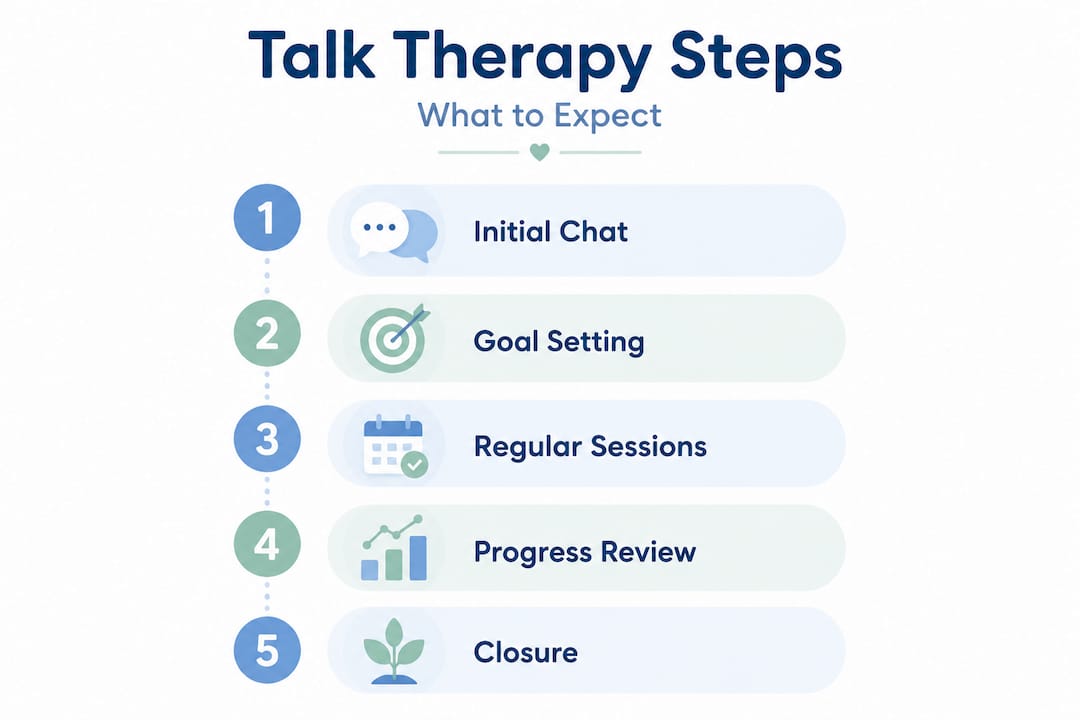
A typical course, particularly for CBT, runs between 8 and 16 weeks, with weekly or bi-weekly meetings, each lasting approximately 50 to 60 minutes. Counselling courses vary more in length depending on individual need.
In each session, you and your therapist will:
- Review your week and any homework completed since the last session
- Identify specific situations that triggered difficult thoughts or feelings
- Examine the thought patterns associated with those situations
- Practise new responses or coping strategies together
- Set tasks for the coming week to apply what you have discussed
Your therapist leads the structure. You provide the content. This division is important because it keeps sessions focused without making you feel directed or judged. Between sessions, your role is to practise the skills discussed and notice when and how they work in daily life.
Reviewing reliable mental health management tips alongside your therapy course can help consolidate progress between appointments.
Benefits and outcomes of talk therapy for anxiety, depression and relationships
The question of whether talk therapy is effective is one worth answering with evidence, not reassurance.
For anxiety and depression, the research is consistent. Talk therapy, particularly CBT, produces measurable reductions in symptoms, and person-centred therapy shows depression outcomes persisting for at least 24 months in collaborative care models. That is not a short-term fix. That is sustained change.
1 in 5 adults in the UK experiences a mental health problem each year, yet many delay seeking support for months or years due to uncertainty about what help is available and how to access it.
For relationship challenges, talk therapy helps in a different but equally important way. It improves your ability to understand your own patterns, articulate needs clearly, and respond to others with less reactivity. These are skills with direct, practical application.
The benefits of talk therapy extend beyond symptom reduction:
- Increased self-awareness and emotional regulation
- Improved communication in personal and professional relationships
- Greater resilience when facing future stressors
- Reduced reliance on avoidance or unhelpful coping behaviours
- A clearer, more grounded sense of personal identity
Supplementing therapy with structured self-help resources strengthens and extends these outcomes over time.
Rethinking talk therapy: what most people miss
Most people approach talk therapy expecting guidance. They want someone to analyse the situation and tell them what to do differently. When that does not happen, some feel the therapy is not working. In reality, that experience is where the work begins.
The insight that drives lasting change in therapy almost always comes from you. The therapist's skill lies in asking the right question at the right moment, not in providing the answer. This requires something many people underestimate: active participation. Attending sessions is necessary but not sufficient. Completing homework, reflecting between sessions, and staying engaged with the process is what separates a course of therapy that transforms behaviour from one that feels useful but fades quickly.
There is also a practical point worth making about access. Many people overlook guided self-help as a genuine first step, assuming it is a lesser alternative to face-to-face work. It is not. For mild to moderate anxiety and depression, self-guided therapy is evidence-based and often produces faster access to support than waiting for a one-to-one slot. Starting there is not settling. It is pragmatic.
Varied formats, whether online, telephone, group, or one-to-one, each carry genuine value. The format that you will actually use consistently is more important than the format that sounds most thorough on paper.
Pro Tip: When you begin therapy, resist the urge to evaluate it after one or two sessions. Most people report meaningful progress only after four to six sessions, once the therapeutic relationship has developed enough to do real work.
Getting started with confidential online talk therapy today
You now have a clear picture of what talk therapy is, how it works, and what you can reasonably expect from a course of treatment. The next step is straightforward.
MySafeTherapy connects UK adults with accredited therapists registered with BACP, UKCP, and NCPS, all accessible privately and confidentially without a GP referral. Sessions are available via video, chat, or avatar-based formats, with flexible scheduling including evenings and weekends. Whether you are managing anxiety, depression, relationship difficulties, or burnout, support is available at a pace and in a format that suits you. To take the first step, start therapy with MySafeTherapy today. Bring whatever notes you have, even brief ones, and your therapist will take it from there.
Frequently asked questions
What types of talk therapy can I access in the UK?
You can access several forms, including CBT, counselling, and guided self-help programmes, many of which are available through the NHS or via accredited private providers.
Can I start talk therapy without a GP referral?
Yes. In the UK, self-referral is available directly to NHS talking therapies services for anxiety and depression, with no GP involvement required.
How long does a typical course of talk therapy last?
A typical course, especially CBT, lasts 8 to 16 sessions, held weekly or bi-weekly, with structured homework to practise skills between appointments.
What are the benefits of online talk therapy?
Online talk therapy provides confidential access from home with flexible scheduling, and often combines guided self-help modules with regular therapist check-ins, making consistent support more achievable.
How effective is talk therapy for depression?
Person-centred therapy has demonstrated depression improvements lasting at least 24 months in collaborative care settings, making it a clinically supported option for long-term mental health management.