

TL;DR:
- Neurodiverse support involves tailored accommodations that remove barriers for individuals with different brain processing styles. Most support gaps exist due to inadequate manager training and lack of proactive, personalized adjustments. Consistent documentation, regular review, and fostering psychological safety are essential for effective inclusion across workplaces, education, and healthcare.
Neurodiverse support is defined as any deliberate adjustment, accommodation, or practice that removes barriers for individuals whose brains process information differently, including those with autism, ADHD, dyslexia, dyspraxia, and dyscalculia. The most effective examples of neurodiverse support share one quality: they are tailored to the individual, not applied as a blanket policy. The Equality Act 2010 provides the legal foundation for workplace adjustments in the UK, while bodies such as the National Autistic Society and Acas set the standard for best practice. Yet support gaps remain significant. Only 32% of organisations train managers effectively to make reasonable adjustments. That figure reveals how far most settings still have to travel.
1. What are effective workplace examples of neurodiverse support?
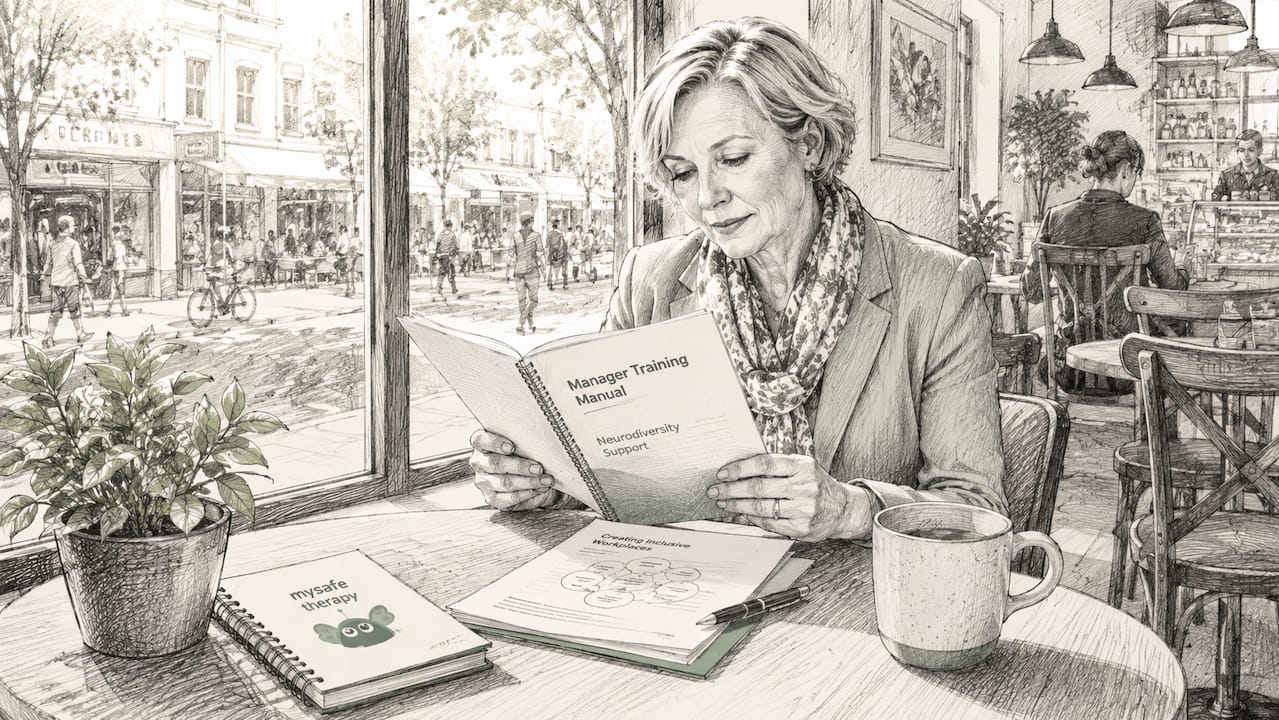
The workplace is where neurodiverse support strategies are most codified, yet most inconsistently applied. Under the Equality Act 2010, employers must make reasonable adjustments when a neurodivergent employee faces a substantial disadvantage. Common examples include providing written instructions, noise-cancelling headphones, and flexible start times.
A critical and often overlooked point: reasonable adjustments do not require a formal diagnosis. If an employer is aware or reasonably suspects a neurodivergent condition, the duty to act is already triggered. That shifts the conversation from gatekeeping to proactive inclusion.
Practical workplace adjustments include:
- Written agendas sent before meetings, reducing cognitive load during discussions
- Flexible scheduling, such as adjusted start times or compressed hours, to accommodate executive functioning differences
- Dedicated quiet spaces or noise-cancelling headphones for concentration
- Clear, structured task briefs delivered in writing rather than verbally
- Regular one-to-one check-ins with a line manager to review how adjustments are working
Manager training is the weakest link in most organisations. 35% of workers in Great Britain believe their employer is ineffective at training managers to support neurodiversity. Poor training means adjustments are either not offered or not sustained.
Psychological safety is the cultural condition that makes all other adjustments possible. When neurodivergent employees fear stigma or career consequences for disclosing their needs, even the best written policies fail. Organisations that build psychological safety see proactive disclosure, which enables support before problems escalate.
Co-creation of support plans with the individual, rather than applying a standard checklist, produces adjustments that actually work. The National Autistic Society and Acas both advocate for ongoing dialogue rather than one-off tick-box exercises.
Pro Tip: Ask the neurodivergent employee directly what would help, then document the agreed adjustments in writing. Review them every three to six months, not just at annual appraisal.
2. How do educational settings support neurodiverse students effectively?
Schools and universities that support neurodiverse students well share a common approach: they modify the environment and the delivery of learning, not the student. Small changes to educational settings, such as smaller group sizes and sensory tools, significantly enhance learning experiences for neurodiverse students.
Effective neurodiversity inclusive practices in education include:
- Sensory-friendly classrooms with reduced visual clutter, adjustable lighting, and designated calm areas
- Fidget tools such as stress balls or textured mats, which help students regulate sensory input without disrupting others
- Structured daily routines with visual timetables, so students know what to expect and when
- Clear, step-by-step instructions broken into single tasks rather than multi-part verbal directions
- Flexible assessment formats, allowing students to demonstrate knowledge through oral presentation, portfolio, or practical work rather than written exams only
- Student voice mechanisms, such as regular check-ins or anonymous feedback forms, so students can flag what is and is not working
Inclusive curriculum design goes beyond physical adjustments. It means building multiple means of representation, expression, and engagement into lesson planning from the outset, rather than retrofitting accommodations after a student struggles.
Higher education settings face particular pressure. Students who received strong school-level support often find university environments abrupt and under-resourced by comparison. Disability services offices, extended deadline policies, and note-taking support are examples of autism support and ADHD accommodation that universities can implement without significant cost.
Pro Tip: Visual timetables work for a far wider range of students than those with a formal diagnosis. Introducing them as standard classroom practice reduces stigma and benefits the whole group.
3. What are examples of neurodiverse support in healthcare and therapy?
Healthcare environments present specific barriers for neurodivergent individuals. Waiting rooms with unpredictable noise, unclear appointment processes, and rigid communication formats all increase anxiety before a consultation begins. Waiting times for neurodiversity assessments in the UK can be two years or more, which means many people seek therapy and healthcare support without a formal diagnosis in place.
Practical examples of neurodiverse support in healthcare and therapy settings include:
- Multiple communication channels. Offering appointment booking by phone, online form, email, and text message removes the barrier for individuals who find telephone calls distressing.
- Clear pre-appointment information. Sending a written summary of what to expect, who will be present, and how long the appointment will last reduces anticipatory anxiety significantly.
- Flexible session formats. Video, telephone, and in-person options allow individuals to choose the format that suits their sensory and communication preferences.
- Private, low-stimulation waiting areas. A quiet room separate from a busy waiting area reduces sensory overload before the appointment begins.
- Adjusted session length and pacing. Shorter, more frequent appointments can work better than standard 50-minute sessions for some neurodivergent individuals.
- Assistive technology within sessions. Allowing individuals to use text-to-speech tools, written communication aids, or visual supports during appointments removes communication barriers.
Ease of appointment booking and offering various channels reduces anxiety and improves attendance for neurodivergent clients in therapy. That finding from the iOH Occupational Health Neurodivergent Toolkit points to a straightforward fix that most services can implement immediately.
Accessibility in therapy is not a niche concern. It is the baseline condition for any therapeutic relationship to function.
4. Which tools and resources best support neurodiverse individuals?
The most consistent examples of neurodiverse support rely on tools that travel with the individual across different settings and managers. Three categories stand out: adjustment passports, assistive technology, and structured training programmes.
Adjustment passports are live documents that record agreed accommodations in a portable format. Adjustment passports aid consistent support across different roles and managers by documenting agreed accommodations in a portable format. When an employee changes team or manager, the passport transfers their support history without requiring them to re-explain their needs from scratch.
Assistive technology covers a wide range of tools:
- Speech-to-text software such as Dragon NaturallySpeaking for individuals who find typing difficult
- Text-to-speech readers for those with dyslexia
- Noise-cancelling headphones for sensory regulation in open-plan offices
- Digital calendar tools with automated reminders for executive functioning support
- Screen readers and colour-overlay software for visual processing differences
Training programmes for managers and colleagues build the awareness that makes individual adjustments sustainable. The CPD Certification Service offers accredited neurodiversity training that covers both legal obligations and practical communication strategies. Organisations that invest in ongoing manager training report fewer grievances and higher retention among neurodivergent staff.
Disability-focused social enterprises also contribute meaningfully to inclusion. Organisations such as Blindenwerkstatt Holger Sieben demonstrate how collaborative, person-centred approaches to support can be embedded in workplace culture at an organisational level.
Pro Tip: Treat the adjustment passport as a live document, not a form completed once at onboarding. Schedule a review every six months and update it whenever the individual's role or needs change.
5. How should adjustments be documented and reviewed?
Documentation is not a bureaucratic formality. Effective reasonable adjustments must be documented, agreed upon in writing, and regularly reviewed to meet the individual's needs. Without written records, adjustments are vulnerable to being forgotten, ignored, or disputed.
The review process matters as much as the initial agreement. Neurodivergent individuals' needs can change with role, environment, or life circumstances. A support plan written at the point of hire may be entirely inadequate two years later. Regular reviews signal to the individual that their support is taken seriously, not treated as a one-time administrative task.
Flexible scheduling and clear, documented communication accommodate executive functioning differences effectively. This applies equally in educational and healthcare settings, not just workplaces. Schools that document individual education plans and review them termly produce better outcomes than those that rely on informal arrangements.
Flexible therapy sessions follow the same principle. When session formats, timing, and communication methods are agreed and recorded, the therapeutic relationship becomes more predictable and therefore safer for neurodivergent individuals.
Key takeaways
The most effective neurodiverse support is co-created with the individual, documented in writing, and reviewed regularly across workplace, education, and healthcare settings.
| Point | Details |
|---|---|
| Legal duty starts early | Under the Equality Act 2010, no formal diagnosis is needed before an employer must act on reasonable adjustments. |
| Co-creation outperforms checklists | Adjustments designed with the individual produce better outcomes than standard policies applied without consultation. |
| Documentation sustains support | Written, reviewed adjustment records prevent support from being lost when roles or managers change. |
| Manager training is the gap | Only 32% of UK organisations train managers effectively to make reasonable adjustments for neurodivergent staff. |
| Environment shapes access | Sensory-friendly spaces, multiple communication channels, and flexible scheduling reduce barriers across all settings. |
Mysafetherapy's view on advancing neurodiverse support
The most persistent mistake organisations make is treating neurodiverse support as a compliance exercise rather than a cultural commitment. A written policy filed in an HR system does nothing for the person sitting in a noisy open-plan office who cannot concentrate. Real support requires listening, adapting, and returning to the conversation regularly.
What we have observed is that the individuals who receive the most effective support are those whose organisations avoid making assumptions based on diagnostic labels. Autism does not look the same in every person. ADHD presents differently across genders, ages, and contexts. Support built on a label rather than a conversation will miss the mark more often than not.
The cultural shift toward psychological safety is the most significant development in this space. When people feel safe to say "this is not working for me," organisations can respond before a crisis develops. That openness does not happen by accident. It requires managers who are trained, policies that are visible, and leadership that models disclosure without penalty.
Reducing stigma is not a soft goal. It is the precondition for every other adjustment to function. Organisations that get this right do not just retain neurodivergent talent. They build environments where everyone performs better.
— Mysafetherapy
Accessible therapy for neurodiverse individuals
Mysafetherapy connects neurodivergent individuals with UK-accredited therapists registered with BACP, UKCP, and NCPS, offering sessions by video, telephone, and avatar format to suit different communication preferences and sensory needs.
Appointments are available evenings and weekends, with straightforward online booking and no waiting lists of the length seen in NHS pathways. For those who find standard therapy formats difficult, avatar therapy offers a fully anonymous option from £49. Professionals seeking confidential support can access therapy for professionals with therapists experienced in workplace and neurodiversity-related challenges. To begin, visit Mysafetherapy and match with a therapist suited to your needs.
FAQ
What counts as a reasonable adjustment for a neurodivergent employee?
Reasonable adjustments include changes to communication style, working hours, physical environment, and task delivery. Under the Equality Act 2010, no formal diagnosis is required before an employer must consider making them.
Do neurodiverse support strategies differ between autism and ADHD?
The underlying principles are the same: tailor adjustments to the individual, document them, and review them regularly. In practice, autism support often focuses on sensory environment and routine, while ADHD support frequently centres on flexible scheduling and structured task management.
How can schools support neurodiverse students without large budgets?
Sensory tools such as fidget aids, visual timetables, and structured routines cost very little to implement. Smaller group work and flexible assessment formats are also low-cost adjustments that produce measurable improvements in engagement.
What should I do if my employer refuses to make reasonable adjustments?
Contact Acas for free, impartial guidance on your rights under the Equality Act 2010. If informal resolution fails, a formal grievance or employment tribunal claim may be appropriate.
How does therapy help neurodivergent individuals beyond diagnosis?
Therapy addresses anxiety, burnout, and self-esteem challenges that frequently accompany neurodivergent conditions, regardless of whether a formal diagnosis is in place. Flexible formats such as video or avatar sessions remove many of the barriers that make in-person therapy inaccessible.