

TL;DR:
- Talking openly about mental health builds understanding and reduces isolation, but fear of judgment remains a major barrier.
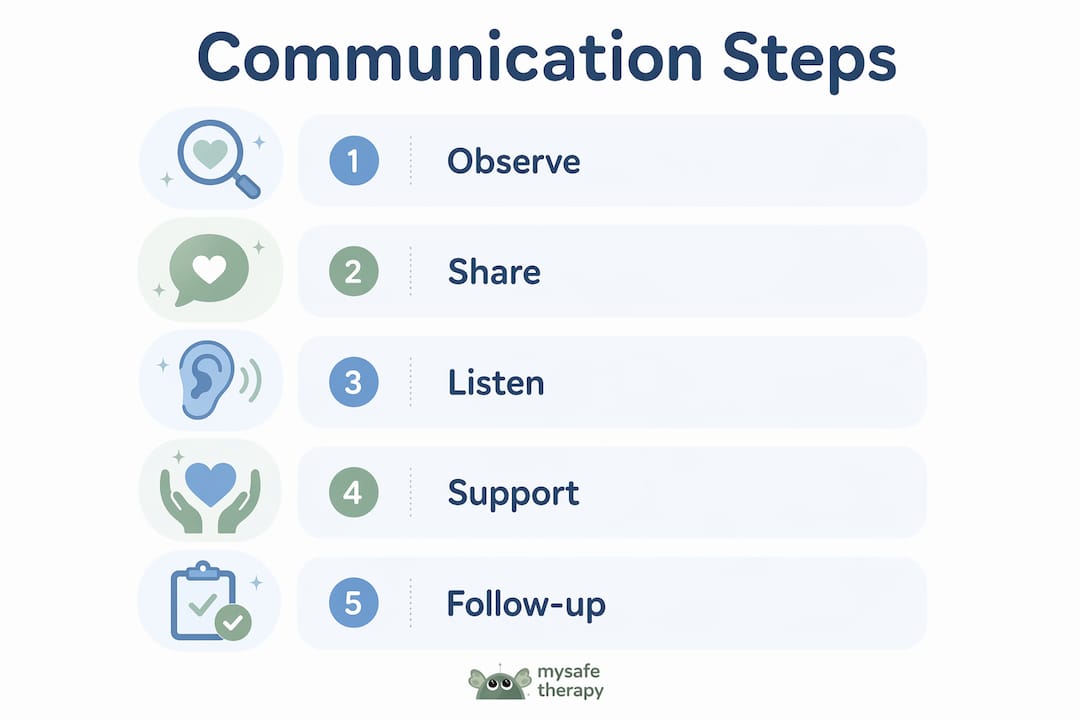
- Effective communication involves observational language, open-ended questions, and active listening, fostering trust and compassion.
Talking about mental health means openly sharing feelings and experiences in a way that builds understanding, reduces isolation, and encourages appropriate support. In the UK, the Mental Health Foundation and NHS Every Mind Matters both recognise that fear of judgement remains the single greatest barrier to these conversations. The good news is that learning how to talk about mental health is a skill, not a personality trait. With the right techniques, timing, and language, anyone can hold these conversations with confidence and compassion.
What are effective communication techniques for discussing mental health?
Effective mental health communication begins with specific, observational language rather than generalisations. Saying "I noticed you haven't been yourself" is far less likely to trigger defensiveness than "You seem depressed." The first statement describes what you observed. The second makes a diagnosis, and people tend to shut down when they feel labelled.

Speaking from your own experience is equally important. Phrases like "I've been feeling overwhelmed lately" invite reciprocal sharing without placing pressure on the other person. This approach, sometimes called "I-statements" in clinical guidance from bodies such as the British Association for Counselling and Psychotherapy (BACP), shifts the conversation from accusation to connection.
Open-ended questions are another practical tool. Questions such as "How have you been finding things lately?" or "What's been on your mind?" invite exploration rather than a yes or no answer. They signal genuine curiosity and reduce the awkwardness that often accompanies sensitive topics.
Active listening is the other half of the equation. This means resisting the urge to immediately offer solutions, reassurances, or comparisons. When someone shares something difficult, the most supportive response is often simply to stay present, nod, and reflect back what you heard. Saying "It sounds like you've been carrying a lot" validates the person's experience without minimising it.
- Use "I noticed..." rather than "You are..." to avoid triggering defensiveness
- Ask open-ended questions to invite dialogue, not yes/no answers
- Reflect feelings back to show you are listening, not just waiting to respond
- Resist the urge to fix. Presence is often more valuable than solutions
- Normalise the conversation by sharing your own feelings when appropriate
Pro Tip: Pay attention to your body language and tone. Leaning slightly forward, maintaining comfortable eye contact, and speaking calmly signals safety. People read these cues before they process your words.
When and where should you have mental health conversations?
The setting of a conversation shapes its outcome as much as the words used. In-person or video calls are strongly preferred over text messages because facial expressions and tone of voice carry emotional information that text simply cannot convey. A message that reads as supportive to you may feel cold or abrupt to the recipient.
Timing matters too. Avoid initiating a mental health conversation during moments of high stress, conflict, or distraction. A rushed exchange before work or in the middle of an argument is unlikely to go well. The goal is to find a calm, private moment when both parties feel emotionally ready.
Here are the most common mistakes people make when choosing when and where to talk:
- Starting the conversation via text or social media, where tone is easily misread
- Bringing up mental health during an existing argument or period of high tension
- Choosing a public setting where the other person may feel exposed or embarrassed
- Raising the topic when either person is tired, rushed, or distracted
- Treating it as a single, definitive conversation rather than an ongoing dialogue
Meaningful conversations about mental health rarely happen in one sitting. Building depth gradually, across multiple shorter exchanges, is far more effective than one intense discussion. This approach also reduces the pressure on both parties and allows trust to develop naturally over time.
Pro Tip: If you are nervous about starting the conversation, prepare two or three specific observations or questions in advance. Having a loose structure reduces anxiety and helps you stay focused if the discussion becomes emotionally charged.
How can you respond supportively when someone opens up?
When someone shares their mental health struggles, the quality of your response determines whether they will open up again. Reflective listening means paraphrasing what the person has said to confirm understanding. "So it sounds like you've been feeling disconnected from everything, is that right?" shows engagement and gives the person a chance to clarify or expand.
Validation is distinct from agreement. You do not need to agree with someone's interpretation of events to acknowledge that their feelings are real. "That sounds incredibly hard" or "I can understand why you'd feel that way" are phrases that communicate empathy without endorsing any particular narrative. Avoid clichés such as "just think positive" or "everyone feels like that sometimes." These responses, however well-intentioned, signal that you are not truly listening.
Knowing when to suggest professional support is a separate skill. Suggesting therapy is most effective during a calm moment, framed around specific concerns rather than a general sense that something is wrong. Saying "I've noticed you've seemed really low for a few weeks. Have you thought about speaking to someone?" is more effective than a vague "you should get help." Offering to help find a therapist or accompany them to a first appointment reduces the practical barriers that often prevent people from acting.
- Use phrases like "That sounds really difficult" to validate without minimising
- Avoid unsolicited advice or comparisons to your own experiences
- Respect confidentiality. What someone shares with you is not yours to pass on
- Recognise when professional support is needed and offer to help find it
- Check in again after the conversation. A follow-up message shows you meant what you said
Normalising professional mental health care as part of overall wellbeing, in the same way you would encourage someone to see a GP for a physical symptom, removes much of the stigma around seeking help. Resources like the therapy formats guide from Mysafetherapy can help you explain the options available to someone who is uncertain about where to start.
What are common challenges in talking about mental health?
Even with good intentions, mental health conversations face real obstacles. The table below maps the most common challenges against practical responses.
| Challenge | Effective response |
|---|---|
| Fear of being seen as weak | Share your own vulnerabilities first to model openness and reduce shame |
| Stigma from family or cultural norms | Use recovery stories selectively to shift the narrative towards hope |
| The person withdraws or goes silent | Maintain patient, consistent support without taking withdrawal personally |
| Not knowing what to say | Focus on listening rather than responding. Silence is not failure |
| Supporter burnout | Set boundaries and seek your own support through therapy or trusted peers |
Fear of judgement is the most frequently cited barrier, and the most effective antidote is sharing your own story. You do not need to disclose everything. Sharing a selective, relevant experience signals that vulnerability is acceptable and that the conversation is a two-way exchange rather than an intervention.
Patience is non-negotiable. Someone who has never spoken openly about their mental health may need several gentle invitations before they feel safe enough to respond. Taking withdrawal personally is a common mistake. It rarely reflects a rejection of you. It more often reflects the person's own fear or unreadiness.
Burnout and mental health struggles worsen with isolation, which means that even small, consistent acts of connection, such as a weekly check-in call or a brief message, carry genuine protective value. You do not need to have a profound conversation every time. Showing up regularly is often enough.
Supporting someone else's mental health also requires looking after your own. If you find these conversations draining, speaking to a professional about how to manage that load is not a sign of weakness. It is a practical step that makes you a more effective source of support. The Mysafetherapy article on reducing mental health stigma in the UK offers further context on why these conversations matter at a societal level.
Key takeaways
Talking about mental health effectively requires specific language, deliberate timing, and consistent follow-through rather than a single well-intentioned conversation.
| Point | Details |
|---|---|
| Use observational language | Say "I noticed..." rather than "You are..." to reduce defensiveness and open dialogue. |
| Choose the right setting | In-person or video conversations preserve tone and non-verbal cues that text cannot carry. |
| Validate before advising | Reflect feelings back and acknowledge them before offering any suggestions or solutions. |
| Suggest professional help calmly | Raise therapy during a calm moment with specific observations and an offer of practical help. |
| Consistency matters more than depth | Regular, brief check-ins build more trust over time than a single intense discussion. |
What we have learned from supporting these conversations
At Mysafetherapy, we have observed a consistent pattern across the people who come to us: the conversations that finally prompted someone to seek help were rarely dramatic. They were quiet, specific, and repeated. A colleague who said "you haven't seemed yourself lately, do you want to talk?" three weeks in a row. A friend who texted after a difficult session to say "I'm still here." A partner who stopped trying to fix things and simply sat with the discomfort.
The conventional wisdom suggests that talking about mental health requires a particular kind of courage, a big moment of disclosure. Our experience suggests the opposite. The most effective conversations are small, low-pressure, and consistent. They do not require you to have the right words. They require you to show up.
We also notice that people underestimate how much their own comfort with the topic affects others. When you speak about your own anxiety or low mood without apology, you give others permission to do the same. This is not about oversharing. It is about modelling the kind of openness you want to see in the people around you.
The hardest part is usually the first sentence. After that, most people find the conversation easier than they expected. The skill is not eloquence. It is willingness.
— MySafeTherapy
Ready to take the next step with professional support?
Open conversations with friends and family are valuable, but they work best alongside professional guidance. Mysafetherapy connects you with UK-accredited therapists registered with BACP, UKCP, and NCPS, offering confidential sessions via video, chat, or avatar-based formats to suit your schedule and comfort level.
Whether you are working through anxiety, depression, relationship difficulties, or burnout, Mysafetherapy provides flexible, affordable access to evidence-based therapy. Sessions are available evenings and weekends, with clear pricing and no long waiting lists. If you are ready to move from conversation to professional support, you can start therapy today or book a session directly with an accredited therapist.
FAQ
What is the best way to start a mental health conversation?
Use a specific, observational statement rather than a general question. Saying "I noticed you've seemed quieter lately" is less likely to cause defensiveness than asking "Are you depressed?" and gives the other person an easy way into the conversation.
How do I talk about my own mental health without feeling judged?
Sharing your own story selectively and without over-explaining is the most effective approach. Start small, choose a trusted person, and frame your experience in terms of feelings rather than diagnoses to reduce the risk of misunderstanding.
What should I avoid saying to someone with mental health difficulties?
Avoid clichés such as "just cheer up," "everyone feels like that," or "you have so much to be grateful for." These phrases minimise the person's experience. Focus instead on listening, reflecting, and validating what they have shared.
When should I suggest professional help to someone?
Suggest therapy during a calm moment, using specific observations about what you have noticed. Offer practical help, such as looking up options together, to reduce the anxiety around taking that first step.
Does talking about mental health actually help?
Yes. Consistent, empathetic dialogue reduces isolation, which is a known risk factor for worsening mental health. Regular connection with others, even brief check-ins, provides measurable protective benefit and makes it more likely that someone will seek professional support when they need it.