
TL;DR:
- Choosing a therapy format when feeling overwhelmed can be stressful, but understanding your needs helps match the right support. Factors such as privacy, cost, and schedule influence the most suitable options, from individual to group or self-guided therapies. Flexibility, personalization, and professional accreditation ensure effective support tailored to your evolving circumstances.
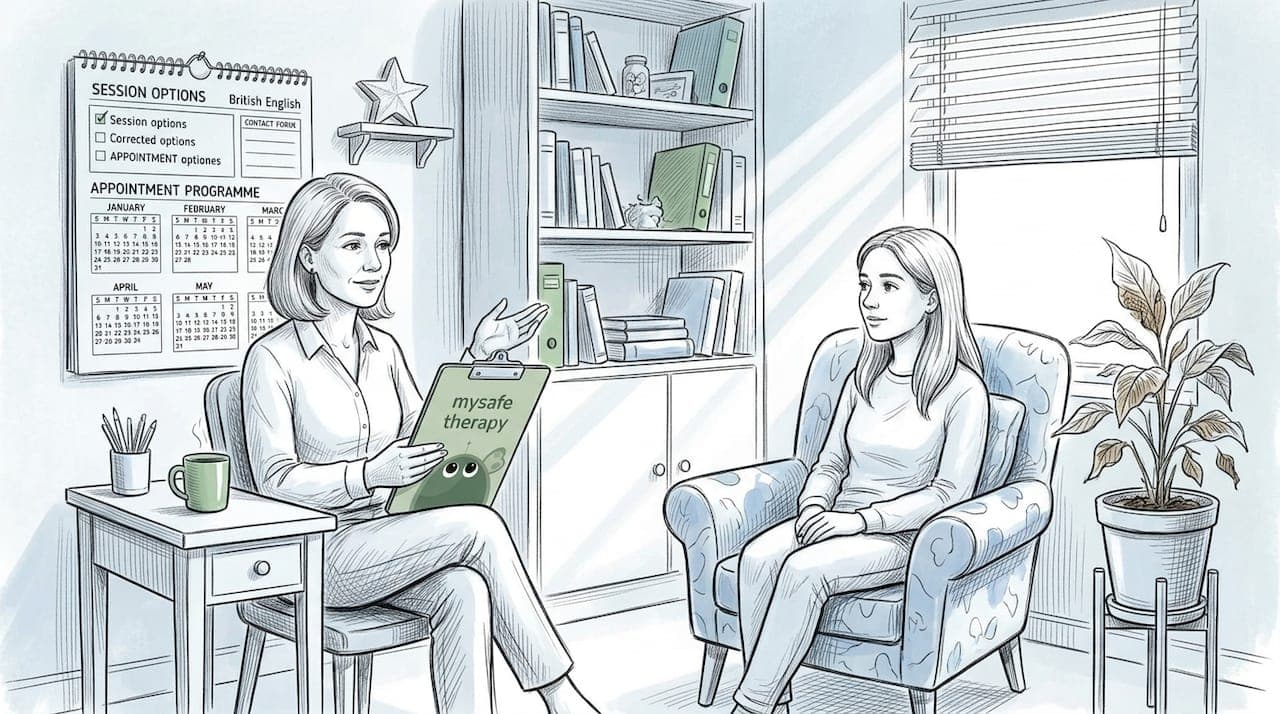
Choosing a therapy format when you are already feeling overwhelmed is one of the more stressful decisions a person can face. There are individual sessions, group settings, couples work, digital self-guided tools, and a growing range of online options, each with distinct benefits, limitations, and best-fit scenarios. The sheer volume of choice can leave you frozen before you have even made a single appointment. This guide breaks down the main therapy formats clearly and directly, so you can match the right type of support to your specific needs, lifestyle, and comfort level without unnecessary confusion.
Table of Contents
- How to choose the right therapy format
- Key therapy formats explained
- Comparing therapy formats: which suits whom?
- Finding your best fit: matching needs to therapy
- Why one-size-fits-all therapy is a myth
- Explore therapy options with trusted support
- Frequently asked questions
Key Takeaways
| Point | Details |
|---|---|
| No single best format | Therapy should be matched to your needs, lifestyle, and comfort level for best results. |
| Online therapy is widely accessible | Digital formats offer privacy and convenience for UK adults facing anxiety, depression, or relationship issues. |
| Comparison helps decision-making | Reviewing formats side-by-side makes it easier to choose confidently and begin getting support. |
| Flexibility is key | Your ideal therapy format may change; choose services that support evolving needs and blend options when possible. |
How to choose the right therapy format
Before exploring specific formats in detail, it helps to understand the criteria that genuinely matter when making this decision. Not every factor will carry equal weight for every person. Some people prioritise cost above all else. Others need complete privacy. Still others need scheduling flexibility because of shift work, childcare, or unpredictable routines.
Flexible mental health support is increasingly recognised as a core feature of effective care, not an optional extra. When therapy fits around your life rather than disrupting it, you are far more likely to attend consistently and see real results.
The following factors are worth considering before you commit to any format:
- Accessibility: Can you attend in person, or do you need remote options? Evening or weekend availability matters if you work standard hours.
- Privacy and comfort: Some people feel more open in their own home. Others find a neutral clinical setting easier. Both responses are equally valid.
- Type of mental health need: Anxiety, depression, relationship difficulties, trauma, and burnout each respond differently to different formats.
- Cost and flexibility: In-person sessions at private clinics can cost significantly more than online alternatives. Group formats are typically cheaper than one-to-one sessions.
- Level of personalisation: Individual therapy offers the highest degree of tailored focus, while group and self-guided options involve more shared or standardised content.
- Stigma and personal comfort: For some, attending a physical clinic feels exposing. Online formats reduce this barrier considerably.
Accessing flexible therapy sessions is linked to better attendance rates and sustained engagement, particularly for those managing busy or unpredictable schedules.
Pro Tip: Start by identifying your single most pressing goal. Is it symptom relief, better relationships, coping tools, or personal growth? That one answer will narrow your format choices considerably and make the rest of the decision much more straightforward.
Key therapy formats explained
Understanding what each format actually involves removes much of the uncertainty around choosing. The online therapy types available in the UK today cover a wide spectrum, from deeply personal one-to-one sessions to digital tools you can use entirely at your own pace.
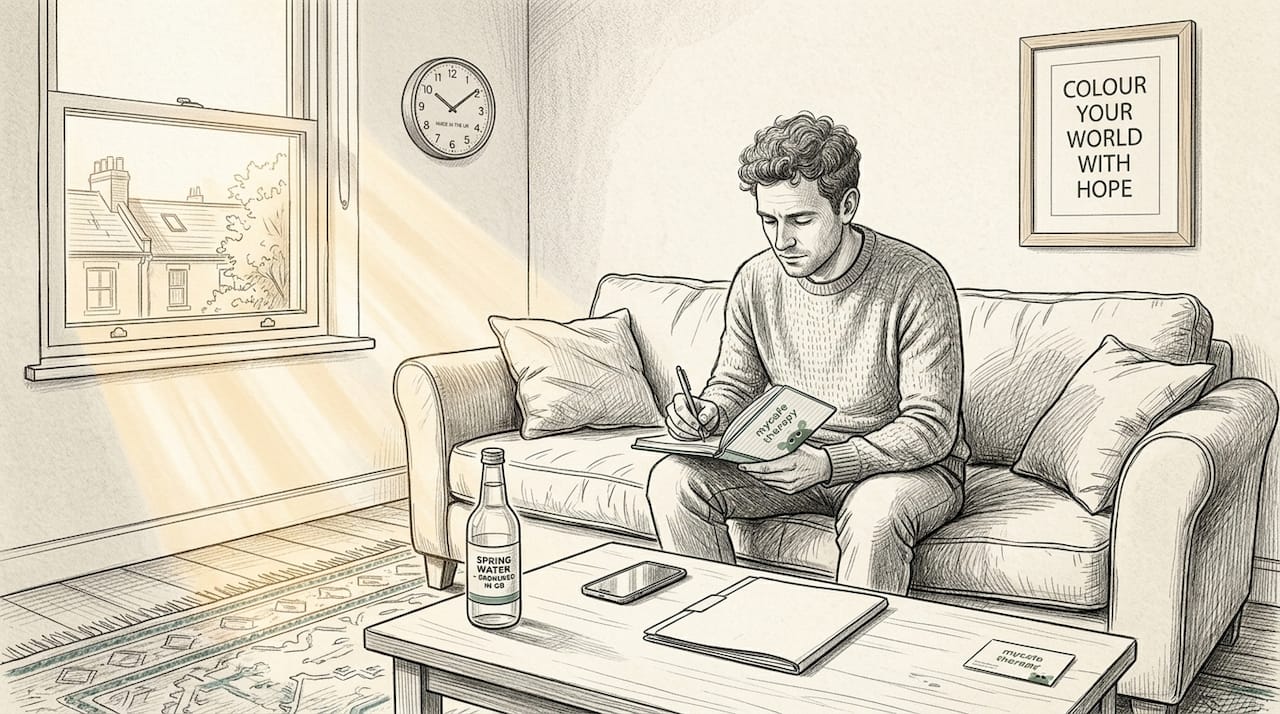
Individual therapy is the most widely recognised format. A single client works with a single therapist, typically on a weekly basis. Sessions are entirely focused on your specific concerns, history, and goals. This format suits people dealing with anxiety, depression, trauma, or any issue that benefits from sustained personal attention. The relationship between client and therapist is itself considered a significant part of the therapeutic process.
Group therapy involves a small number of participants, usually between six and twelve people, working with one or two therapists. The group setting creates a space for peer learning, shared experience, and the recognition that others face similar struggles. Group therapy is notably effective for social anxiety, grief, and addiction recovery. It is also considerably more affordable than individual sessions.
Couples and relationship therapy focuses on the dynamic between two people. A therapist helps partners identify communication patterns, address conflict, and rebuild connection. Couple and family therapy is particularly effective when both individuals are willing to engage honestly and there is a shared goal, such as improving communication or working through a specific crisis.
Family therapy broadens the scope to the wider family unit. Rather than focusing on one individual's internal experience, it addresses how family dynamics, roles, and patterns affect everyone involved. This format is often used when a child or teenager is experiencing difficulties, or when family conflict is a central concern.
Self-guided therapy uses digital tools such as structured workbooks, AI-assisted journaling, mood tracking, and cognitive behavioural therapy (CBT) exercises. There is no live therapist involved, which means the barrier to entry is very low. Self-guided therapy suits people who are managing mild to moderate symptoms and prefer to work independently, at their own pace, and without the commitment of scheduled appointments.
Teletherapy and online sessions replicate the individual or group therapy experience through video, phone, or text-based platforms. Access is immediate, no travel is required, and sessions can be arranged around existing commitments.
"There are a range of online and in-person formats tailored to individual needs, making it possible to find a therapy type that genuinely suits your circumstances."
Pro Tip: Formats do not have to operate in isolation. Many people find that combining individual weekly sessions with a self-guided tool for between-session reflection produces noticeably better outcomes than either approach alone.
Comparing therapy formats: which suits whom?
Understanding each format in isolation is useful. Seeing them side by side is more practical. The best types of mental health support available online in 2026 vary considerably in terms of cost, privacy, and the type of difficulty they address most effectively.
| Format | Session style | Who benefits most | Privacy level | Typical cost | Accessibility |
|---|---|---|---|---|---|
| Individual therapy | One-to-one, ongoing | Anxiety, depression, trauma | High | £50 to £120 per session | Online or in person |
| Group therapy | Facilitated group | Social anxiety, grief, addiction | Moderate | £15 to £40 per session | Often online or local centre |
| Couples therapy | Two clients, one therapist | Relationship conflict, communication | Moderate | £60 to £150 per session | Online or in person |
| Family therapy | Multiple clients, one therapist | Family dynamics, parenting stress | Moderate | £70 to £160 per session | Usually in person |
| Self-guided | App, workbook, AI tool | Mild symptoms, personal growth | Very high | Free to £20 per month | Fully digital |
| Online teletherapy | Video, chat, or phone | Broad range, time-poor individuals | High | £30 to £90 per session | Fully remote |
Several real-life scenarios can help clarify these distinctions further:
- Busy lifestyle with irregular hours: Online teletherapy or self-guided tools are the most practical choices, as they eliminate commuting time and allow flexible scheduling.
- Private or sensitive concerns: Individual online therapy offers a confidential space from your own environment, which many people find easier than attending a physical clinic.
- Budget-conscious approach: Group therapy or self-guided digital tools offer meaningful support at a fraction of the cost of private individual sessions.
- Feeling isolated or disconnected: Group therapy provides genuine human connection alongside professional guidance, which self-guided tools cannot replicate.
- Relationship difficulties: Couples therapy targets the specific dynamics at play and is far more effective than either partner attending individual sessions without the other.
A common misconception is that online formats are inherently less rigorous or effective than in-person alternatives. This is not supported by evidence. Understanding online therapy safety is important, but when a platform uses accredited therapists and secure technology, the therapeutic quality is comparable. The format itself does not determine the outcome. The quality of the therapeutic relationship and the consistency of attendance matter far more.
Another myth worth addressing: that group therapy means sharing deeply personal information in a public setting. In practice, group therapy is bound by strict confidentiality agreements, and skilled therapists manage boundaries carefully to ensure all participants feel safe.
Finding your best fit: matching needs to therapy
Reaching a clear decision about therapy format involves a structured process. Rushing this step often leads to people starting a format that does not suit them, attending inconsistently, and concluding that therapy does not work for them personally. A more considered approach produces better outcomes.
The starting point is understanding access, safety and personal comfort when considering whether to engage online or in person. That foundation makes the rest of the decision much more manageable.
Follow these steps to identify your most suitable format:
- Define your primary goal. Write down what you most want from therapy. Symptom reduction, coping strategies, relationship repair, personal insight, and communication skills each point toward different formats.
- Assess your practical constraints. Consider your schedule, transport access, budget, and device availability. These are not minor factors. They determine whether you will actually attend consistently.
- Consider your comfort with disclosure. Are you comfortable speaking openly with a therapist one-to-one? Does the idea of a group setting interest or unsettle you? Your honest answer here matters more than any external recommendation.
- Research platform safety and therapist credentials. Confirm that any online platform uses therapists registered with bodies such as BACP, UKCP, or NCPS. Read the platform's privacy policy and check how sessions are secured.
- Start with a low-commitment entry point. Many platforms offer a free initial consultation or a short matching quiz. Use these to test compatibility before committing to a full course of sessions. Starting online therapy is often easier than expected when a clear process is in place.
- Consider blending formats. If individual sessions are not sufficient on their own, or if cost is a limiting factor, combining a lower-cost self-guided tool with occasional one-to-one sessions may be the most practical and effective approach.
- Review your decision after three to four sessions. It is entirely reasonable to reassess whether the format is working. Good therapist matching online tools allow you to adjust your approach without starting from scratch.
Pro Tip: Many online platforms in the UK now offer matching assessments that take your stated goals, availability, and format preferences into account. These quizzes take fewer than ten minutes and can save you weeks of uncertainty.
Why one-size-fits-all therapy is a myth
There is a persistent assumption in public discourse that one therapy format is objectively better than all others. Individual weekly CBT is often held up as the gold standard, and while it is effective for many people, treating it as universally superior misses a great deal.
The reality is that choice and personalisation are key for effective mental health support. A person managing burnout while raising two children and working full time has genuinely different needs than someone with fewer time pressures who is processing a bereavement. Applying the same format to both without adjustment is not best practice. It is simply convenience.
What makes the one-size approach particularly limiting is that personal needs shift over time. Someone who starts with self-guided tools during a mild episode of anxiety may later find they need individual sessions to work through deeper patterns. Someone who begins with individual therapy may reach a point where group work offers something their one-to-one sessions cannot, specifically the experience of being understood by peers rather than by a professional.
We believe that the most important commitment is not to a specific format but to the practice of seeking support at all. The format is a tool. What matters is finding why custom therapy matters to your situation at this particular point in time, and being willing to revise that choice as your circumstances change.
People sometimes feel guilty about switching therapists or changing format, as though it signals failure. It does not. It signals self-awareness. Recognising that a particular approach is not serving you well and actively seeking something better is exactly the kind of informed decision-making that produces lasting results.
Explore therapy options with trusted support
Taking the first step toward therapy is often the hardest part. Once you know what you are looking for, the path forward becomes considerably more straightforward.
MySafeTherapy connects you with UK-accredited therapists registered with BACP, UKCP, and NCPS, offering one-to-one video, chat, and avatar-based sessions to suit your comfort level and schedule. You can begin therapy online at a time that suits you, including evenings and weekends, with clear pricing and no pressure to commit long-term. If you are not sure where to start, take the therapy assessment quiz to identify your needs and receive personalised format recommendations in minutes. Your comfort, privacy, and progress are the priority at every step.
Frequently asked questions
Which therapy format is most suitable for social anxiety?
Individual online therapy is often recommended for social anxiety, as it provides personal attention in a private setting without the immediate pressure of face-to-face interaction. Over time, some people progress to group therapy to practise social engagement in a supported environment, with tailored formats available to support this transition.
Are online therapy formats as effective as in-person ones?
Research shows many people benefit equally from online and in-person therapy, particularly for anxiety and depression. Flexible therapy options make support more accessible without reducing clinical quality when delivered by accredited professionals on secure platforms.
Can I switch therapy formats if my needs change?
Yes, most providers allow you to switch between formats or blend options for greater flexibility. Personalised therapy is built on the understanding that what works at one stage of recovery or growth may not remain the best fit indefinitely.
What should I look for to ensure my online therapy is safe?
Check for secure, encrypted platforms, therapist registration with professional bodies such as BACP or UKCP, and a clear, accessible privacy policy. The step-by-step guide to online therapy outlines exactly what to verify before booking your first session.