

Mood tracking increases emotional awareness and turns vague feelings into patterns you can act on. That is the entire premise, and it holds up under scrutiny. Naming an emotion, a process researchers call affect labelling, engages the prefrontal cortex and reduces amygdala reactivity, which is why the simple act of writing "anxious, 4/5" can quieten a spiral rather than feed it. Research indicates mobile mood monitoring can reduce momentary negative mood and impulsivity, giving the practice a genuine mechanism rather than a wellness slogan.
Three groups gain the most from tracking: people who struggle to name what they feel until it overwhelms them, therapy clients who want sessions to start from evidence rather than memory, and anyone watching for early warning signs of a mood episode. Mysafetherapy sees this pattern regularly among people combining self-help tools with accredited support.
- Who benefits most: people building emotional literacy, therapy clients wanting sharper sessions, and anyone monitoring for relapse warning signs.
The mechanism is well established. What is less settled is whether tracking alone changes outcomes, or whether it needs to be paired with reflection, therapy, or a coping plan to actually move the needle.
Key Takeaways
Mood tracking works because naming and reviewing emotional patterns turns vague distress into specific, testable triggers you can act on.
| Point | Details |
|---|---|
| Start small | Log one mood score, one intensity rating, and one context note; add fields only once the habit sticks. |
| Review weekly, not daily | Set one fixed slot to spot patterns; daily obsessing over single entries increases burden without adding insight. |
| Log positives, not just negatives | Revisiting good moments counters negativity bias and supports more sustained positive mood. |
| Watch for red flags | Rapid worsening, suicidal thoughts, or severe instability need immediate clinical contact, not another week of tracking. |
| Pair data with support | Mysafetherapy connects mood-tracking and AI journaling tools directly with UK-accredited therapists for evidence-based sessions. |
Table of Contents
- Mood tracking benefits you can expect from consistent use
- Which mood tracking method actually suits you?
- What should you actually write down each day?
- How to turn tracked mood data into something useful
- What mood tracking can't do, and where it can backfire
- Making mood tracking a habit that actually lasts
- How therapists actually use a client's mood records
- When mood tracking is worth the effort, and when it isn't
- Combine tracking with a therapist who can act on it
- Frequently asked questions
- Sources
Mood tracking benefits you can expect from consistent use
The benefits of mood tracking cluster around six areas, and each one has a distinct mechanism behind it rather than just "it helps you feel better."
- Improved self-awareness. Naming a feeling with a word, rather than leaving it as a diffuse sensation, is affect labelling in action. It builds emotional vocabulary over weeks, and that vocabulary makes emotions easier to regulate rather than just endure.
- Pattern recognition. A single bad day tells you nothing. Thirty entries tell you that your mood dips every Sunday evening or spikes after poor sleep, turning a vague sense of "I've been off lately" into a testable hypothesis.
- Trigger identification. Logging context alongside mood, not just the mood itself, is what separates a mood tracker from a diary. Once you can see that arguments with a specific person or back-to-back meetings precede a slump, you can plan around it.
- Better self-care and behaviour change. Awareness without action changes nothing. But once a pattern is visible, small experiments (an earlier bedtime, a walk before difficult calls) become easier to justify and easier to test.
- Sharper conversations with clinicians. A therapist working from your memory of "a rough month" is working with less than a therapist looking at six weeks of dated entries. Evidence and shared language change what a session can achieve.
- Earlier warning signs. For people managing recurring depression or bipolar disorder, a tracked dip that arrives faster or deeper than usual can prompt outreach before a full episode develops.
There's a second, quieter benefit worth naming: reviewing positive entries retrospectively appears to counter negativity bias. Research from Arizona State University found that people reminded of past positive emotions were more likely to report positive feelings the following day than those who simply logged without reviewing, which is good evidence for building a review habit, not just a logging habit.
None of this means tracking cures anything by itself. Systematic reviews of mood monitoring in bipolar disorder and depression report that while insight and early detection improve, the effect on symptom reduction is mixed and often small across trials. Tracking is scaffolding for change, not the change itself.
Pro Tip: End each week by rereading your three best entries before your three worst ones. It sounds trivial, but ordering the review this way counteracts the brain's natural pull towards dwelling on the negative first.
Which mood tracking method actually suits you?
There is no single correct format. The method that produces good data is the one you will actually keep using, which is why the mood tracker vs journal question matters less than people assume.
A plain paper journal costs nothing, carries no privacy risk, and works for anyone who finds screens intrusive at the end of a difficult day. Its weakness is obvious: nobody wants to manually chart six weeks of handwritten entries to spot a Tuesday pattern.
Structured mood apps solve the visualisation problem. They turn entries into graphs and calendars automatically, which is precisely what users say they want. Qualitative research into mood-tracking apps found that people consistently prefer simple visualisations over dense data entry, and the biggest complaint isn't the app itself but the absence of guidance on what the data actually means.
A feelings wheel, a printed or app-based chart of emotion words radiating from broad categories to specific ones, solves a different problem entirely: not knowing what to call what you feel. It's less a tracking method than a vocabulary-building tool that pairs well with any of the others.
Wearables and passive sensors (heart rate variability, sleep tracking, activity data) offer continuous data without requiring you to remember to log anything. The trade-off is validation. A review of digital mood-monitoring techniques found the technology is promising for longitudinal assessment but still lacks the clinical validation needed for routine diagnostic use.
Voice notes and photo prompts exist for a reason beyond convenience: they're an accessibility route for people who find typing a barrier, whether through disability, literacy, or simply exhaustion at the end of the day.
| Method | Ease of use | Data richness | Daily burden | Privacy |
|---|---|---|---|---|
| Paper journal | High | Low to moderate | Low | Very high |
| Mood app | High | High (with visualisation) | Low to moderate | Depends on provider |
| Feelings wheel | Very high | Low (naming only) | Very low | Very high |
| Wearable/sensor | Moderate | High (passive, continuous) | Very low | Variable, often cloud-stored |
| Voice or photo entry | High | Moderate | Low | Depends on provider |
If digital literacy or privacy concern is high, paper or a feelings wheel remain entirely legitimate choices; the evidence for benefit rests on the habit of naming and reviewing mood, not on any particular software. Mysafetherapy's own AI journaling and mood-tracking tools are built to sit inside that same evidence base, giving people who want a digital option one that connects directly to a UK-accredited therapist rather than sitting in isolation.
What should you actually write down each day?
The mistake most people make when they start is logging too much, too soon, then abandoning the habit within a week because it feels like homework. Keep the anchor entry small.
- Mood label — a single word: content, anxious, flat, irritable.
- Intensity — a 1 to 5 scale, nothing more precise than that.
- Time of day — morning, afternoon, evening is enough resolution.
- One trigger or context note — who you were with, what just happened, or "no clear cause."
- Sleep quality — good, poor, or a rough hours estimate.
- One action or coping step you took — even if it was "did nothing, just noticed it."
That's six fields, and most people can complete them in under a minute. A daily check-in works for general wellbeing; people managing acute symptoms or working with a clinician on a structured programme sometimes log several times a day, a method researchers call ecological momentary assessment, because it captures mood closer to the moment it happens rather than relying on end-of-day recall.
Here's what a real entry looks like:
Tuesday, 6:45pm. Mood: anxious. Intensity: 3/5. Context: back-to-back meetings, skipped lunch. Sleep: poor, 5 hours. Action: took a 10-minute walk before dinner.
Nothing about that entry is profound on its own. The value only appears after twenty or thirty of them sit side by side, which is why the first two weeks of tracking will feel like effort with no visible payoff. Practical guides on the topic generally agree that around 30 days is enough to reveal weekly cycles and recurring triggers, so push through that flat opening stretch before judging whether the habit is working.
How to turn tracked mood data into something useful
Data sitting in an app does nothing on its own. The value of tracking your mood only shows up once you build a review habit around it, and that habit needs structure or it collapses into occasional, guilty scrolling through old entries.
- Review weekly, not daily. Set one fixed slot, Sunday evening works for most people, and look at the week as a whole rather than obsessing over each entry as it lands.
- Mark repeating patterns. Look specifically for day-of-week dips, a correlation between poor sleep and low mood the next day, or a trigger that shows up more than twice.
- Test one small change for two weeks. If Sundays are consistently low, try one adjustment, an earlier night, a planned activity, and don't change three things at once or you won't know what worked.
- Re-review after the trial period. Compare the two weeks with the change against the baseline. If nothing shifted, that's useful information too; it rules out one hypothesis and points towards another.
If you're working with a therapist, sharing the data changes what a session can do. Export a simple summary chart rather than raw entries, a therapist can absorb a trend line in seconds but not forty individual notes, and flag two or three specific entries you found confusing or intense. That combination of overview plus concrete example is what clinician-facing monitoring tools are built around, and a randomised trial using exactly this approach found small but statistically significant improvements in depressive symptoms and psychological health at six months compared with usual care.
Pro Tip: Before reviewing your week, write one neutral sentence describing your general impression before you look at the data. Comparing that gut impression against what the numbers actually show is a quick, effective check against interpretation bias, the tendency to see only the pattern you already expected to find.
Setting a genuinely useful review goal, rather than a vague intention to "track more," makes this habit far more likely to stick. Structured goal-setting approaches can help turn a pattern you've spotted into a concrete, testable change.
What mood tracking can't do, and where it can backfire
Tracking is not a treatment. It's a measurement tool, and measurement tools have limits that are worth stating plainly before you build your expectations around them.
The clinical evidence is genuinely mixed. A systematic review and meta-synthesis of ambulatory assessment and mood monitoring in depression found that while tracking often increases insight and supports self-management, it can equally provoke temporary distress or a sense of burden for some people, particularly those already struggling with rumination.
Systematic review evidence describes a genuine split in user experience: tracking builds insight and strengthens therapy conversations for many people, but for others the same daily prompt to examine their mood becomes another source of pressure rather than relief.
That split matters because it means tracking isn't automatically good for everyone, and stopping is a legitimate choice if it starts to feel like a chore that makes things worse rather than better.
A few specific risks deserve attention:
- Rumination risk. For people prone to dwelling on negative thoughts, repeated close examination of low mood can reinforce the very pattern it was meant to interrupt.
- Data burden and drop-off. Qualitative research on mood-tracking apps found users commonly avoid logging negative moods altogether, which quietly skews the data towards a rosier picture than reality.
- Unreliable readings during mania. Self-reported mood during high-arousal manic states is often distorted, so for people managing bipolar disorder, tracking works best as one part of a wider safety and support plan rather than the sole method of monitoring.
- Privacy and data handling. Not every app discloses clearly where mood data is stored or who can access it; check a provider's privacy policy before logging anything sensitive.
Certain patterns in your tracked data are red flags, not just interesting trends, and deserve immediate clinical attention rather than another week of observation:
- A rapid, sustained worsening trend rather than the usual up-and-down variation.
- Any entry involving suicidal thoughts, self-harm urges, or a sense of being unable to keep yourself safe.
- Severe mood swings that feel unlike your normal pattern, particularly if sleep and behaviour are also changing sharply.
If any of these appear, contact a GP, a crisis line, or emergency services rather than waiting for the next scheduled review. Tracking is for noticing patterns over time, not for managing a crisis in the moment.
Making mood tracking a habit that actually lasts
Most people who quit tracking don't quit because the method failed; they quit because they built a system too demanding to sustain past the second week.
- Anchor it to an existing routine. Log while the kettle boils, right after brushing your teeth, or the moment you sit down on the commute home. A habit needs a trigger, and "whenever I remember" isn't one.
- Keep entries under 60 seconds. If it takes longer than that, you'll start skipping it on busy days, and skipped days are how the whole habit unravels.
- Start with one score and one context field. Add sleep, medication, or activity fields only once the basic habit feels automatic, usually after two to three weeks.
- Log positive entries as deliberately as negative ones. This directly counters negativity bias and mirrors the finding that people who regularly revisit good moments sustain more positive affect over time.
- Use reminders sparingly. A daily notification nagging you to log is more likely to breed resentment than compliance; one gentle prompt at a consistent time beats three insistent ones.
If you lapse for a week or two, don't try to reconstruct the missing days. Start a fresh seven-day focused check-in instead, treat it as a mini restart rather than a failure, and let the momentum rebuild from there.
Pro Tip: Pair tracking with a mindfulness or CBT-based practice rather than running it in isolation. Noticing a pattern is only half the work; a technique from mindfulness-based approaches gives you something concrete to do with what you notice.
How therapists actually use a client's mood records
Clinicians value tracked mood data for a specific reason: it replaces recall with evidence. Memory of the past month is notoriously unreliable and skews towards whatever happened most recently or most dramatically. A dated log doesn't have that bias.
In practice, this changes three things about a session. First, a therapist can open by asking about a specific dip on a specific Wednesday rather than a general "how have you been," which produces sharper, more concrete answers. Second, tracked data gives both parties a shared language, a rating of 4/5 anxiety means something consistent across weeks, rather than a description that shifts depending on mood at the time of the retelling. Third, for conditions with a relapse pattern, a log that starts trending sharply downward can prompt earlier outreach than waiting for the next scheduled appointment.

Consider a schematic example: someone tracking mood for six weeks notices intensity scores climbing on Sunday and Monday specifically, alongside consistently poor sleep those same nights. That pattern, invisible in memory alone, becomes the actual focus of the next session, and the coping plan built from it targets Sunday evening specifically rather than "stress" in general.
This is where the case for combining self-tracking with professional support is strongest. Mysafetherapy connects UK-accredited therapists, registered with bodies including BACP, UKCP, and NCPS, with AI journaling and mood-tracking tools built to feed directly into that clinical conversation, rather than sitting as a separate app a client has to remember to mention.
Pro Tip: If you're bringing mood data to a therapist, export a simple summary chart rather than raw daily entries, and flag two or three specific days you'd like to discuss in detail. Clinicians consistently say an annotated snapshot is more useful in session than a wall of unstructured numbers.
When mood tracking is worth the effort, and when it isn't
Mood tracking isn't right for everyone, and it would be dishonest to pretend the evidence says otherwise. The clinical trial data is genuinely mixed, some reviews find real symptom improvement, others find mainly improved insight without much change in symptoms themselves. What the evidence agrees on consistently is the mechanism: naming and observing emotion strengthens the mental step between feeling something and choosing what to do about it.
That step is where tracking earns its keep. Awareness on its own rarely changes behaviour. Awareness paired with a therapist, a coping plan, or even just a deliberate weekly review turns a spreadsheet of moods into something closer to a feedback loop you can actually steer. That's the honest case for tracking, not a promise of symptom reduction, but a tool that makes the rest of your mental health work sharper.
If you're unsure whether it suits you, don't commit indefinitely. Run it as a structured four to eight week trial, log consistently, review weekly, and decide afterwards whether the pattern-spotting was worth the daily minute it cost you.
Combine tracking with a therapist who can act on it
Mysafetherapy exists for exactly the gap this article keeps circling back to: a mood log tells you what's happening, but turning that into change usually needs someone qualified helping you interpret it. Rather than a mood app running in isolation from professional support, Mysafetherapy pairs its AI journaling and mood-tracking tools directly with UK-accredited therapists, so the patterns you spot get discussed, not just stored.
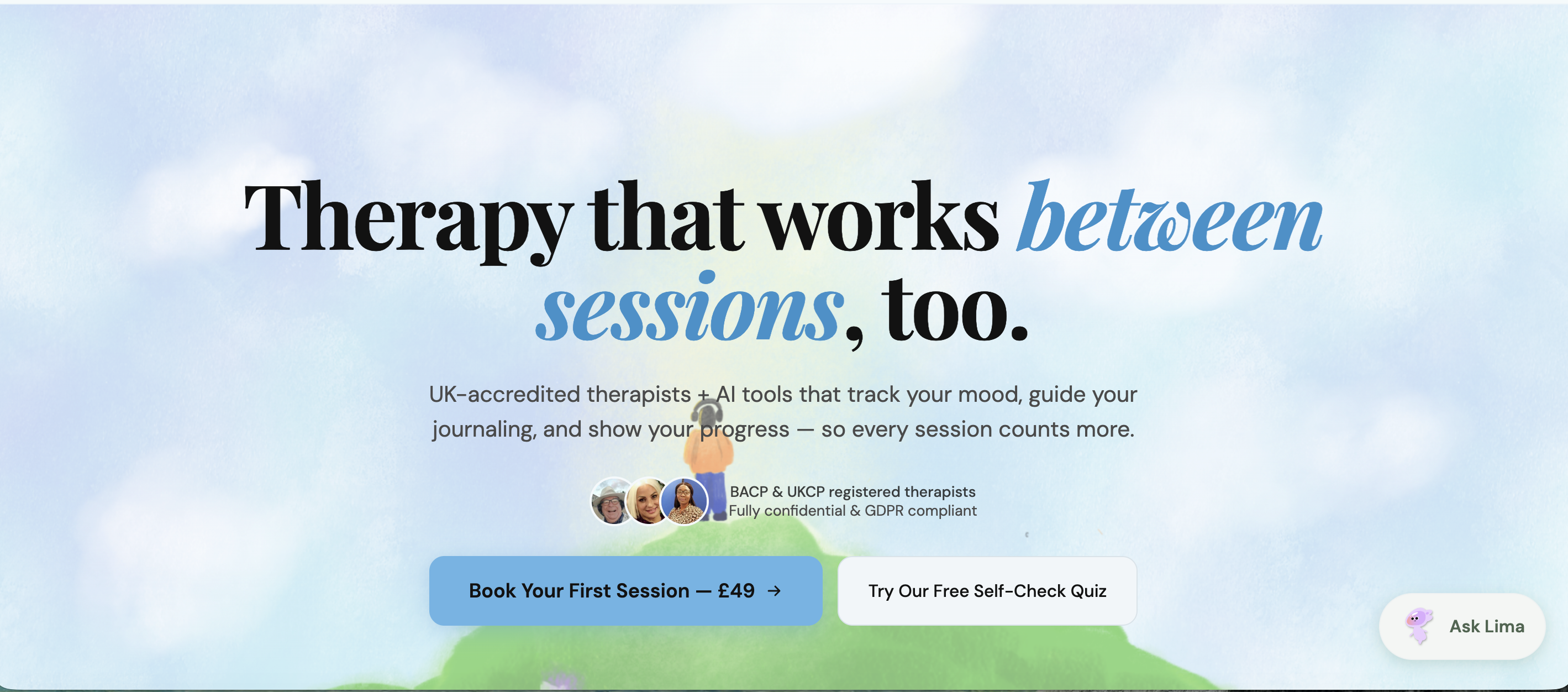
Sessions run over video, chat, phone, or avatar-based formats, including evenings and weekends, which matters if a 9-to-5 clinic slot has never fitted your week. Progress reports and guided journeys sit alongside the tracking tools, giving both you and your therapist the same evidence to work from going into every session. If you'd rather explore the AI-supported options first before committing to therapy, the guide to AI mental health platforms covers how the tools and clinician support fit together. When you're ready to bring your own tracked patterns into a session, you can book an online therapy appointment directly and start from evidence rather than memory.
Frequently asked questions
Does mood tracking actually improve mental health, or just awareness? The strongest evidence points to improved awareness and better therapy conversations rather than guaranteed symptom reduction on its own. One randomised trial found small but significant improvement in depressive symptoms when tracking was combined with clinician access, suggesting the benefit strengthens considerably once the data is shared and acted on.
How is a mood tracker different from a regular journal? A mood tracker specifically records a rated emotional state alongside structured context, like intensity and triggers, making patterns visible over time. A journal captures free-text reflection, which is valuable for processing but harder to scan for recurring trends across weeks or months.
How long should I track before deciding if it's helping? Give it four to eight weeks. The first fortnight usually feels like effort without payoff; recognisable weekly patterns typically emerge around the 30-day mark.
Is it normal to feel worse after tracking my mood for a while? For some people, close daily examination of mood can increase rumination rather than ease it. If tracking consistently leaves you feeling worse, that's a legitimate reason to stop or switch to a lighter, weekly-only format instead of daily logging.
Can mood tracking replace therapy? No. Tracking is a measurement and awareness tool, not a treatment. It works best as a supplement to therapy or a structured self-help plan, giving both you and a clinician concrete evidence to work from rather than replacing professional support.
This article is general information, not a substitute for advice from a qualified doctor. Consult a qualified healthcare professional about your own circumstances before acting on anything here.
Sources
- Putting feelings into words: affect labeling disrupts amygdala activity
- Boosting positivity: The impact of mood tracking on mental well‑being
- The real‑world user experience of mood‑tracking apps: qualitative findings
- The user experience of ambulatory assessment and mood monitoring in depression: systematic review and meta‑synthesis