

The five most useful therapy homework formats are thought records, activity diaries for behavioural activation, graded exposure plans, grounding exercises like 5-4-3-2-1 and worry time, and behavioural experiments. All five are worksheet-based, take minutes to complete daily, and have evidence behind them. Downloadable NHS-style templates for each sit in the sources section below.
TL;DR:
- Structured homework tasks lasting 10 to 20 minutes, such as thought records and activity diaries, are most effective when they are specific and manageable.
- Using a fear hierarchy for graded exposure helps clients gradually confront avoidance behaviors without becoming overwhelmed.
- Creative tasks like shaping clay objects or drawing worries can improve self-expression for clients who process trauma non-verbally.
- Reviewing mood and activity logs weekly reveals patterns that guide therapy adjustments and progress tracking.
- Online tools and therapist support enhance homework adherence by enabling real-time logging and expert feedback.
Table of Contents
- Practical therapy homework examples for CBT and other approaches
- Creative and movement-based homework beyond the worksheet
- How to fill in worksheets: mood monitors, thought records and audio
- Agreeing homework that actually gets done
- Why homework matters: UK clinical evidence and practical benefits
- Supporting homework between sessions with online therapy
- Getting therapist support for your homework plan
- Sources
- FAQ
Practical therapy homework examples for CBT and other approaches
Homework only works when it is specific enough to actually do. Vague instructions like "notice your thoughts this week" rarely survive a busy Tuesday. What follows are concrete, copy-ready versions of the formats therapists assign most often.
Thought records. A thought record captures one moment where your mood dropped, then walks it apart. Write down the situation, the automatic thought that appeared, the evidence for and against that thought, an alternative thought, and a mood rating before and after. A filled example: situation, "boss didn't reply to my email"; automatic thought, "I've annoyed her, I'm going to lose my job"; evidence for, "she seemed short yesterday"; evidence against, "she's been in back to back meetings all week, and my last three reviews were positive"; alternative thought, "she's busy, this probably isn't about me"; mood before, 8/10 anxious; mood after, 4/10. One record a day, done properly, teaches the skill faster than five done badly.
Behavioural activation and activity diaries. This format rebuilds routine and pleasure by scheduling activity rather than waiting for motivation to arrive first. You rank potential activities as easy, moderate, or difficult, then slot one or two small ones into the coming days and rate your mood before and after on a 1 to 10 scale. The East London Foundation Trust monitors this hour-by-hour: a micro-example might be "10am, ten-minute walk to the postbox, mood 3 before, 5 after." Early weeks work best when each day includes a balance of pleasurable activities, routine tasks, and necessities, so you can observe which category actually shifts your mood.
- Easy: making a cup of tea in the garden, texting one friend.
- Moderate: a 20-minute walk, cooking a meal from scratch.
- Difficult: attending a social event, returning a call you've been avoiding.
Graded exposure. Exposure homework builds a fear hierarchy scored 0 to 10, then works upward one manageable step at a time. For transit anxiety, a plan might run: stand at the bus stop without boarding (3/10), ride one stop with a companion (5/10), ride three stops alone (7/10), ride the full route alone at rush hour (9/10). For clients with severe avoidance, starting with imaginal exposure or a single 10 to 15 minute micro-step, paired with a grounding technique, keeps arousal at a tolerable level rather than tipping into overwhelm.
Grounding tools and worry time. The 5-4-3-2-1 technique asks you to name five things you can see, four you can hear, three you can touch, two you can smell, and one you can taste. It takes under two minutes and interrupts spiralling thoughts by forcing attention back into the room. "Worry time" works differently: you postpone worrying to a fixed 15-minute slot each evening rather than letting it hijack the whole day, then use that slot to write worries down and sort them into "can act on" and "can't control." A slow breath, in for four counts, hold for four, out for six, repeated five times, often pairs well with either exercise; the physiological reasoning behind why slower breathing calms the nervous system is well documented.
Behavioural experiments. These turn a belief into a testable prediction. State the belief ("if I go for a walk alone, I'll feel worse"), predict an outcome, run the test once, then record what actually happened. A common example: a 20-minute solo walk, predicted mood drop to 3/10, actual outcome 6/10. Behavioural experiments were developed extensively within cognitive therapy for PTSD and translate well to remote delivery, since the design step (defining the prediction and the measure) can happen over video just as easily as in person.
Pro Tip: Keep every homework task under 20 minutes for the first two weeks. Tasks that feel achievable get finished; tasks that feel like a project get abandoned by Thursday.

Creative and movement-based homework beyond the worksheet
Not everyone processes feelings through words on a page, and cognitive tasks can feel flat for clients who find verbal reflection difficult, particularly younger clients or anyone processing trauma non-verbally.
- Living memory bowl: shape a small object from clay or salt dough that represents a memory or feeling, then bring it to the next session with two or three sentences about what shaped it and why.
- "Where worry lives" drawing: sketch worry as a shape, colour, or place on the body, then note one sentence about what changed when you drew it.
- Parts walk: take a 15-minute walk while mentally naming different "parts" of yourself as they surface (the anxious part, the tired part, the part that wants to give up), then jot down which part was loudest and whether that shifted over the walk.
- Sensory anchor object: carry a small textured object (a stone, a piece of fabric) and hold it during a stressful moment, then log when you used it and what changed in your body afterwards.
Creative and play-based tasks have shown genuine value in improving self-expression and family communication in clinical exercise material from BACP, particularly where verbal disclosure feels too exposing on its own. The point of recording outcomes, even a single sentence, is the same across every format here: it gives your therapist something concrete to review rather than a vague "yeah, I did some of it."
How to fill in worksheets: mood monitors, thought records and audio
Most worksheets fail not because they're badly designed but because people guess at the format instead of following the structure. Here's how the three most common templates actually work.
1. Activity and mood monitor. Divide your day into time slots (morning, afternoon, evening works for most people; hour-by-hour if you want finer detail). For each slot, note what you did and rate your mood 1 to 10.
| Time | Activity | Mood (1–10) |
|---|---|---|
| Morning | Stayed in bed | 3 |
| Afternoon | 20-minute walk, called a friend | 6 |
| Evening | Cooked dinner, watched TV | 5 |
Reviewing a full week at once, rather than day by day, is what reveals the pattern. The SLaM monitoring workbook recommends a weekly review specifically to spot which activities consistently lift mood and which ones you avoid, then flagging that pattern with your therapist rather than trying to solve it alone.
2. Thought record columns. The standard format runs: situation, automatic thought, emotion and intensity, evidence for, evidence against, balanced thought, new emotion rating. Filling in all seven columns for one moment beats a rushed attempt at three.
3. Audio-recording sessions. Recording a session on your phone, with your therapist's consent, and listening back within 48 hours is a genuinely underused piece of homework. It catches details you missed in the moment and helps consolidate behavioural experiments discussed live, according to NHS practitioner guidance. Keep the file on a private, password-protected device, delete it once you've reviewed it if that feels safer, and always check your therapist is comfortable being recorded first.

Agreeing homework that actually gets done
Homework that gets assigned but never completed usually has one problem: it was set too big, too vague, or without your input.
A workable process runs in four steps. First, agree a measurable goal together, not "feel less anxious" but "walk to the corner shop without turning back." Second, pick one small task that moves toward it. Third, timebox it, decide exactly when and for how long. Fourth, plan the review at your next session before you leave the room.
Grading matters as much as the task itself. Behavioural activation plans that start with genuinely tiny steps avoid the boom-and-bust cycle where you overcommit, crash, and then avoid trying again for weeks. If a task feels 8/10 difficult before you've even started, it's too big.
Not finishing homework isn't failure, it's information. Therapists generally treat non-completion as clinical data that tells you the task needs adjusting, not that you've done something wrong.
- "How exactly will we measure whether this worked?"
- "What does a partial success look like, not just full completion?"
- "If I don't manage it this week, what should I try instead?"
Pro Tip: Bring your homework attempt to session even if it's a blank page. "I tried and got stuck at step two" is far more useful to your therapist than silence.
Why homework matters: UK clinical evidence and practical benefits
Homework isn't busywork bolted onto therapy; it's part of what makes the therapy work. The Royal College of Psychiatrists/) frames skills practice between sessions as central to CBT's effectiveness, because insight gained in a session only becomes change once it's tested against real situations. A single hour a week in the therapy room can't do that generalisation work on its own.
That's echoed at a practical level too. Templates from ELFT and South London and Maudsley (SLaM) NHS trusts, both built for routine clinical use, follow the same logic: structured monitoring between sessions, not sporadic reflection, is what surfaces the patterns therapist and client actually need to discuss.
One caveat matters here. If you're experiencing severe symptoms, high risk, or acute crisis, homework should be discussed with your clinician before you take it on alone, and any safety plan or crisis guidance you've been given always takes priority over a worksheet.
Supporting homework between sessions with online therapy
Homework tends to stick better when there's an easy way to log it the moment it happens, not three days later when you've half forgotten the detail. That's the practical case for pairing structured homework with online support: mood tracking and AI journaling tools let you capture a thought record or an activity rating in the moment, on your phone, rather than losing it to a notebook you can't find.
Flexible formats matter too. Video, chat, and avatar-based sessions all make it easier to share a worksheet mid-week rather than waiting for the next fixed appointment, particularly if a behavioural experiment throws up something worth flagging early. The tools themselves don't replace the therapeutic relationship, they just remove the friction of holding everything in your head until session day.
The tools themselves don't replace the therapeutic relationship, they just remove the friction of holding everything in your head until session day.
— MySafeTherapy
Getting therapist support for your homework plan
Reading through a thought record template is one thing; having someone check whether you're filling it in usefully is another. Mysafetherapy is the alternative to working through worksheets alone. It matches you with UK-accredited therapists across BACP, UKCP, and NCPS who can set, review, and adjust homework session by session, and pairs that with built in mood tracking and journaling tools so your activity diary or thought record doesn't get lost in a random notebook.
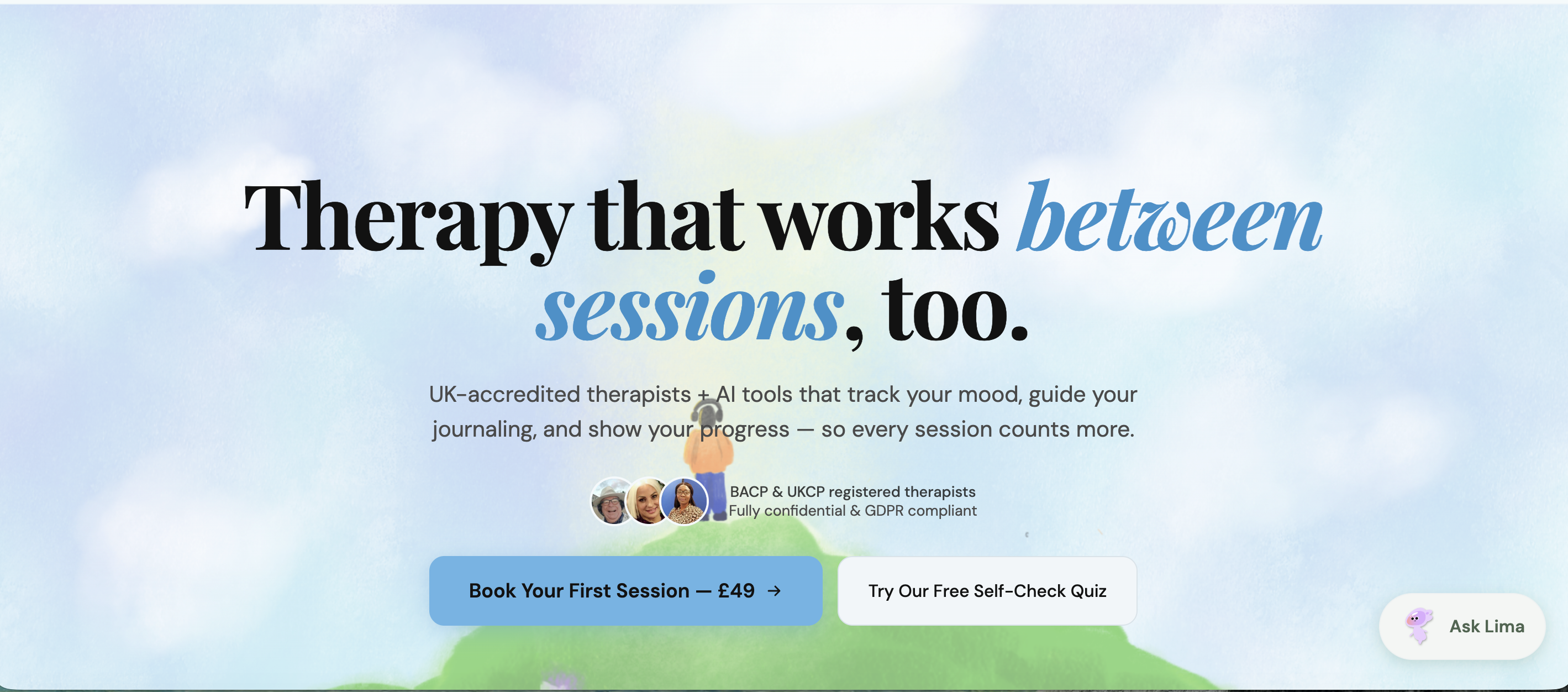
If you're new to this, chat therapy from £50 a session lets you work through your first thought record or activity plan in writing at your own pace, no video call required. Prefer to talk it through face to face without an appointment locking you in? Individual therapy sessions are billed one at a time, so you're never stuck in a long-term contract. Full session pricing across Essential, Standard, Premium, and Elite tiers is listed on the pricing page, and you can start therapy today to book your first session and agree your first piece of homework with a real therapist.
Sources
The templates referenced throughout this article come from established UK clinical sources, all free to download and use alongside your own therapy.
- Behavioural activation — East London Foundation Trust (ELFT)
- Monitoring activity and mood — SLaM iAPT
This article is general information, not a substitute for advice from a qualified doctor. Consult a qualified healthcare professional about your own circumstances before acting on anything here.
FAQ
What does therapy homework actually look like?
Most homework is a short daily or weekly task tied to what you covered in session, filling in a thought record, logging activities and mood, or practising a grounding exercise. It's usually designed to take 10 to 20 minutes and gets reviewed at your next appointment.
What are some examples of CBT homework?
Common CBT homework includes thought records, activity diaries for behavioural activation, graded exposure hierarchies, and behavioural experiments that test a specific belief against reality. All four are covered with filled examples earlier in this article.
What are some good prompts to bring to a therapy session?
Useful prompts include "what did I notice about my mood this week that surprised me?", "which homework task felt too hard, and why?", and "what's one situation I avoided that I want to try differently?" These give your therapist concrete material to work with rather than a general mood update.
What are some examples of simple therapy activities I can try alone?
The 5-4-3-2-1 grounding technique, a scheduled 15-minute worry time, and a single small behavioural activation task, like a short walk, are all low-effort activities you can try without a worksheet. If you want structured support building on these, Mysafetherapy's self-help tools pair mood tracking with guided journaling for £14.99 a month.
How much does therapist-supported homework review cost with Mysafetherapy?
Individual sessions range from £50 to £75 for Essential, £80 to £110 for Standard, £120 to £180 for Premium, and from £200 for Elite, all listed on the pricing page. Chat therapy and avatar-based sessions both start from £50 per session.