
TL;DR:
- Burnout recovery involves deliberate rest, environmental adjustments, and returning gradually to sustainable habits. Recognizing burnout is crucial, and a medical assessment ensures proper support and workplace adjustments. Structured plans and evidence-based therapy help rebuild resilience and prevent relapse.
Burnout recovery is a multi-stage process that requires intentional rest, environmental change, and a gradual return to sustainable habits. The term "burnout" is recognised clinically as a state of chronic exhaustion caused by prolonged, unmanaged stress, and it demands structured intervention rather than willpower alone. Stress-related sickness absence accounts for 32% of all workplace absences in the UK. That figure reflects how widespread this condition is, and why a clear, step by step burnout recovery approach matters for so many adults across the country.
What are the essential steps before starting burnout recovery?
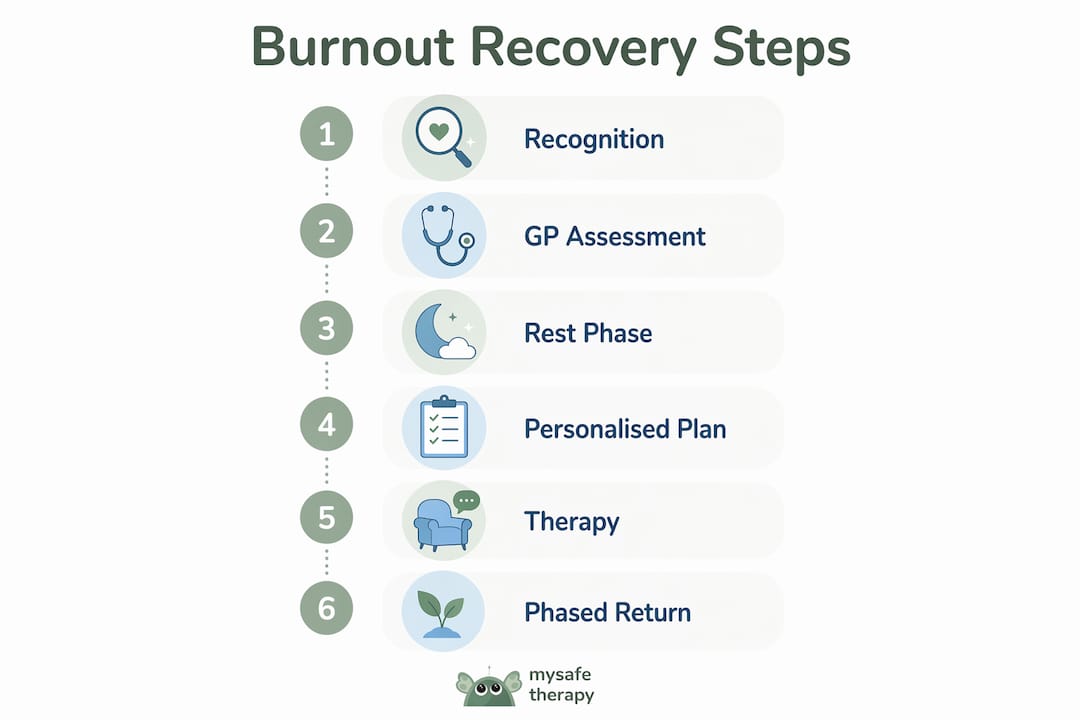
The first step in any burnout recovery plan is not rest. It is recognition. Many people spend months pushing through exhaustion before they accept that what they are experiencing is burnout rather than ordinary tiredness. Burnout is a biological response to unsustainable environmental demands, not a personal failing. Understanding this is the foundation of genuine recovery.
Before you change your schedule or start therapy, see your GP. A medical assessment rules out other conditions, such as thyroid disorders or anaemia, that can mimic burnout symptoms. Your GP can also sign you off work if needed, which gives you the legal and practical space to begin recovering properly.
Signs that indicate you need to stop and seek help include:
- Persistent physical exhaustion that sleep does not resolve
- Difficulty concentrating or making simple decisions
- Emotional detachment from work, relationships, or activities you previously valued
- Recurring physical symptoms such as headaches, digestive problems, or frequent illness
- A sense of dread or cynicism about daily responsibilities
Pro Tip: Before your GP appointment, write down your symptoms and when they started. A clear timeline helps your doctor assess severity and recommend the right level of support.
Preparing your environment matters as much as preparing yourself. Tell a trusted person, whether a partner, friend, or family member, what you are going through. Reducing your immediate obligations, even temporarily, creates the conditions in which recovery can actually begin.
How to build a personalised burnout recovery plan
A burnout recovery plan works best when it is structured, written down, and built around your specific circumstances. Small, consistent changes outperform ambitious goals that are difficult to sustain. This is not about doing less permanently. It is about doing the right things in the right order.
Follow these stages to build your plan:
-
Prioritise sleep above everything else. Sleep is the primary mechanism through which your nervous system regulates itself. Set a consistent sleep and wake time, reduce screen exposure in the hour before bed, and treat sleep as a non-negotiable commitment rather than a reward.
-
Set psychological boundaries. Identify the specific demands, whether work emails after hours, excessive meetings, or unrealistic deadlines, that contributed to your burnout. Write them down. Decide which ones you will no longer accept, and practise communicating that clearly.
-
Negotiate formal workplace adjustments. Under the Equality Act 2010, employers have a legal duty to make reasonable adjustments where burnout qualifies as a disability. This can include reduced hours, changed responsibilities, or a phased return to work. Request these adjustments in writing, not in a verbal conversation.
-
Create a phased return plan. 83% of employees returning from burnout-related sick leave have no formal written return plan. That absence of structure significantly increases the risk of relapse. A written plan should specify your start date, initial hours, responsibilities, and review points.
-
Reintroduce enjoyable activities gradually. Choose one or two activities that gave you energy before burnout. Start small. A 20-minute walk or a short social visit counts. The goal is to rebuild your capacity for positive experience, not to fill your diary.
Pro Tip: Share your written recovery plan with both your GP and your employer. Having the same document in both places reduces the risk of conflicting expectations and protects you legally.
The table below outlines a practical framework for the first eight weeks of recovery:
| Week | Focus | Example action |
|---|---|---|
| 1–2 | Rest and medical support | GP appointment, signed off work, sleep routine |
| 3–4 | Boundary setting | Identify stressors, reduce obligations, limit contact |
| 5–6 | Gentle reactivation | Short walks, social contact, enjoyable activities |
| 7–8 | Phased return planning | Written plan agreed with employer, therapy begins |

Which therapies work best for burnout recovery?
Evidence-based therapy is the most reliable tool for addressing the psychological roots of burnout. Cognitive behavioural therapy (CBT), acceptance and commitment therapy (ACT), and other talking therapies are the most widely recommended approaches for burnout recovery. Each works differently, but all three help you identify the thought patterns and behaviours that made you vulnerable to burnout in the first place.
CBT focuses on changing unhelpful thinking patterns, such as perfectionism or catastrophising, that drive overwork. ACT takes a different approach: it helps you clarify your values and commit to actions aligned with them, rather than fighting difficult emotions. Both therapies are available through BACP-registered and UKCP-accredited therapists in the UK.
Self-care strategies that support therapy include:
- Mindfulness practice. Even ten minutes of daily mindfulness reduces cortisol levels and improves emotional regulation. Apps such as Headspace or Calm provide structured introductions, but a simple breathing exercise works equally well.
- Physical movement. Gentle exercise, particularly walking, cycling, or swimming, supports nervous system recovery without adding physical stress. Avoid high-intensity training during the early stages of burnout recovery.
- Social connection. Isolation worsens burnout. Maintaining at least one regular social contact, even briefly, protects against the emotional withdrawal that deepens exhaustion.
- Reducing stimulants. Caffeine and alcohol both disrupt sleep quality and nervous system regulation. Reducing both during recovery produces measurable improvements in energy and mood.
Therapy does more than address symptoms. It rebuilds your sense of agency, which burnout systematically erodes. Working with a therapist also helps you identify the environmental and relational patterns that need to change, not just the internal ones. For broader context on managing stress in occupational settings, workplace wellness strategies offer useful supplementary guidance.
How do you manage setbacks during the burnout healing process?
Setbacks are a normal part of the burnout healing process, not evidence that recovery has failed. The most common setback is returning to work before the nervous system has genuinely recovered. Pushing through exhaustion is the primary cause of burnout relapse. Feeling slightly better is not the same as being ready to resume full responsibilities.
Common challenges and how to address them:
- Returning too early. If your employer pressures you to return before you are ready, refer to your written plan and your GP's advice. You have legal protections under the Equality Act 2010.
- Informal promises from managers. Verbal assurances about reduced workloads rarely hold. Informal support promises are unreliable. Always request written confirmation of any agreed adjustments.
- Guilt about resting. Many people experiencing burnout feel they do not deserve to stop. This is a symptom of burnout, not a fact. Recognising guilt as a symptom helps you respond to it differently.
- Plateaus in progress. Recovery is not linear. A week of low energy after several good days does not mean you are back at square one. Adjust your plan rather than abandoning it.
"Rest is the critical first stage of recovery, but it must be paired with re-establishing psychological boundaries and sustainable habits to prevent relapse. True recovery requires returning with different, more sustainable patterns rather than resuming the ones that caused burnout."
When progress stalls significantly, or when anxiety or depression symptoms intensify, seek further clinical input. Your GP can refer you to NHS talking therapies, or you can access a BACP-registered therapist privately. Mental health management guidance for UK adults provides additional practical support for this stage.
Key takeaways
Sustainable burnout recovery requires medical assessment, written workplace plans, and evidence-based therapy working together, not any single intervention alone.
| Point | Details |
|---|---|
| Start with a GP assessment | Rule out other conditions and get formal documentation before making any workplace changes. |
| Demand written plans | 83% of returning workers have no formal plan; a written agreement protects you legally and practically. |
| Use evidence-based therapy | CBT and ACT address the root causes of burnout, not just the symptoms. |
| Rest is not optional | Sleep and nervous system recovery must come before any attempt to reintroduce work demands. |
| Setbacks are expected | Adjust your plan when progress stalls rather than abandoning recovery altogether. |
What recovery from burnout has taught us at Mysafetherapy
The most persistent misconception about burnout recovery is that it is primarily a mindset problem. People are told to think more positively, practise gratitude, or simply push through. That advice is not just unhelpful. It is actively harmful. Burnout is a physiological state, and the environment that caused it must change for recovery to hold.
What we observe consistently is that the people who recover most sustainably are those who treat their return to work as a negotiation, not a concession. They use the legal protections available to them under the Equality Act 2010. They request written plans. They do not accept verbal reassurances. They also tend to be the people who enter therapy not as a last resort, but as a structured part of their recovery from the beginning.
Self-compassion is not a soft concept in this context. It is a clinical requirement. The internal critic that drives overwork does not switch off during sick leave. Therapy provides the tools to manage it. Recovery is not about becoming a different person. It is about returning to work and life with boundaries that were absent before.
— Mysafetherapy
How Mysafetherapy supports your burnout recovery
Mysafetherapy connects UK adults with BACP-registered and UKCP-accredited therapists who specialise in burnout, stress, and workplace-related mental health. Every therapist on the platform is qualified to deliver CBT, ACT, and talking therapies tailored to your specific recovery stage.
Sessions are available via video, chat, or avatar therapy for those who prefer anonymity, with evening and weekend appointments to fit around your circumstances. Pricing is transparent, and switching therapists is straightforward if your needs change. Whether you are at the earliest stage of recognising burnout or ready to plan a phased return to work, you can start therapy with a qualified professional today and build a recovery plan that holds.
FAQ
How long does burnout recovery take?
Burnout recovery typically takes several months, depending on severity and the quality of support in place. Recovery is a staged process that cannot be shortened by willpower alone.
Should I see a GP before starting burnout recovery?
Yes. A GP assessment is the first step because it rules out other medical conditions and provides the documentation needed for workplace adjustments under UK law.
What is the best therapy for burnout?
CBT and ACT are the most evidence-based therapies for burnout recovery. Both address the thought patterns and behaviours that contribute to chronic overwork and exhaustion.
Can I return to work during burnout recovery?
A phased return is possible, but only with a formal written plan agreed with your employer. Returning without a plan significantly increases the risk of relapse.
What are my legal rights during burnout recovery in the UK?
Under the Equality Act 2010, employers must make reasonable adjustments where burnout qualifies as a disability. You can request reduced hours, changed duties, or a phased return in writing.